Artist Spotlight
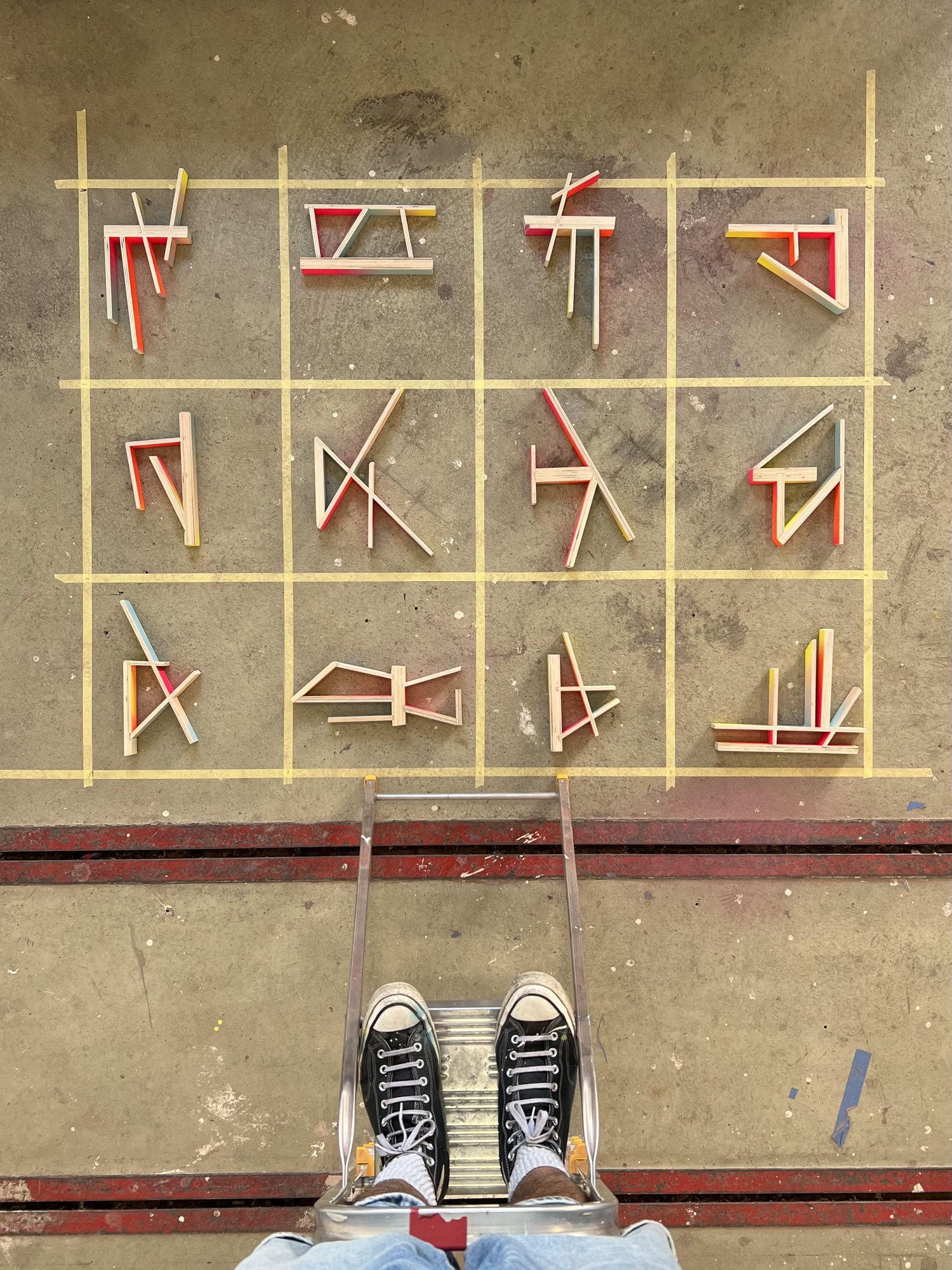
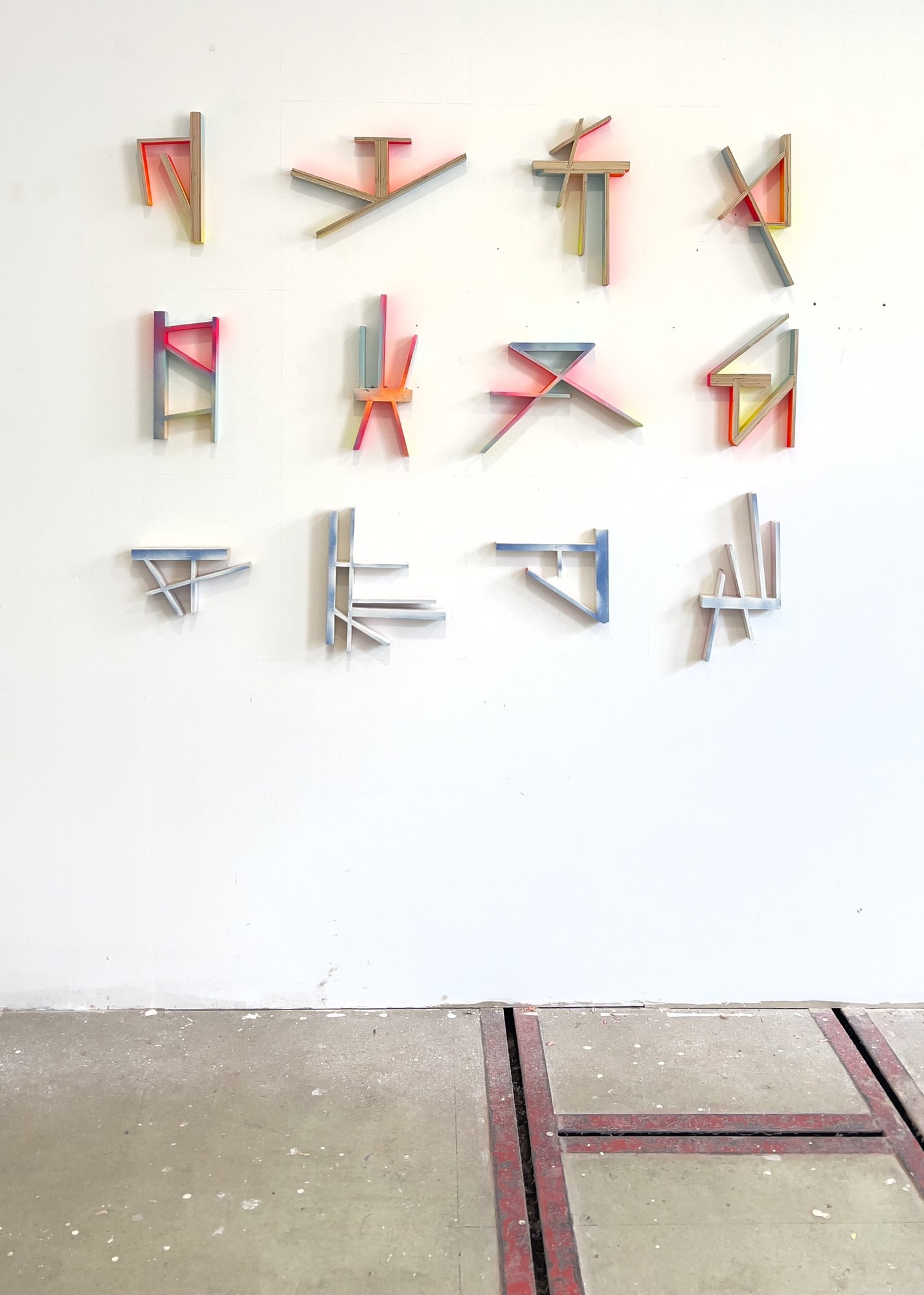
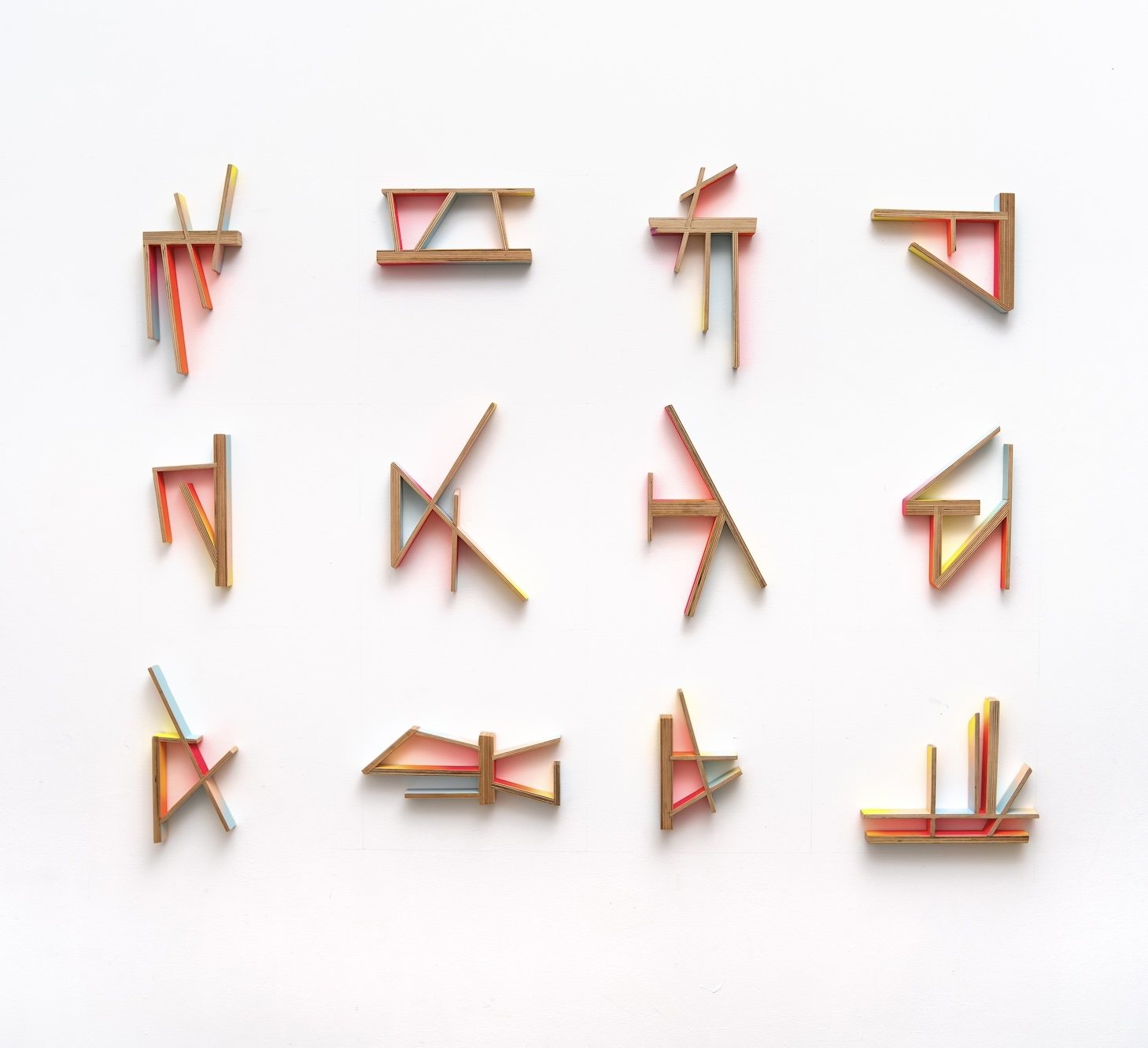
Anthony Vasquez spent years learning to paint the figure the traditional way, in oil on canvas, with anatomy, light and shadow as the discipline. Then, by his own account, the whole mindset shifted at once. There was no slow drift into abstraction, just a sudden turn toward structure, and toward wood not as a surface to paint on but as a material to build with.
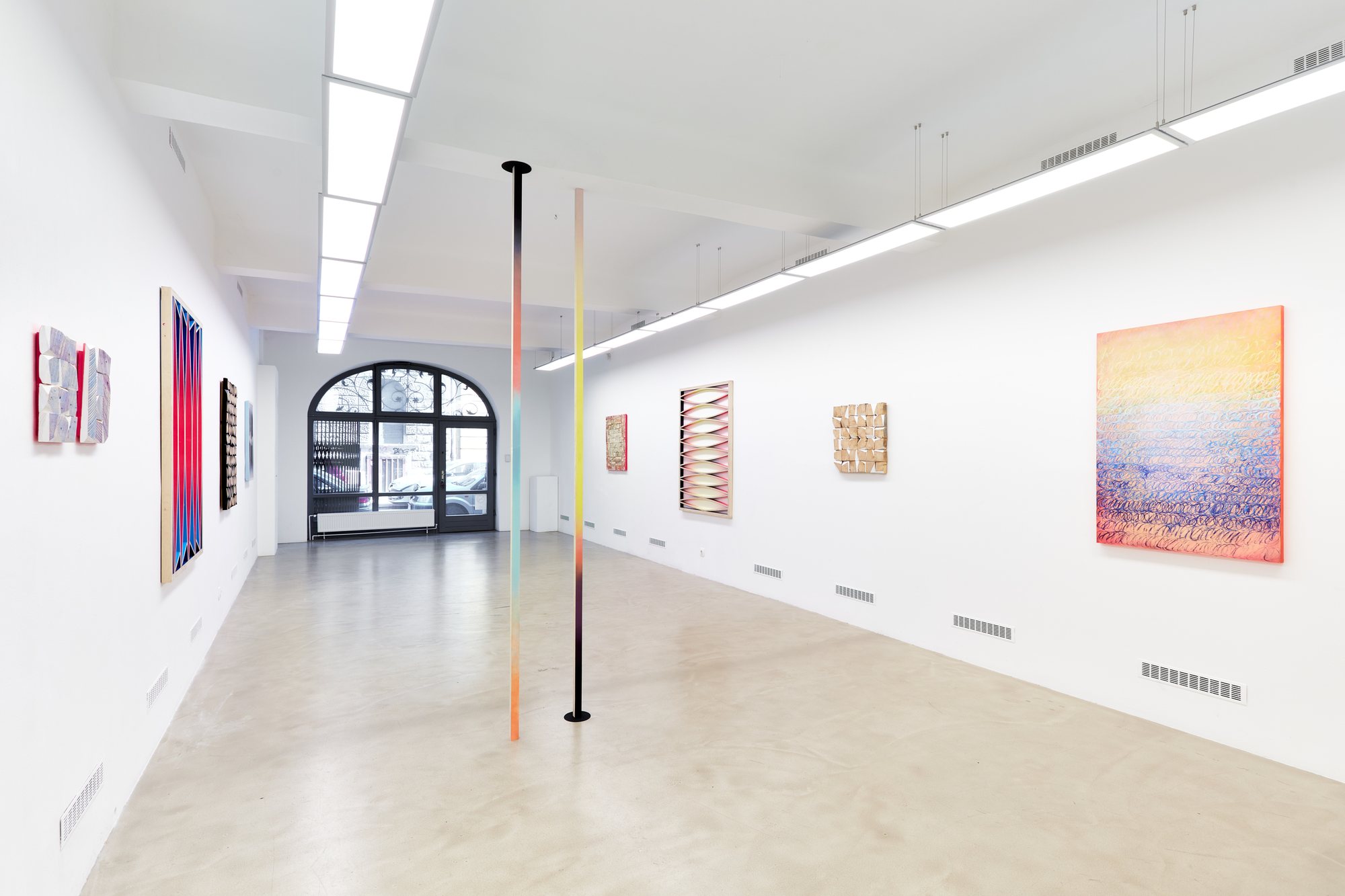
Working today in Budapest, he constructs his pieces from plywood and wood, cut, assembled and finished with acrylic gradients that recall the sky and shifting light. Here he talks about beginning with the material in hand, the black work he made in a time of grief, and a recent residency in a steel factory that left him, as he puts it, with more questions than answers.
Was geometry always your language, or did you arrive at it?
My arrival at geometry was quite unexpected. For a long time, I considered myself a figurative painter, having learned the traditional processes of painting with oil on canvas. Then, rather abruptly, my whole mindset shifted. It wasn't a gradual transition or a natural progression from one style into another. It was a pretty drastic change in direction. What I remember most about that moment wasn't uncertainty or a sense of leaving something behind, but excitement and wonder. I was suddenly walking into an entirely new visual territory, fascinated by the possibilities of structure and abstraction.
At the same time, my thinking about materials began to change. I started seeing wood not simply as a surface to work on, but as a material in its own right: a source of form, structure, and possibility. What I didn't realize at the time was that this visual language wasn't entirely new to me. In many ways, it had always been there, somewhere beneath the surface, waiting to find its way into my work. Looking back, it feels less like I discovered something foreign and more like I recognized something that had been inside me all along.
Was art part of your world growing up, or a path you found on your own, and who first understood it?
I always loved drawing as a kid. I began taking art a little more seriously toward the end of high school, and that interest really took shape when I got to college. But honestly, the arts weren't particularly present or emphasized in the environment I grew up in. I wouldn't say there was someone who necessarily recognized it early on or encouraged me to pursue an art career.
I think the common denominator throughout all those years is that making art has always been a way for me to process my life. It has been a means of working through things, making sense of experiences, and understanding the world around me. In that sense, I don't know if art was ever something I consciously chose as a path. It was simply something I kept returning to, something that gave me a way to engage with the world and with myself.
If you placed one of your earliest works beside a recent one, what would we see change, and what has stubbornly stayed the same?
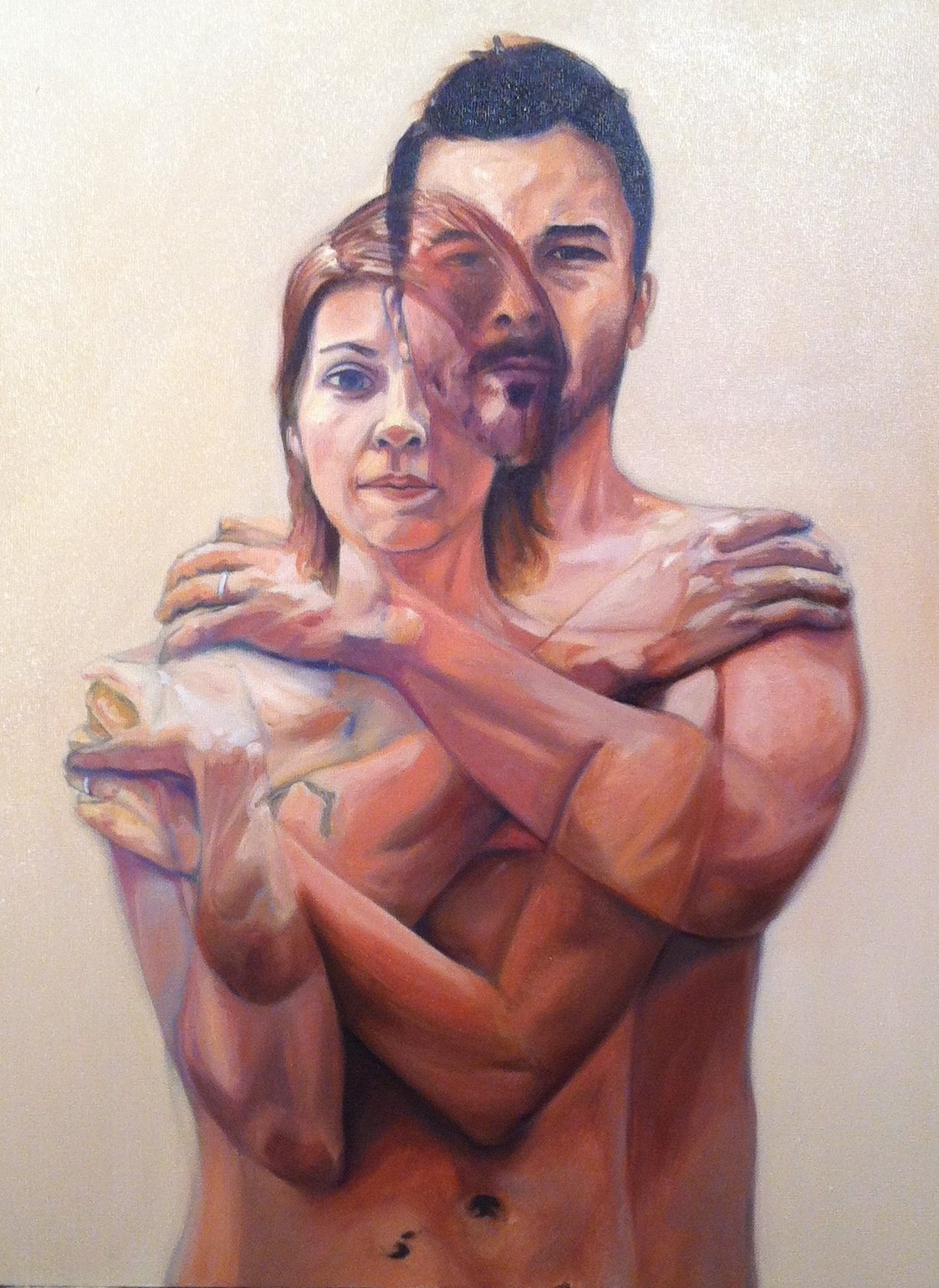
The difference would be pretty drastic, almost comical in some ways. If you placed one of my earliest works next to something I'm making today, you might have a hard time believing they came from the same artist. I went from spending years learning the discipline of realistic figuration, studying anatomy, light, shadow, and traditional oil painting techniques, to working almost entirely in abstraction, geometry, and constructed forms. Visually, the two worlds are quite far apart.
But I think what has stubbornly remained the same is my desire to find meaning in the work. I've always wanted to create something that reaches beyond the visual, something that resonates on a deeper, more human level. I want the work to have a presence that can be felt, perhaps even reaching something of the soul. The language and materials have changed dramatically, but that aspiration has remained at the center of what I do.

Then. One Flesh, 2013 · Oil on panel · 24 × 18 in

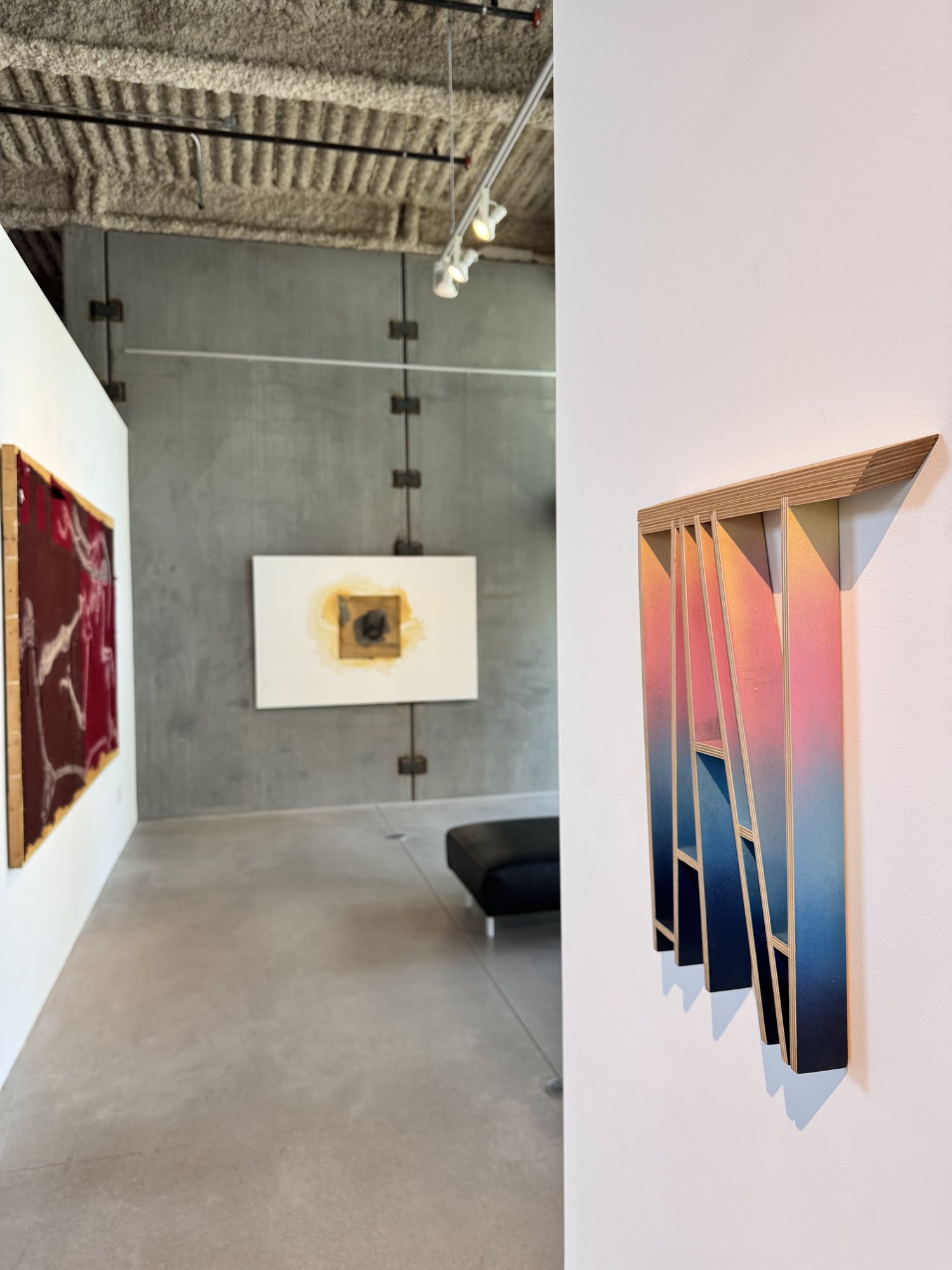
Now. Wind That Cuts So Deep, 2026 · Wood · 30 × 9 × 60 cm
“Even within something that feels overwhelmingly dark, there can still be a glimmer of light.”
Anthony VasquezWhere does a piece begin: a rule, a colour, an accident?
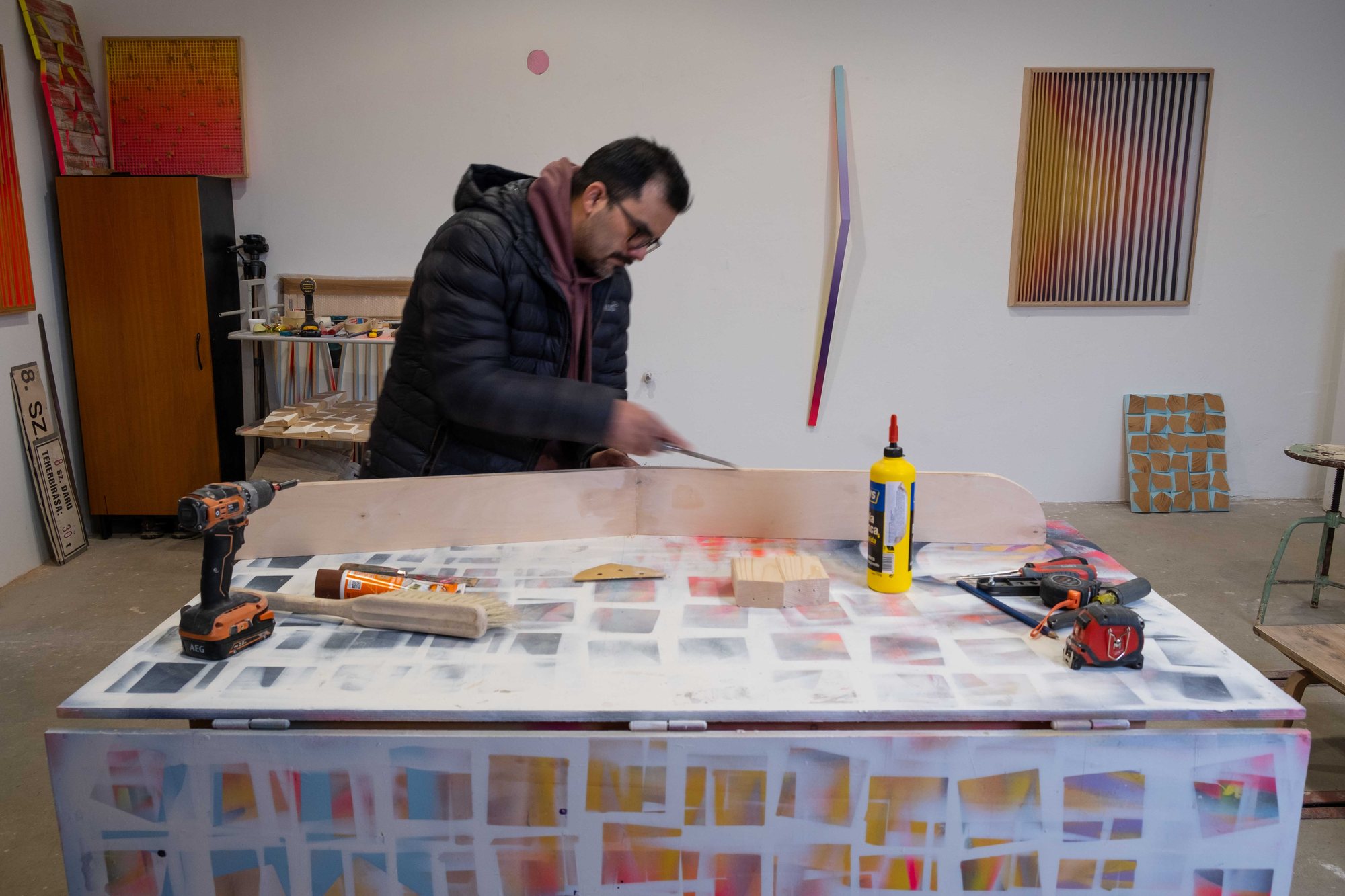
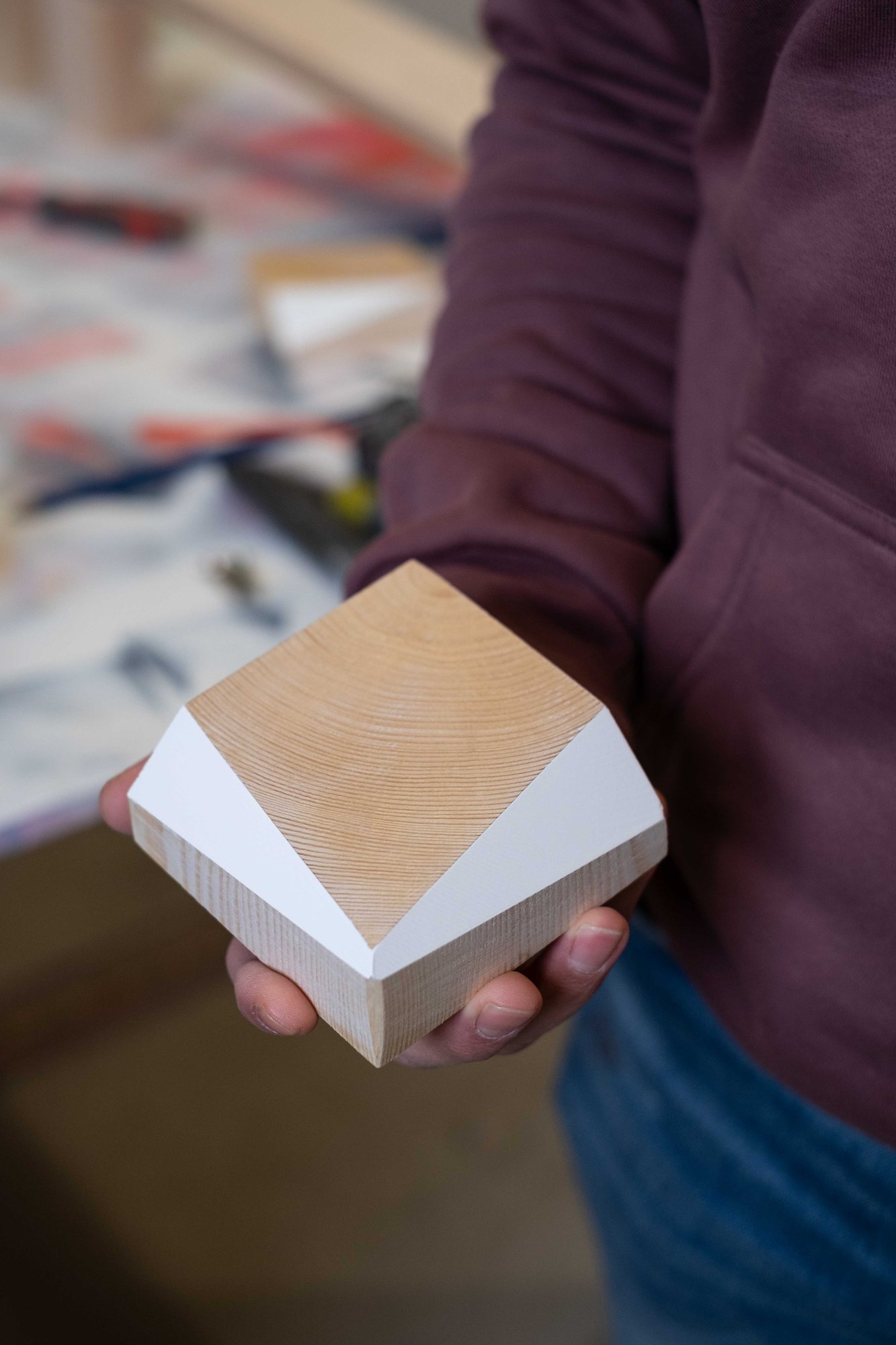
For me, a piece usually begins with the material in hand. I need to physically engage with what I'm working with. There's something about that sensory experience that allows my mind to connect with a sense of play and curiosity. From there, I begin to imagine new forms, consider their possibilities, and think about how they might be constructed.
Of course, there's always something carried over from previous works: a lingering idea, a structural solution, or an unanswered question that finds its way into the next piece. But I find my best creative flow often comes from working with a limited source of material. I like having those constraints. Holding the material, understanding its properties, and beginning to visualize just how far I can push its limits is where the excitement really begins.
Colour, structure, surface: which one leads, and which one fights back?
Probably structure comes first. I'm naturally drawn to the act of building something, figuring out how individual pieces of wood can come together to create a form that has its own presence. I tend to think through construction first, almost allowing the structure to reveal what the work wants to become.
But color and surface are never just finishing touches for me. They have a very particular relationship with the structure. Color can shift the entire feeling of a piece, while the raw surface of the wood brings its own warmth, texture, and character. I'm constantly negotiating between these elements. I guess what interests me most is when they begin to work together in a way that creates something I couldn't have anticipated at the beginning.
How do you know when a work is finished, and not one move too late?
Because of the nature of my process, sometimes I genuinely don't know whether a piece is working until I put it up on the wall. There's a certain point where I need to step away from the act of making and experience the work as an object, from a different perspective. Only then can I begin to understand whether the balance, proportions, and relationships between its elements are really working.
Maybe I could introduce more two-dimensional planning before beginning a piece, and perhaps there are advantages to that. But I haven't quite embraced that approach. I feel it might take away something I really value in my process: the element of surprise, discovery, and playfulness that comes from working directly with the material. I like not knowing exactly where something is going to lead. Sometimes the work has to reveal itself to me along the way. And maybe that's also how I know when it's finished: when I reach a point where I no longer feel the need to intervene.


Walk us through an ordinary day in the studio.
I try to get to the studio fairly early in the morning. I really enjoy those first few moments before the day gets going. I'll make a coffee, spend some time praying or meditating, or simply sit in silence for a bit.
If there's something left unfinished from the previous day, I'll usually pick up where I left off. If I'm starting something new, I like to spend a little time cleaning and reorganizing my workspace, almost as if I'm clearing the stage for whatever might happen next. Music is always playing. I can go through different genres, sometimes listening to the same style or sound for weeks until something else catches my attention.
My studio is close to a handful of other artists; sometimes the day moves between periods of focused work and moments of conversation. Lunch is almost always shared with at least one other person around one o'clock, followed by coffee and an occasional studio visit to another artist's space to see what they're making, exchange ideas, or simply catch up.
For the past few years, I've tried to make a point of heading home around five. I really value that transition from studio life to family life and want to be present when I'm home. Of course, there are openings, exhibitions, and colleagues to visit and celebrate, and I genuinely enjoy being part of that. My days are a mixture of solitude, creating, conversation, and community. I wouldn't want to lose any of those elements.
How a work comes together

01

02

03

04
Which project or exhibition tested you most, and what did it leave you with?
One of the things that has tested me most recently is trying to find a meaningful connection between metal and my established wood practice. I've been pursuing this relationship for some time, but haven't quite found the language or solution I've been looking for. Recently, I was invited to take part in a two-week residency at a steel factory, which gave me an opportunity to immerse myself in the material and its possibilities.
It's been challenging, to say the least. Working with a completely different material means learning its behaviors, understanding its limitations, and rethinking some of the instincts I've developed through years of working with wood. It's difficult to enter a new material with the same level of intuition you might have with one you've known for a long time. But I think that's also where the value lies. It puts me back in a position of curiosity and experimentation, where I have to learn, make mistakes, and discover new possibilities. I left with more questions than answers, but perhaps that's exactly what I needed.


Tell us about a dead end, something that genuinely didn't work.
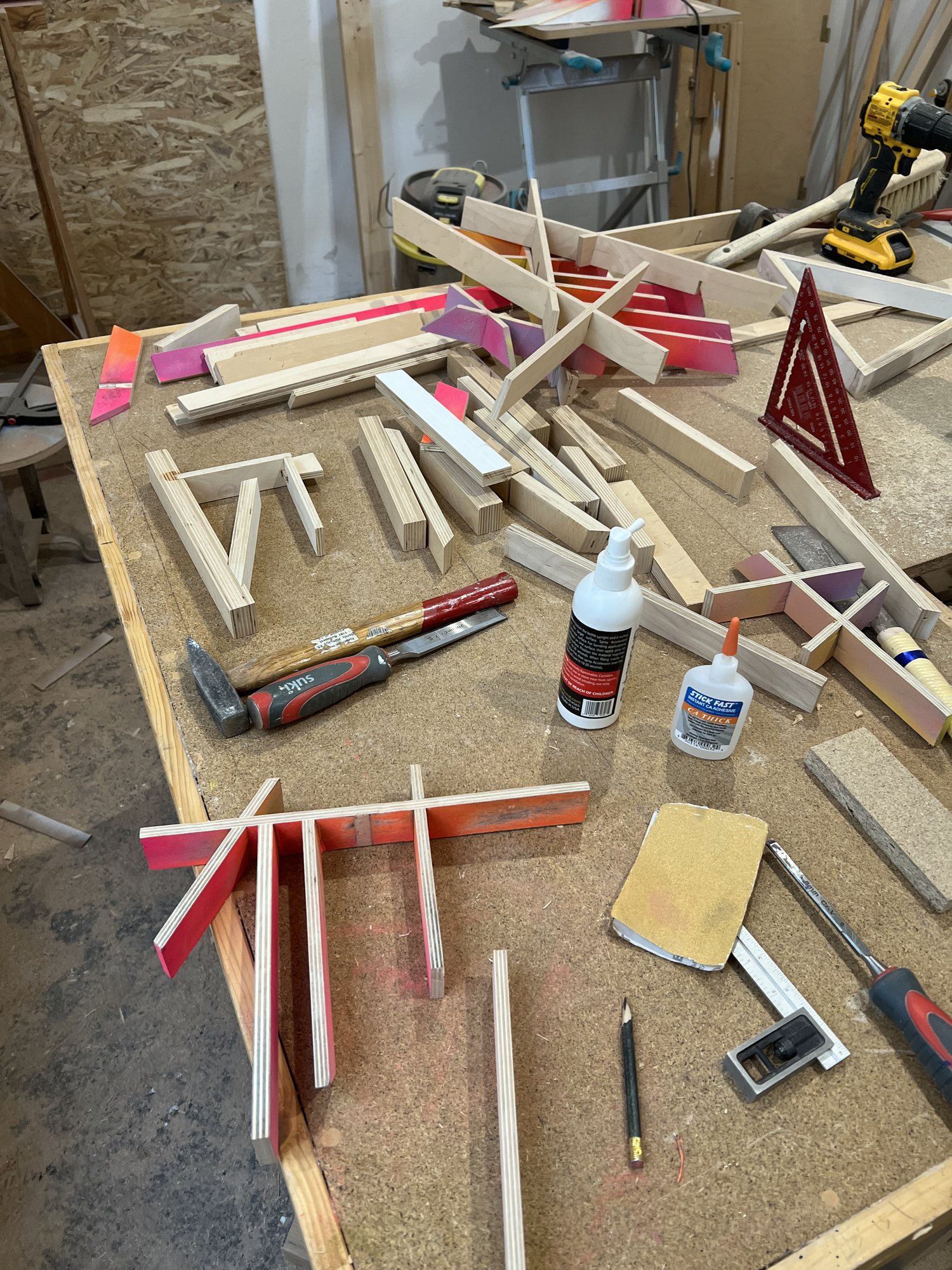
Sometimes I try to give new life to leftover pieces from previous works. I remember having quite a collection of triangular plywood forms that had already been cut and painted. I started experimenting with building them into something that could sit somewhere between a wall-based work and a three-dimensional object. On paper, there seemed to be a lot of potential there, and I kept trying different arrangements and configurations.
But something never quite felt right. Looking back, I think I was trying to force the material into becoming something simply because I was more interested in finding a use for these pieces than in allowing a new work to develop naturally from them. Even now, I haven't really found what I was looking for. I suppose it's a good reminder that just because something has potential doesn't mean it necessarily needs to become something. Sometimes you have to recognize when an idea simply isn't going anywhere. But still I do keep them in the corner of my eye, hoping one day I find the way.
One work, up close
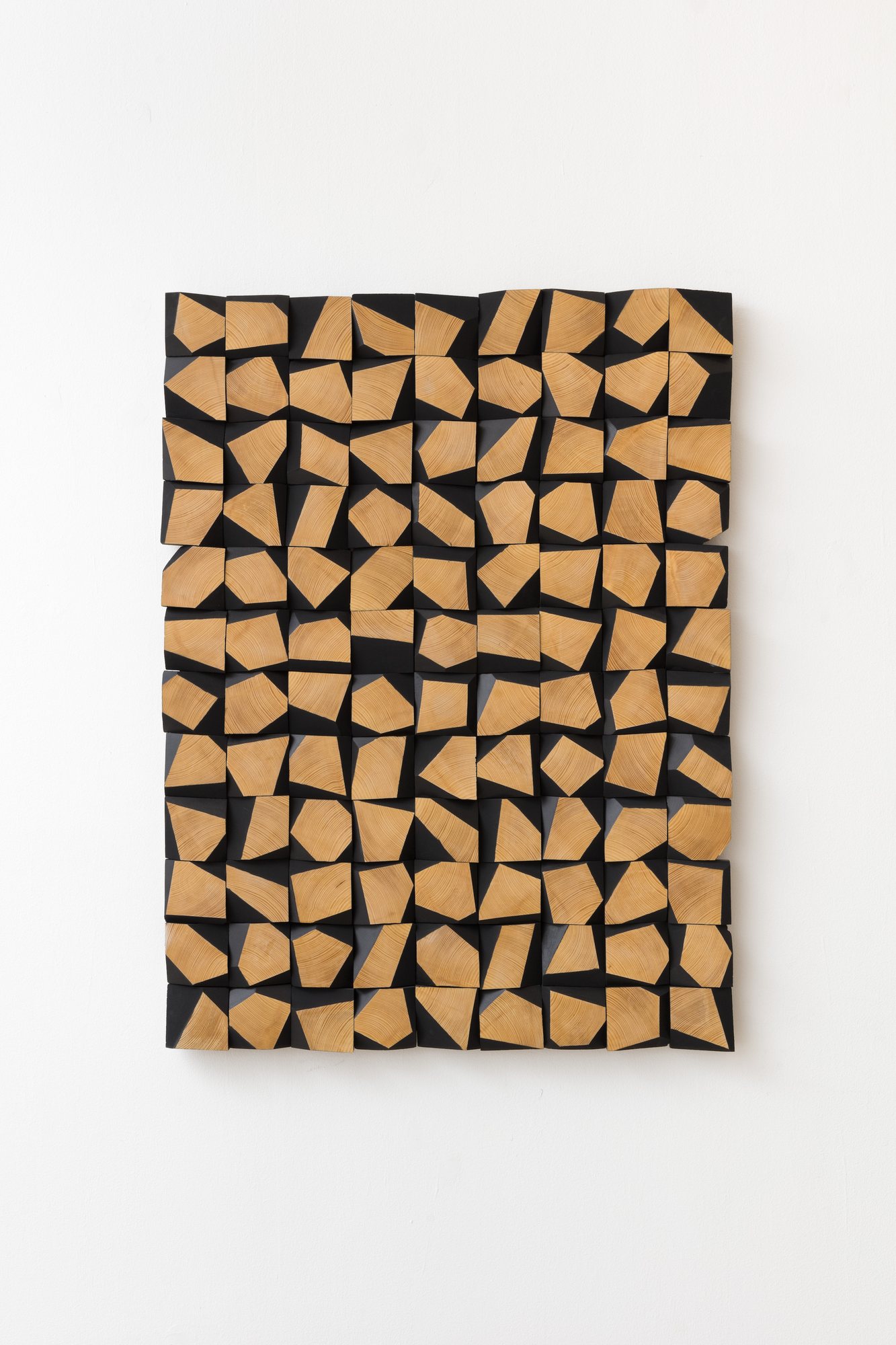
“Some Days Are Easier Than Others”
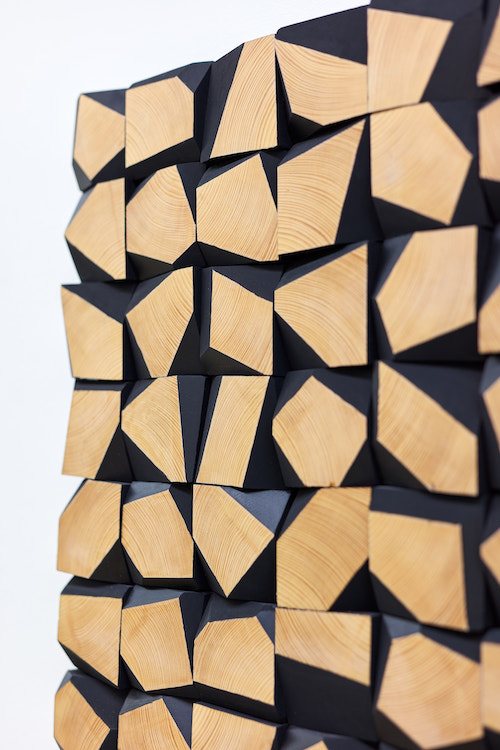
I made this piece during a period of considerable grief and sorrow, and it became a very personal work. It was the first abstract work of mine that I could directly connect to a particular feeling or emotional experience. Although the work is primarily black, I used two different finishes: one completely matte and the other semi-gloss. That subtle contrast became quite important to me. Even within something that feels overwhelmingly dark, there can still be a glimmer of light, something that catches your attention and offers a sense of hope.
I think I was chasing a way to give form to an emotion that was difficult to express otherwise. I didn't want to illustrate grief, but rather explore what it might feel like through a balance of natural wood grain, color, and light in a deeply human way.


Some Days Are Easier Than Others, 2022 · Acrylic and wood · 110 × 82 × 4 cm
For someone standing in front of your work for the first time, what should they look for that they might miss?
I would really like people to find a place of rest or peace in my work. I hope there's a natural pull toward a simple kind of beauty, perhaps something that reminds them of nature or evokes a familiar feeling. I think the wood itself has a certain gentleness and warmth to it, and the color gradients often carry references to the sky, to shifts in light, and to the subtle transitions you experience in nature.
I don't necessarily want people to feel they need to figure something out. I'd rather they spend a little time with the work, allow themselves to slow down, and find something in it that resonates with them personally. If the work can offer even a small moment of stillness in an otherwise busy world, I think that's something meaningful.
Is there one work you'd point someone to first, and why that one?
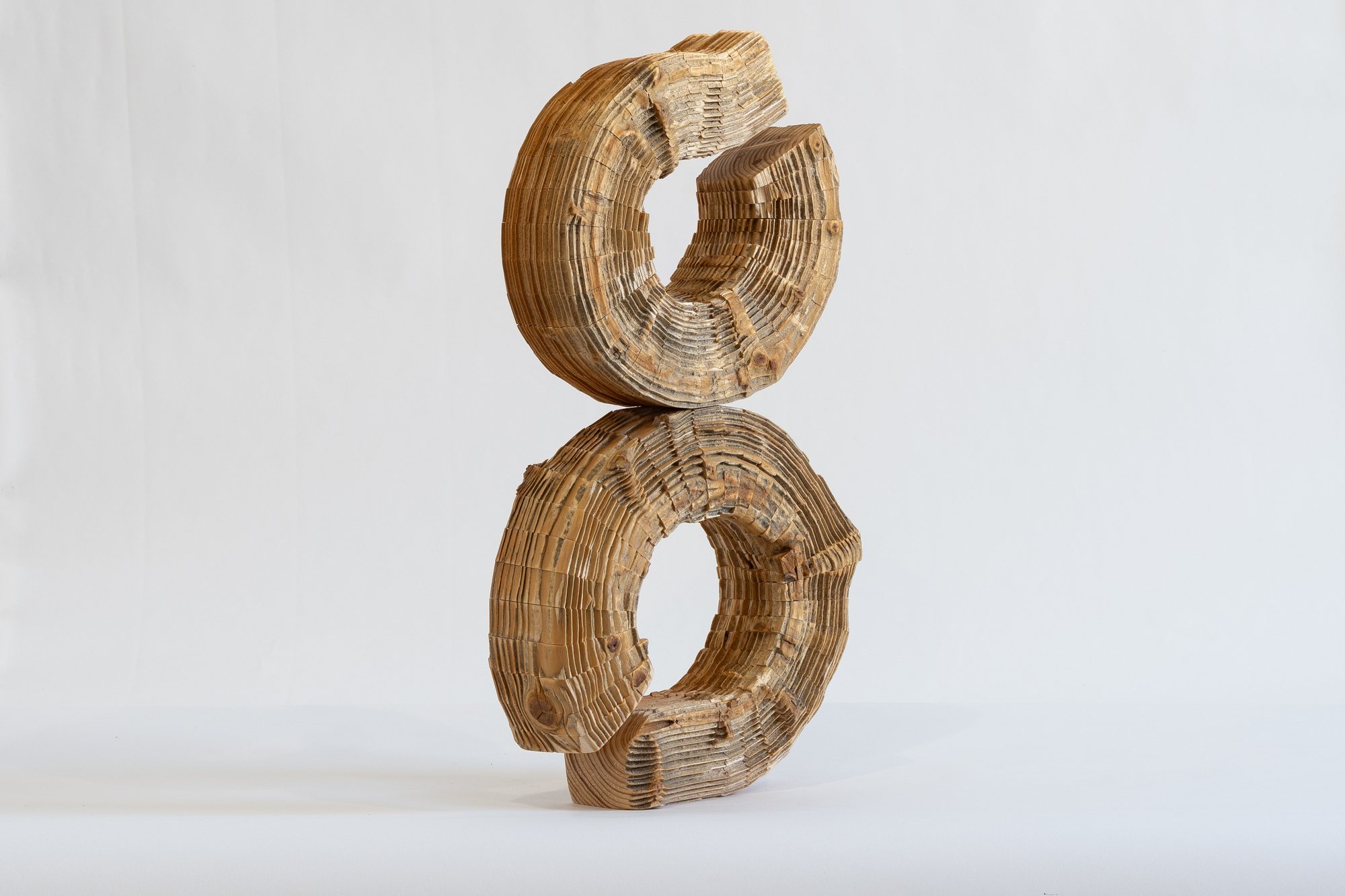
Probably my most recent work. It feels like a new beginning for me. I was really excited to find a way to express the material I encountered at the steel factory, taking something rooted in an industrial process and giving it an entirely new form and identity. I'm particularly drawn to its texture, which feels almost archaic or ancient, as if the object had been unearthed rather than made. I love that contrast, and I think it opens up an exciting new direction in my practice.
What are you chasing now that you haven't caught yet?
I suppose my biggest unresolved relationship at the moment is with the color green! We just haven't quite figured each other out yet. I've tried bringing it into my work a few times, but it never seems to find its place. Maybe one day we'll get there!
More seriously, I'm always chasing that balance between material and color, trying to find the point where they complement and challenge one another without competing for attention. I'm also eager to find a way to bring wood and steel together in a single work, where both materials retain their own character but contribute to a shared visual language. I want to find a relationship between them that feels natural rather than forced. I feel like I'm getting closer, but there's still a lot to discover, and that's part of what keeps me excited about making work.
Selected works
Tap any work to view it larger.
Where to see the work
Art Matters 18 · Galerie Biesenbach
Online group show · 7–15 November 2026
Subscribe to the Journal for new conversations from the world of geometric abstraction.
Subscribe →