Artist Spotlight

Spotlight No. 01  ·  September 2026  ·  Berlin

Kai “Raws” Imhof

Based in

Berlin, Germany

Medium

Canvas & Murals

Born

1990

Kai "Raws" Imhof came up the way few gallery abstractionists do, not through an academy but through the street. He was tagging walls around Berlin as a teenager in the mid-2000s, and it was only later, by way of graphic design and a close reading of Kandinsky, the Bauhaus and Gerhard Richter, that the letters began to fall away. What remained was what had sat under the graffiti all along: line, rhythm, colour, and the pull between order and chaos.

His recent Chaos paintings live on that tension. Loose pencil constructions get overrun by an exact system of lines, light and shadow, until intention and accident become hard to tell apart. Here he talks us through where a piece begins, the collector commission that turned into a legal dispute, and the question he keeps coming back to: where, exactly, does art part ways with design?
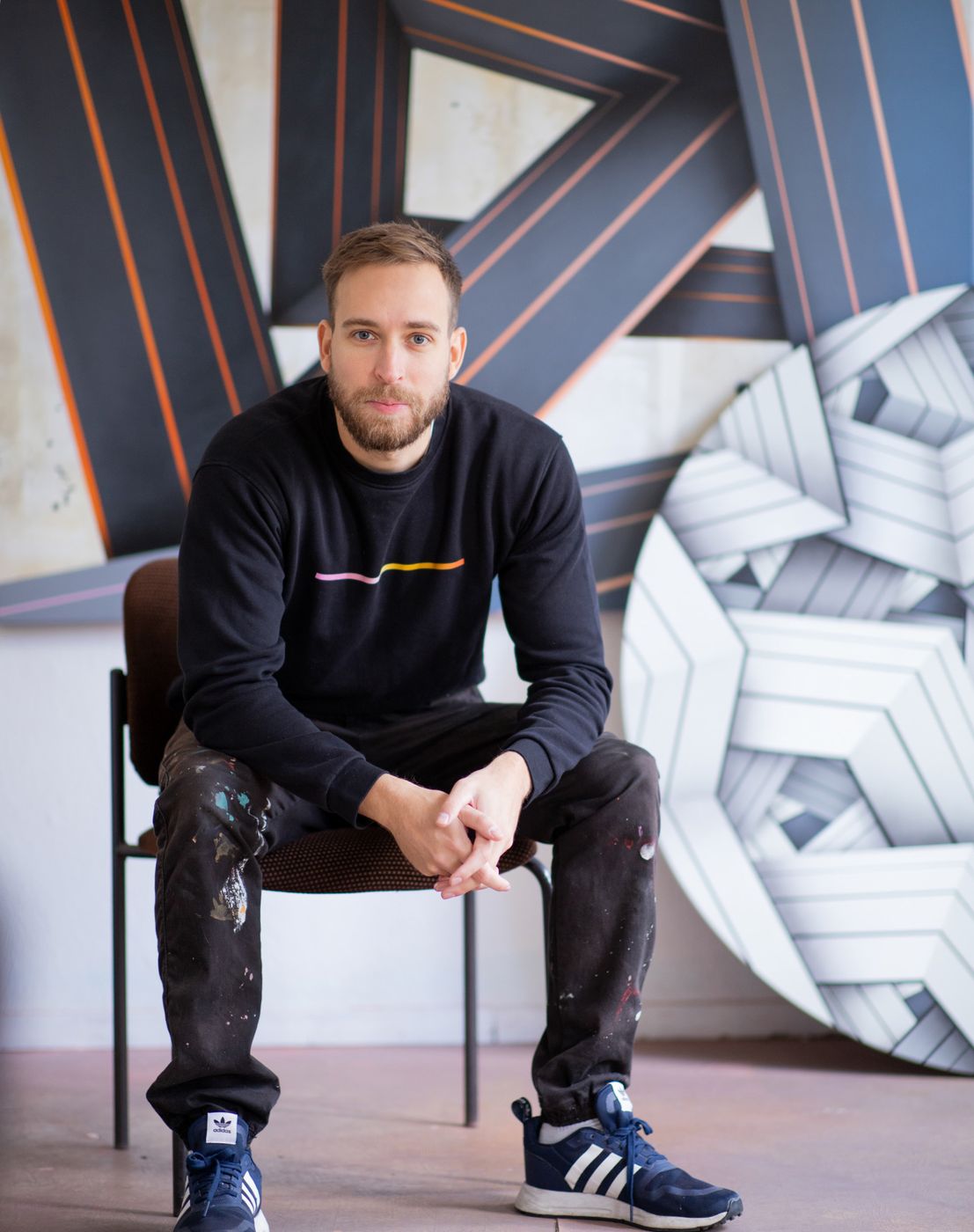
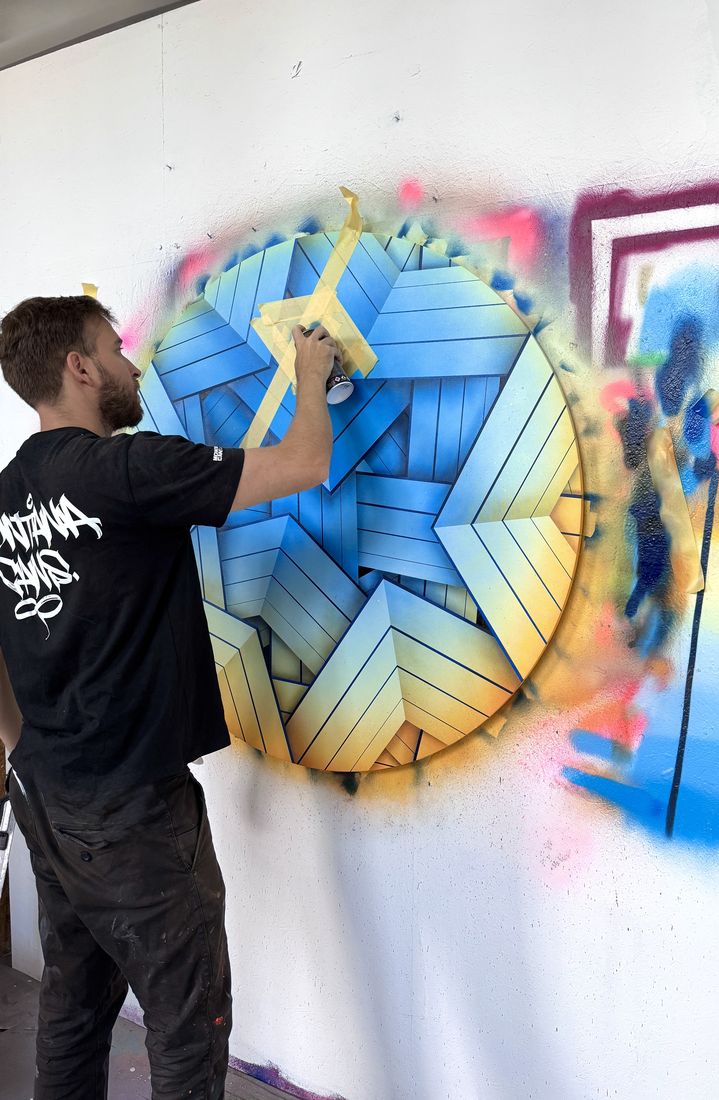
Raws in the studio
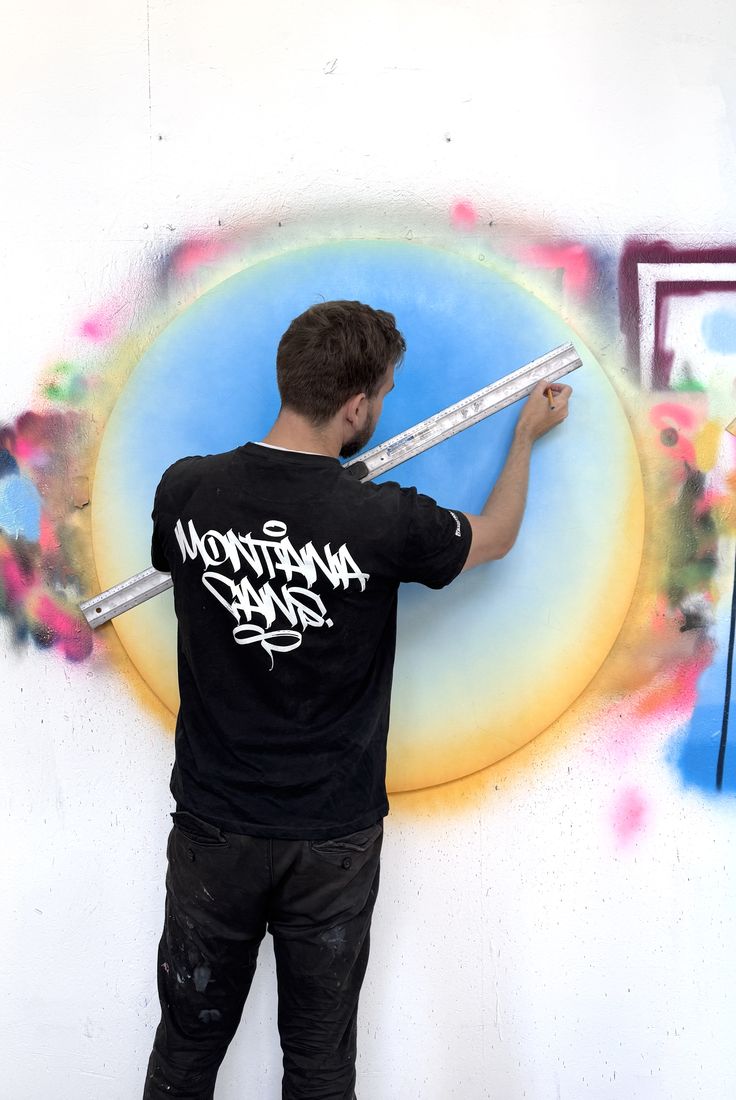
Raws in the studio, Berlin. Photo: Birkenwald.
I.The path to geometry

Was geometry always your language, or did you arrive at it?

I think I slowly arrived at geometry over the years rather than consciously choosing it from the beginning. My roots are in classic graffiti, where line, form, rhythm and composition were always fundamental, even if I didn't think about them in those terms at the time. As my work developed, I gradually stripped away the typographical elements of graffiti and became increasingly interested in what remained: lines, shapes, color and the relationships between them.

Geometry gave me a way to create structure without eliminating the sense of movement, roughness of graffiti and unpredictability that has always been important to me. In many ways, my work is about finding a balance between chaos and harmony allowing elements to collide, overlap and create tension, while still searching for a composition that feels coherent.

So I wouldn't say geometry was always my language. It became my language through the process of reducing my work to the essential elements of urban aesthetics.

Was art part of your world growing up, or a path you found on your own, and who first understood it?

Art wasn't really part of my world growing up as a kid. There was no particular artistic background in my family, so I found my way into it on my own. It started with the graffiti when I was a teenager. That was really my first doorway into creativity and art. At the time, I didn't necessarily think of it as becoming an artist, I was simply fascinated by the freedom of creating something myself.

Later, during my final years of school, I had an art teacher who saw something in me and was very supportive. She recognized my potential at a time when I probably didn't fully recognize it myself. That encouragement played an important role in my decision to study graphic design.

Studying design also opened up a much broader perspective for me. I became more deeply interested in art history and in the question of what art actually is and what it can be. Looking back, I think that progression from graffiti, to design, to a deeper engagement with art shaped the way I approach my work today.

If you placed one of your earliest works beside a recent one, what would we see change, and what has stubbornly stayed the same?

If I placed an early Neograffism work (2020) next to one of my recent Chaos paintings, I think the biggest change would be where the focus lies.

In my earlier work, I was interested in dissolving recognizable elements into shapes and color. I was taking forms that had a certain connection to graffiti and reducing them until they became more abstract, almost treating the visual as a field of color and flat shapes.

Today, the line has become much more central to my work. I see it as one of the most elementary gestures in art, something minimalistic, but capable of carrying movement, tension, rhythm and emotion. In the Chaos series, I'm much more interested in what lines can express and how it can interact with other lines and forms to create depth and emotion.

What has stayed the same is the idea of reduction. I'm still trying to strip things down to their essential visual elements and explore how much can be expressed with very little. The vocabulary has evolved, but that search for the essence of urban aesthetics has remained.

Then

Then. Vision Art Festival, Switzerland · 2020

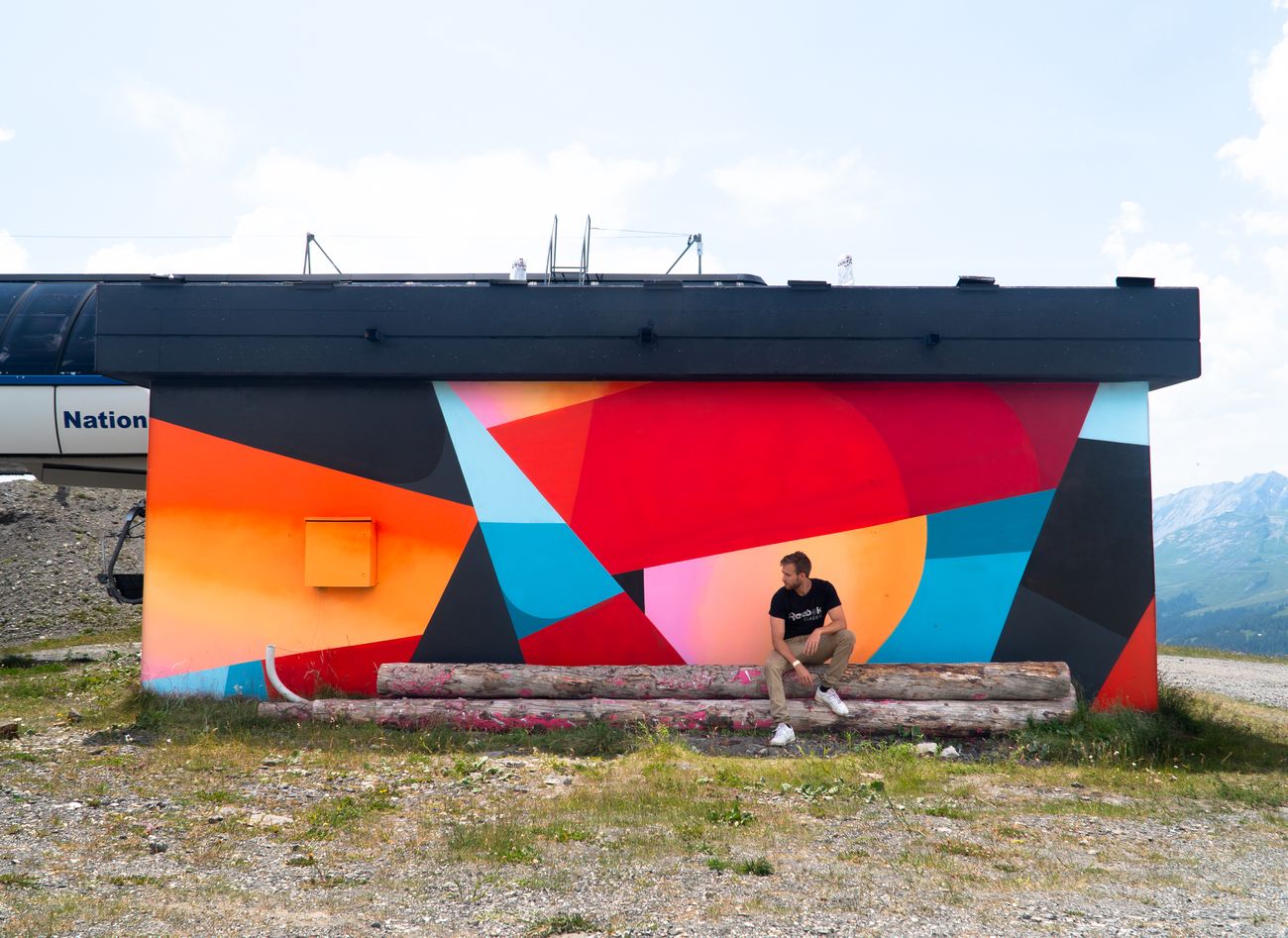
Now

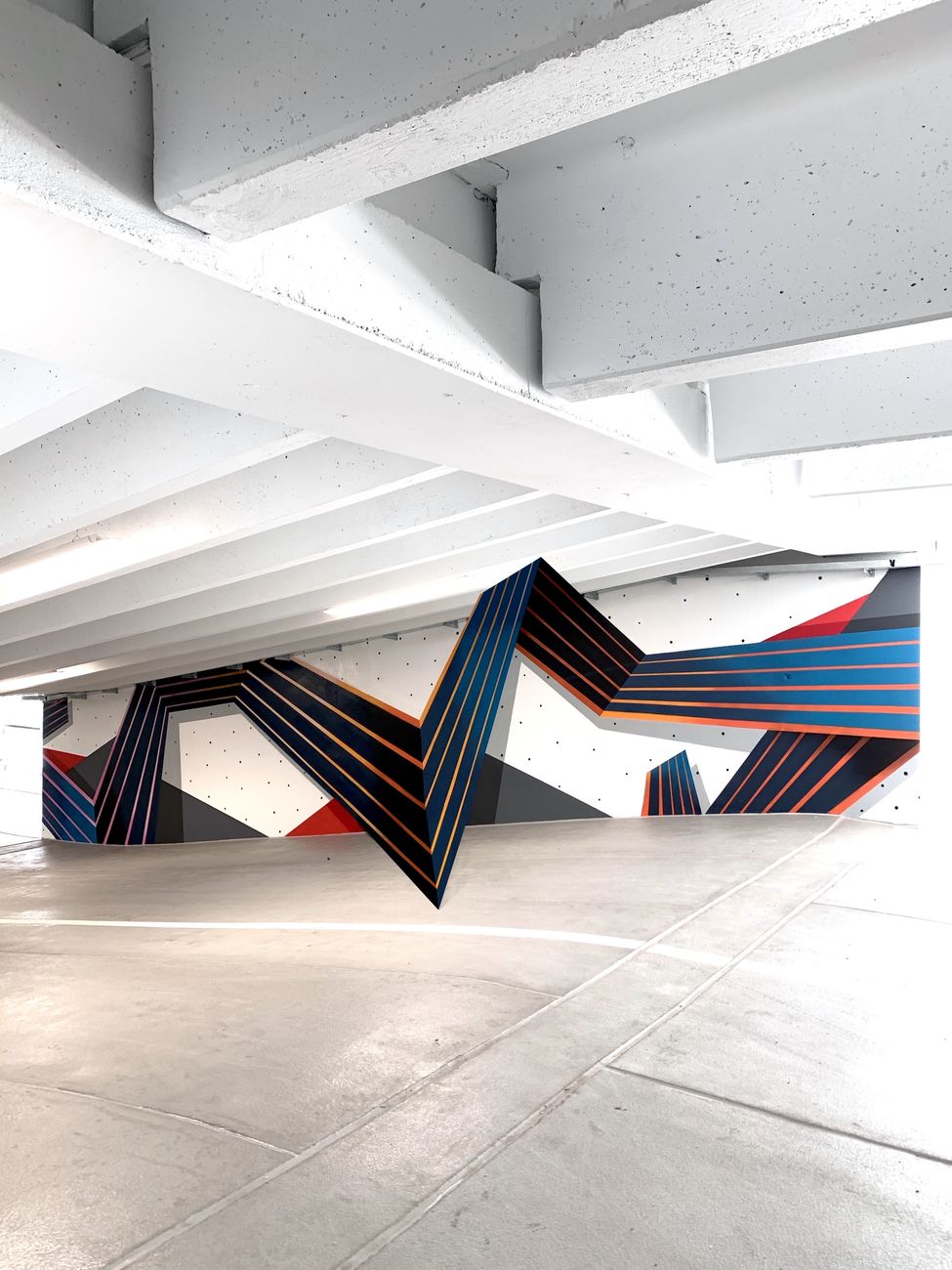
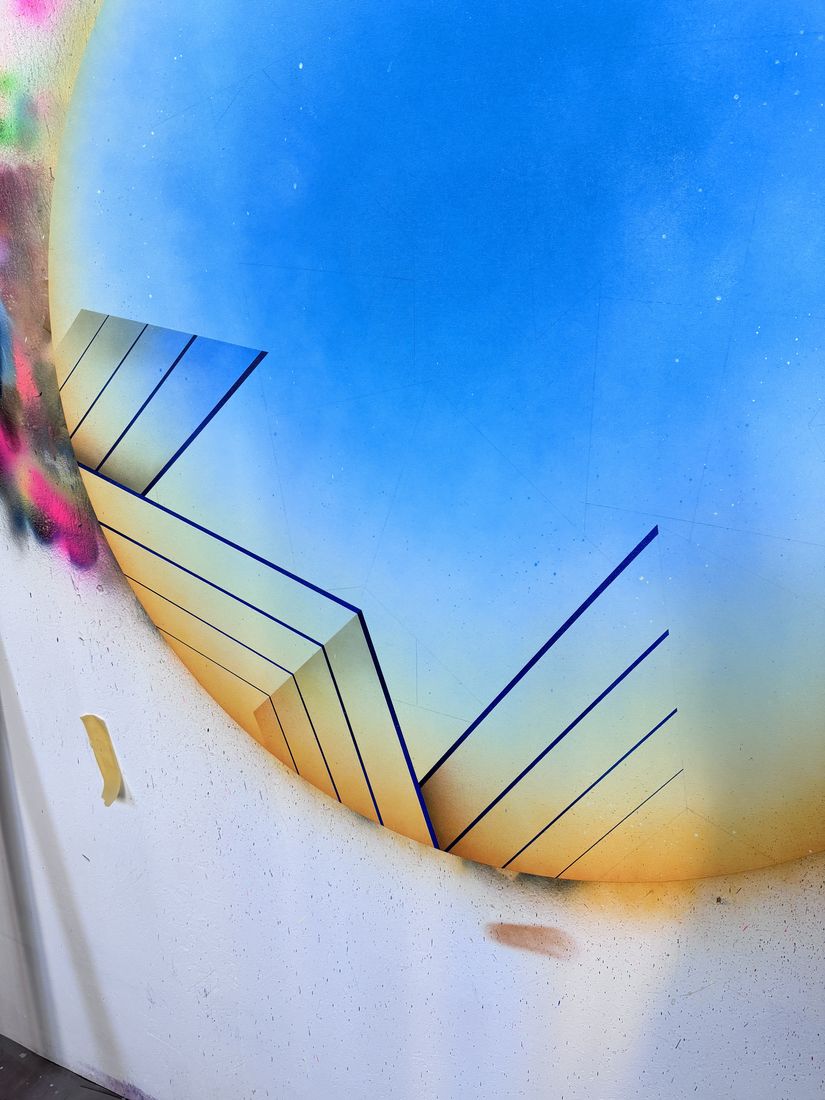
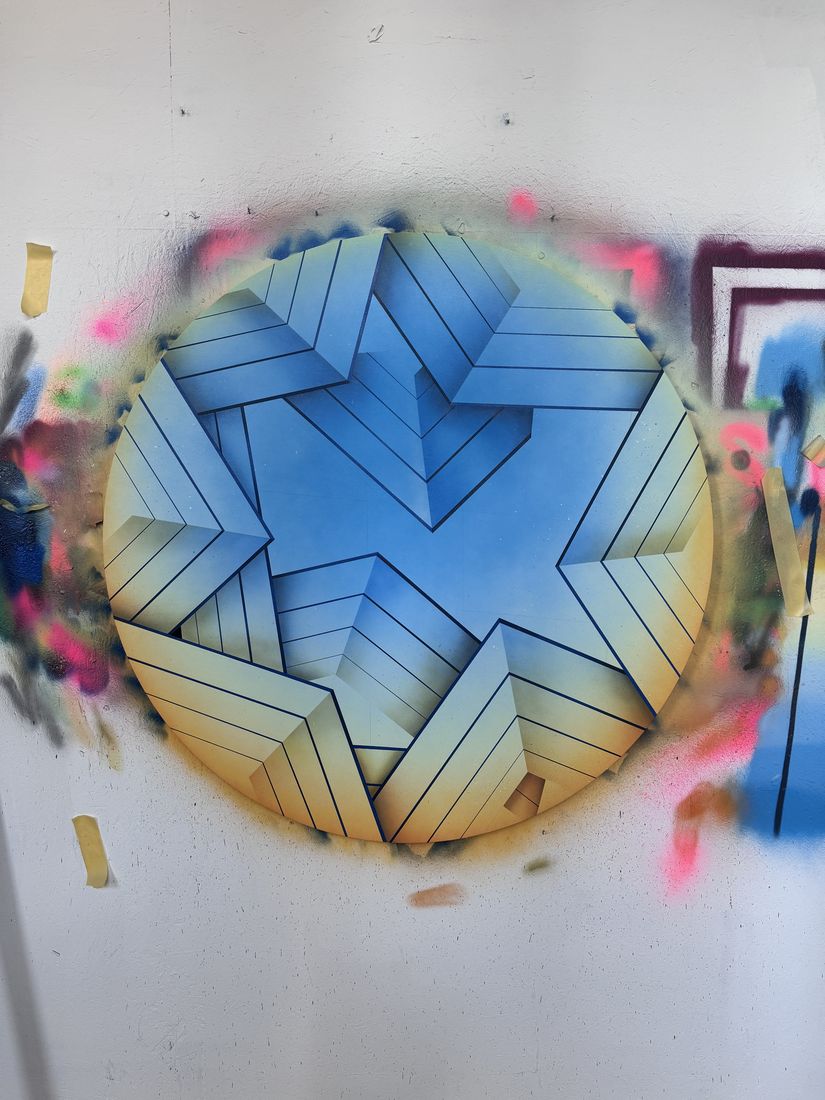
Now. Mural, spray paint on wall · 2022

“Knowing where to draw the line is just as important as knowing where to put one.”

Kai “Raws” Imhof
II.Inside the studio

Where does a piece begin: a rule, a colour, an accident?

A piece usually begins with a visual feeling I want to create. Before I even approach the canvas, I decide on the color world, the medium and the technique. Those choices establish a certain atmosphere that I want the painting to inhabit.

Once I start working on the canvas, I deliberately let go of that control. I begin with spontaneous pencil lines and constructions, building up a chaotic overall aesthetic. There is no sketch or predetermined composition. The decisions happen intuitively, one line responding to the previous one.

Once the pencil construction and the underlying color structure are in place, my approach becomes more technical. I start building the characteristic lines of my Chaos style, as well as light and shadow, with much more precision and control.

So the process moves from intention, to intuition and finally back to control. I think that tension between the spontaneous and the constructed is an essential part of the work.

Colour, structure, surface: which one leads, and which one fights back?

Color probably leads in the beginning. It is the first decision I make because it establishes the emotional and visual atmosphere of the piece. I choose a specific color world before I start working on the canvas, and from there I build the underlying structure.

But once the painting develops, structure starts to "fight back". The spontaneous pencil constructions create a kind of visual chaos and then I begin imposing my own system of lines, light and shadow onto it. At that point, I'm constantly negotiating between what is already there and what I want to add.

Surface is equally important to me, but in a different way. I'm interested in how the physical quality of the surface can create a contrast with the painted elements. Texture, materiality and traces of the process can interrupt the more precise, constructed aspects of the painting and give the work another layer of tension. That's why, I also integrate rough materials into my work.

So I wouldn't say one element permanently leads. The hierarchy keeps shifting throughout the process: color establishes the atmosphere, structure creates the framework and surface can challenge both. That friction is what keeps the process interesting to me.

How do you know when a work is finished, and not one move too late?

I think I know a work is finished more through feeling than through a fixed set of rules. There is a moment when I feel that the painting has reached a certain balance and that adding another element would take something away rather than add to it.

Sometimes I deliberately leave a painting alone for a few days before making that decision. When I come back to it with some distance, I can usually see more clearly whether it is actually finished or whether I'm simply attached to the process.

And not every painting makes it to the finish line. There are works that I abandon because, somewhere along the way, I realize that I've taken the painting in the wrong direction. I think that is also an important part of the process.

Studio
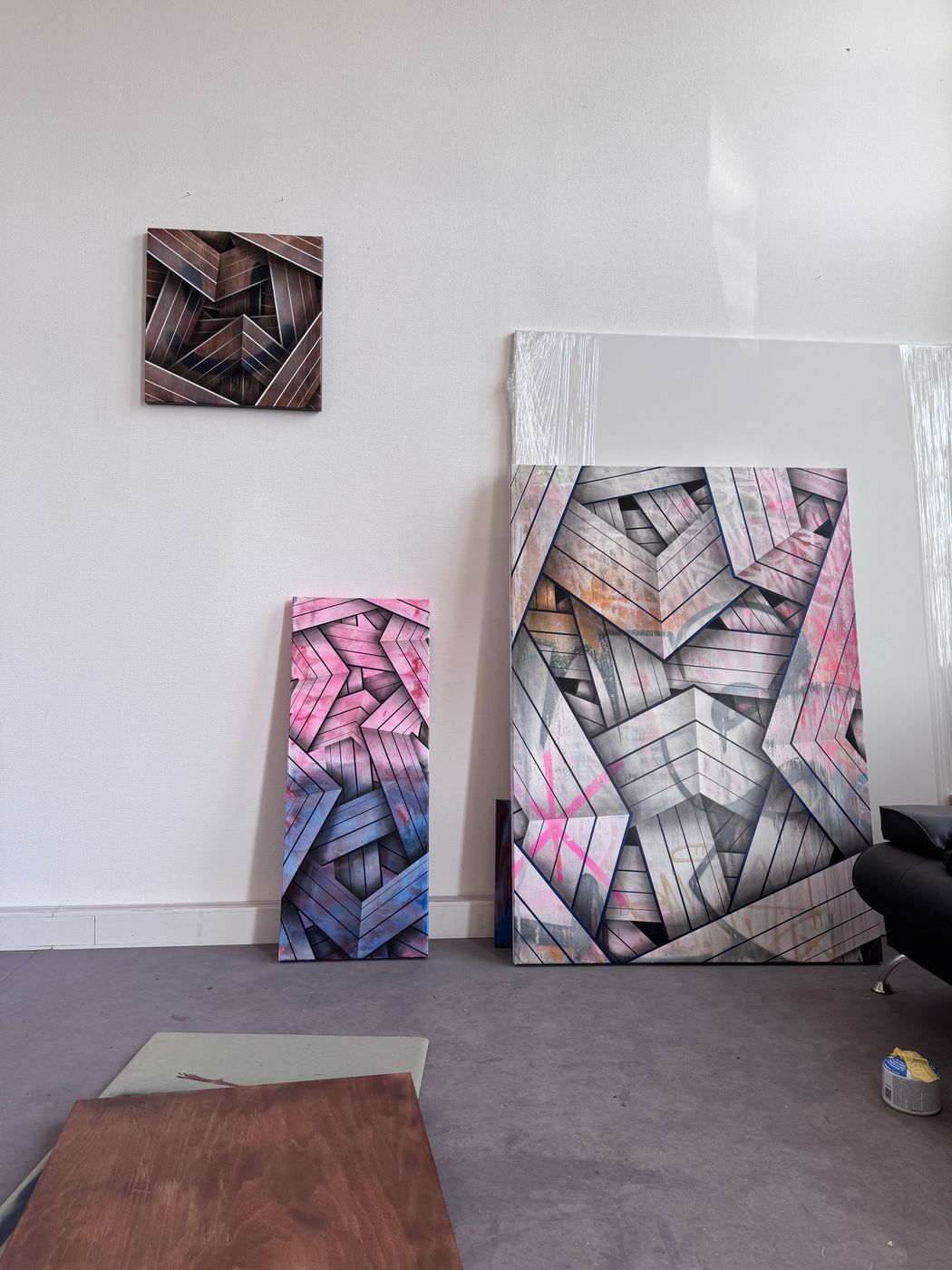
Studio detail

Walk us through an ordinary day in the studio.

An ordinary studio day usually starts around 11 a.m. I put on some music: it can be anything, but I tend to choose something atmospheric and relaxing. And then I work quite concentrated for four to six hours.

I usually work on one painting over the course of three to four days. Only about half of that time is actually spent actively painting. The rest is looking, thinking, stepping back, making decisions and sometimes simply letting the work develop before I intervene again.

I'm also quite conscious of documenting the process. I try to take photographs and videos while I work, both because the process itself has become an important part of my practice.

One thing I particularly love about my studio is that I have access to the river. I often take a break there, which gives me a completely different perspective after being immersed in a painting for hours. I think those moments away from the canvas are just as important as the time spent in front of it.

How a work comes together · “Coral”, 2026

01

02

03

04

III.A defining moment

Which project or exhibition tested you most, and what did it leave you with?

One of the projects that tested me most wasn't necessarily the most complex artistically. It was a commission where I painted a private collector's car. Everything was agreed upon contractually, including the technical limitations and the associated risks. Before starting, I repeatedly explained that working with spray paint on a car comes with certain technical uncertainties: for example overspray potentially reaching areas around seals and that it was impossible to guarantee a completely risk-free result.

Despite those conversations and the written agreements, I was faced with a legal claim from the owner afterwards. It was a difficult experience, especially because I had been very transparent about the limitations from the beginning.

It left me with an important lesson that goes beyond that particular project: contracts need to be extremely clear, but they can't replace trust between the people involved. I've become much more conscious of listening to my intuition when entering collaborations. If something feels wrong (and it felt with this guy) from the beginning, even if everything looks fine on paper, I've learned that it can be better to walk away.

For me, that experience ultimately reinforced something I also recognize in my paintings: knowing where to draw the line is just as important as knowing where to put one.

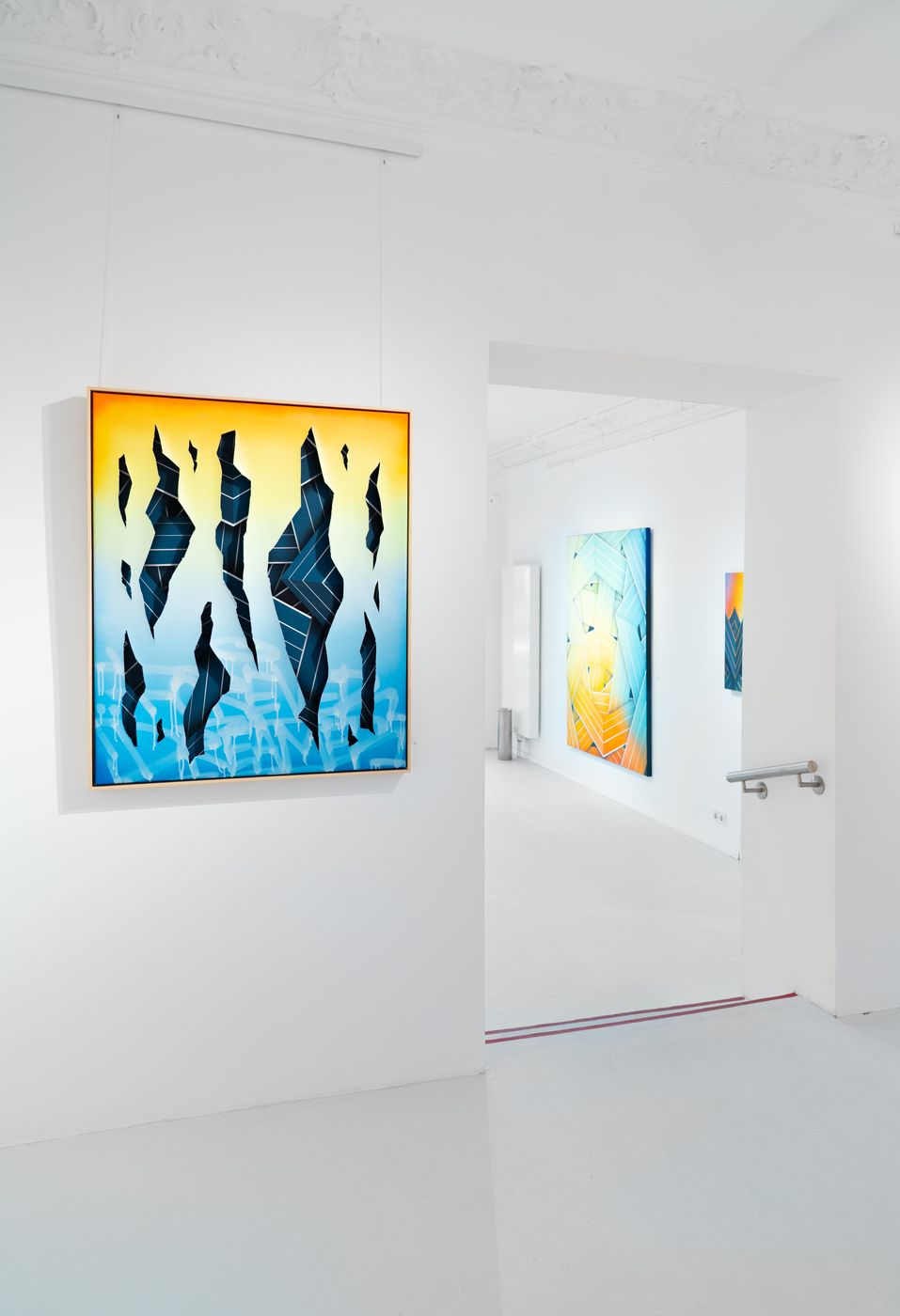
Installation view
Installation view

Tell us about a dead end, something that genuinely didn't work.

Dead ends are simply part of being an artist. Sometimes a painting becomes something completely different from what I originally intended or a promising project falls apart at the final stage. It can be frustrating, but I've learned to accept it as part of the process.

Sometimes there are shadows, sometimes the sun is shining. As long as you have more sun than shadows, I don't think there is a more beautiful profession.

One work, up close

“Past and Present”

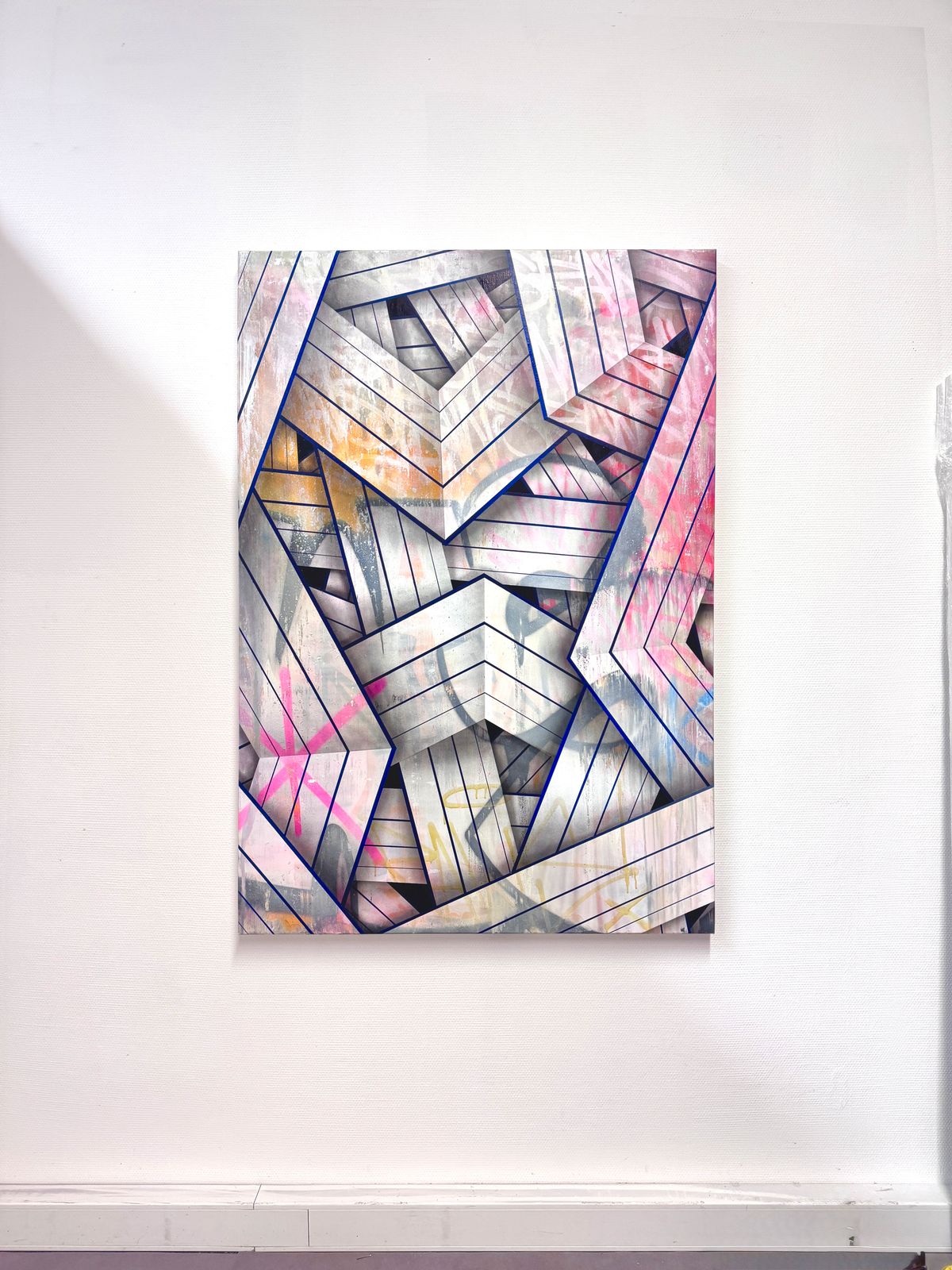
"Past and Present" is a particularly important work for me because it creates a direct connection between where I come from and where my work is today. After years of moving away from graffiti, I wanted to build a bridge back to it, but without simply repeating what I had done before.

I created the base layer of this painting from graffiti letters, working with spray paint, solvents, scratching and other forms of abrasion. I wanted to incorporate the idea of impermanence that has always been part of graffiti. On top of this, I built my current Chaos style, using my typical lines, light and shadow to create depth and structure.

For me, the work brings my artistic background and my present practice together in a very direct way. At the same time, it raises questions that I find increasingly interesting: What is graffiti? What is art? Where is the tipping point between the two and what ultimately determines the value of art?

The painting almost becomes a conversation between my past and my present, which is also where the title comes from.

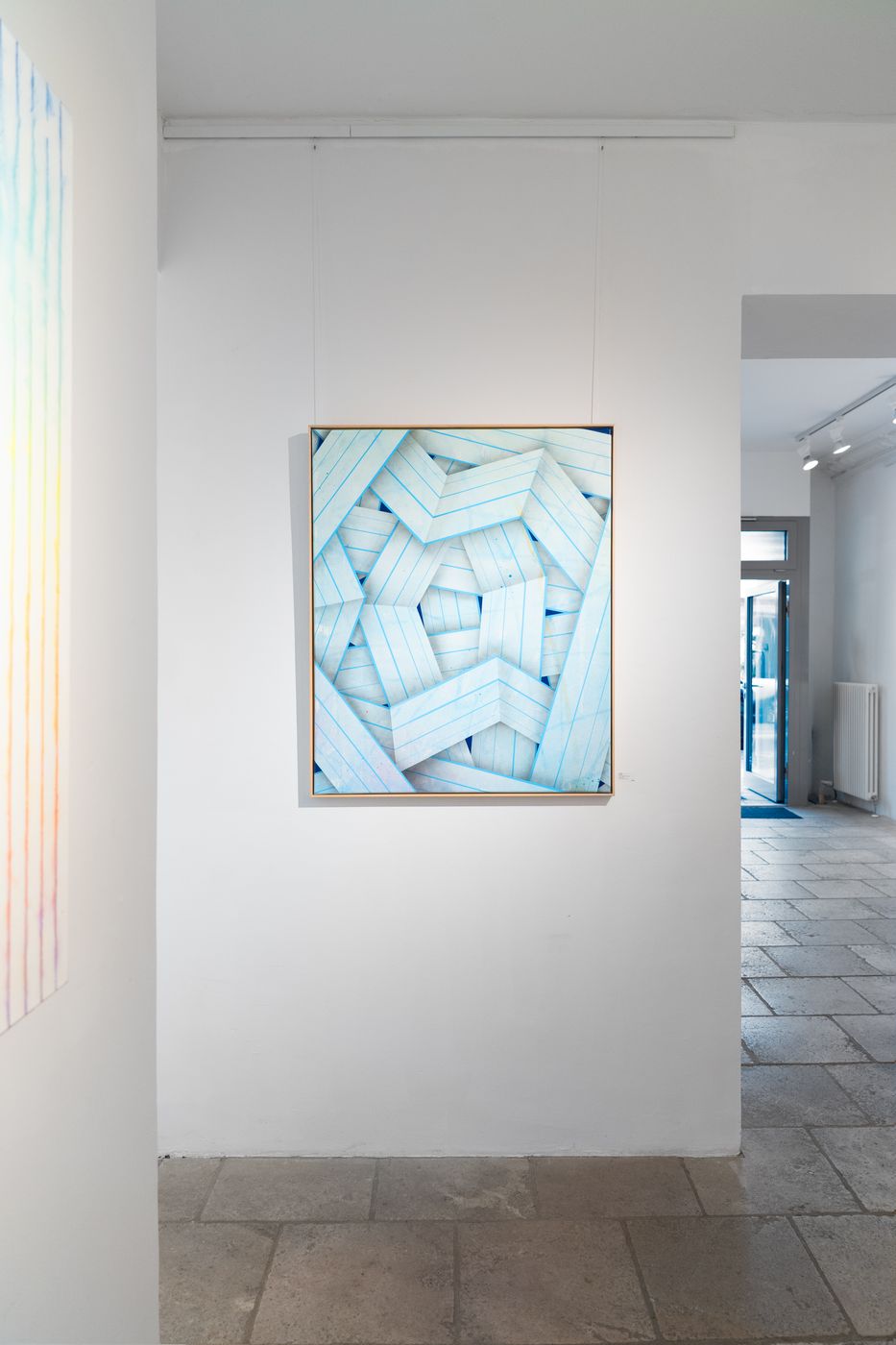
Past and Present

Past and Present, 2025 · Acrylics on canvas · 150 × 100 cm

IV.The work, and what's next

For someone standing in front of your work for the first time, what should they look for that they might miss?

I would first encourage them not to look for anything specific, but to take in the overall feeling the work creates in them. Before analyzing it, I think it's important to simply experience it.

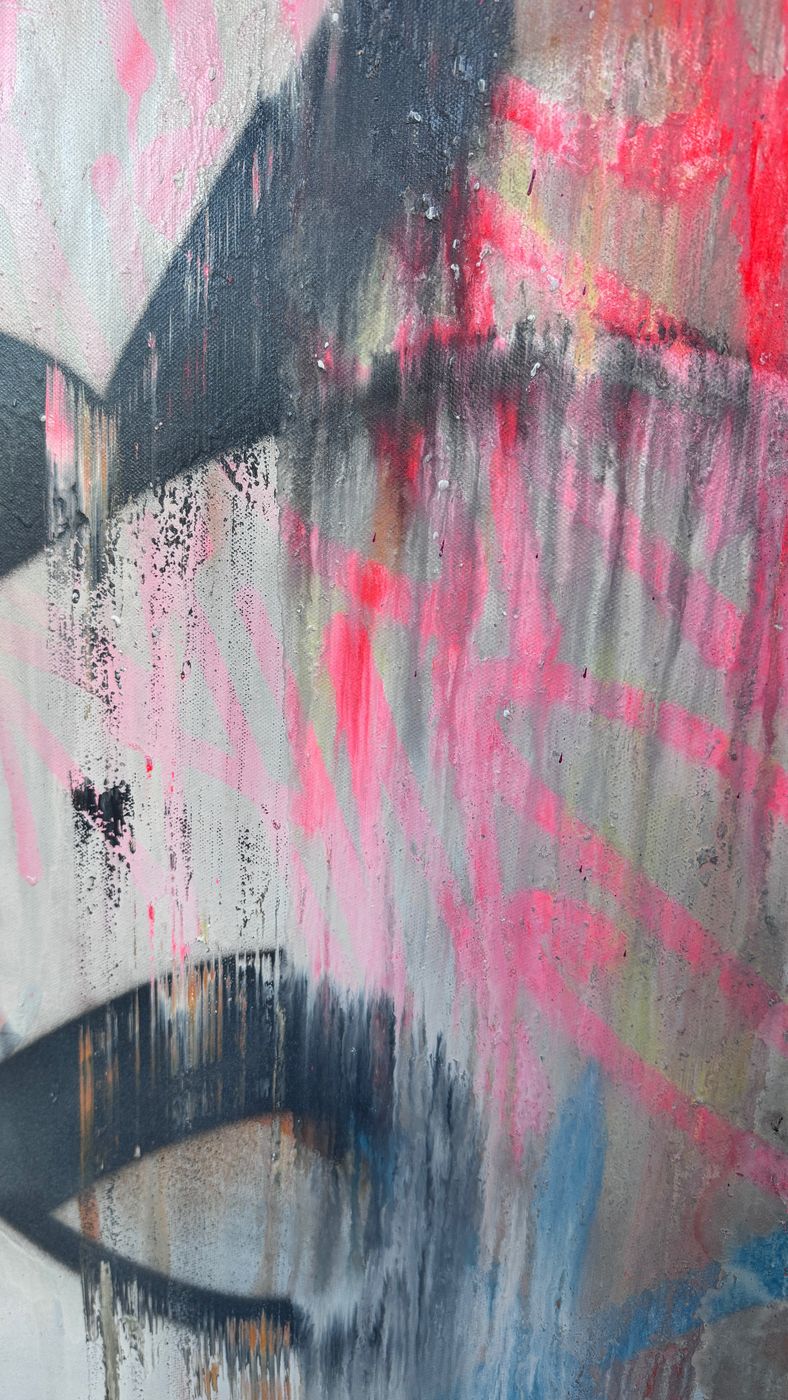
Then, step closer. My paintings can appear very clean and precise from a distance, but up close you start to notice the imperfections, the materials, the textures and traces of the process. Those details are essential to me. They carry a sense of humanity and emotion and create a contrast to the apparent perfection of the overall composition.

Is there one work you'd point someone to first, and why that one?

Rather than pointing to one particular painting, I would probably point them to my book, Intentions. It offers a deeper insight into my way of thinking and into why I make art the way I do.

It also brings together a selection of my recent works, so you get a broader sense of the visual language I'm developing. For me, it's less about understanding one individual painting and more about understanding the ideas and intentions behind the work as a whole.

What are you chasing now that you haven't caught yet?

I'm still trying to push the balance between perfection and imperfection. I want to give the element of chance and the traces of the human hand an even stronger role in my work. Mistakes, roughness, materiality.

That contrast interests me because it brings me back to a question I keep asking myself: where is the difference between art and design? Does art need to be aesthetically pleasing, or is its real value found in the imperfections that reveal the human behind it?

In general the question for the value of art keeps inspiring me.

Selected works

Tap any work to view it larger.

Where to see the work

Art Miami · Oliver Cole Gallery · 2026

Represented by Oliver Cole Gallery (USA) & Raab Galerie (Germany)

Website →
More in the JournalFollow Raws on Instagram

Don't miss the next Spotlight.

Subscribe to the Journal for new conversations from the world of geometric abstraction.

Subscribe →