Selected Artist
About
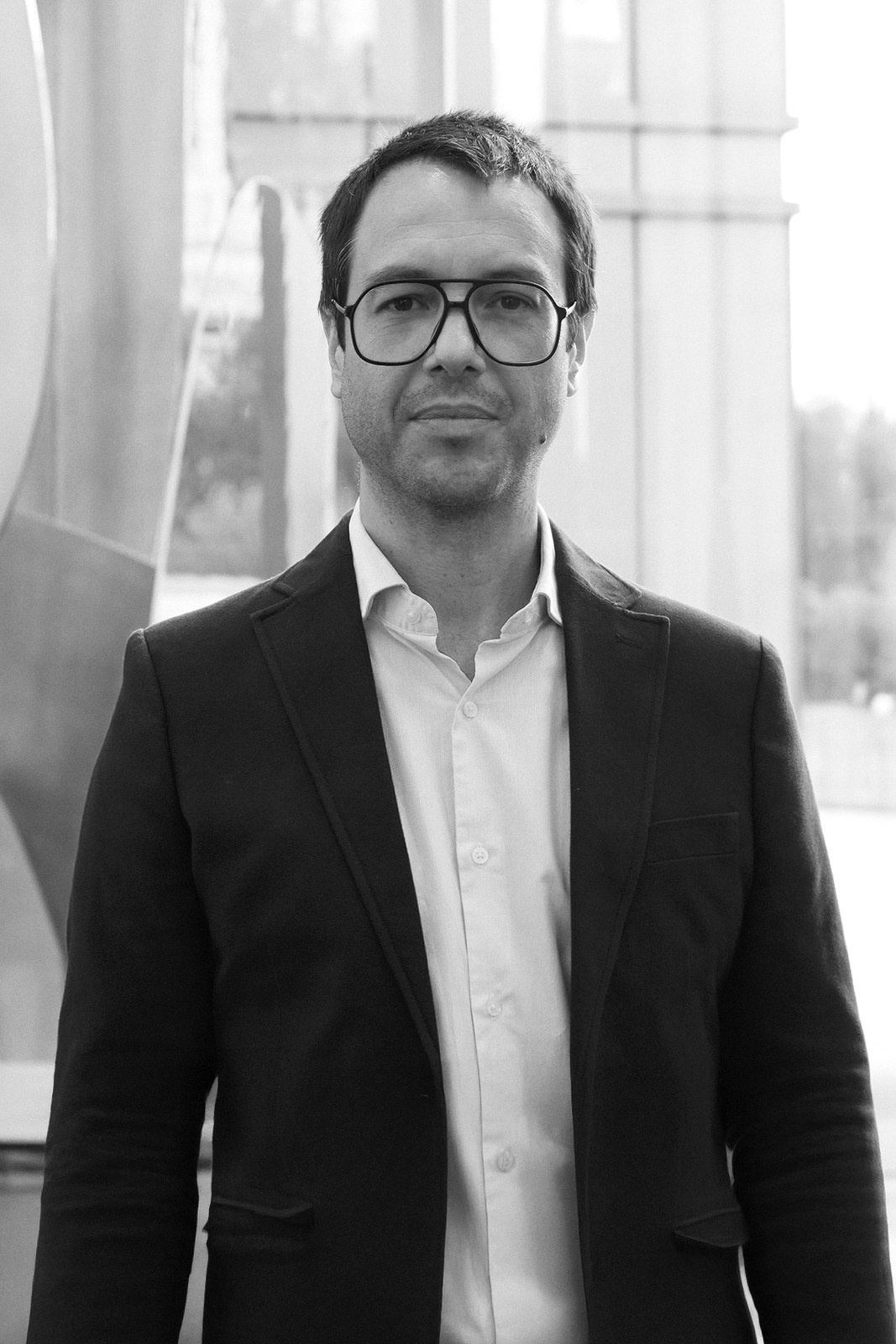
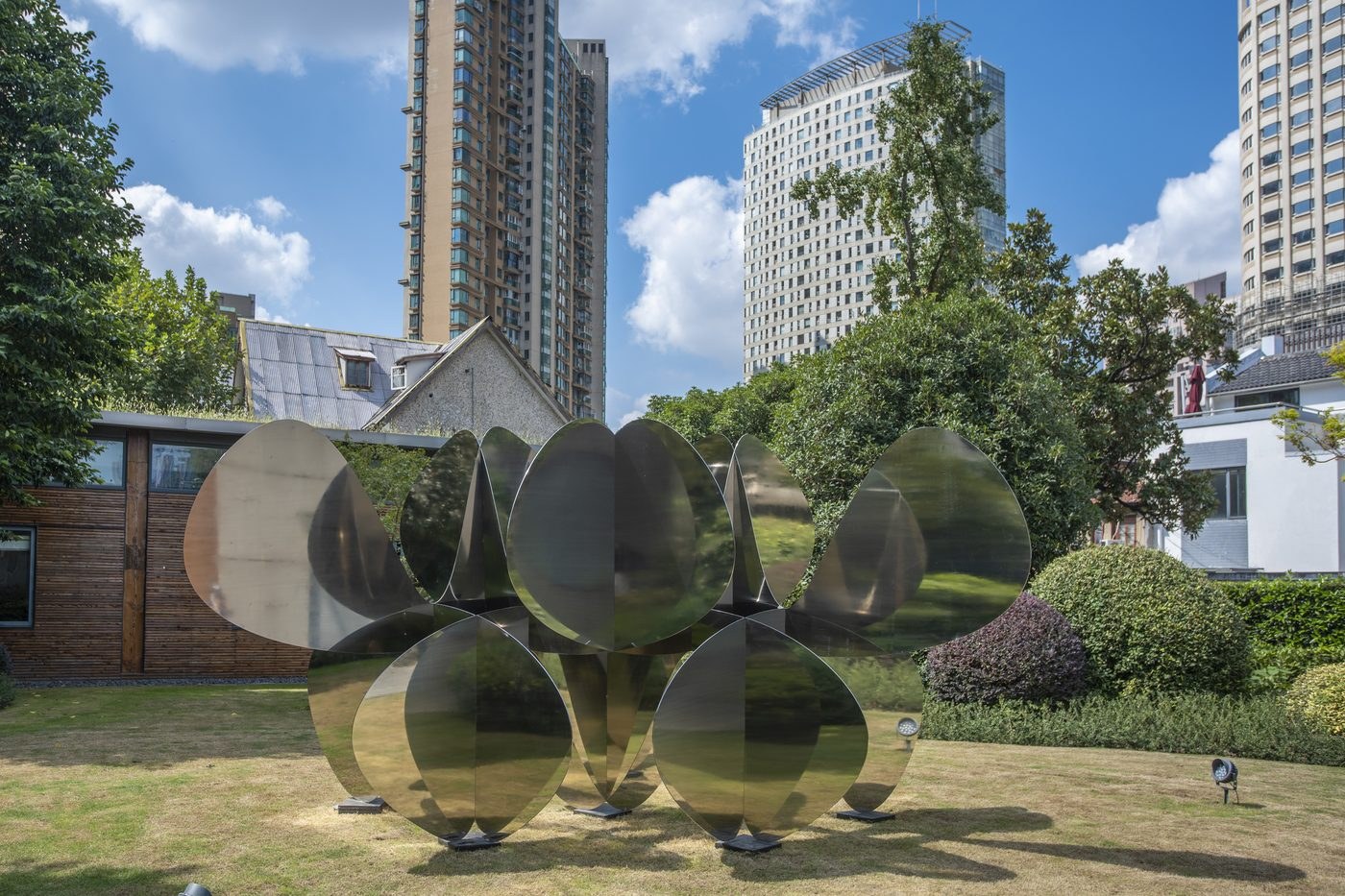
Alejandro Vega Beuvrin (Caracas, 1979) is a Venezuelan sculptor working in large-scale abstract metal sculpture. Trained as an architect at the Universidad Central de Venezuela, with a Master in Advanced Architecture from IAAC Barcelona, he practiced architecture for a decade, seven of those years teaching at Universidad Simón Bolívar, before turning fully to sculpture in 2014. His work begins in digital space, where two-dimensional planes interact in three dimensions, and is materialized through laser-cut corten steel, stainless steel and bronze, assembled into structures that read as abstract geometry while holding the tension of something alive that is about to move. His central body of work, the Barricadas (Guarimbas) series, originated in Caracas and carries the formal memory of the improvised protective barricades raised by Venezuelan civil society. Seven of his large-scale sculptures permanently occupy public and semi-public spaces in China and Venezuela, across Changchun, Nanjing and Caracas, with smaller works held in private collections in France, Spain, the United States, Dubai and beyond. His work has been exhibited at the Palais Royal gardens in Paris, the 7th Jing'an International Sculpture Project in Shanghai, and NordArt in Germany, and in 2021 the first edition of Madrid Luxury Art was dedicated entirely to his work in a solo exhibition. After more than a decade in Barcelona, he recently relocated to the Dominican Republic, where he now lives and works on an international scale.
Selected works
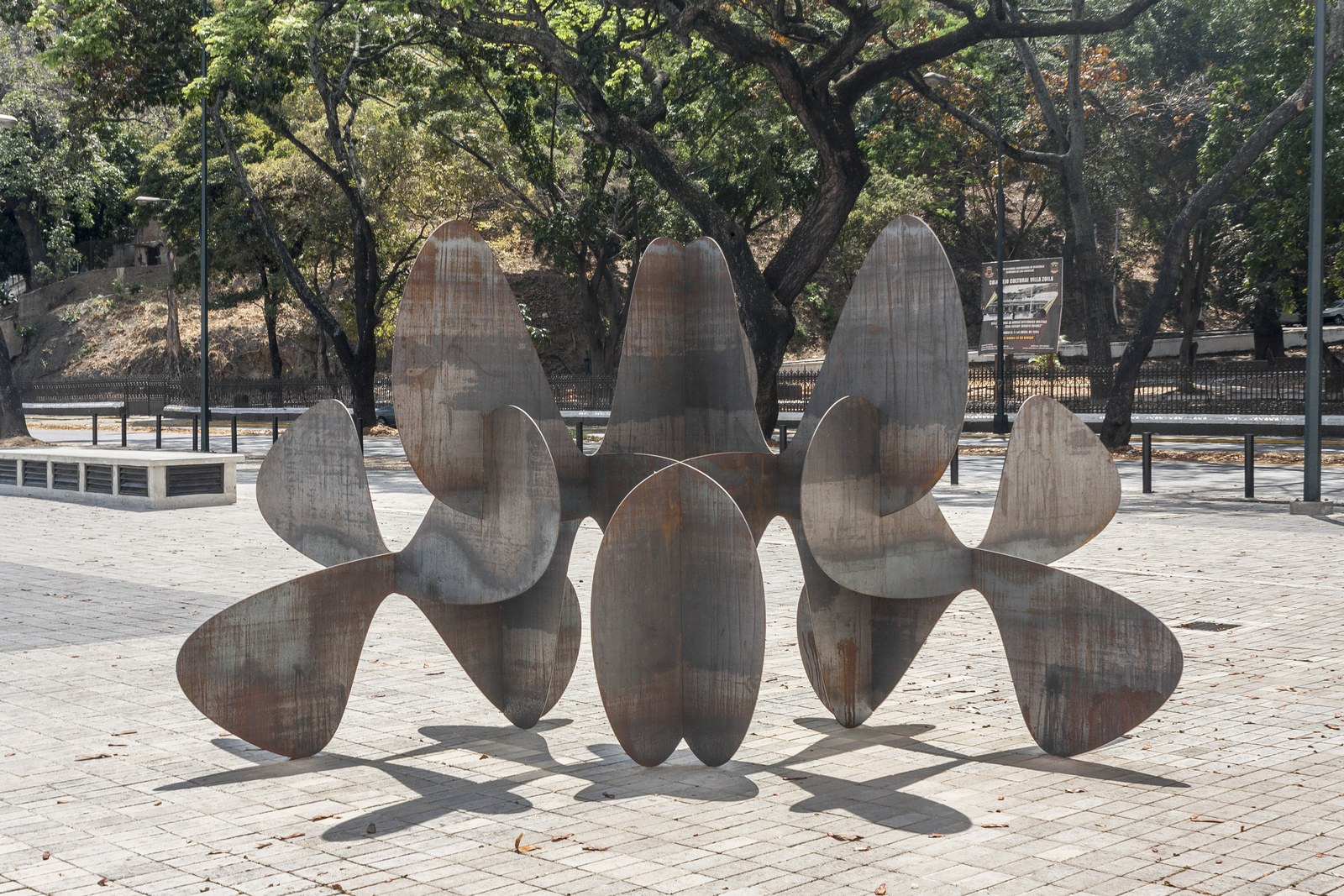
Barricada #2 (Guarimba #2), 235 × 401 × 152 cm, 2015 — corten steel, digital fabrication. Plaza Cipriano Castro, El Paraíso, Caracas, Venezuela. Photo: Julio César Mesa.
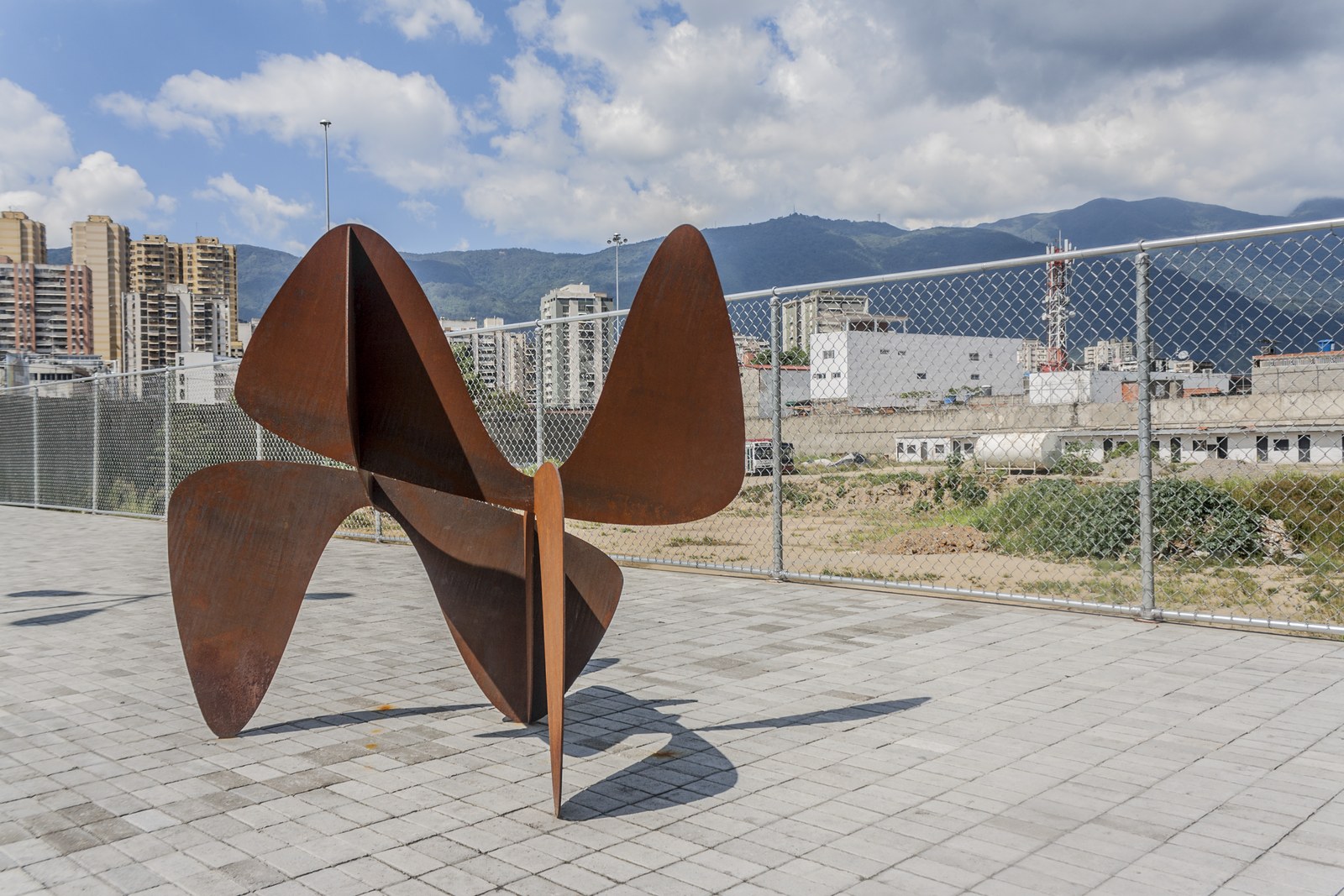
Barricada 3 (Guarimba 3), 2000 × 2029 × 1477 mm, 2015 — corten steel, Caracas, Venezuela
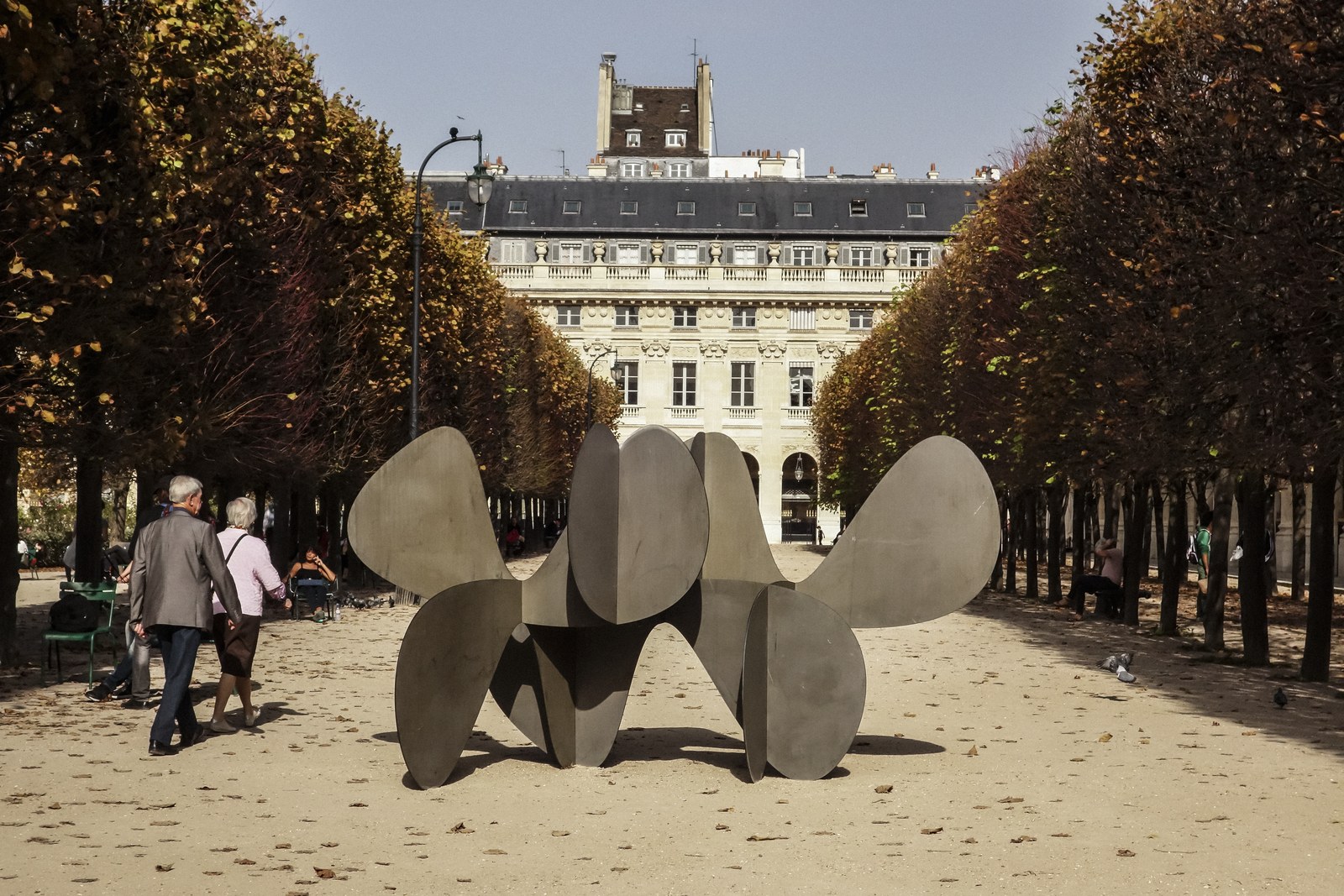
Barricada 1 (Guarimba 1), 2000 × 3394 × 1717 mm, 2016 — corten steel, Palais Royal, Paris
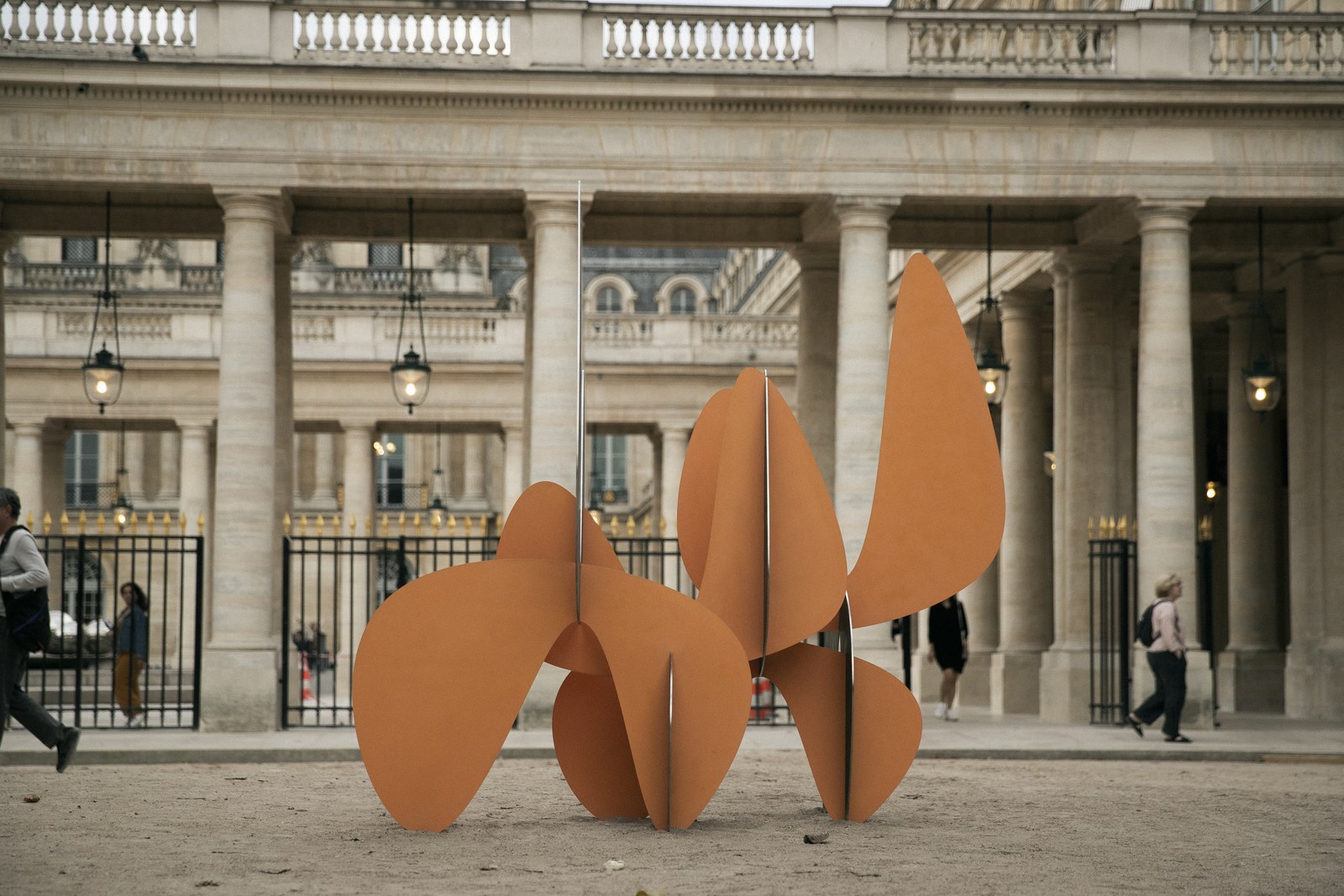
Barricada 8 (Guarimba 8), 2100 × 2350 × 950 mm, 2017 — coated stainless steel, Palais Royal, Paris
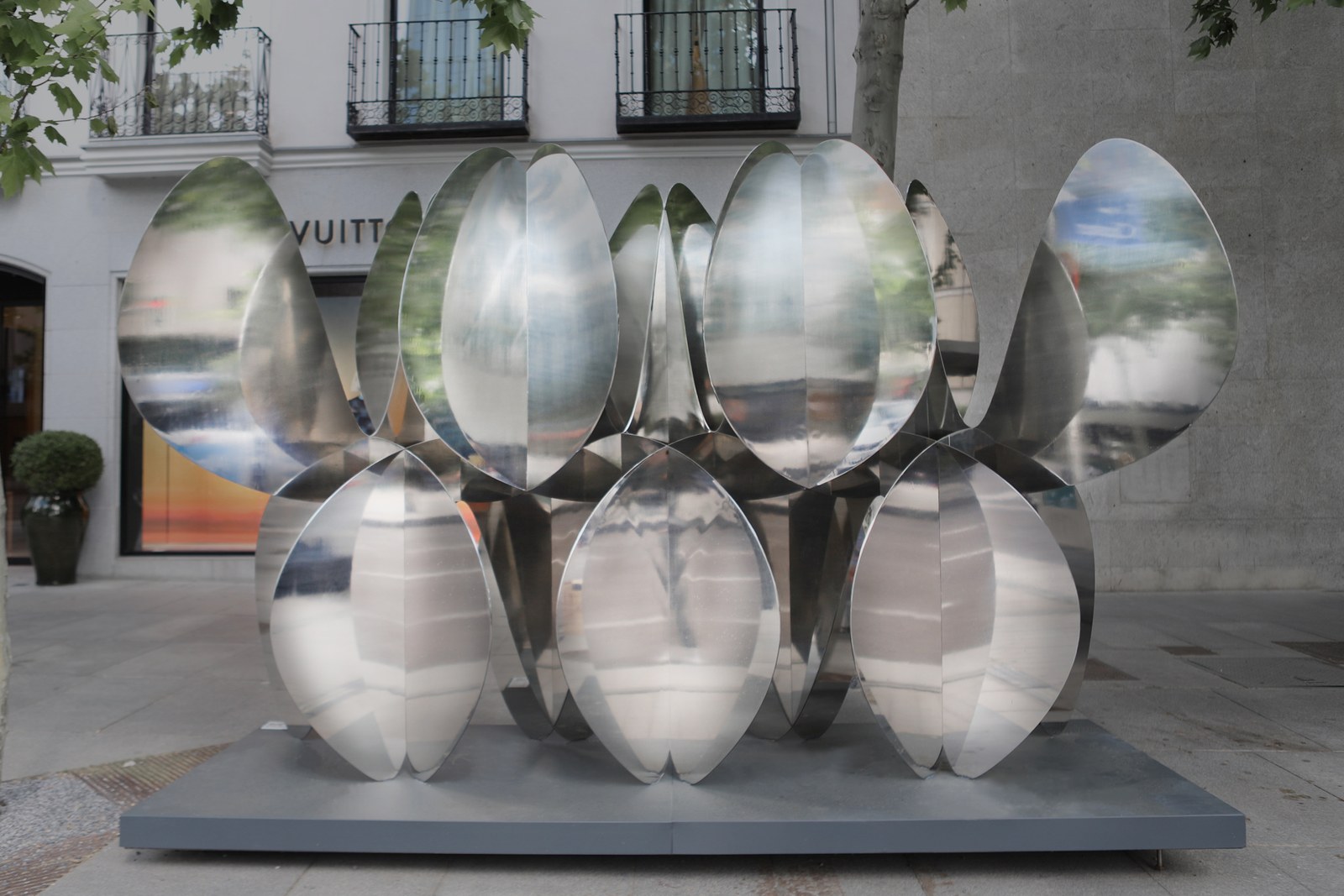
Barricada 4 (Guarimba 4), 2200 × 3494 × 1305 mm, 2021 — polished stainless steel, MLA, Madrid
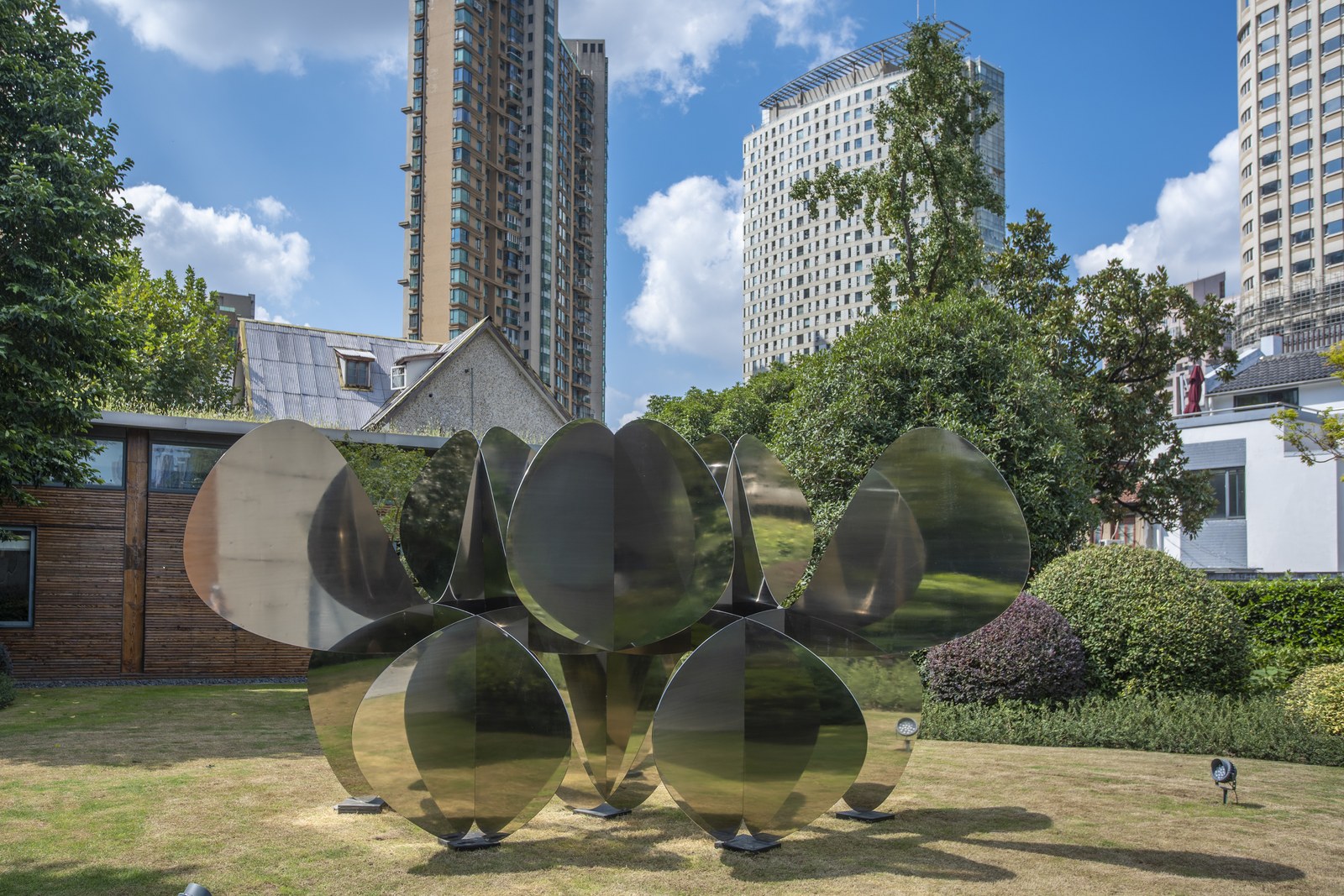
Barricada 18 (Guarimba 18), 2650 × 4590 × 2330 mm, 2023 — polished stainless steel, Jing'an International Sculpture Project, Shanghai
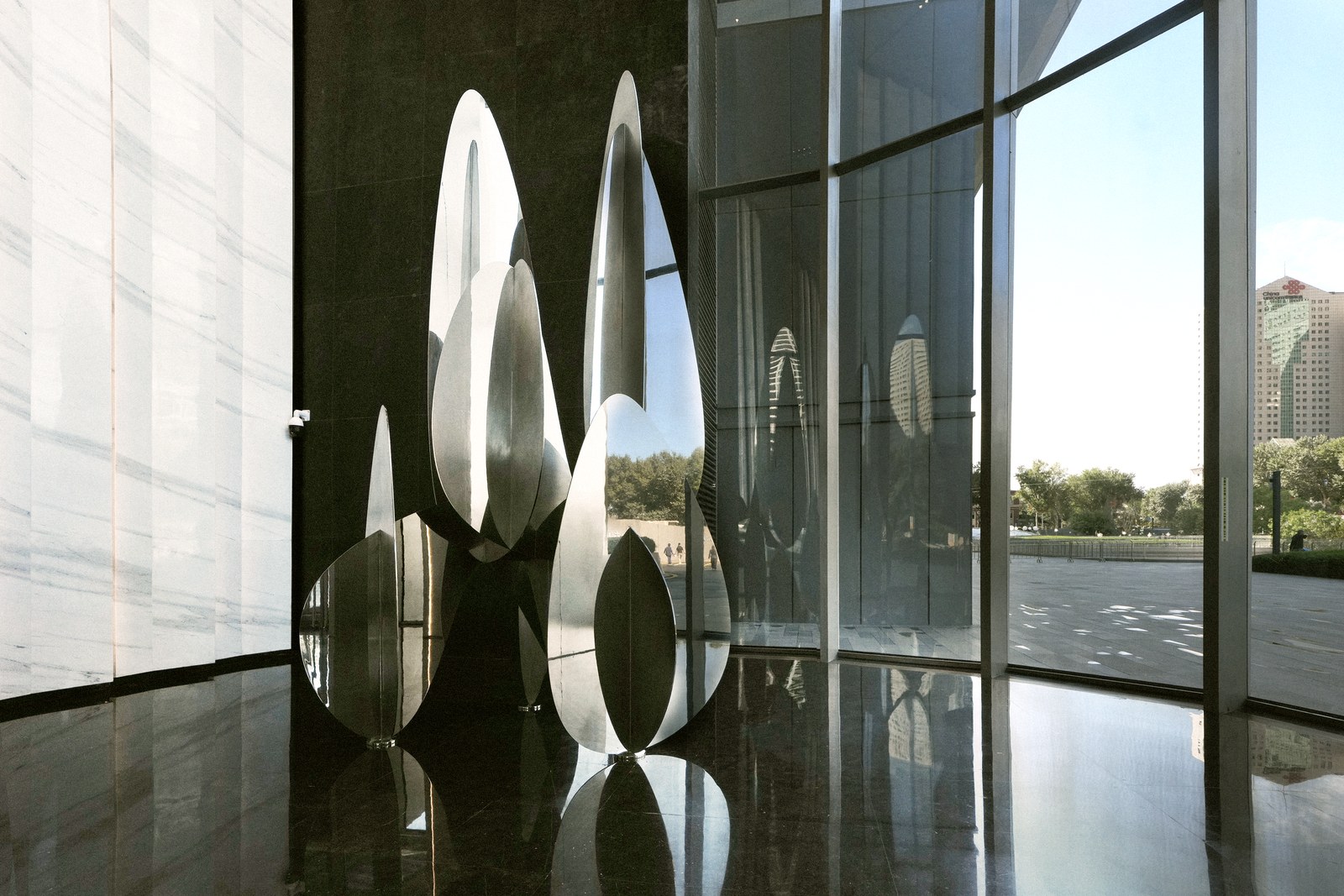
Barricada 25 (Guarimba 25) — Snowmelt Dawn (雪融之曙), 5400 × 2762 × 1768 mm — polished stainless steel, CR Center, Changchun
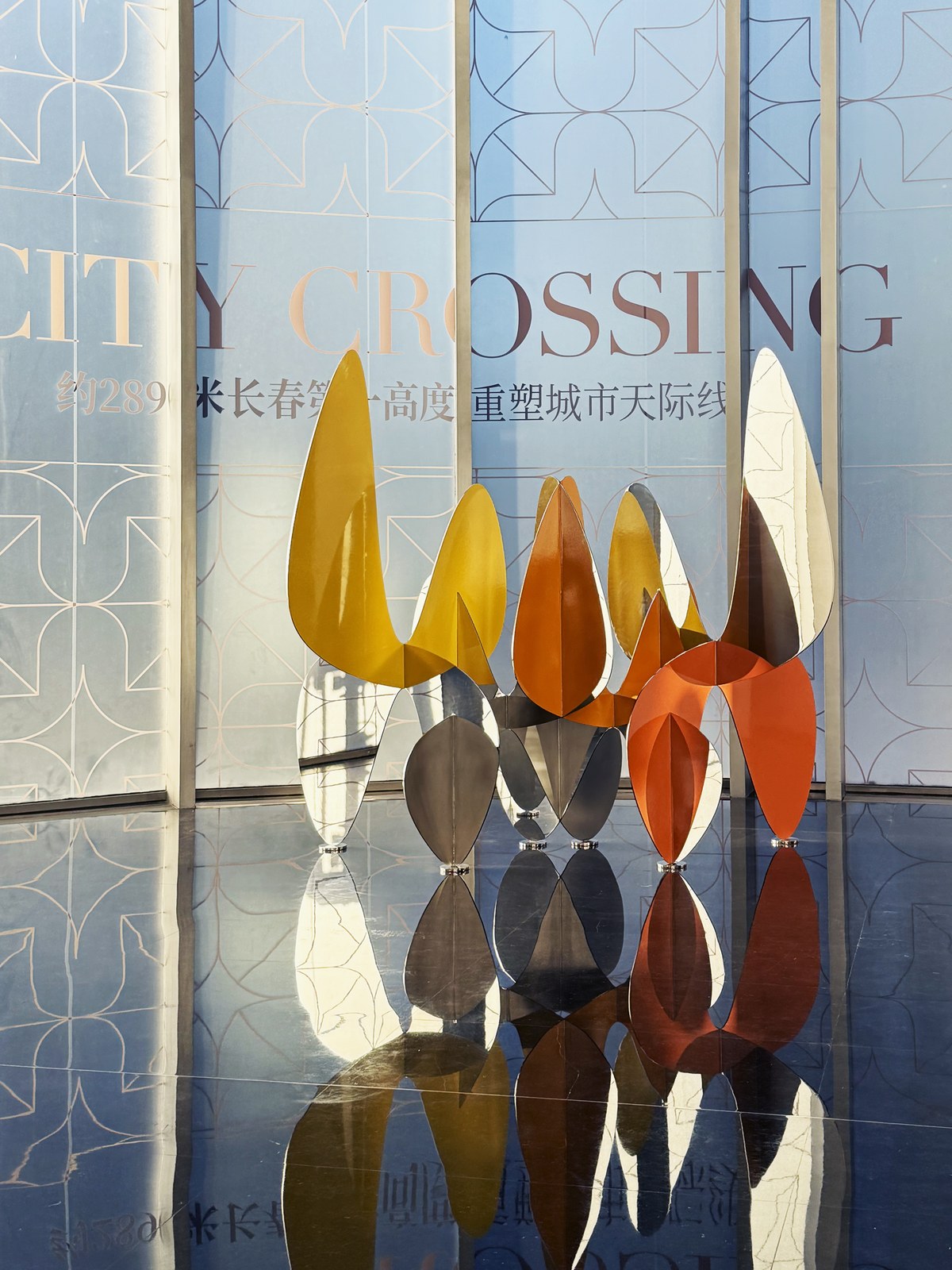
Barricada 8 (Guarimba 8) — Eternal Blossom (长春之蕊), 2600 × 2880 × 1160 mm, 2025 — CR Center, Changchun
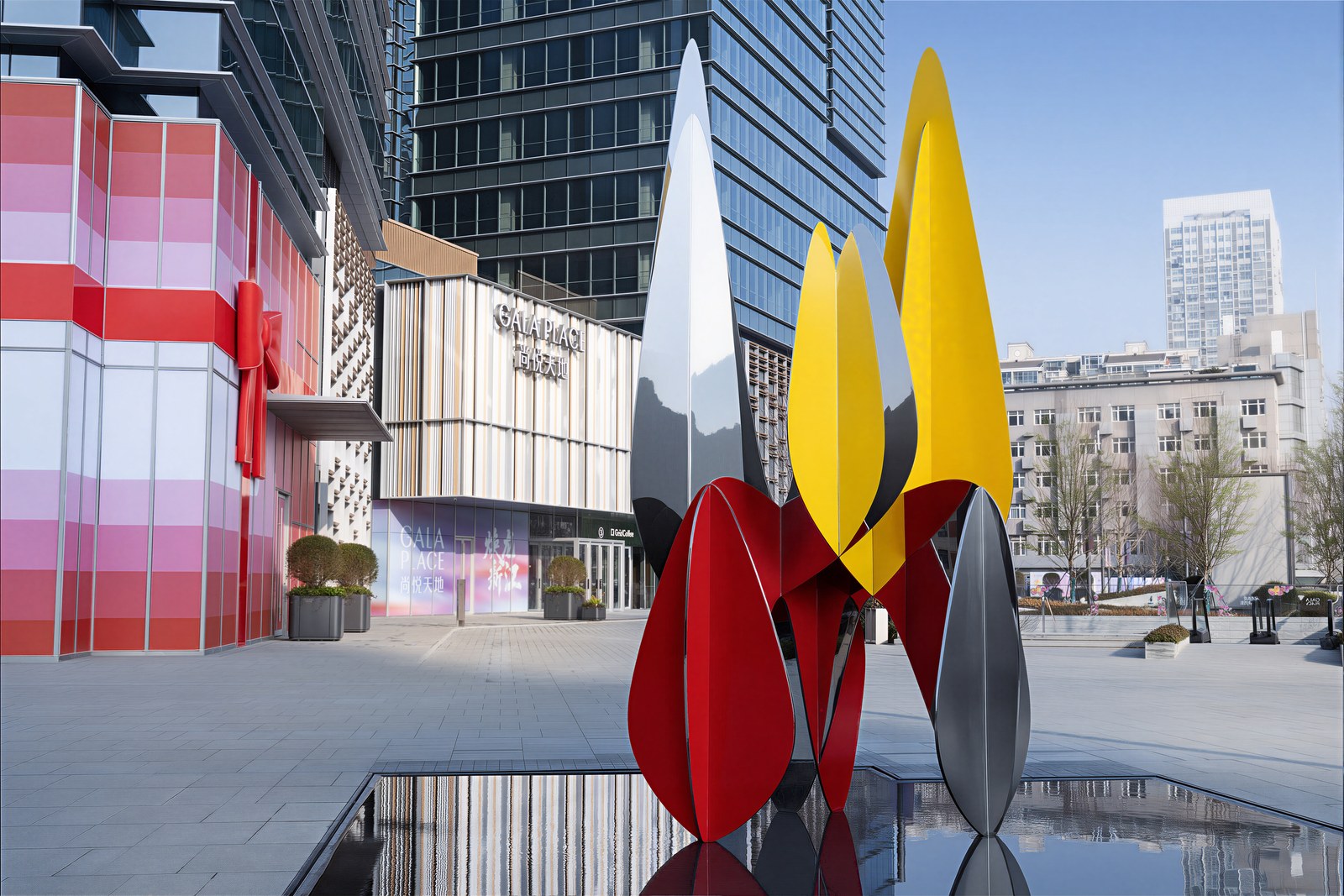
Barricada 26 (Guarimba 26) — Blossom Rising (金陵花信), H 5.2 m, 2026 — coated and polished stainless steel, T Center, Nanjing
Q & A
Is geometry a constraint or a freedom for you — and has that answer ever changed?
I understand geometry as the study of form, and form as a language capable of communicating experience. Inert objects and living beings communicate through formal patterns, and the brain classifies them instantly, we are programmed to do it even with shapes we have never seen before. My work centers on recognizing and using those patterns, proportion, symmetry, scale, whether something reads as a threat or not, but I do it without directly citing any particular being. Geometry has never felt like a constraint, to me it is a territory that deserves to be explored, and that exploration deepens with time, each piece teaches me something the next one can say. It is that accumulated exploration that today allows me to pursue something as specific as the friction of seeing an evidently inert object that transmits, through its form, the sensation of standing before something that evokes a living referent, something that is still but holds the tension of the instant before movement.
Walk us through your process — where does a piece begin, and how do you know it's finished?
A piece begins with a point, followed by another, and between the two a line appears on its own. With at least three points in digital space I construct a plane, and to that plane I apply basic operations, repetition, mirror, scale... There is no formula dictating when to apply each one, those decisions are intuitive, and from that interaction of two-dimensional planes in a three-dimensional virtual space, the form emerges. There the plane can be a compositional element in itself, something material nature does not allow, in the physical world every plane has thickness, it is already a volume. Those constructions belong to another nature. Then comes materialization, and with it another layer of decisions just as determining, the material to be cut, the finish of its surface, the interaction with whoever walks around it and with the space it inhabits, the incidence of light. You could say the digital work is the birth, and materialization is the life. I know a piece is finished when it communicates the intention of the system as a whole. Though finished does not mean closed, I often pick up a piece exactly where it ended and another is born from there. It strikes me as an analogy of evolution, where something ends a new version of the same thing begins, and after multiple variants something entirely new appears.
Is there something outside of art — a system, structure, or phenomenon — that quietly shapes how you think about form?
La guarimba. In Venezuela that is the name for the improvised barricade that civil society raises in the street for protection during protests. It is a structure without an author, made of whatever is at hand, rubble, fences, furniture, and yet it fulfills its function with precision, to be refuge and barrier against the forces of repression. That phenomenon shaped my way of thinking about form more than any artistic reference. The Barricada (Guarimba) series was born from a dilemma, I wanted to make public art and the first commission came from the worst possible client, the very apparatus of that repression. The answer was a trap, I conceived protective structures disguised as abstract art, designed to wait in the street for the precise moment of being activated, when besieged protesters would need them as shields. The disguise was tailored to the one paying for it, and it worked, the first pieces were financed by the same people who persecuted what the pieces concealed. They still hold that condition today, even installed in contexts where no one would suspect their origin, hidden inside each one is la guarimba, waiting to be activated.
What does a viewer miss when they see your work as 'just geometry'?
They miss everything, and that is precisely the design. The pieces were conceived to be seen as simple geometry, their survival depended on it. So that unsuspecting gaze is not a misunderstanding, it is the disguise fulfilling its function, the trap operating in the present tense. Every person who passes a piece and sees only form confirms that the secret is still safe, even now that I am telling it.
What's the last rule you set for yourself in the work, and did you keep it?
I try not to work with rules, I prefer to keep the process open. I recognize a single standard, that I like the result. Said like that it sounds arbitrary, but it is the opposite, that taste is a scrutiny dictated by years of experience and aesthetic rigor, a filter that grows more demanding with each piece. Many correct forms do not pass it, technically impeccable, conceptually justifiable, and yet something in them fails to convince the eye. That is the only rule I always keep, and I would not know how to write it down, it operates only in the act of looking.
Newsletter
Curated open calls and one artist to know, every couple of weeks. Free, no spam.