Selected Artist
About
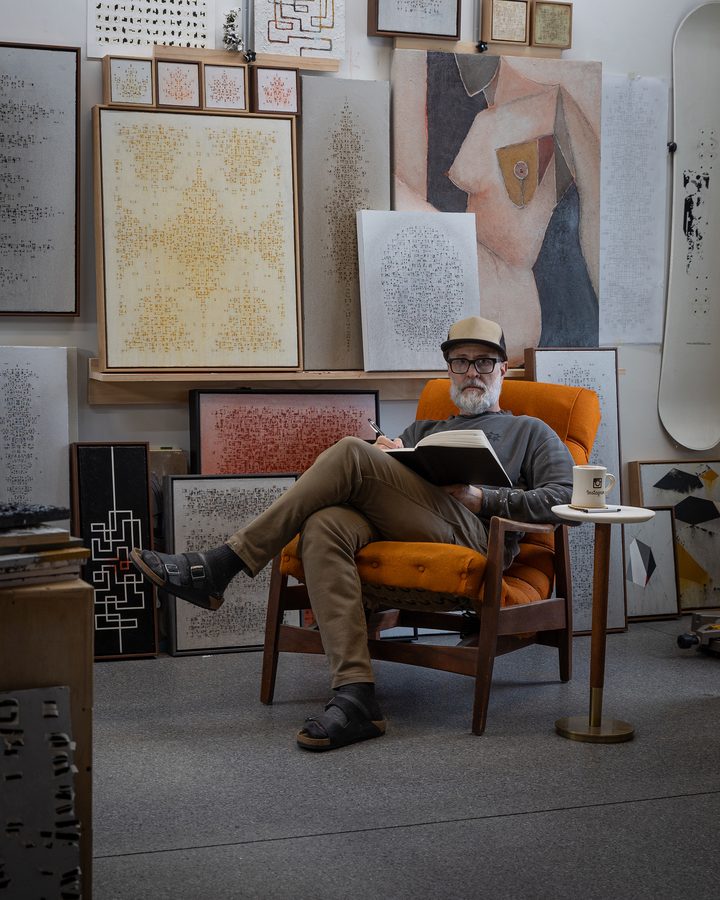
Growing up in chaos, I turned to “making” as a way to control something in my life. Starting from nothing can be terrifying, but bringing things into existence brought me peace.
I attended art school in Central Kansas in the early nineties and graduated with a Bachelors Degree in Graphic Design and an unofficial minor in Painting. Design took me into the agency world in Chicago in 1994, San Francisco in 2004, and simultaneously around the world for collaborations in print, film and digital production for a wide variety of clients. Throughout my design career, painting took a back seat, but came to the forefront as a form of therapy when I was going through troubling times.
As an avid adventurer and outdoorsman, access to the outdoors drew my family and I to Bend, Oregon in 2021. A more relaxed lifestyle and reduced financial responsibilities gave me the opportunity to focus on my art practice full time, which is just what I did.
Living on the edge of the forest, near the Deschutes River, the Cascade Lakes and alongside a range of strata volcanoes also has a great deal of influence on my mindset and my work. It might seem odd as someone who focuses on geometry in my paintings, but exploring and enjoying the outdoors informs my palette and subject matter, and fills me with ideas for more art than I can create in a lifetime.
Selected works
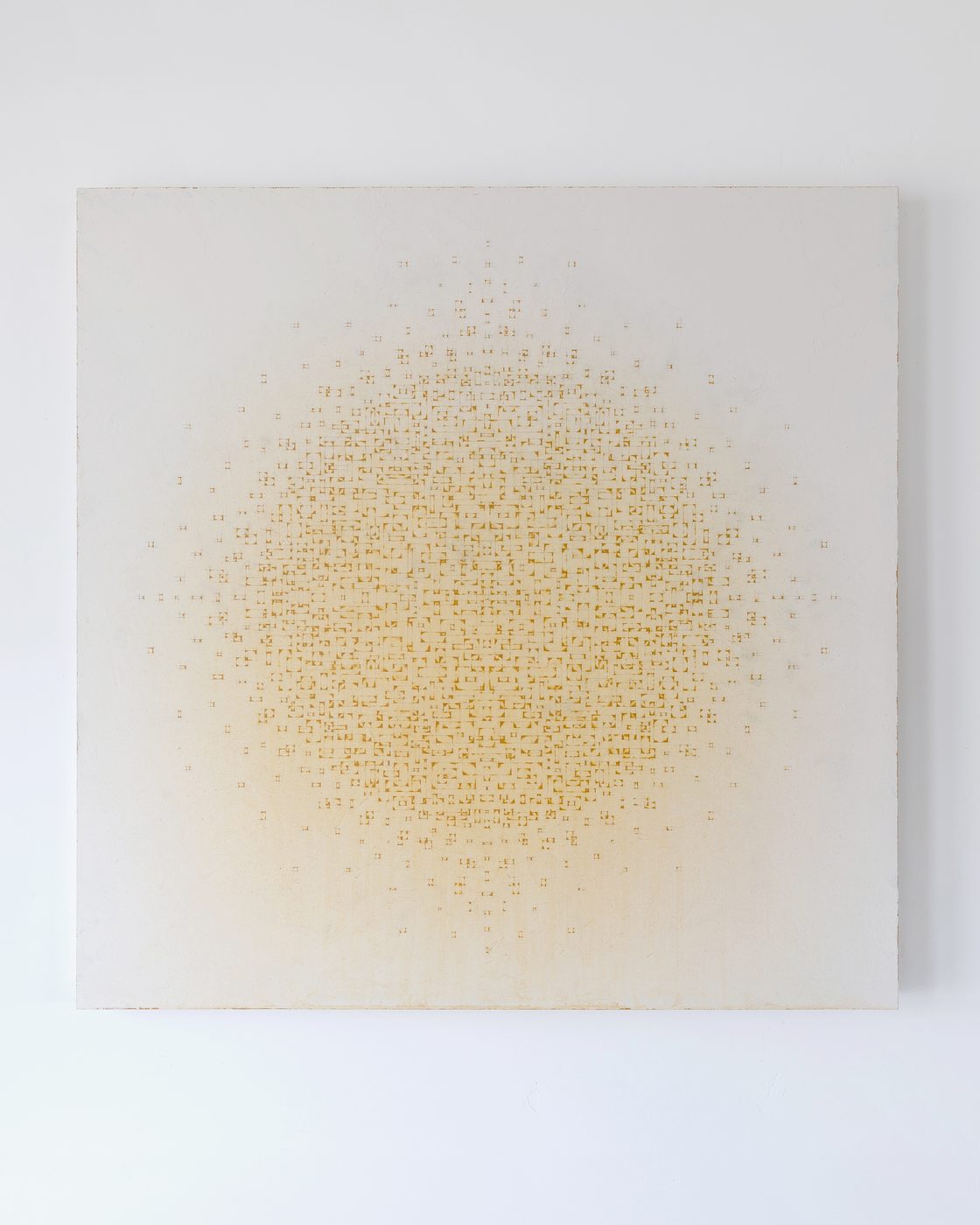
Eternal Light — acrylic & graphite on panel, 36 × 36 × 1.5 in
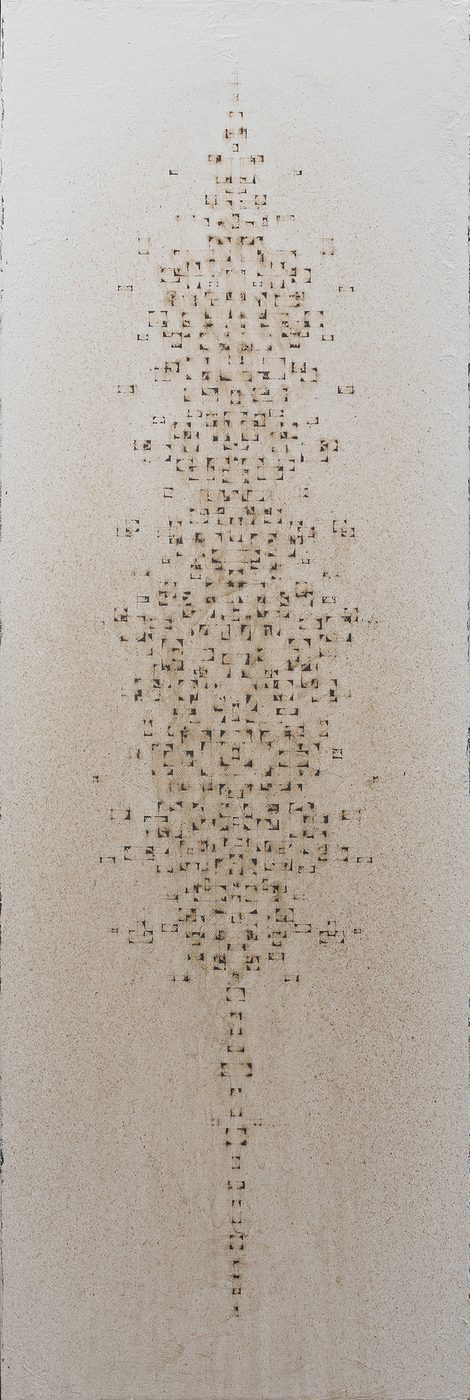
Chasing the Spark — acrylic & graphite on canvas, 12 × 36 × 1.5 in
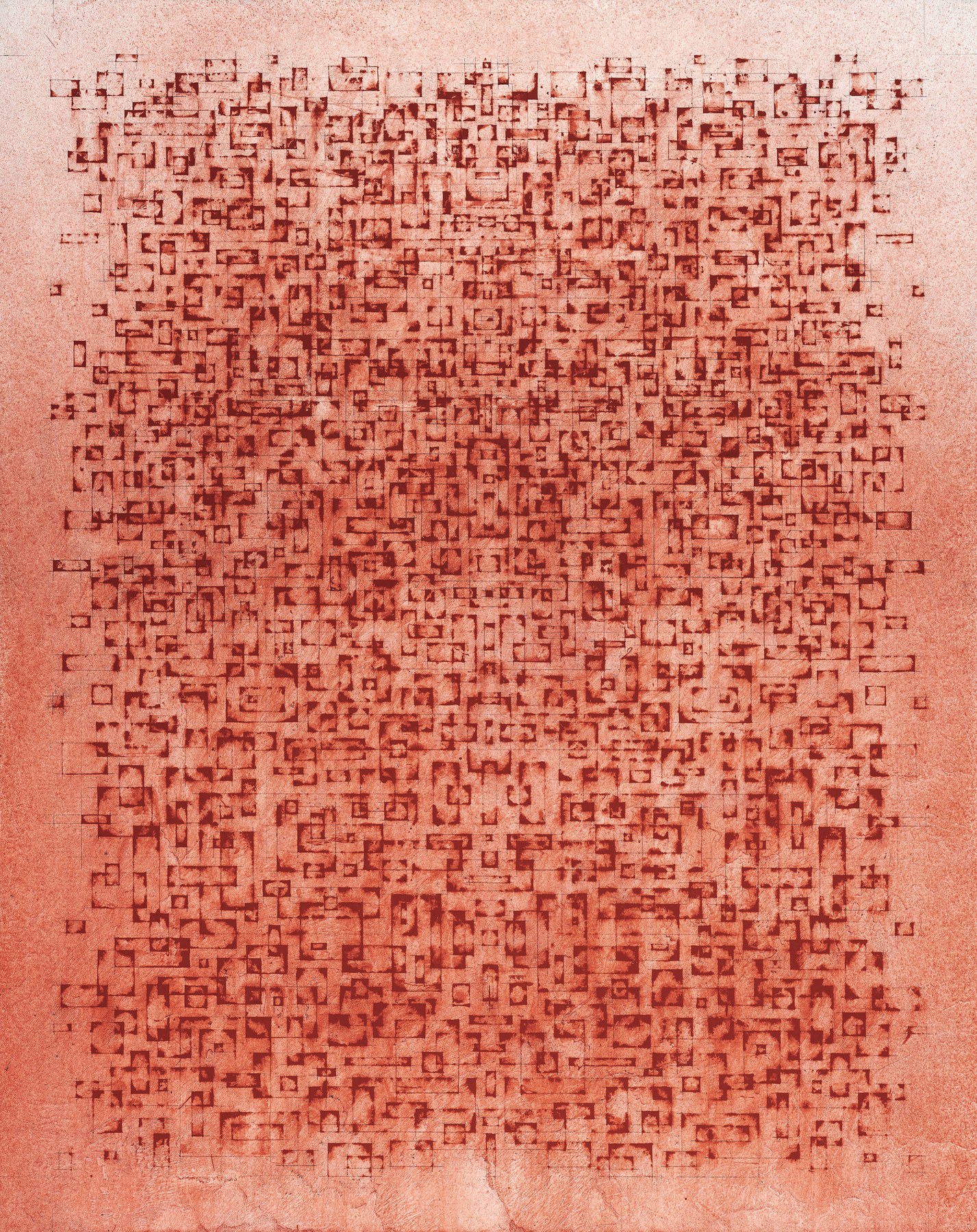
Razed in Red — acrylic & graphite on panel, 24 × 30 × 1.5 in
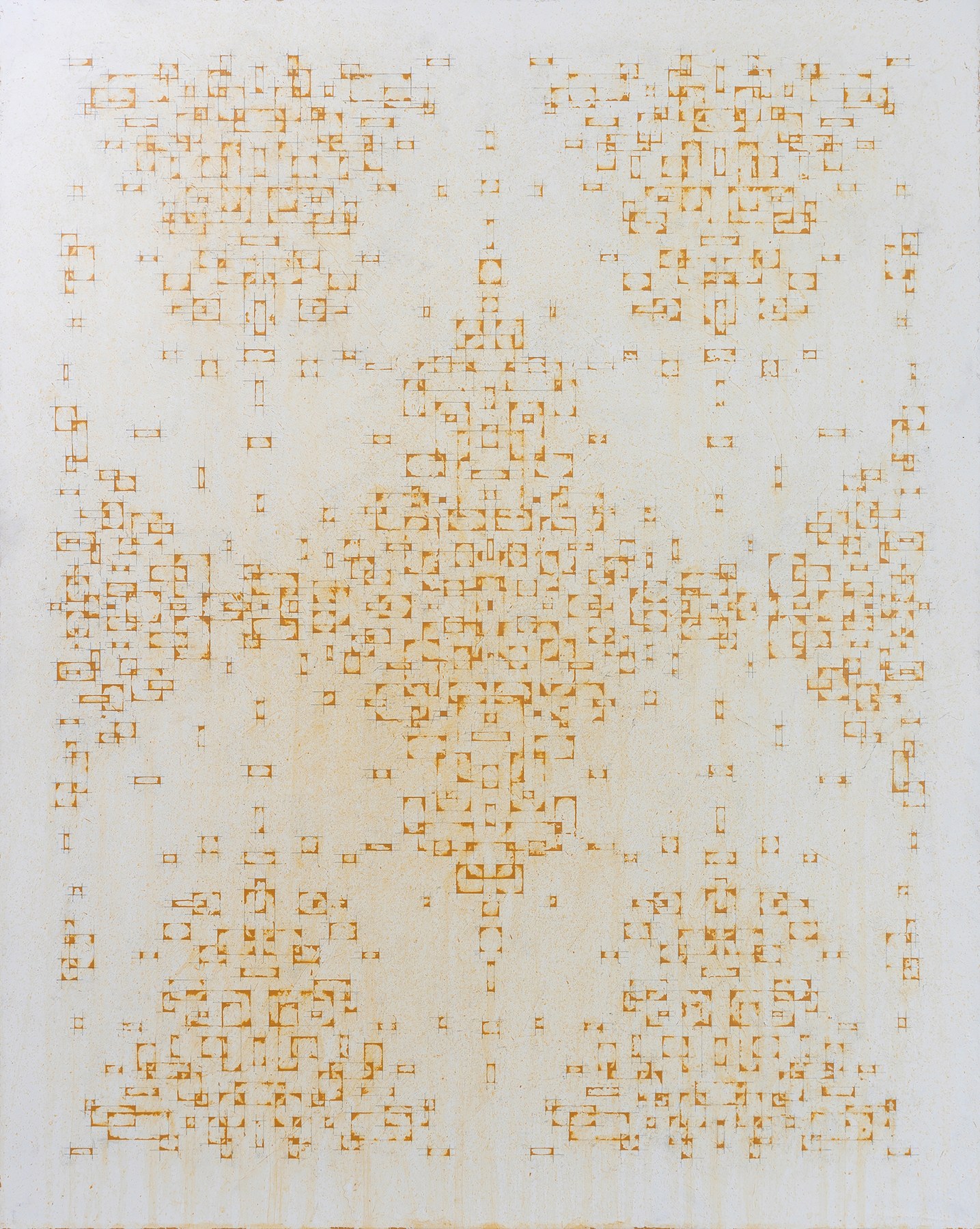
Sun Will Rise — acrylic & graphite on panel, 24 × 30 × 1.5 in
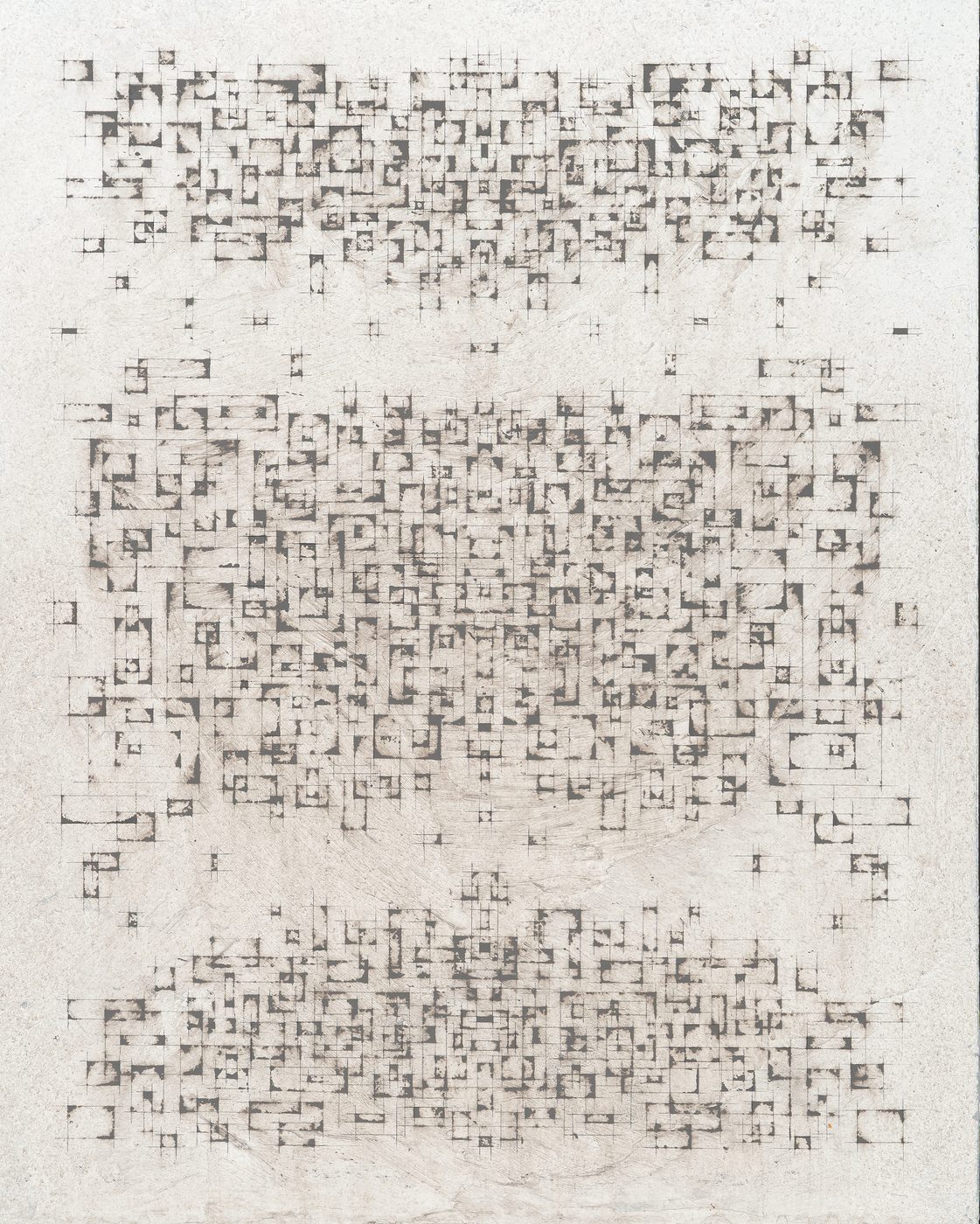
Gray Matter — acrylic & graphite on panel, 16 × 20 × 1.5 in
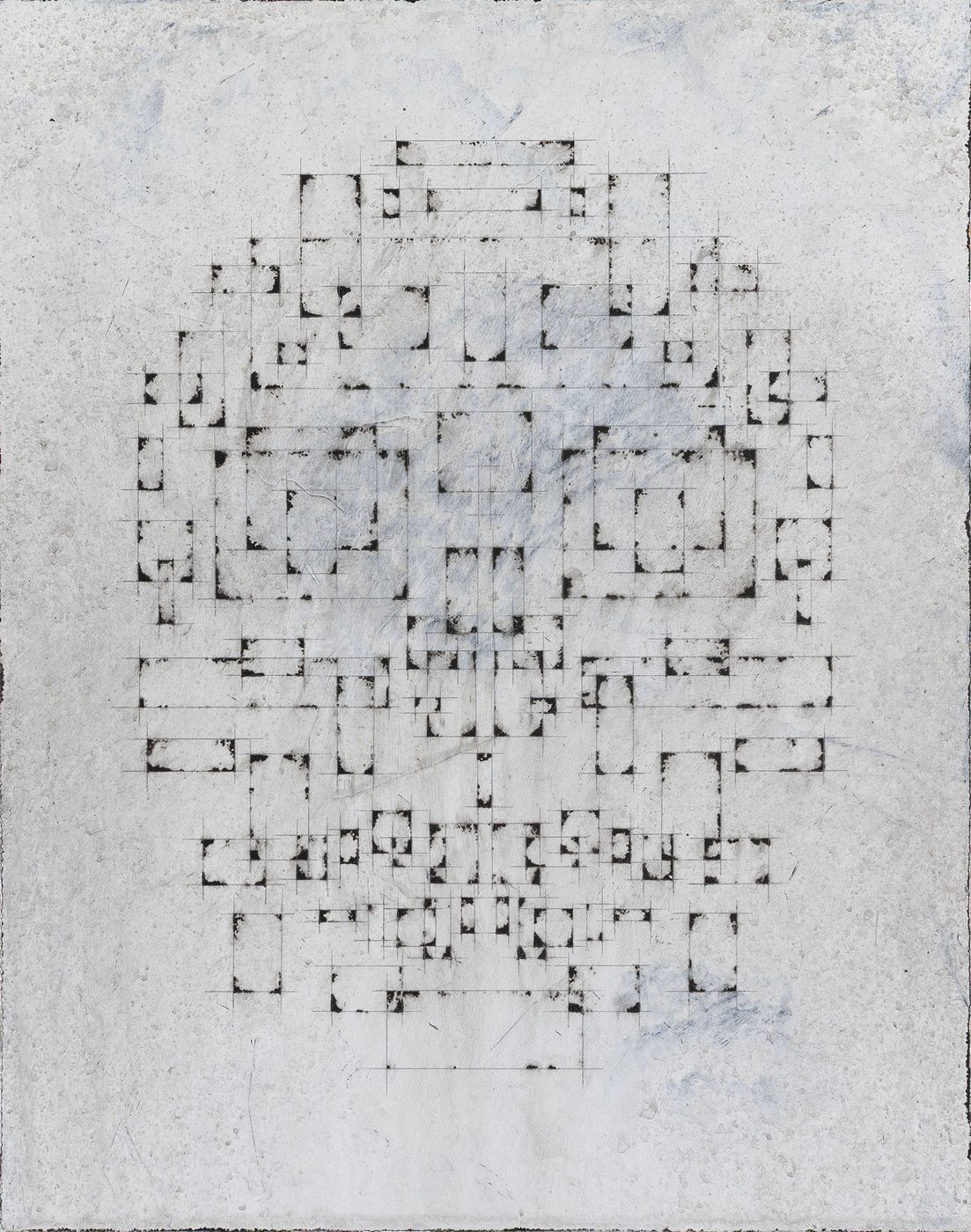
All That Remains — acrylic & graphite on panel, 11 × 14 × 1.5 in
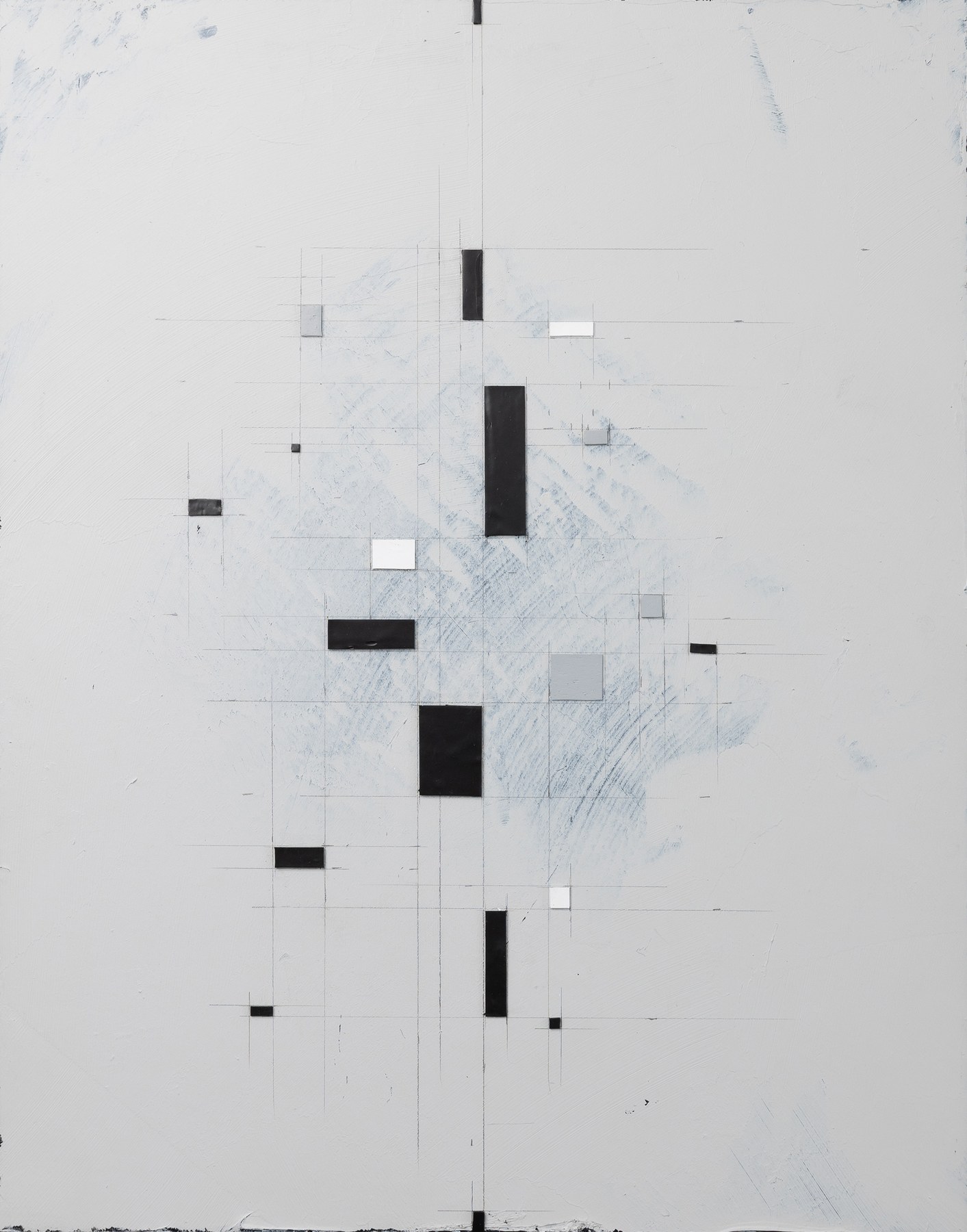
Of the Sky — acrylic & graphite on panel, 11 × 14 × 1.5 in
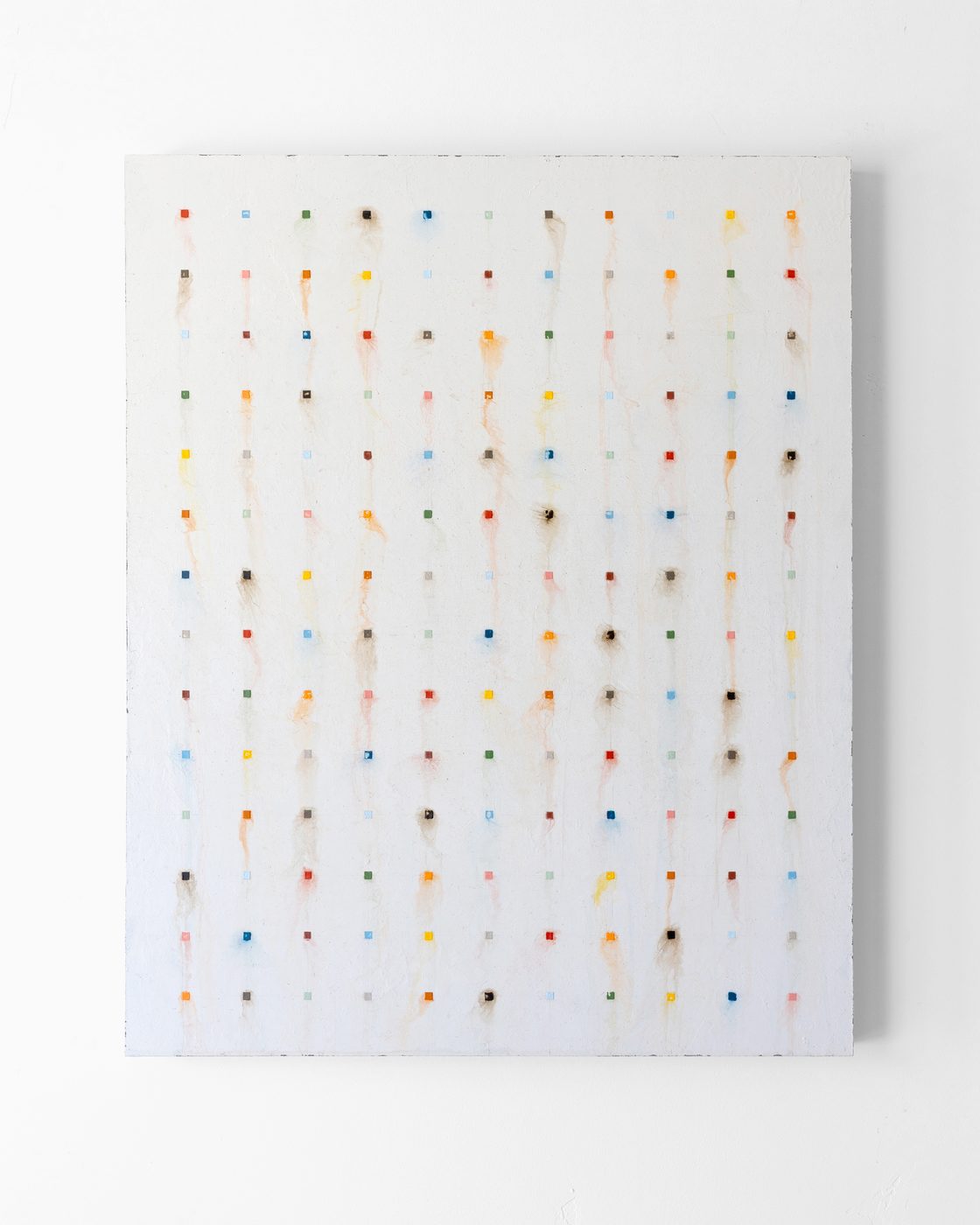
Fleeting Thoughts — acrylic & graphite on panel, 24 × 30 × 1.5 in
Q & A
Is geometry a constraint or a freedom for you — and has that answer ever changed?
I’ve always believed that having a box to play in gives rise to the most creative work. Having complete and total freedom can be paralyzing. Having a basic framework that strategically defines your practice can be freeing, and help you create the best work for yourself and for your collectors. Working within a geometric practice gives me that framework, literally and figuratively.
Walk us through your process — where does a piece begin, and how do you know it's finished?
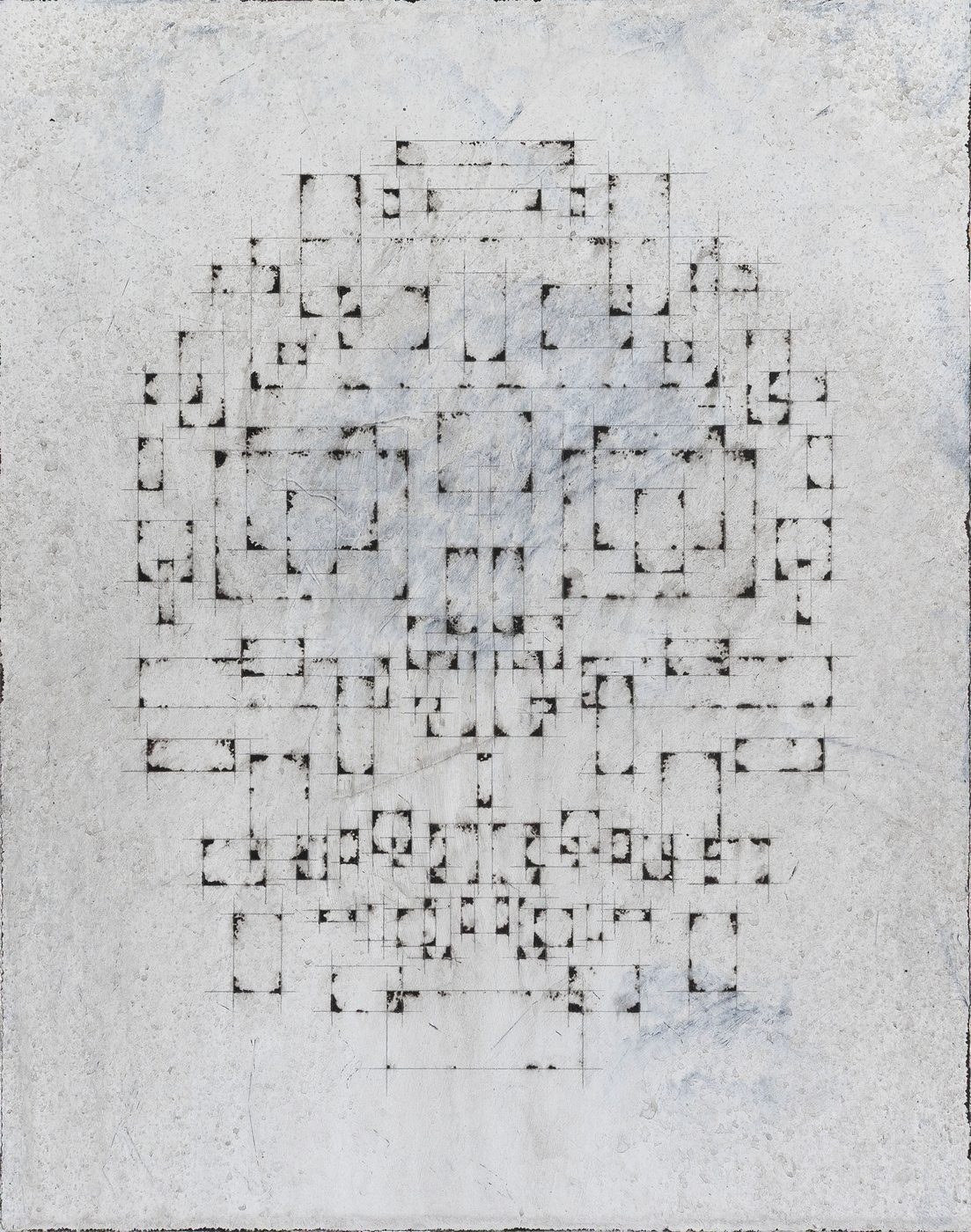
At the beginning of my creative process, I break objects and ideas down into quadrangular schematics — blueprints made of varying sizes and proportions of rectangles. My compositions are built on rectangular geometry, which our living spaces, memories, and daily communication are made of and framed within. I create my paintings with rectangles of graphite and pigment, then by organic means, hydrologically erode them into almost non-existence. The plan or “schema” remains, but the subject matter is almost imperceptible. There is a definitive start and end point in my Schema pieces, so the decision as to when the work is complete is not subjective.
Is there something outside of art — a system, structure, or phenomenon — that quietly shapes how you think about form?
The rise and fall of civilizations and the remaining ruins, structures, and artifacts inform the forced decay that I apply to the geometric elements in much of my work. Often our focus is on perfected shapes, what exists when things are new, clean, perfect. But the reality that everything is born into a state of decay isn’t often top of mind. This perpetual construction and decay is always in my thoughts and process as I develop my work.
What does a viewer miss when they see your work as 'just geometry'?
The pigment remaining in the corners of my shapes forms the positive space in each painting. These “dirty corners” visualize the idea that no matter how hard we try to forget or move on, or what time takes away, there will always be bits and pieces of experiences, memories, and trauma left in the corners of our mind, at the edges of our existence.
Describe a failure or a dead end in your practice — something that didn't work.
I’m always trying new things, so there are always paintings or mixed media pieces that some might put aside, but I tend to push through or layer, or put them aside for future ideas. I believe each layer adds to the story of a painting. I value the process and leaving evidence of the path it took to get there. For example, I leave graphite guidelines in my work that many would erase. I also frame and sell my experiments as they are likely the most important part of my practice. I’m not sure I’d call anything a dead end, as it’s always a step toward something else, even if it might be a pivot to a new direction.
Newsletter
Curated open calls and one artist to know, every couple of weeks. Free, no spam.