Selected Artist
About
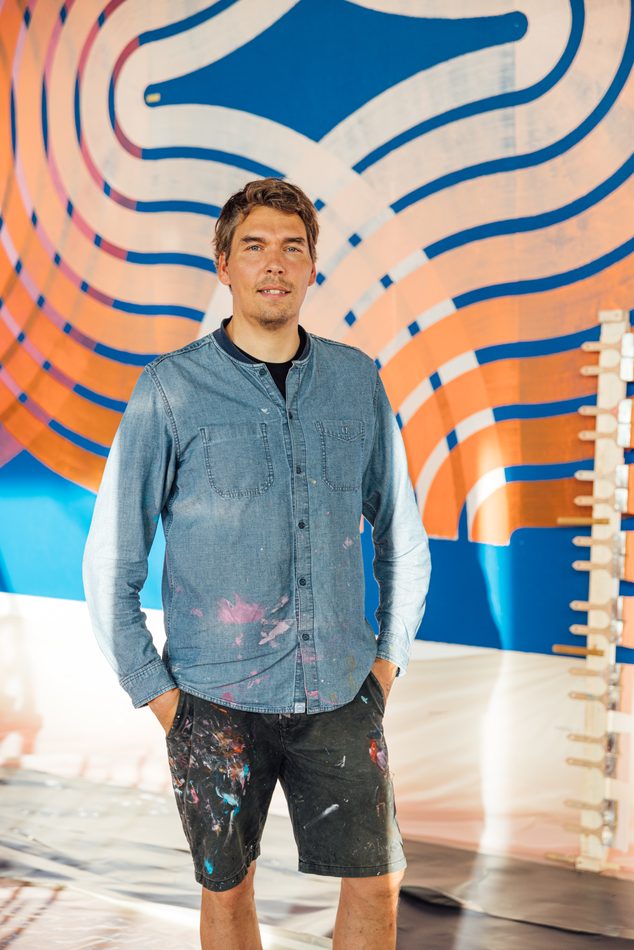
Otto Baum is a contemporary artist whose practice explores the relationship between geometry, systems, and physical movement. Through the development of his self-designed painting tools, known as #Ottotools, he creates large-scale works that investigate how structured processes can generate unique and unpredictable visual outcomes.
His tools establish a specific framework of movement, rhythm, and repetition, while the final image is shaped by the artist's physical interaction with the surface, the material, and the moment of creation. Each work becomes a dialogue between control and intuition, precision and variation.
Baum is interested in the visual power of simplicity and the complexity that can emerge from clear forms and reduced elements. His works explore the relationship between positive and negative space, foreground and background, as well as the shifting perception of form depending on distance and proximity.
By combining constructed systems with an analogue, performative process, Otto Baum creates geometric compositions that exist between order and transformation, inviting the viewer to experience structure as something dynamic and alive.
Selected works
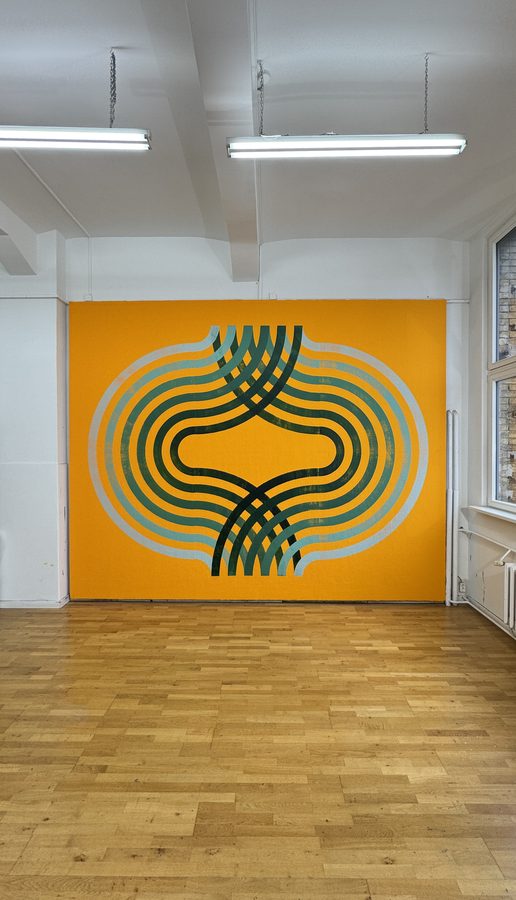
Baton
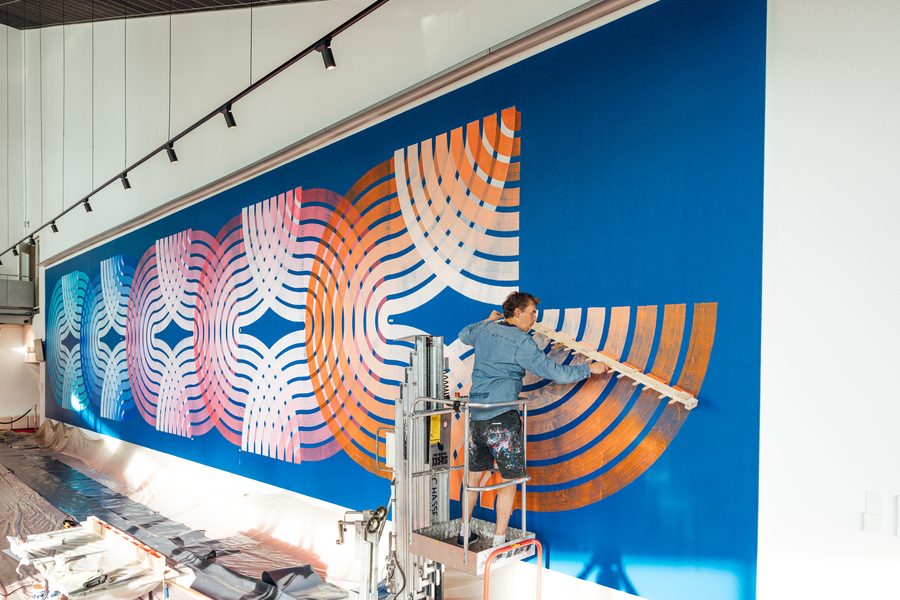
Gimme Five
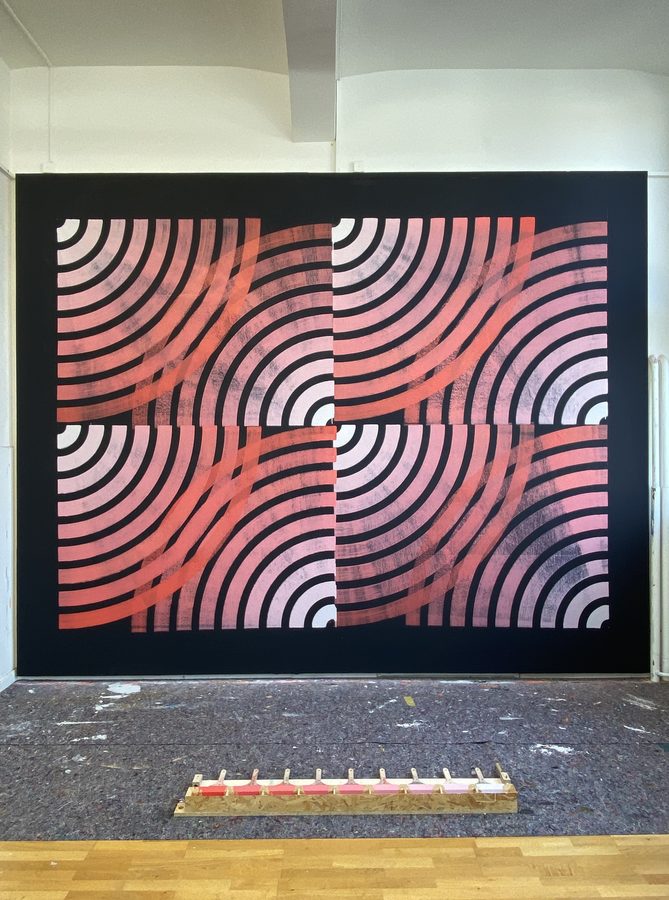
Now
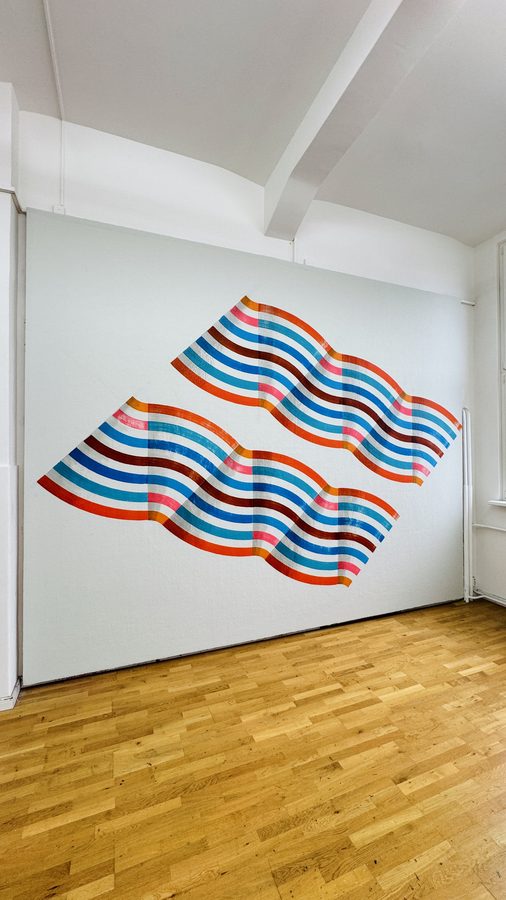
Stroph
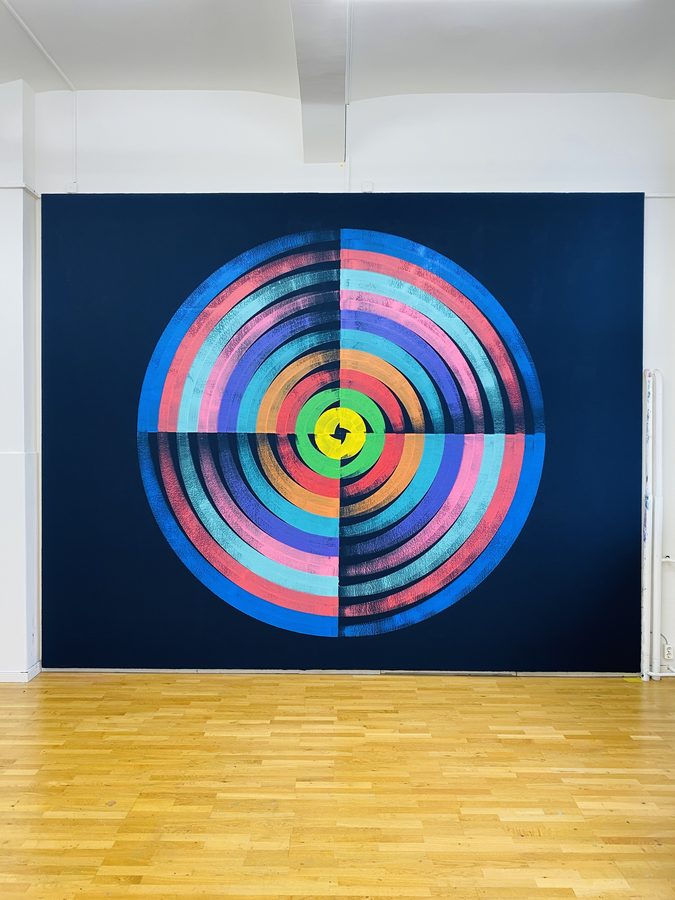
Twisted
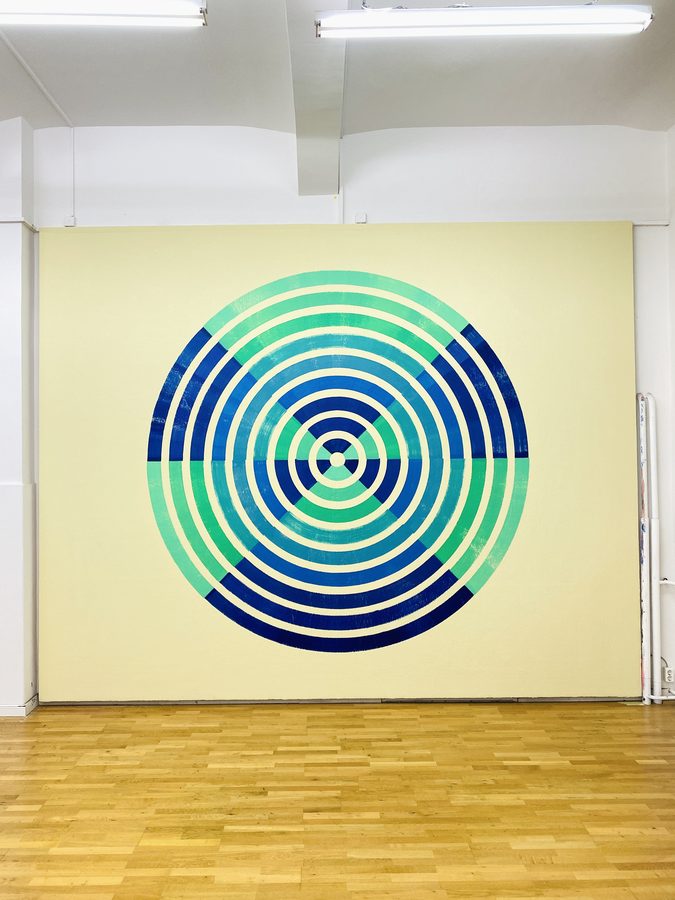
Wynter
Q & A
Is geometry a constraint or a freedom for you — and has that answer ever changed?
That is an interesting question, because geometry could easily be seen as a limitation. For me, however, it provides a fixed system within which I experience a great deal of freedom. This freedom lies in creating the forms themselves, but also in deciding on the format, the surface, and the choice of colors. For me, the combination of a clear structure and endless possibilities is what makes geometry so fascinating. It does not restrict my expression; instead, it creates a space in which I can explore and discover new possibilities.
Walk us through your process — where does a piece begin, and how do you know it's finished?
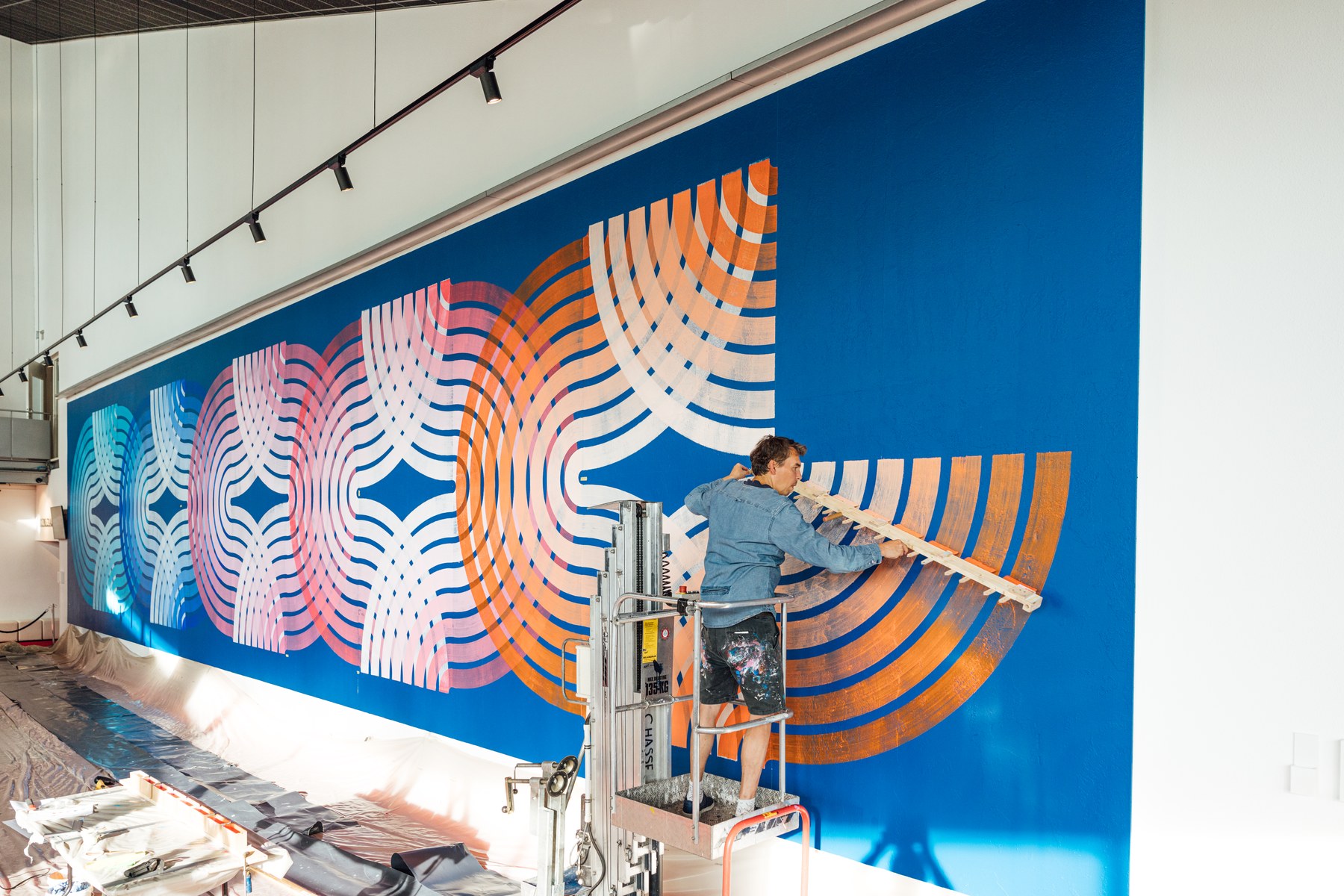
For several years, I have been designing and constructing my own painting tools, which I call #Ottotools. These instruments allow me to create different pattern worlds and independent symmetrical geometries on walls and across various scales. I apply the paint simultaneously with multiple brushes and move performatively across the surface. Although the tool defines a certain system, each work is created through my physical movement and intuition. I decide through personal sensation how much pressure to apply, how to guide the tool, and how the movement develops. Every gesture directly influences the final result, meaning that each piece becomes a unique work. The structure may follow a system, but the execution is always individual and unrepeatable.
Is there something outside of art — a system, structure, or phenomenon — that quietly shapes how you think about form?
I am interested in systems and structures that are based on simple principles and are capable of creating a great variety of outcomes. This idea can be found in many areas outside of art — for example, in mathematical relationships, natural growth processes, or recurring patterns in our surroundings. What fascinates me most is the power of simplicity: clear forms, reduced elements, and defined rules can develop an unexpected complexity. This idea strongly influences my work. I create systems and tools that establish a certain framework and then explore the possibilities that emerge within these boundaries. For me, it is not only about the visible form, but also about perception. I am interested in the interaction between proximity and distance, between foreground and background. Negative forms, which initially appear as empty spaces or gaps, can suddenly become active elements through their relationship with the painted areas and move into the foreground. This creates a dialogue between surface and space, between order and transformation. I am fascinated by the moment when something living and multi-layered emerges from a clear structure.
What does a viewer miss when they see your work as 'just geometry'?
They might miss the most essential part: the process of creation. The finished geometric structure only reveals a part of what stands behind the work. A viewer may recognize that there is a craft and a physical process involved, but the actual making of the work is unique. Through the fixed system of the tool and the arrangement of the brushes, which apply several colors simultaneously onto the surface, a specific rhythm emerges. Every variation in pressure, movement, and contact with the surface is transferred into each individual line. The entire process becomes visible through the final composition. Especially in large-scale works, the physical dimension of this process becomes an important part of the experience.
What's the last rule you set for yourself in the work, and did you keep it?
My rules are usually defined by the tool itself. The instrument determines which movements are possible and what kind of structures can emerge from them. I love this state because I do not experience it as a restriction, but as a form of freedom. The moment when I place the tool onto the wall and allow the colors to become visible through my physical movement is where the work truly begins. The system creates the framework, but within that framework there is space for intuition, sensitivity, and discovery.
Describe a failure or a dead end in your practice — something that didn't work.
Some ideas appear realistic in my mind but turn out to be impossible to realize in practice in the way I initially imagined. This happens quite often, and it is an important part of my process. When this occurs, I adjust my approach, modify details, or refine the tools themselves. Working directly with my #Ottotools is essential because the analogue process differs greatly from a purely mathematical calculation. The physical interaction between the tool, the material, the surface, and my own movement introduces elements that cannot be completely planned or predicted. For me, this unpredictability is what keeps the work alive.
Newsletter
Curated open calls and one artist to know, every couple of weeks. Free, no spam.