Selected Artist
About
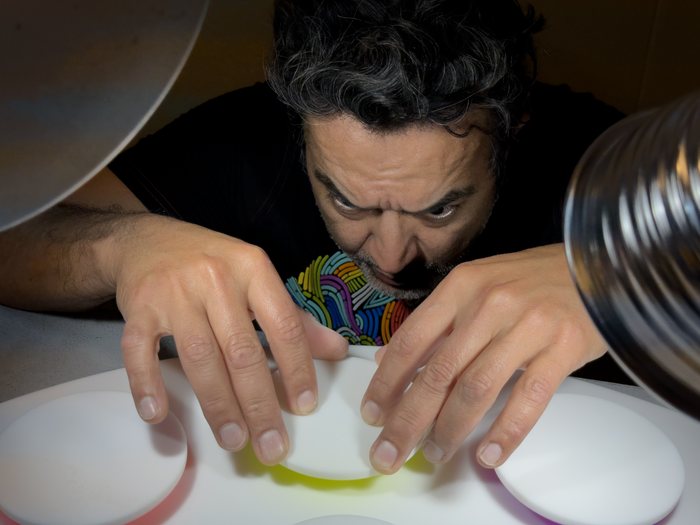
Ender Martos's practice explores the fluid boundary between order and human emotion, rooting geometric abstraction in sensory experience rather than cold logic. Raised in Mérida, Venezuela, amid the dramatic peaks of the Andes, he developed an early obsession with capturing the region's vibrant, sun-drenched light. Though he initially pursued architecture, he felt a deep desire to build something that made people feel.
Immigrating to the United States in 1998 transformed his life and vision. Standing on the shoulders of Venezuelan kinetic masters like Jesús Rafael Soto, Carlos Cruz-Diez, and Gego, he bridged his technical background with intense emotional inquiry, ripping lines off the flat page to create three-dimensional, immersive kinetic sculptures.
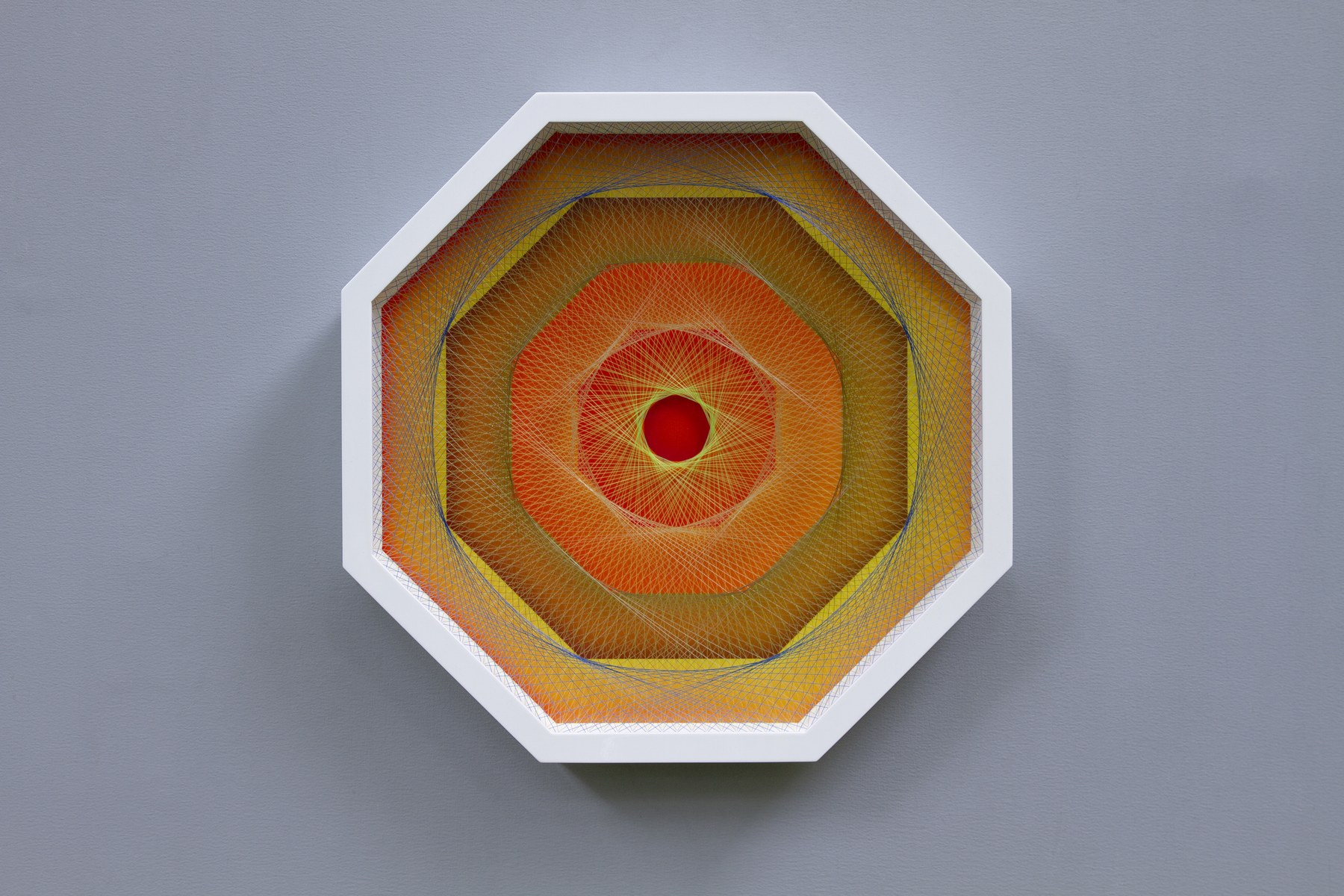
Specialising in monumental installations made from meticulously layered translucent monofilament, acrylics, and mirrors, his work creates shifting moiré effects and optical vibrations that demand the physical movement of the viewer to be fully activated. From intimate gallery series to large-scale public commissions, his art serves as an immigrant's bridge between worlds — using a universal geometric language to dissolve societal hard edges and celebrate the interconnection of our shared human experience.
Selected works
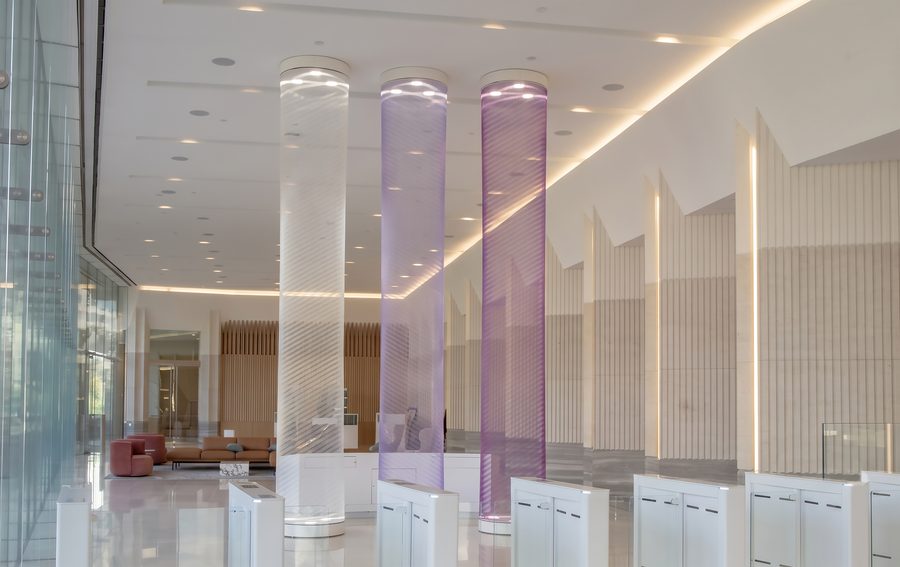
Celestial Beams of Unity, 2023, powder coated aluminum, monofilament & LED
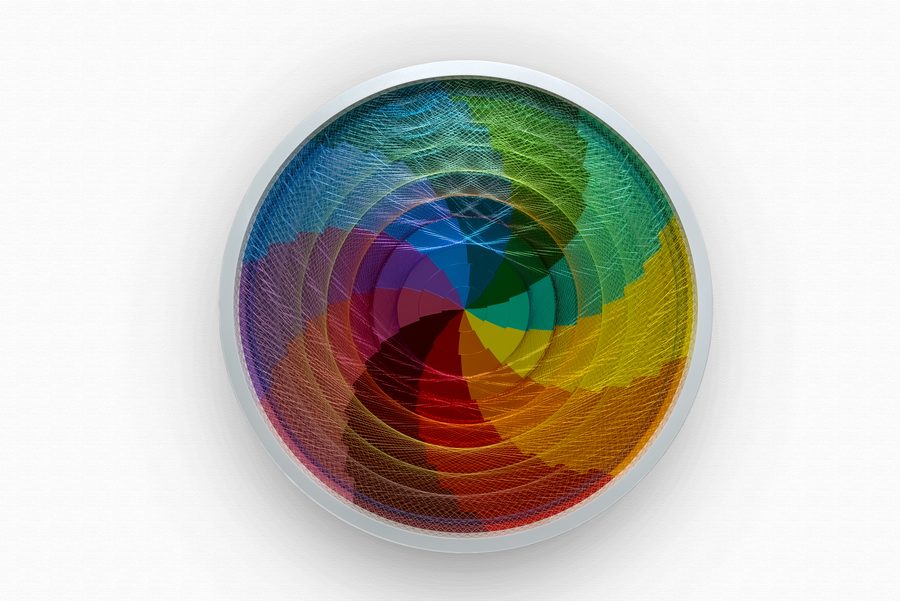
Centrifugal Force of Light, 2022, aluminum, monofilament, acrylic mirror
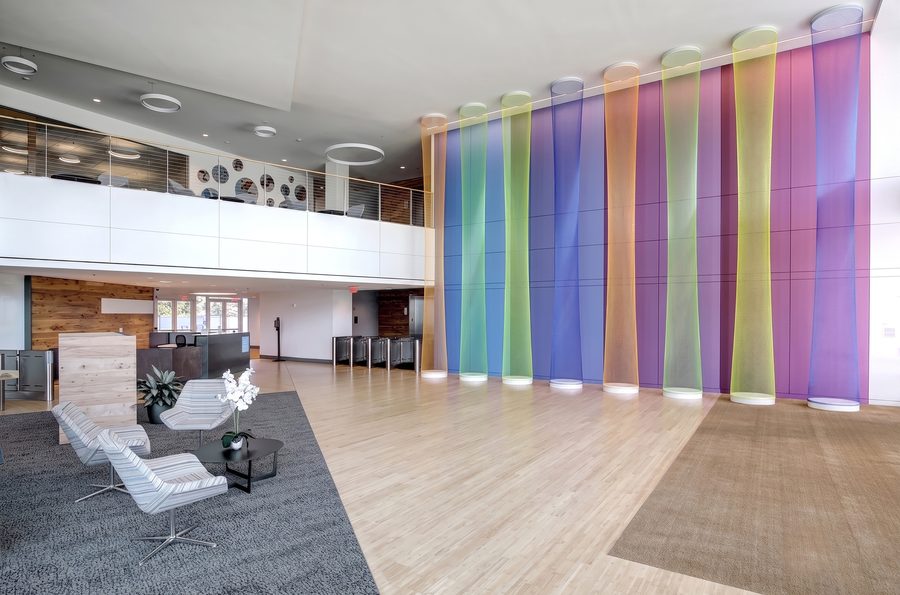
Graceful Celestial Vernal Equinox II, 2016, acrylic latex, monofilament & wood
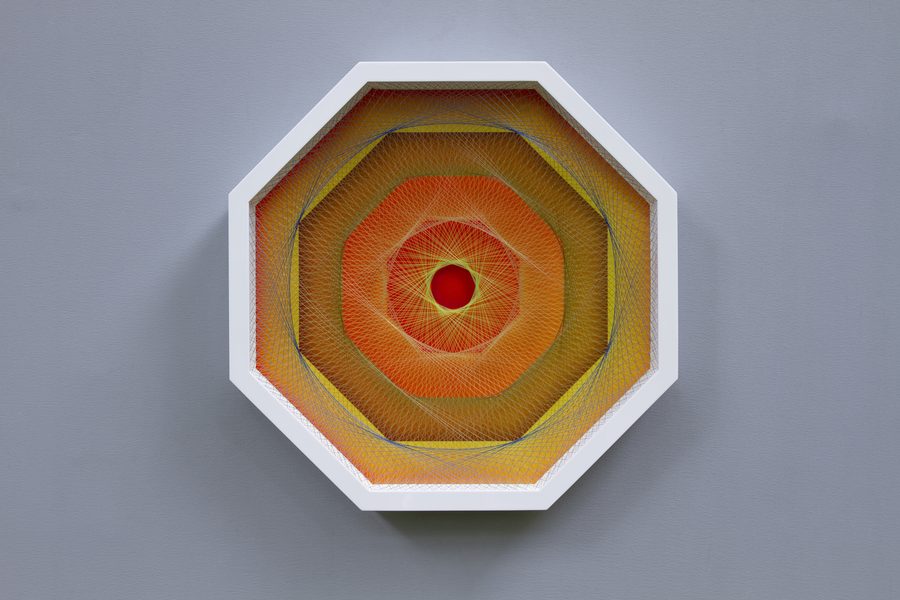
Infinitus Presence of Silence, 2022, aluminum, monofilament, acrylic lenticular
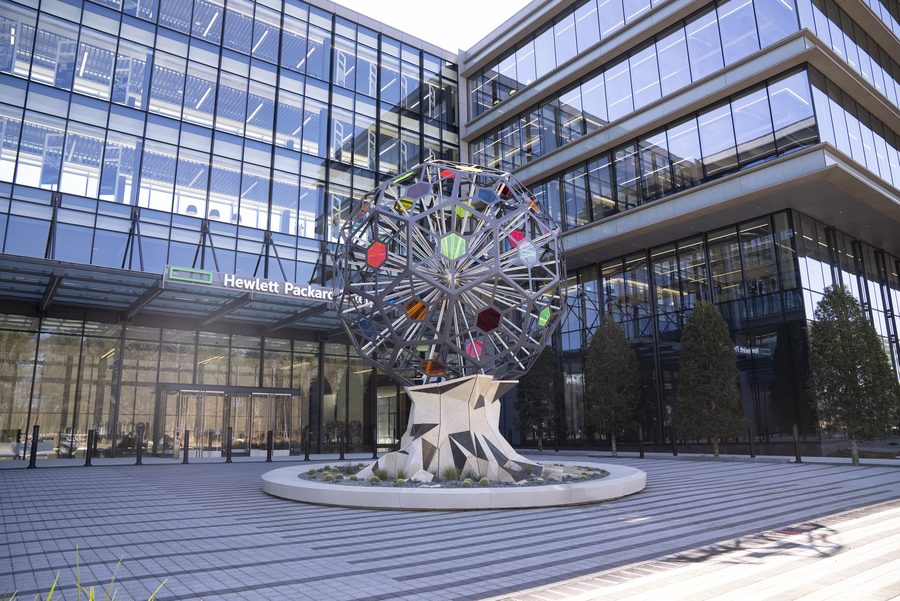
Rebirth of Technology, 2022, limestone, corten steel, stainless steel, LED
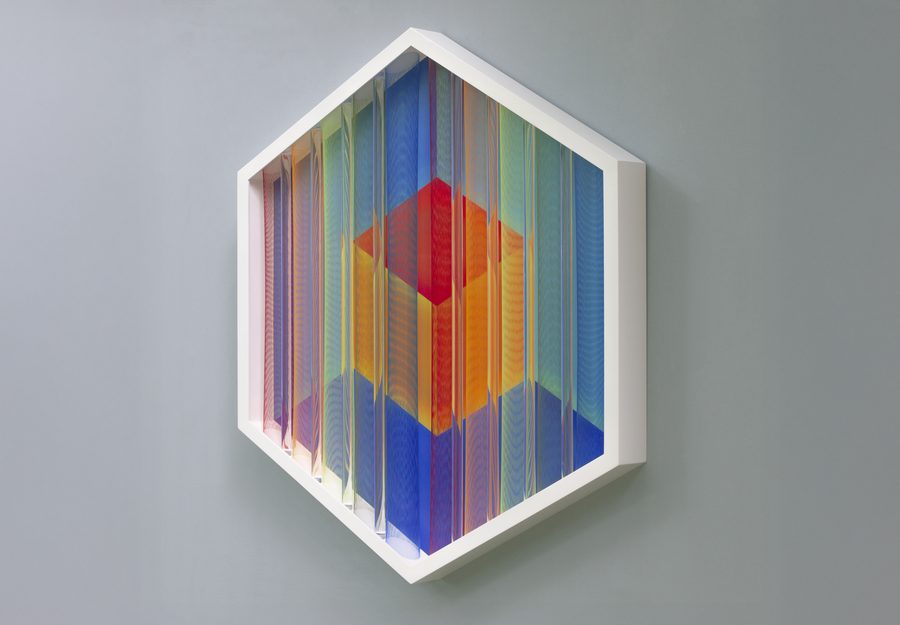
Texashedron Physicality, 2022, aluminum, monofilament, acrylic lenticular
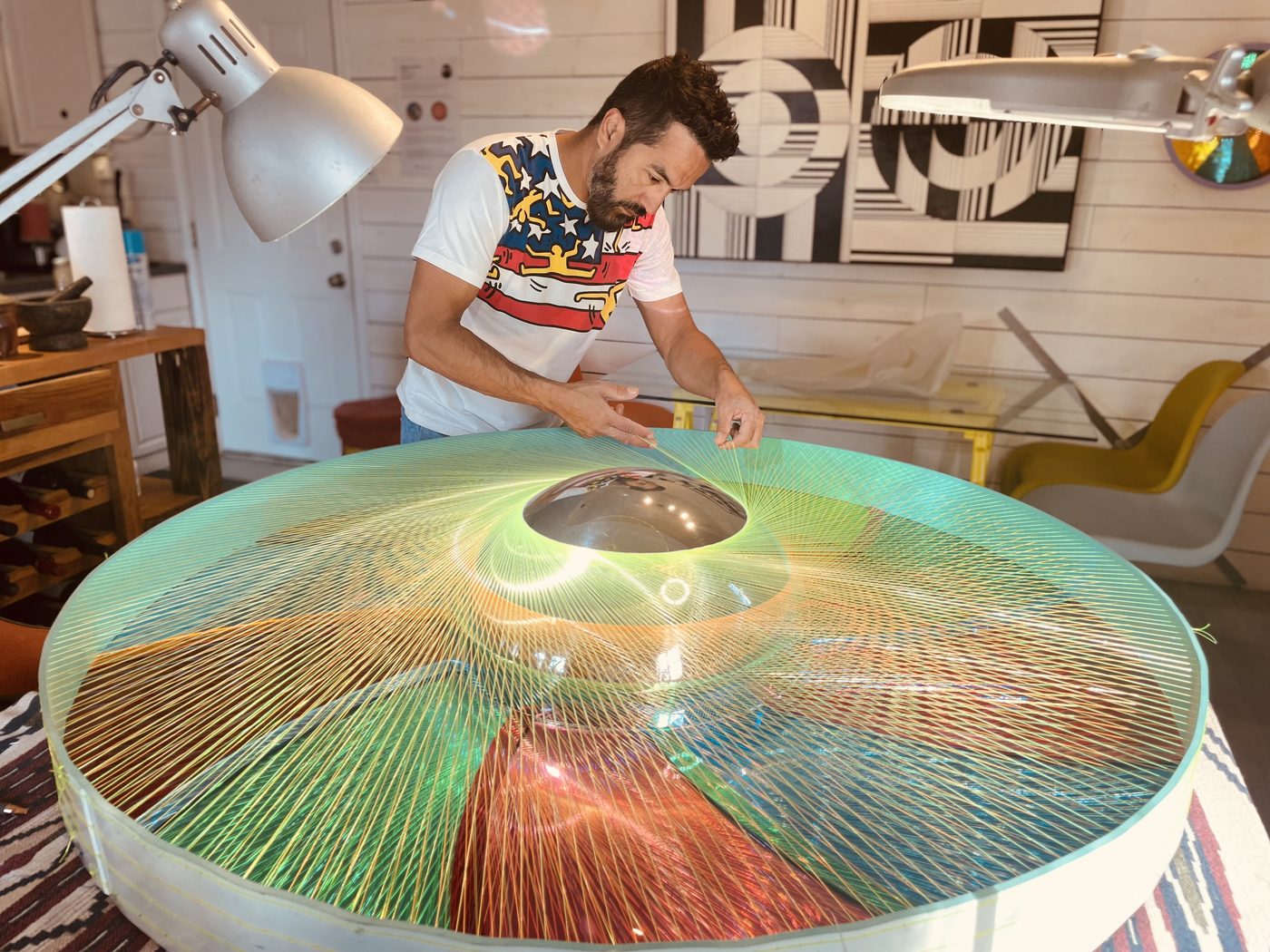
Ender Martos
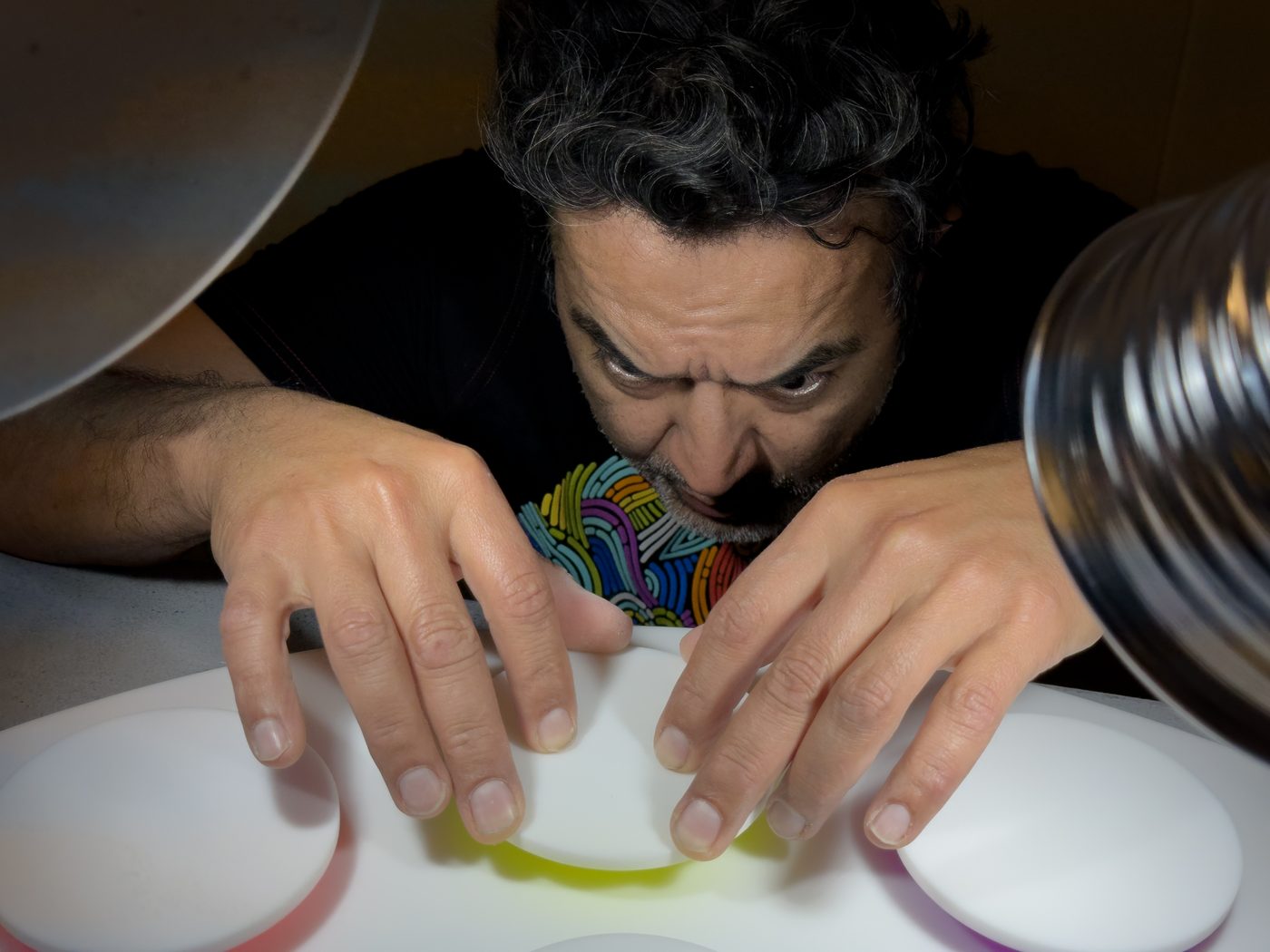
Ender Martos
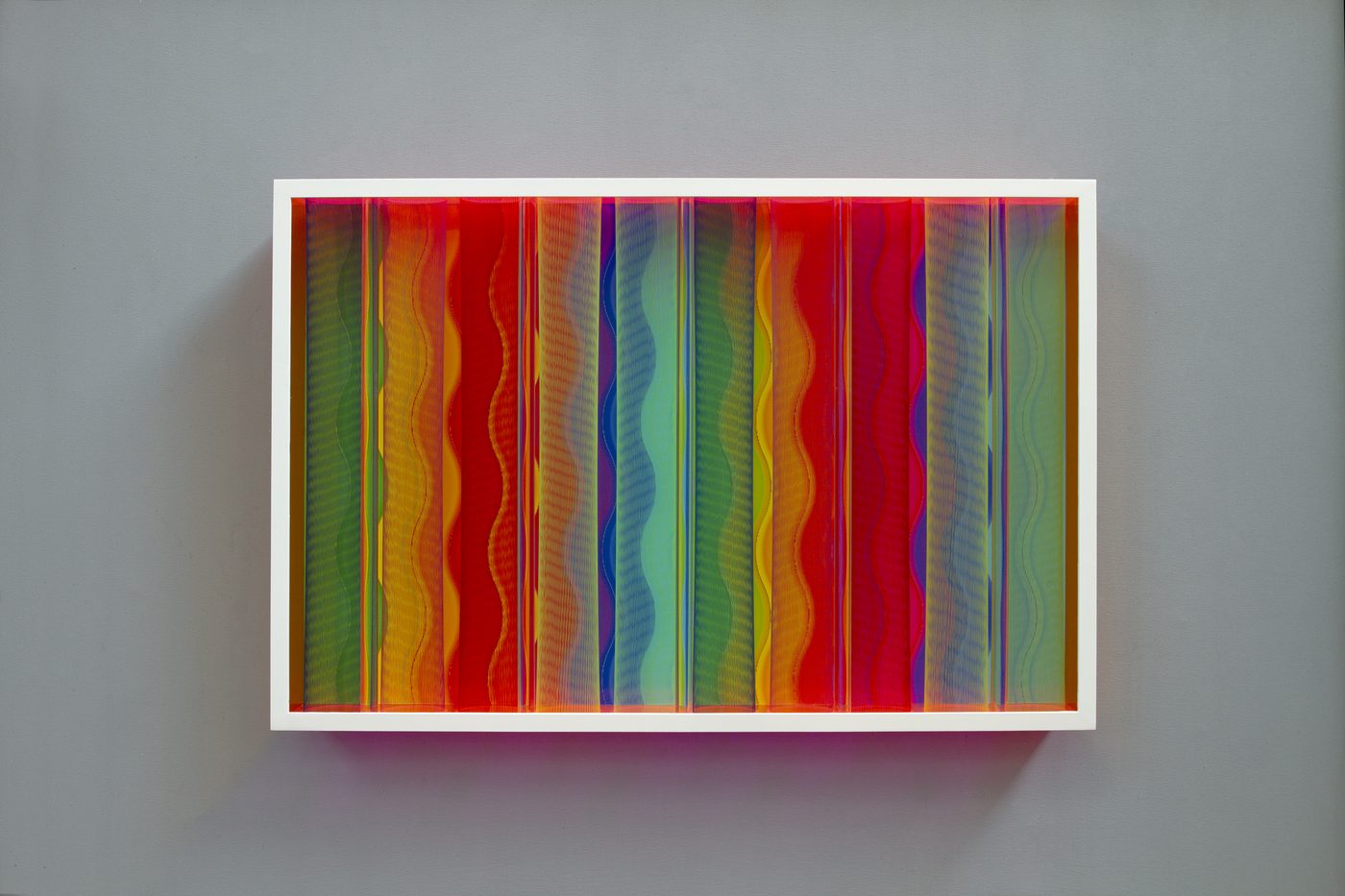
Graceful Wavy Parallax, acrylic sheet, monofilament, lenticular
Q & A
Is geometry a constraint or a freedom for you — and has that answer ever changed?
It started strictly as a constraint. When I was studying architecture in Venezuela, geometry was a set of rigid technical rules, blueprints meant to define fixed physical boundaries. But when my life fractured in 1998 and I immigrated to America at twenty-one, that answer completely flipped. Suddenly, I was an outsider navigating a new culture, a new language, and the grueling survival of Texas construction jobs. In that state of deep displacement, the grid became my anchor. The geometric line was the one language that didn’t require translation. Today, geometry is absolute freedom. The constraint of absolute mathematical precision gives me the containment I need to explore chaotic, sprawling human emotions. It provides a safe, structured framework where light, vibrant color, and movement can play without boundaries. It is a universal architecture that allows an immigrant from the Andes to communicate directly with a passerby in Texas.
Walk us through your process — where does a piece begin, and how do you know it's finished?
Every piece begins in quiet containment with a technical drawing—a highly rigorous, mathematical layout where I draft the precise choreography of the lines. But the real, exhilarating transformation happens when I pull those lines into three dimensions, hand-stringing endless strands of translucent monofilament across custom frames. The studio practice is intensely labor-intensive and meditative; it requires absolute physical focus to keep the tension of the thread perfect. I know a piece is finished when I step away from it, walk across the studio, and the physical material completely dissolves. If the acrylic, the mirrors, or the strands themselves still feel heavy and static, the work isn't done. It is finished the exact moment the physical structure disappears into an optical experience of pure light and vibration. When the work begins to breathe, shimmer, and react to my own footsteps, I know it is ready to be handed over to the world.
Is there something outside of art — a system, structure, or phenomenon — that quietly shapes how you think about form?
I am constantly shaped by the phenomenon of human migration and the natural architecture of networks. When you leave your homeland, your relationship with space changes. You become hyper-aware of how paths cross, how networks form, and how human beings adjust their perspectives to survive in a new environment. I think about the way a forest network functions, or how digital communication channels interconnect us globally. This heavily informed my public sculpture, Rebirth of Technology. I designed a monumental tree structure where Texas limestone roots sprout into a matrix of colored panels and several of vibrating lines. I wanted to mirror how nature, technology, and human resilience are fundamentally part of the same interconnected system. I look for systems outside of art where individual, delicate threads come together to create a powerful, unified, and supportive structure.
What does a viewer miss when they see your work as 'just geometry'?
They miss the entire heartbeat of the piece. They miss the human element—the fact that the geometry is merely a catalyst for empathy and connection. When people look at a static photograph of my work on a screen or see it as "just geometry," it can look cold, decorative, or purely mathematical. But my work is created to be experienced in the flesh. They miss the physical dialogue between the object and their own body. The artwork doesn't sit passively on a wall; it requires the viewer to walk, tilt their head, and move through space to activate it. When you move, the lines oscillate, the colors bleed into one another, and a beautiful moiré effect suddenly breathes warmth into a hard edge. It isn't a math lesson; it is an invitation to slow down and confront the beautiful, joyful mechanics of your own perception.
What's the last rule you set for yourself in the work, and did you keep it?
The last rule I set for myself was to completely surrender control over how the public interacts with my art, and I have absolutely kept it. Coming from an architectural background, there is an instinct to dictate how people navigate a space or view a form. But during a breakthrough moment in my practice, driven by pure curiosity, I decided to take a guerrilla art approach. I took my entire installation process out of the isolated studio and onto a pedestrian bridge in Lady Bird Lake, Austin. I ruled that I wouldn't hide the process or protect the work from the chaos of everyday life. The reward was incredible. Passersby stopped, asked questions, touched the light, and became part of the creation. Breaking the rule of studio isolation taught me that public art belongs entirely to the community.
Describe a failure or a dead end in your practice — something that didn't work.
Transitioning from two-dimensional technical drawings to three-dimensional structures was like learning a completely new language without a dictionary. Early on, I hit a profound practical dead end. I was experimenting with non-traditional materials like monofilament and plexiglass to pull my lines off the flat page. What I didn’t understand yet was the invisible force of tension. As I hand-wove hundreds of lines through a new piece, each strand exerted a tiny, cumulative pull. Suddenly, the entire plexiglass frame began to warp, groan, and completely collapse under the pressure. When I stepped back, it was a total failure. The work felt dead—a distorted, buckled cage of cold geometry that completely ruined the original idea. It was a deeply humbling realization that technical precision alone isn't enough. That quiet heartbreak in the studio forced me to completely reengineer my approach. I began incorporating thicker plexiglass bracing elements to reinforce the structural frames and switched to an even thinner monofilament. This shift unexpectedly amplified the optical illusion, allowing the physical structure to disappear so that vibrant color and light could truly breathe. In art, as in the immigrant journey, sometimes you have to let a structure collapse to discover how to build something stronger and more alive.
Newsletter
Curated open calls and one artist to know, every couple of weeks. Free, no spam.