Selected Artist
About
As a child, Francisco Rozas wanted to be an architect. In time his engagement with architecture took a different path — one rooted not in the construction of spaces meant to be lived in, but in the geometric principles that structure them.
His practice as an artist investigates geometric systems, patterns, and structures through analogue processes. Each sculpture begins as a drawing: a full net laid out on graph paper, scaled and dimensioned by hand, with every crease and facet plotted before a single fold is made. From this ongoing research the paper sculptures emerge, shaped by a succession of formal and material decisions. Because the underlying patterns are built from repeated modules, each finished work reads as a bounded excerpt of a system that could, in principle, continue indefinitely.
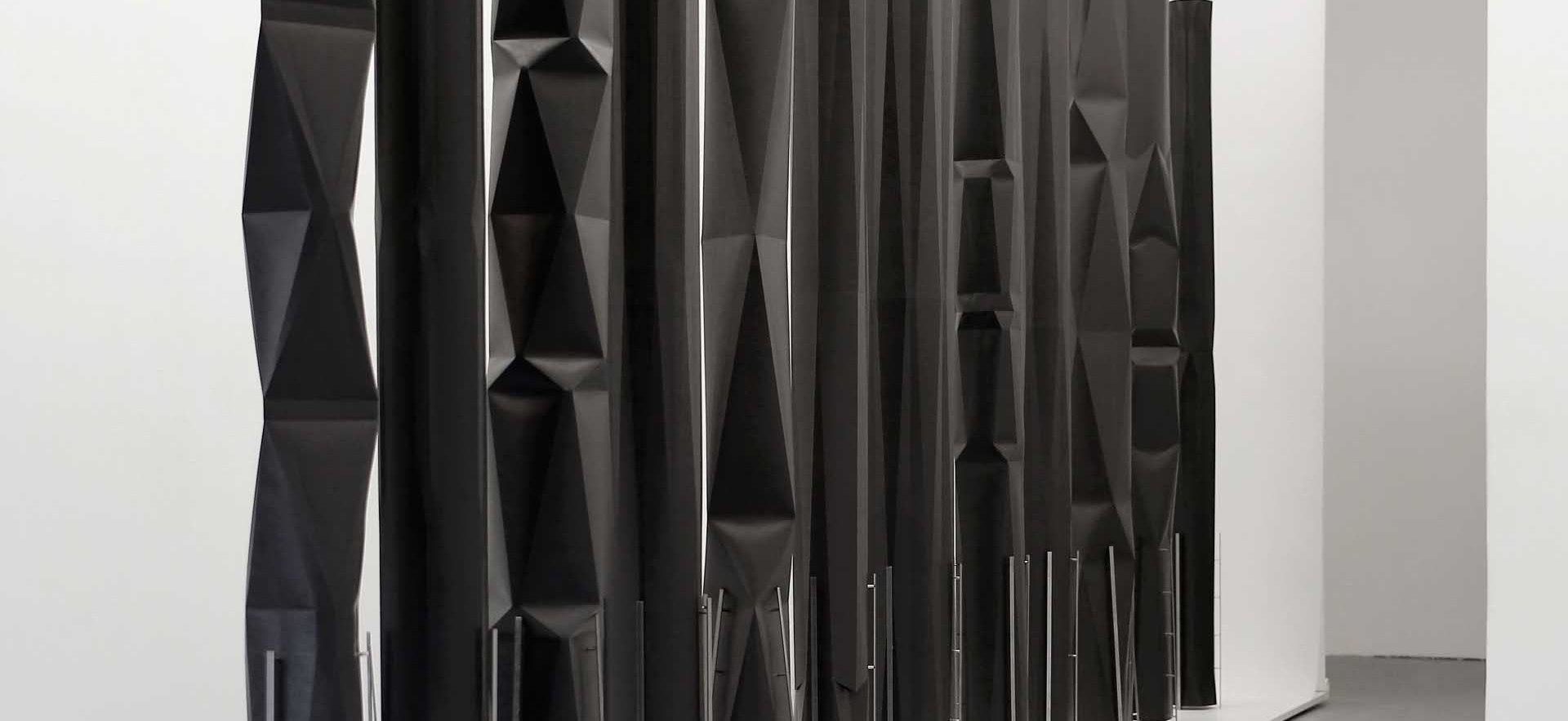
Folded into three dimensions, the works become faceted totems that catch light along every ridge. Rozas presents them in varied registers — arranged in procession across a plinth, suspended from thin steel rods, or standing alone as a column that opens from a solid base into an airy lattice of stacked apertures.
Though the works appear solid, rigid, and monumental, they are in fact extremely lightweight and capable only of supporting themselves. It is in this gap between perceived stability and actual fragility that the work operates — turning geometry from a subject to be depicted into an instrument of perception, and asking how much of what we see is supplied by our own expectation.
Selected works
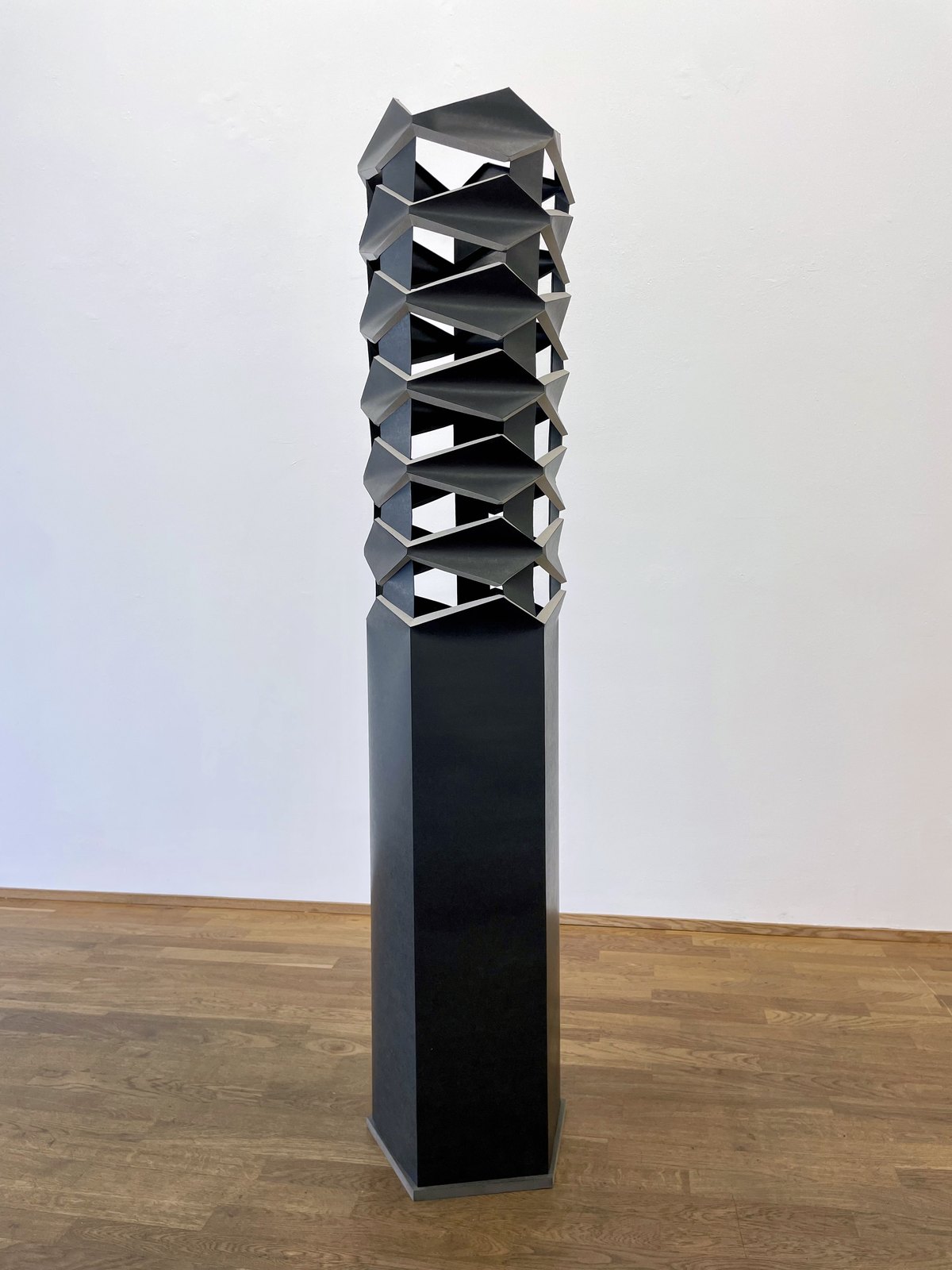
Untitled, H 180 cm · Ø 37 cm, 2024 — paper
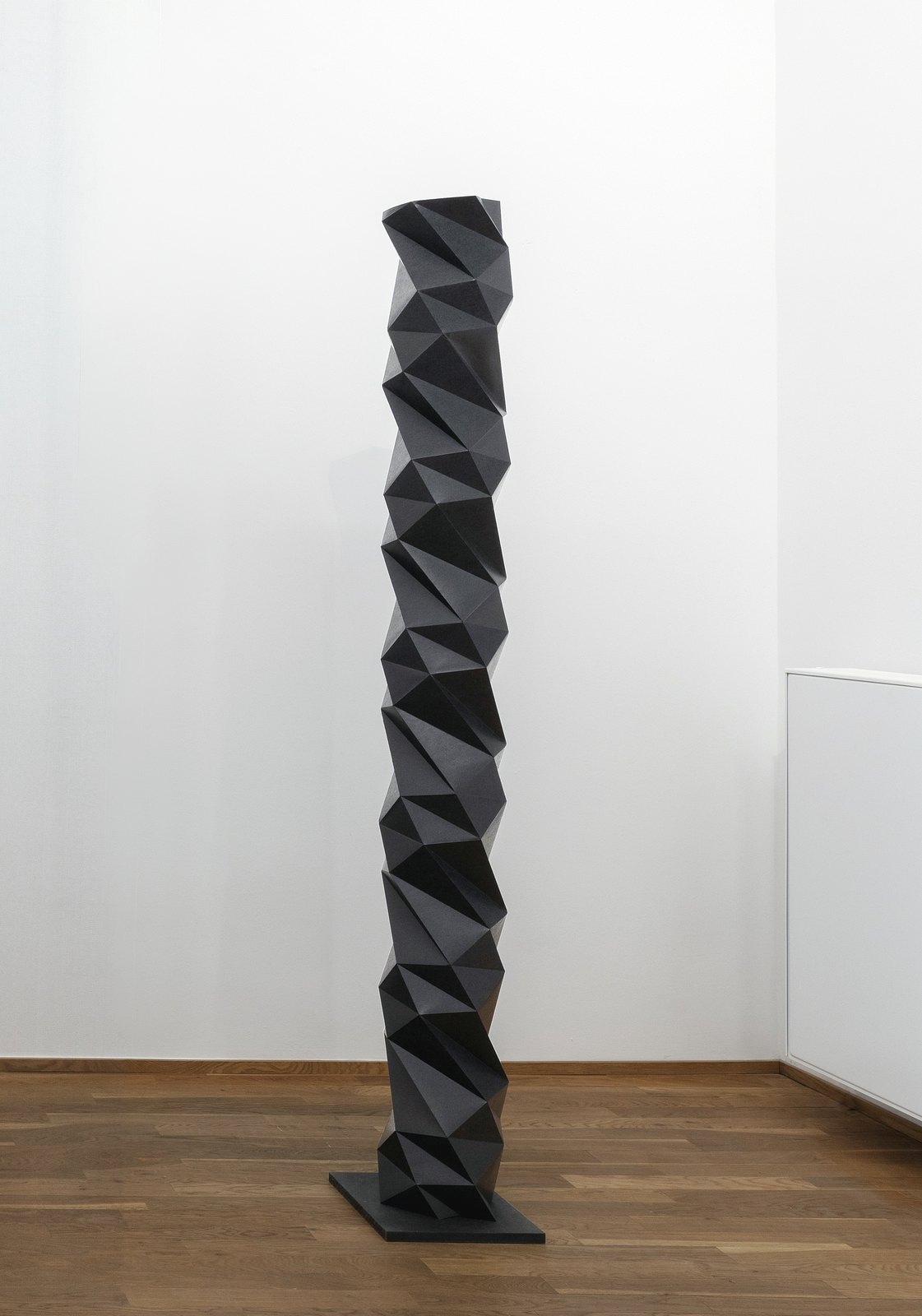
Untitled, H 210 cm · Ø 25 cm, 2023 — paper
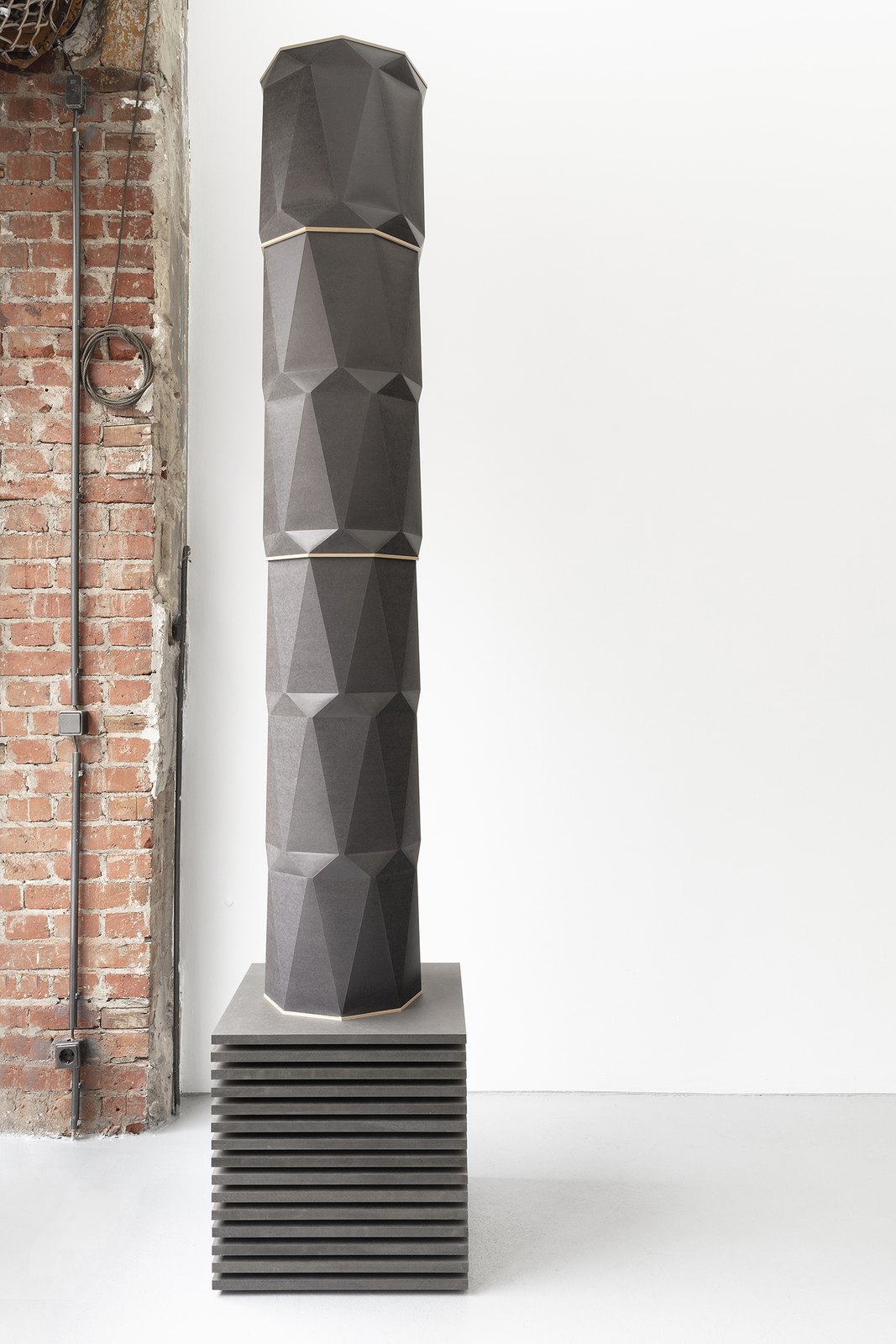
Untitled, H 200 cm · Ø 34 cm, 2021 — paper, wood
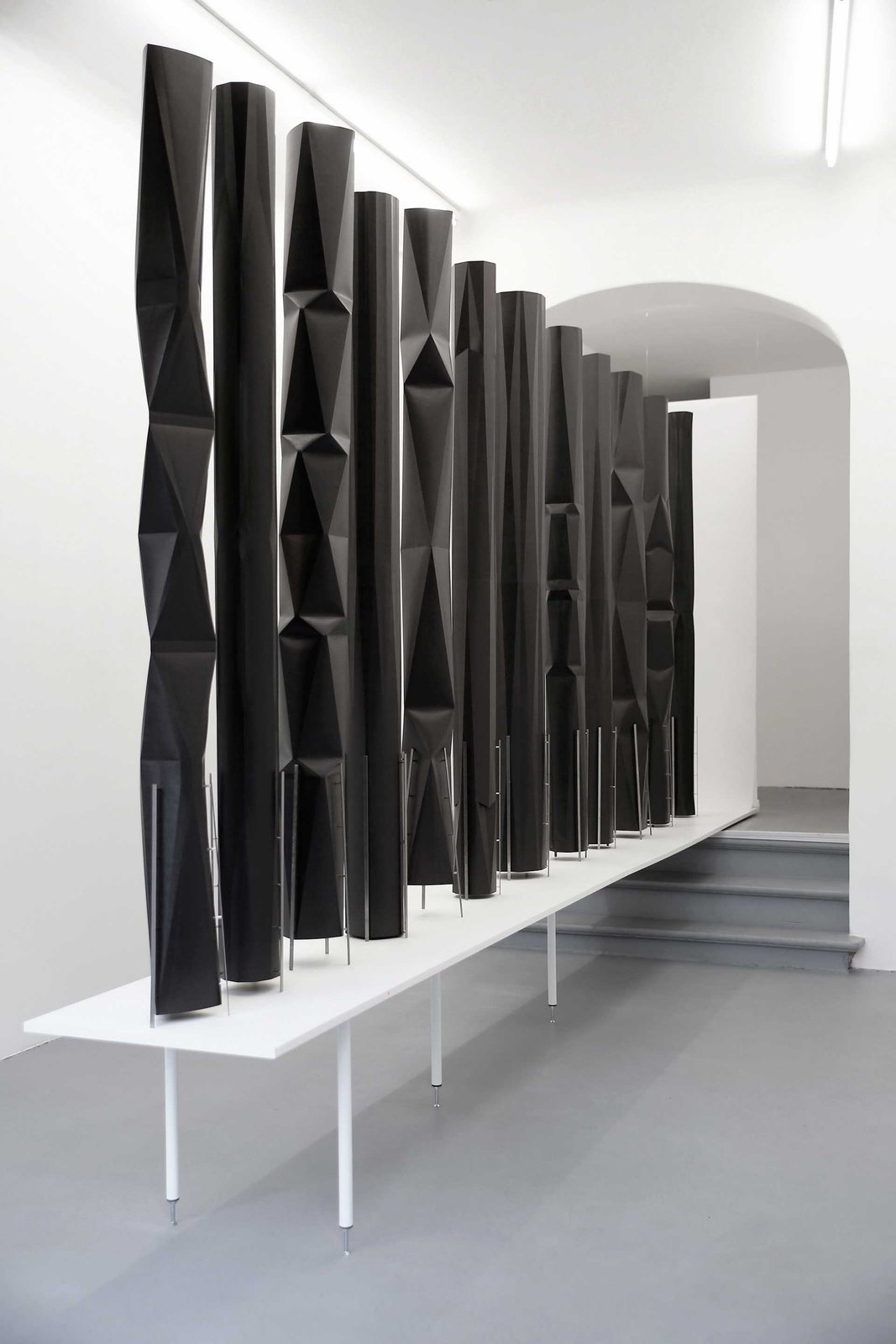
Pretending, 270 × 60 × 520 cm, 2016 — paper
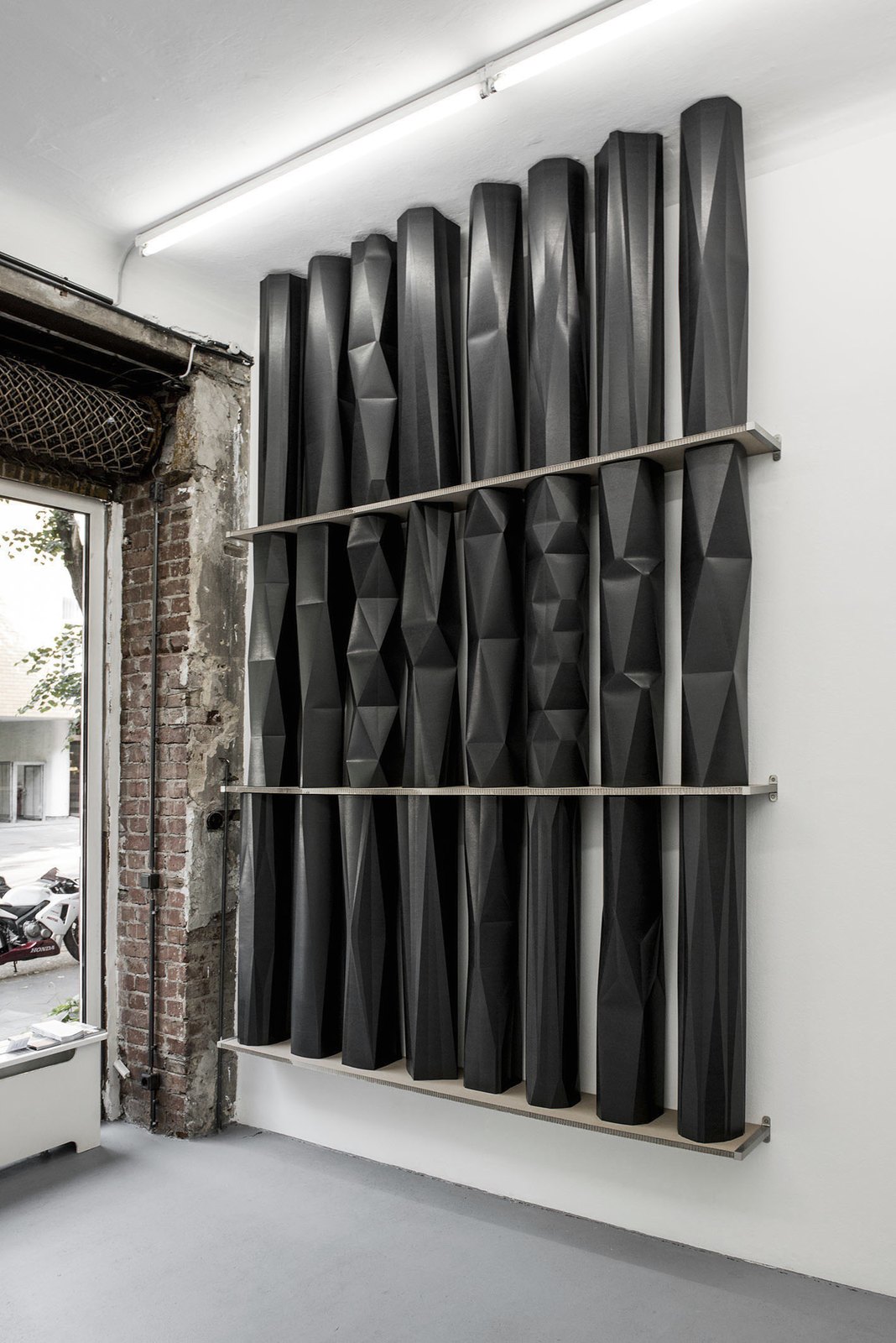
In Planning, 313 × 211 × 24 cm, 2014 — paper
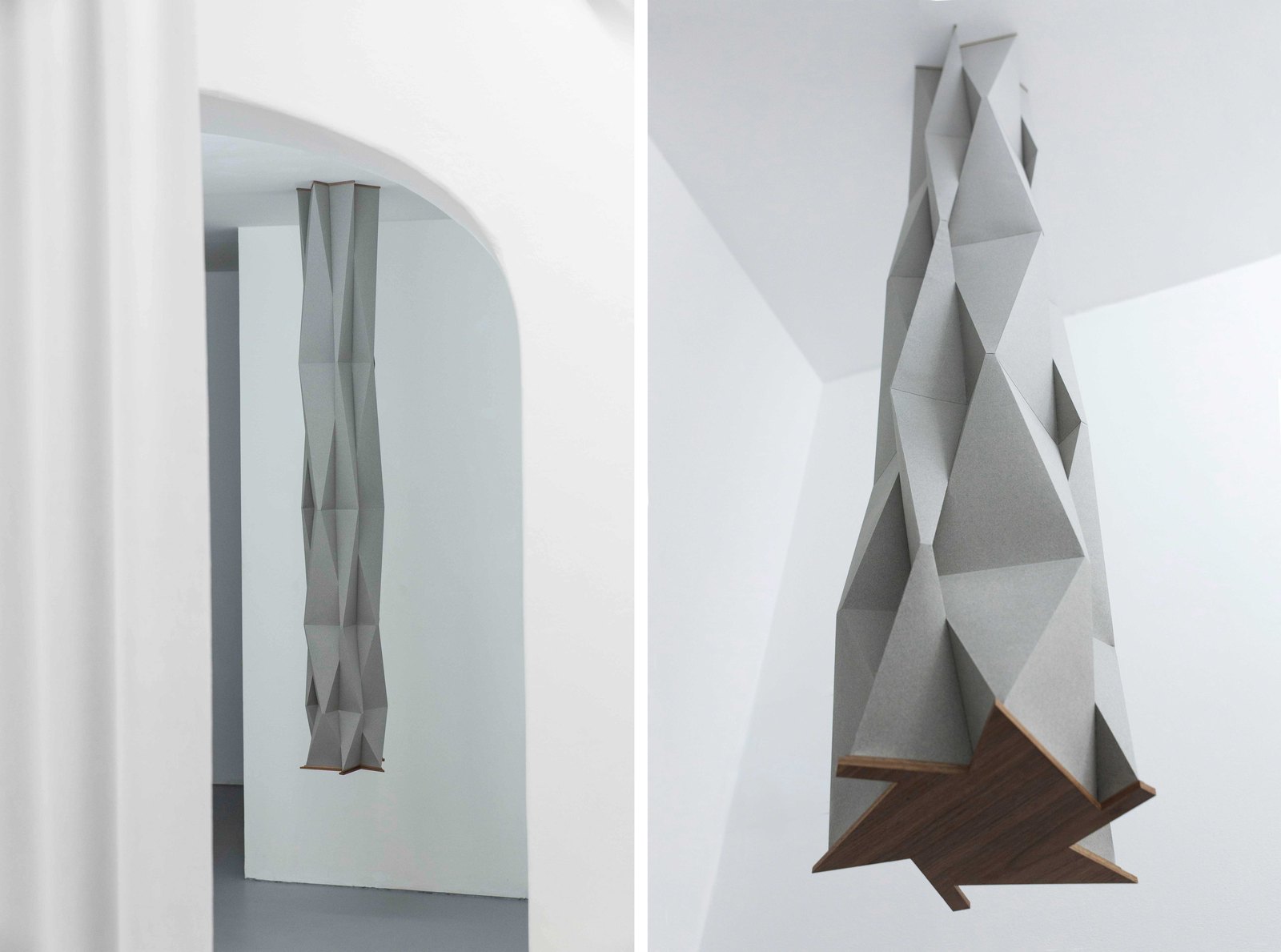
Support 01, H 200 cm · Ø 38 cm, 2018 — paper, wood
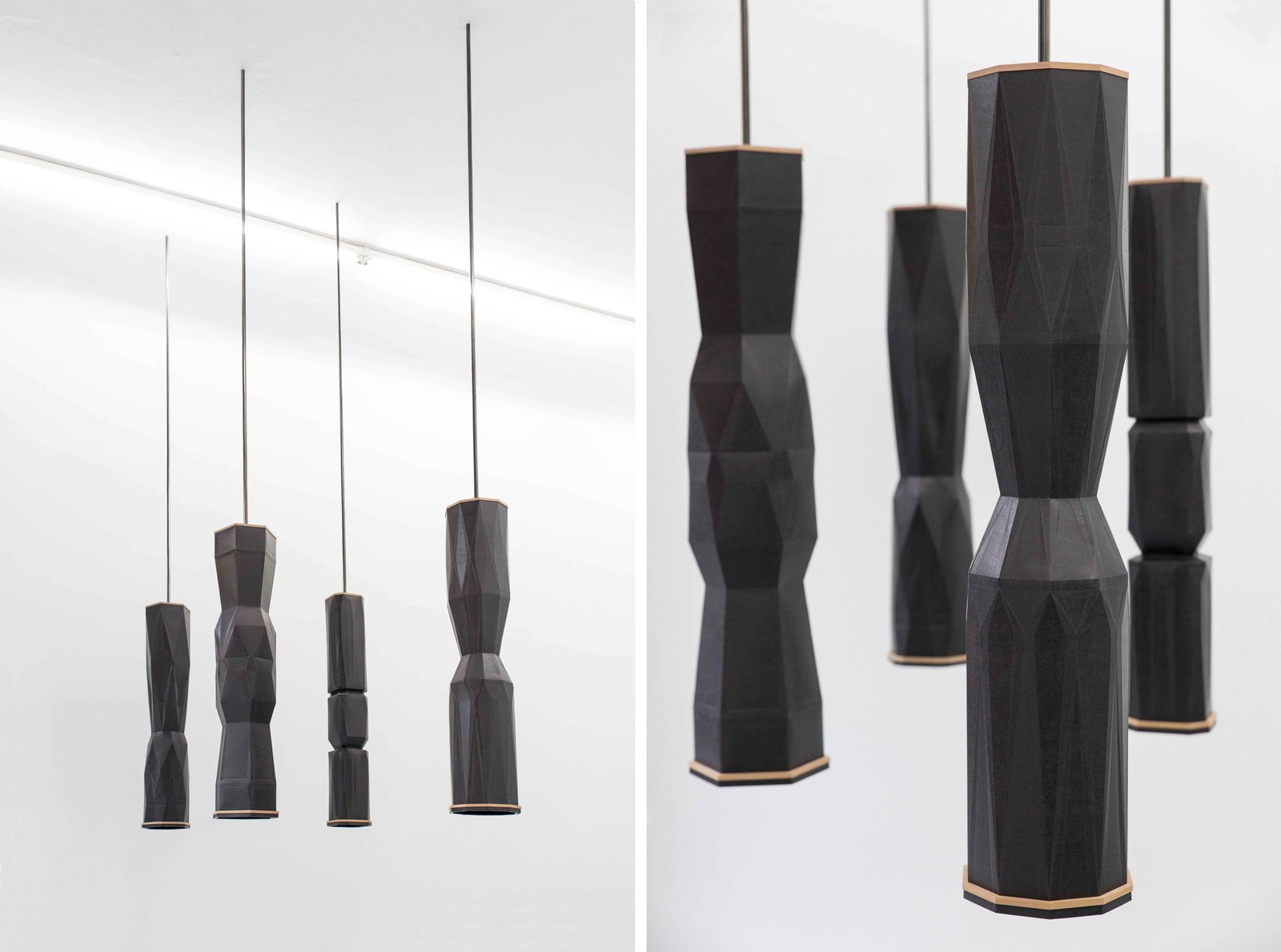
Support 02, H 80 cm · Ø 22 cm, 2018 — paper, wood, steel
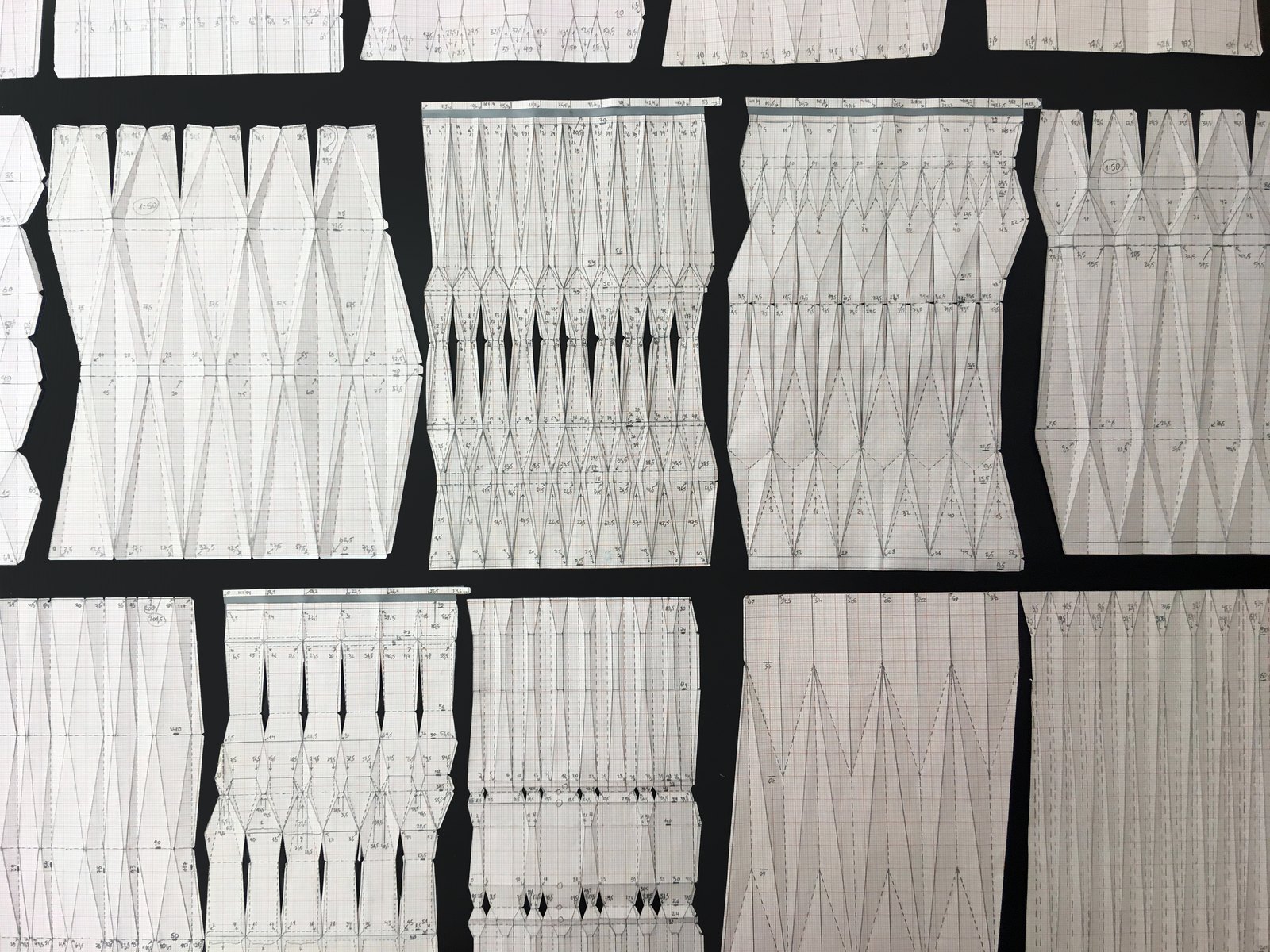
Sketches on graph paper (work in progress)
Q & A
Is geometry a constraint or a freedom for you — and has that answer ever changed?
Both. It’s a self-imposed framework. Through the repetition of geometric shapes that I create myself, a work emerges that is beautifully foreign. And yes, my answer to this question has changed. And I hope it continues to change.
Walk us through your process — where does a piece begin, and how do you know it’s finished?
My work begins with a long process of sketches and handmade models. At some point, it seems as though the form takes on a life of its own, and a distinct geometry begins to emerge. That is when the work truly begins. However, since its patterns can be repeated indefinitely, the work can never truly be finished — it can only be strategically paused.
Is there something outside of art — a system, structure, or phenomenon — that quietly shapes how you think about form?
Yes, there are many things. But without a doubt, architecture plays a fundamental role.
What does a viewer miss when they see your work as ‘just geometry’?
I think we all miss something when we look at a work of art. And at the same time, we’re able to notice something that the artists themselves hadn’t addressed. One day I came across some large sheets of old sewing patterns. I’m glad I didn’t realize for a while what they were for. That allowed me to simply enjoy their geometry.
What’s the last rule you set for yourself in the work, and did you keep it?
To keep going despite the challenges of working as a professional artist. So far, like everyone else in this field, I’ve stuck to it.
Describe a failure or a dead end in your practice — something that didn’t work.
Many things in an artistic practice never quite work out. There are projects that get left behind along the way, for all sorts of reasons, as well as sketches and models for unfinished works. Sometimes I think that all this material constitutes a larger body of work — perhaps even more monumental than the works that were actually completed.
Newsletter
Curated open calls and one artist to know, every couple of weeks. Free, no spam.