Selected Artist
About
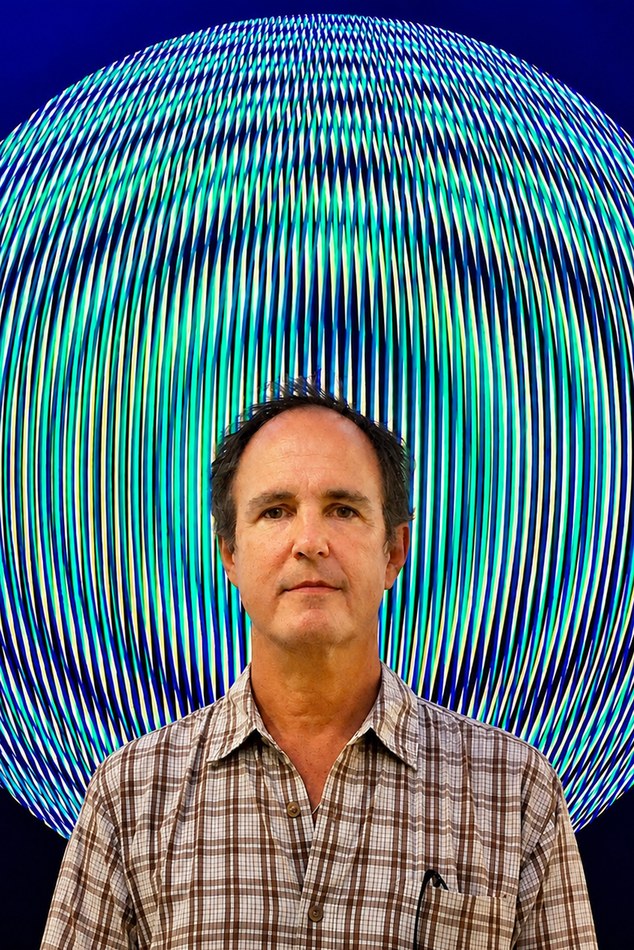
James Flynn (b. 1958) is a New Orleans artist whose path to painting developed alongside his career as a professional mariner and Mississippi River ship pilot. Geometry was the lens through which he saw and understood the world around him. What began as a means of navigating the seas later became his means of exploring visual perception through painting.
Flynn’s artistic development was shaped by his work with Abstract Minimalist Peter LoBello and by his decision to seek out Mexican Surrealist Pedro Friedeberg in 1989, a meeting that began a thirty-seven-year mentorship. As Friedeberg’s protégé, Flynn drew from his mentor’s fusion of geometric structure and visual complexity while establishing his own distinct visual language.
Flynn explores the boundary between what exists on the painted surface and what the viewer perceives. His work operates at the threshold between abstraction and recognition.
Selected works
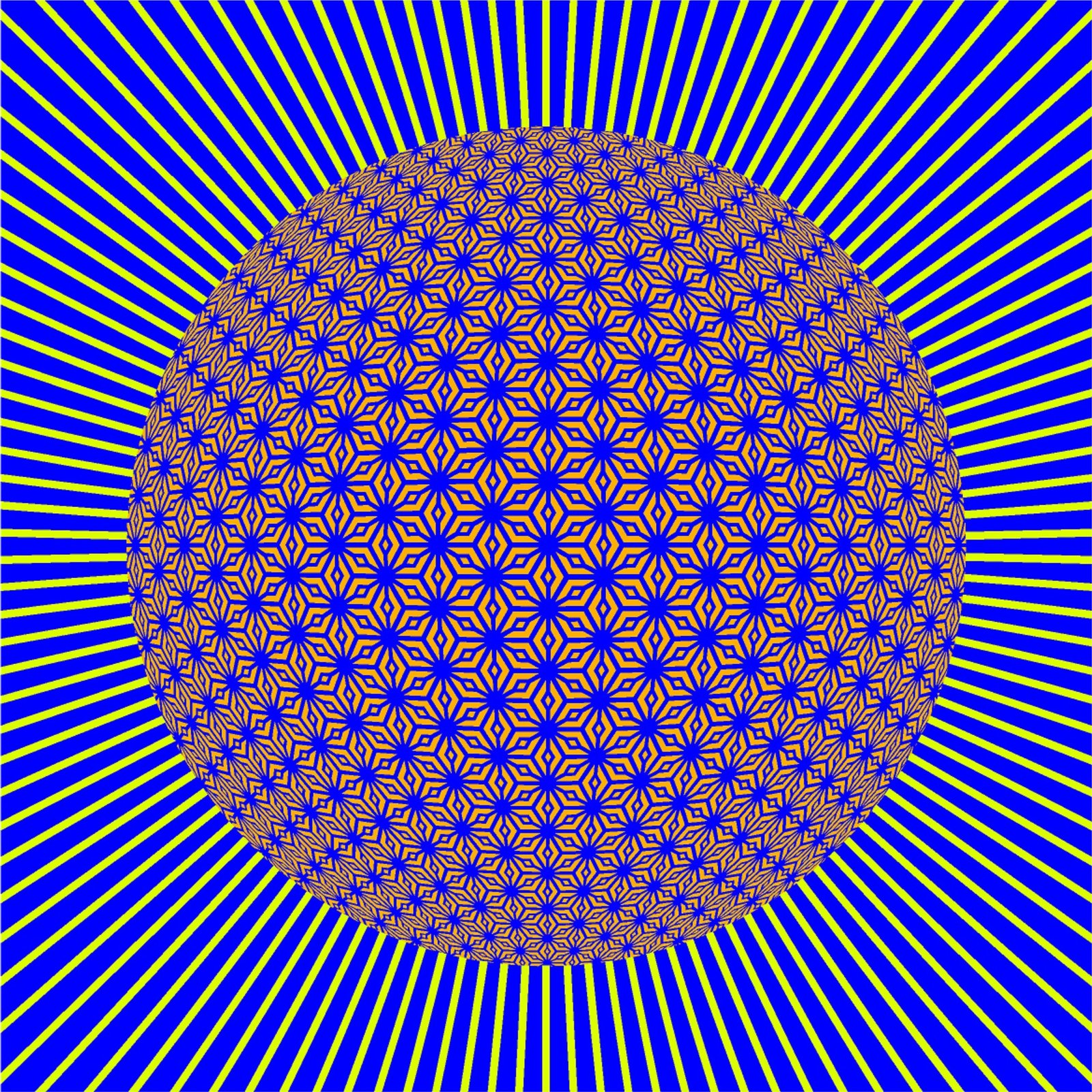
Day Star Radient
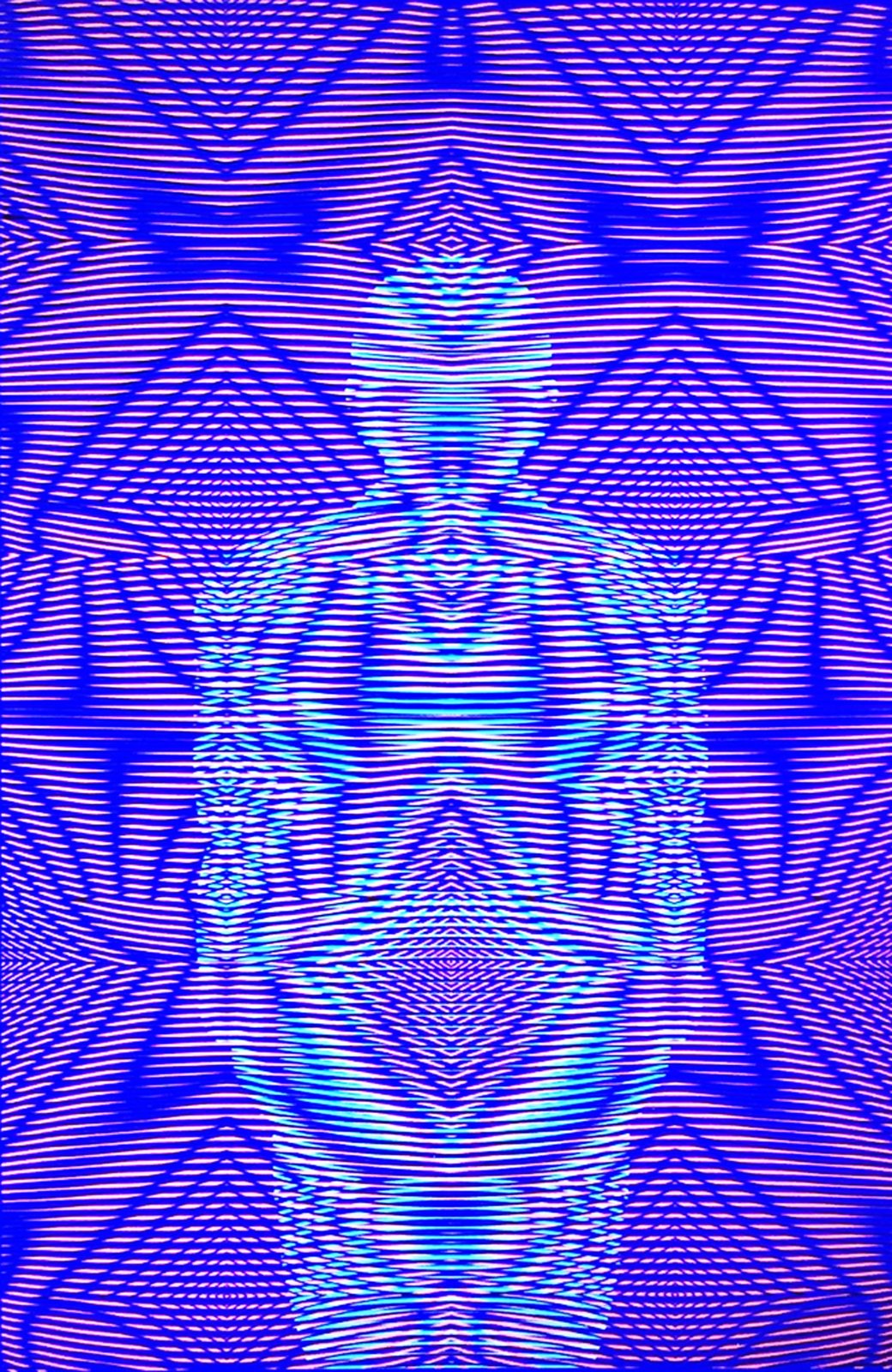
Epiphany
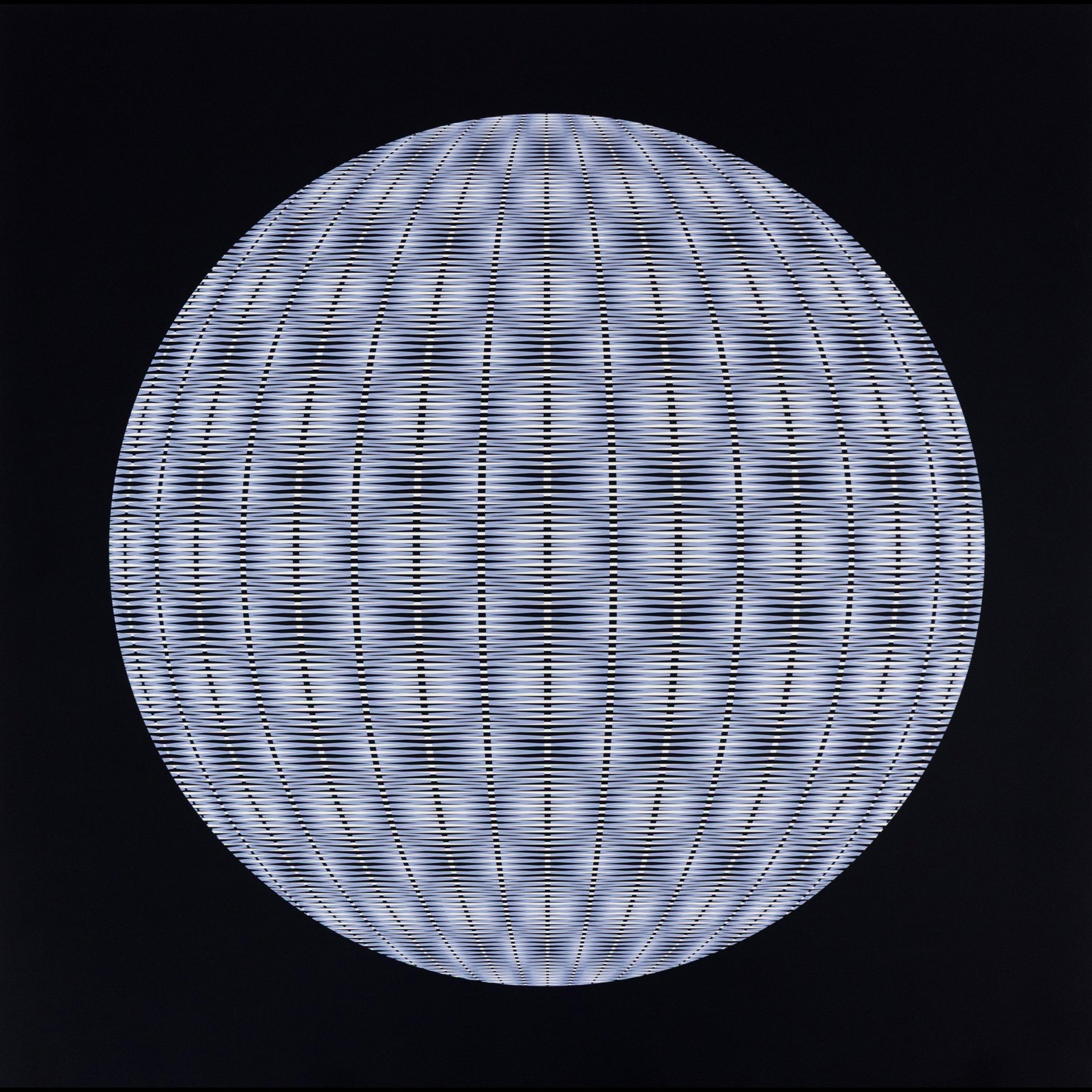
The Luminal Field at the Threshold of Perception
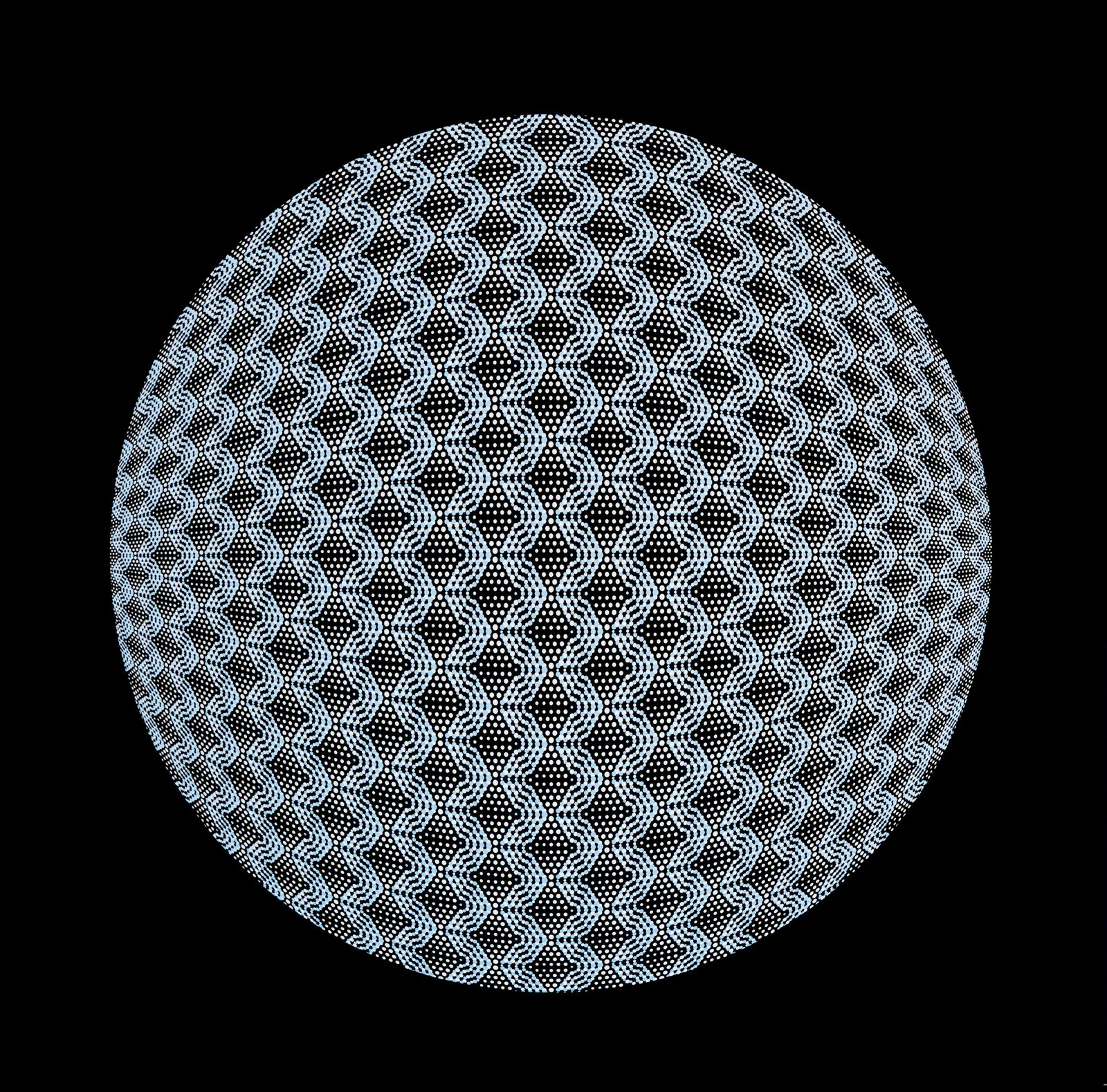
A Sudden Fever of Spotted Eagle Rays in Superposition
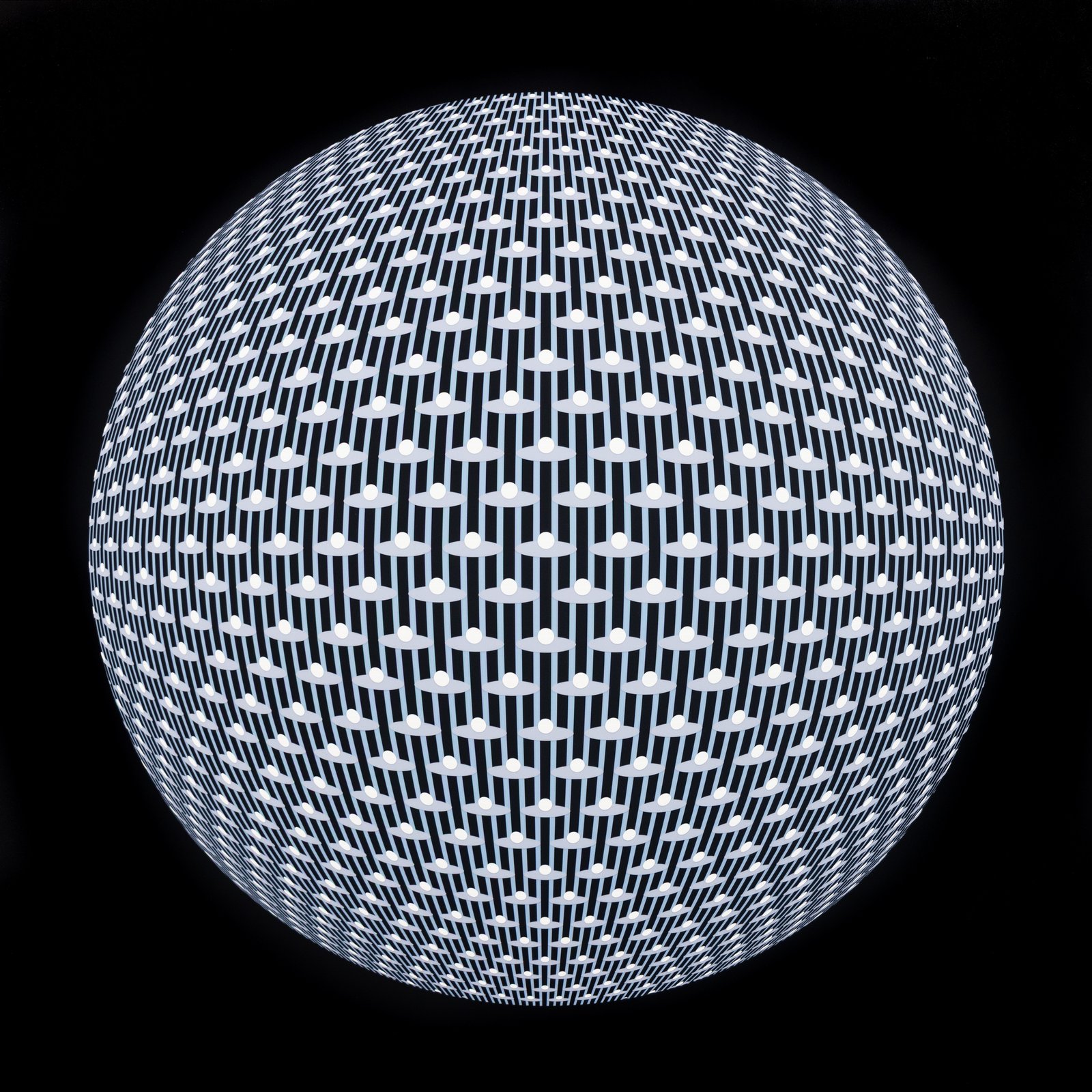
The Aetheric Incandescence of Nothingness
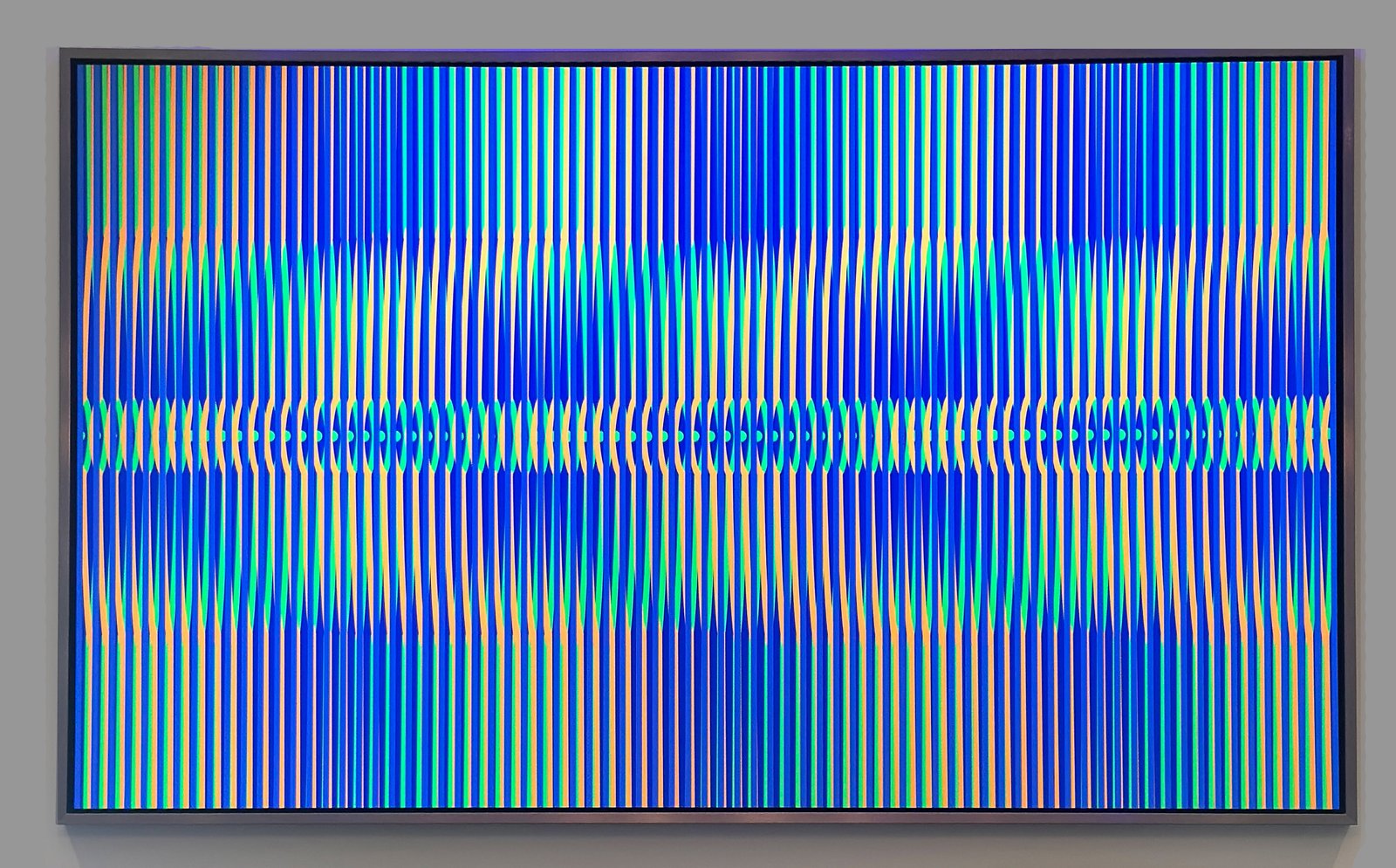
At the Quantum Threshold of Particle-Wave
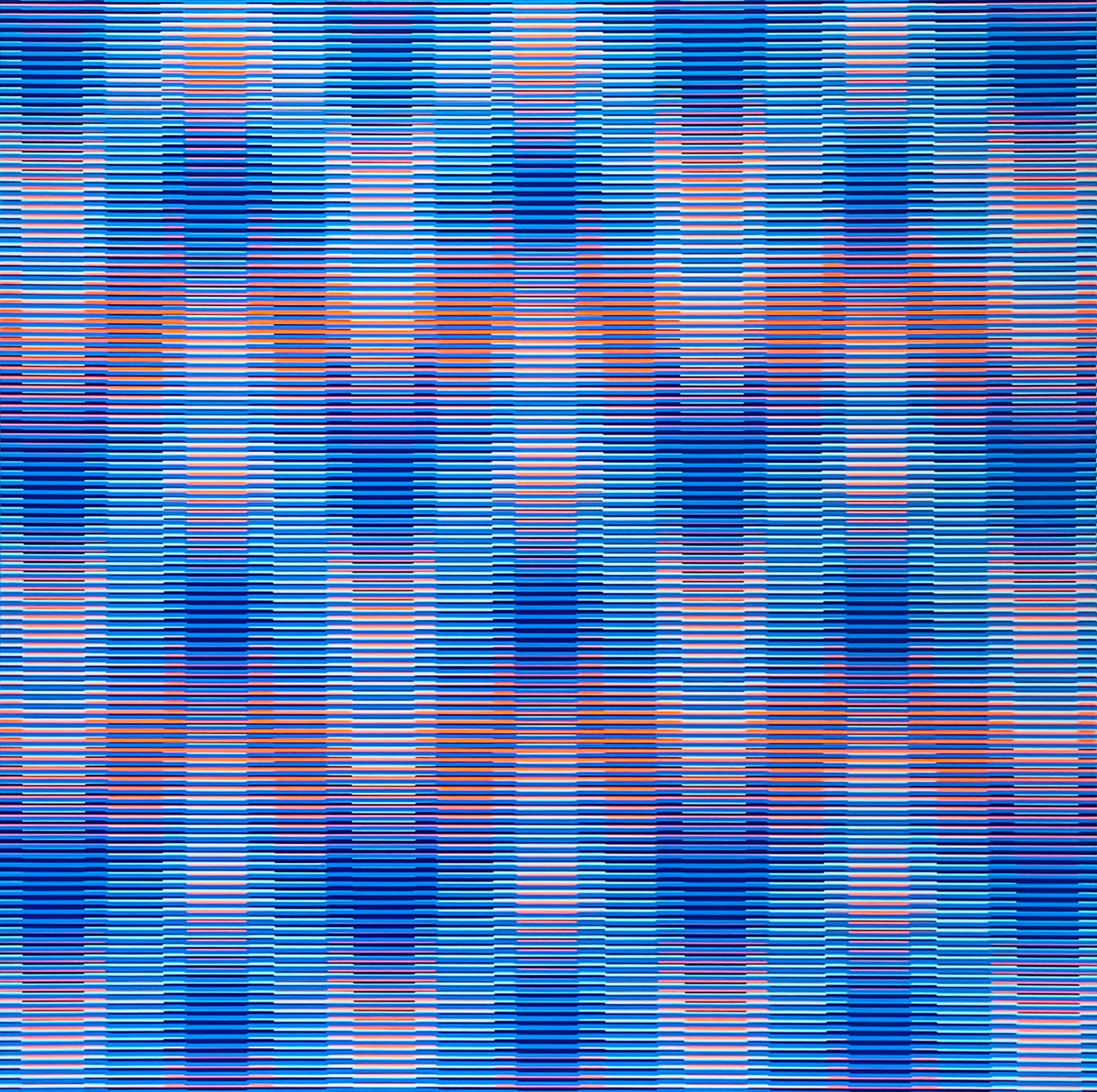
Kente of Dorothy Height of The Big Six of The Great March on Washington 1963
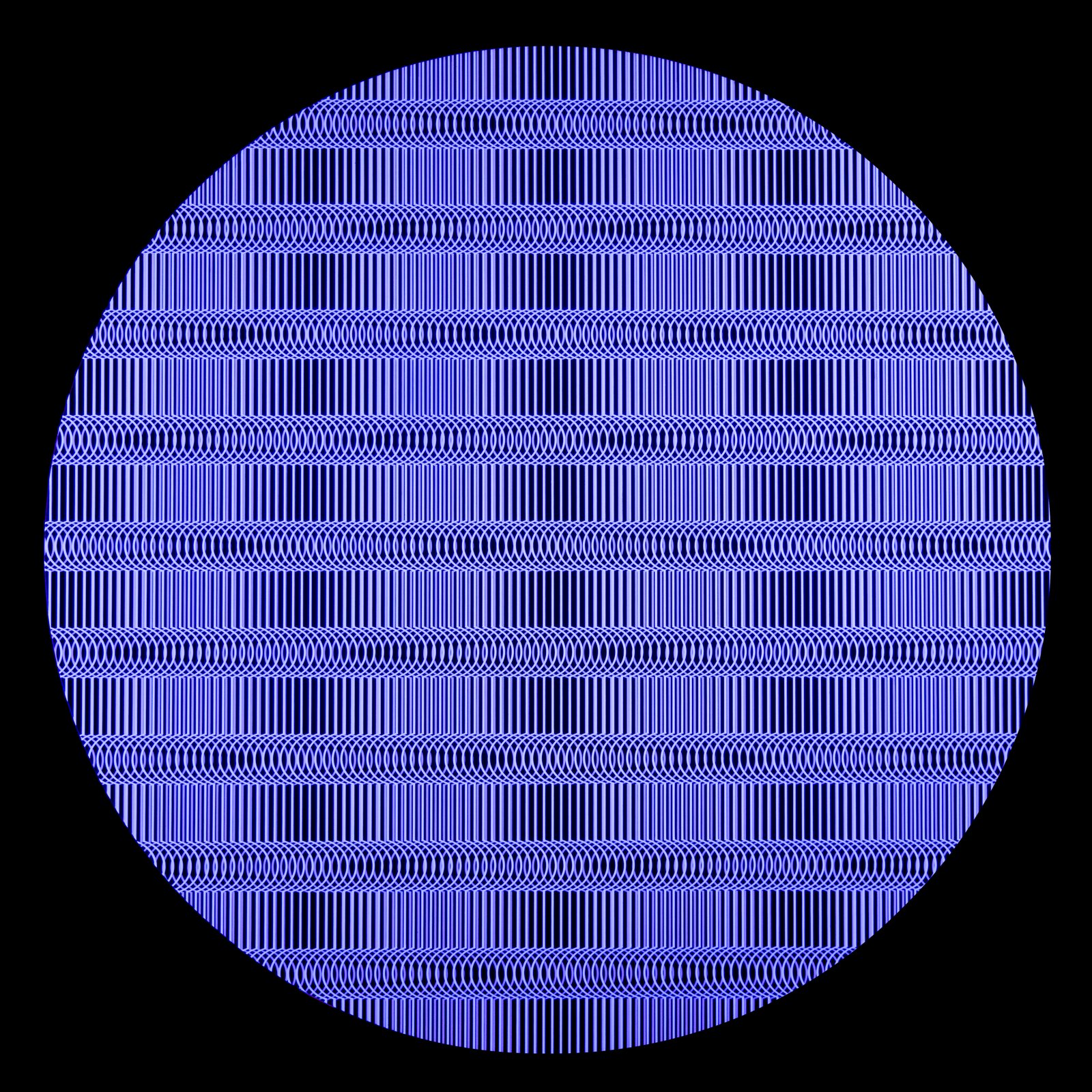
The Tremulous Liminality of the Particle-Wave
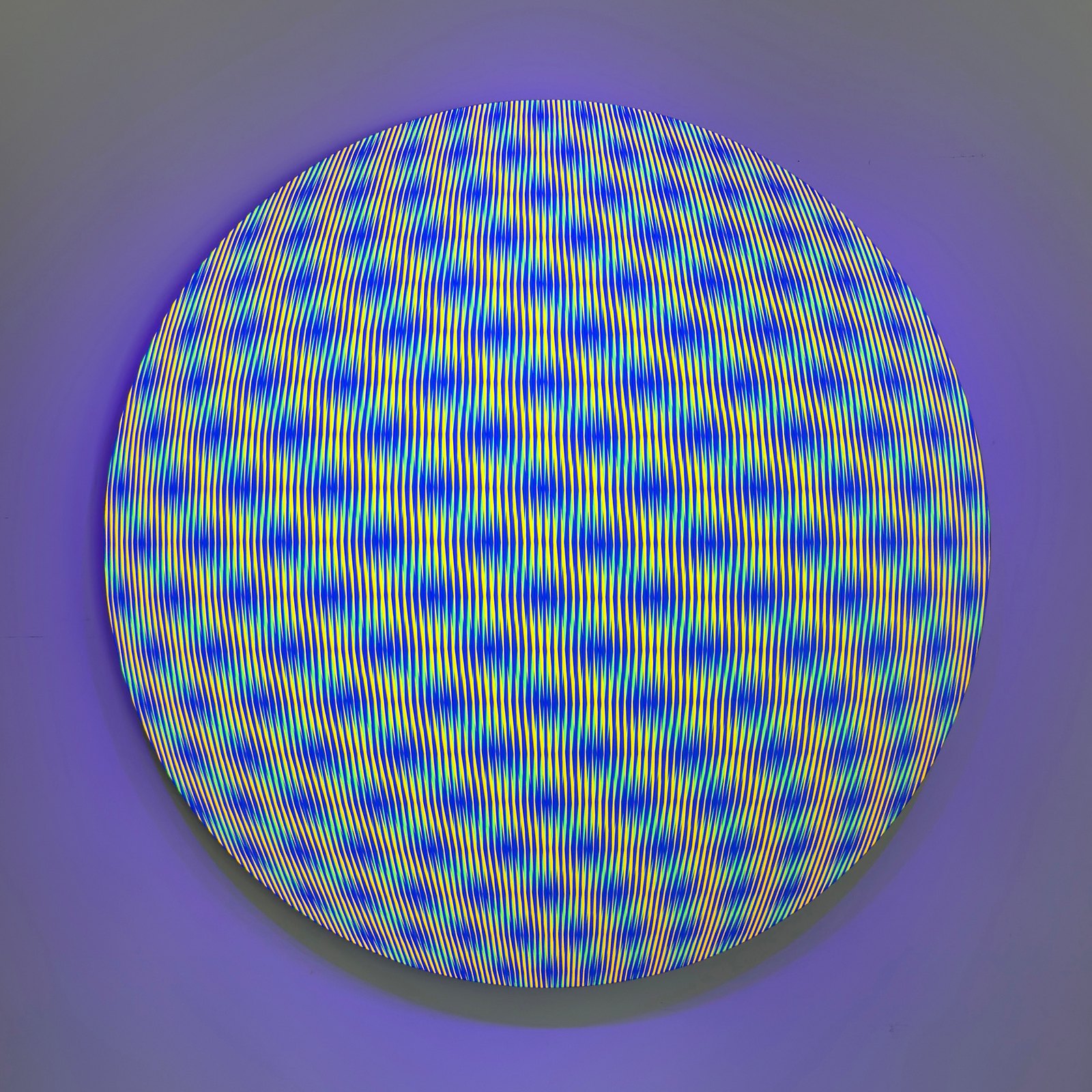
The Ontic State Between Particle and Wave
Q & A
Is geometry a constraint or a freedom for you — and has that answer ever changed?
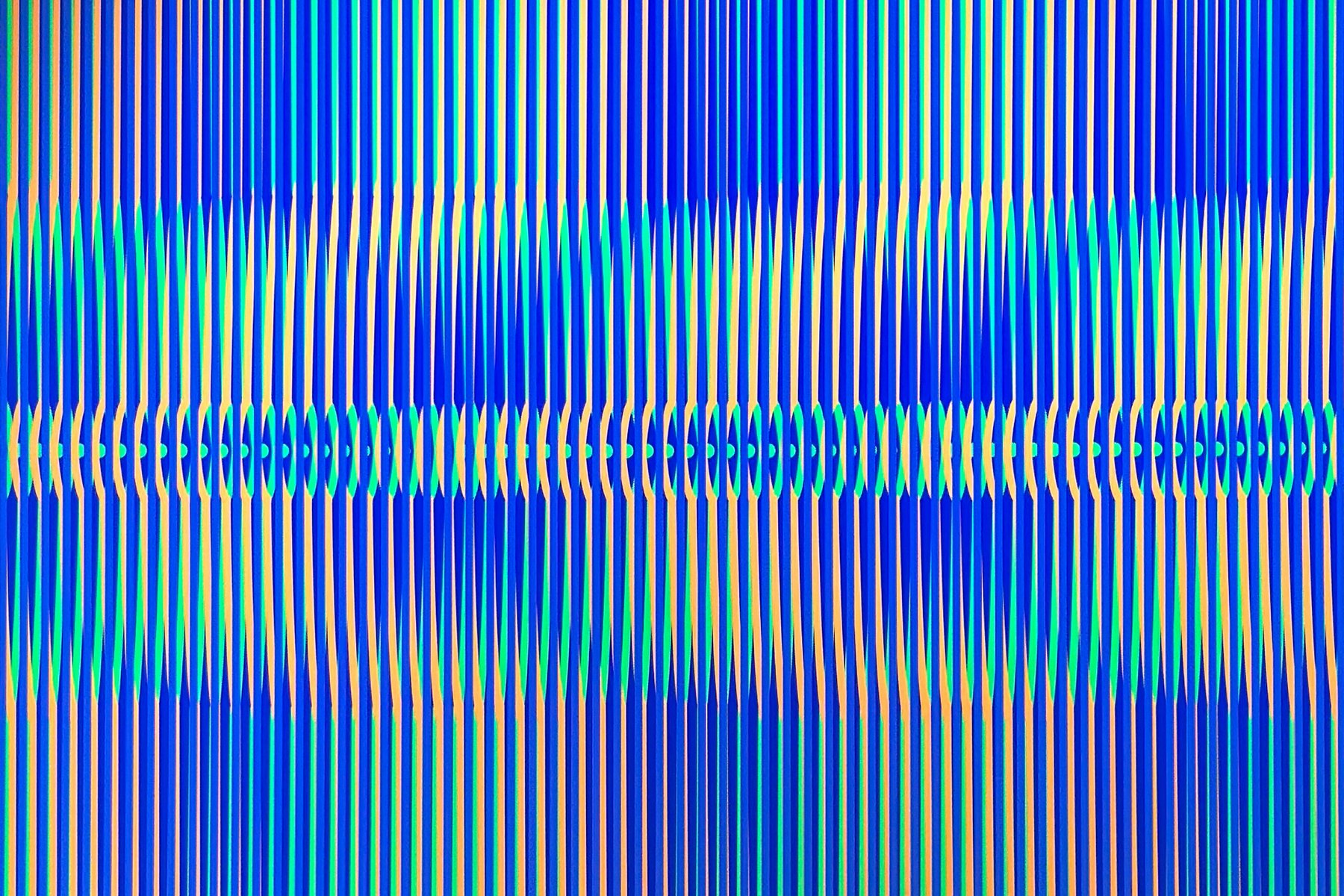
I was initially constrained by the precision and order of the geometry required by my discipline in Celestial and Terrestrial Navigation. My paintings began with carefully calibrated points, lines, and angles. Over time, I discovered that destabilizing this order gave me greater freedom. By introducing subtle deviations into the geometry, I created the conditions for new spatial relationships, chromatic effects, and optical phenomena to emerge. The resulting uncertainty set the perceptual process into motion. I found that as the viewer changed position and viewing distance, the perceived image continually shifted, allowing multiple readings to coexist. I now see geometry as the engine that drives perception, giving rise to fluid and elusive imagery.
Walk us through your process — where does a piece begin, and how do you know it’s finished?
My paintings begin as investigations into abstract illusionism, ambiguous geometry, and pareidolia. Drawing upon the chromoluminarist principles developed by Georges Seurat, I apply three pure colors separately as bands or geometric forms on a dark ground, keeping the pigments physically separated so they interact optically in the viewer’s eye. Carefully calibrated line weight, spacing, and chromatic induction create optokinetic effects, while iridescent, metallic, and fluorescent pigments extend the range of visual possibilities. Although the painted surface is entirely flat, with no sculptural elements, the image remains intentionally unstable, shifting between two-dimensional geometry and the illusion of three-dimensional form. A painting is finished when its visual elements resolve into a coherent structure and the intended optical relationships are fully realized. Photography cannot fully capture these optical effects, which vary with viewing position, distance, and illumination.
Is there something outside of art — a system, structure, or phenomenon — that quietly shapes how you think about form?
Navigation has always been the foundation of how I think about spatial form. My years as a ship pilot on the Mississippi River taught me that position is established in relation to an observer, a frame of reference, and the ever-changing conditions of the river. That navigational mindset continues to guide how I construct paintings. Rather than arranging shapes, I create observer-activated perceptual fields through which the viewer navigates. The image is never fixed; it changes with the viewer’s position and engagement. My fascination with consciousness, perception, and pareidolia led me to investigate how our visual system constructs coherent perceptual experiences from abstract geometric relationships. I later found compelling parallels in quantum physics, particularly Wave-Particle Duality and the Observer Effect. While these quantum phenomena are not scientifically equivalent to visual perception, they provided me with a conceptual framework for understanding the role of the observer and profoundly influenced the evolution of my work.
What does a viewer miss when they see your work as “just geometry”?
They mistake the language for the conversation. Underlying my work are ideas of impermanence, dependent arising, and the instability of apparently fixed form. Geometry is not the image; it is the catalyst for what emerges through perception. Each painting explores a different visual phenomenon. Some allow multiple readings, others generate optokinetic effects that make the image appear to shift or vibrate, and still others evoke pareidolic imagery in which recognizable forms emerge without being explicitly depicted. As position and viewing distance change, lines and colors resolve into shifting forms and imagery. My paintings are observer-activated perceptual events that ultimately challenge the viewer’s perception of perception itself. Geometry provides the structure; perception constructs the experience.
What’s the last rule you set for yourself in the work, and did you keep it?
The image must emerge through the interaction of geometry and perception rather than be explicitly rendered. Every painting must generate a visual phenomenon, whether illusionistic, optokinetic, or pareidolic. In my pareidolic work, abstract geometry must coalesce into recognizable forms without resolving into a single fixed image, allowing multiple readings to coexist. My absolute rule is that every visual effect must be inherent to the painted surface, arising from geometric structure, color relationships, and the material properties of the pigments. I do not use lenticular lenses, optical overlays, electronic media, or image-generating devices to create these effects. Changes in illumination, including ultraviolet light, may reveal additional chromatic effects, but those effects originate strictly in the painting itself.
Newsletter
Curated open calls and one artist to know, every couple of weeks. Free, no spam.