About
“What gives space form?”
Jeu., an artistic practice developed by architect Hideaki Nishimura and artist Yumi Toyama, begins with this question. Drawing on their backgrounds in architecture, mathematics, and the luxury fashion and beauty industries, they construct conditions through which space acquires form. Hideaki Nishimura is a first-class licensed architect in Japan, with academic and professional experience in Italy and France, working across architecture, urban design, land art and branding. After studying oil painting and silverpoint drawing, Yumi Toyama worked in Paris as a colourist and nail artist, contributing to fashion and beauty projects for VOGUE, CHANEL and DIOR, while independently studying mathematics and geometric construction. The name Jeu.—“play” in French—carries a twofold resonance: a mode of observing, reflecting and interpreting, and the slight clearance within a structure. These two senses converge in Jeu.’s logic: a game of spatial reasoning and inquiry. At the core of Jeu. lies Architectonic Painting, a geometrically conceived, hand-executed construction in which linen stretched over architectonic wooden frames generates curved surfaces through the interaction of structure, tension, material and void. Beyond this axis, Jeu.’s work spans spatial installations, animation, furniture and architectural projects, and has been presented in Japan and internationally.
Selected works
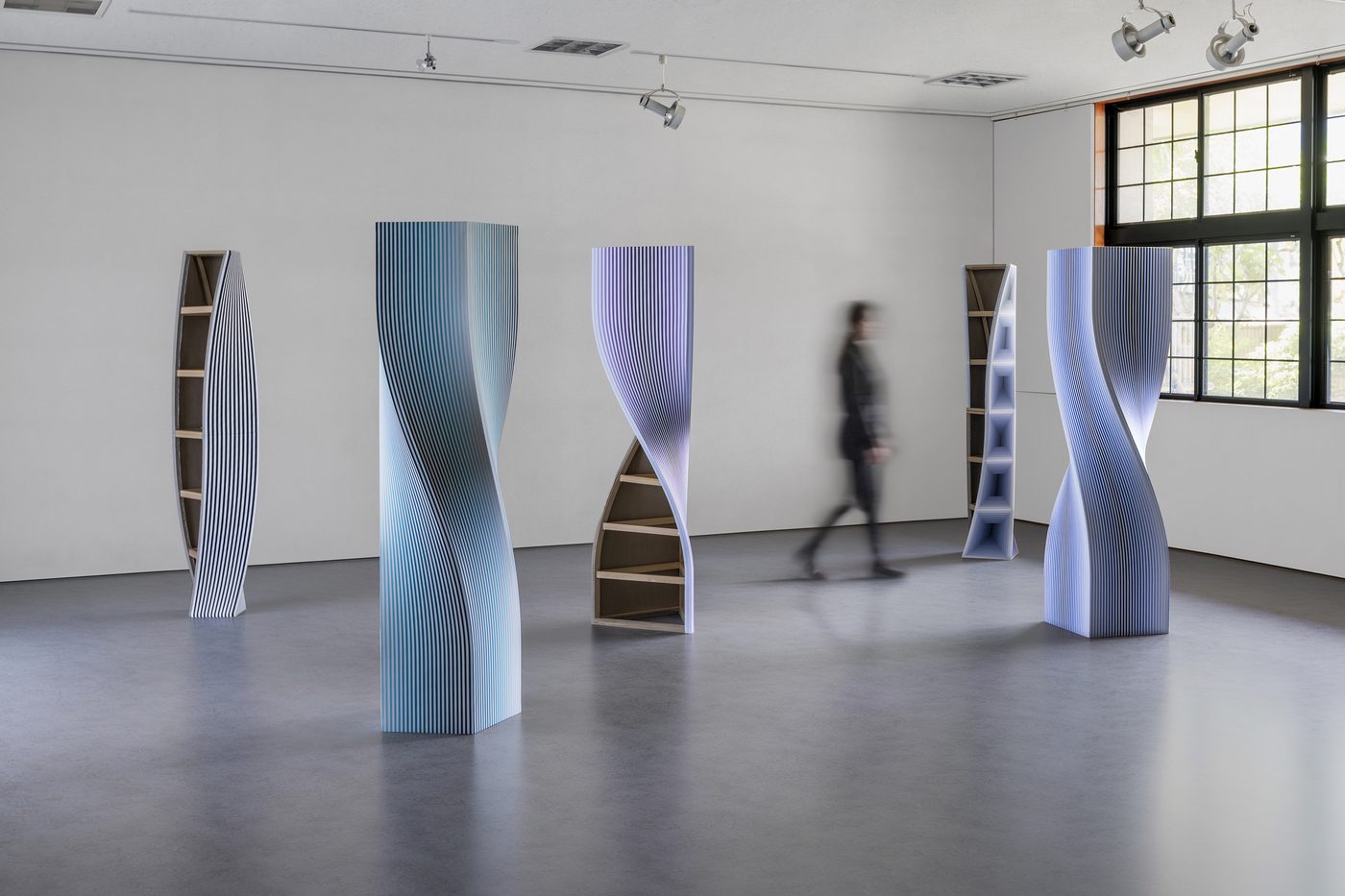
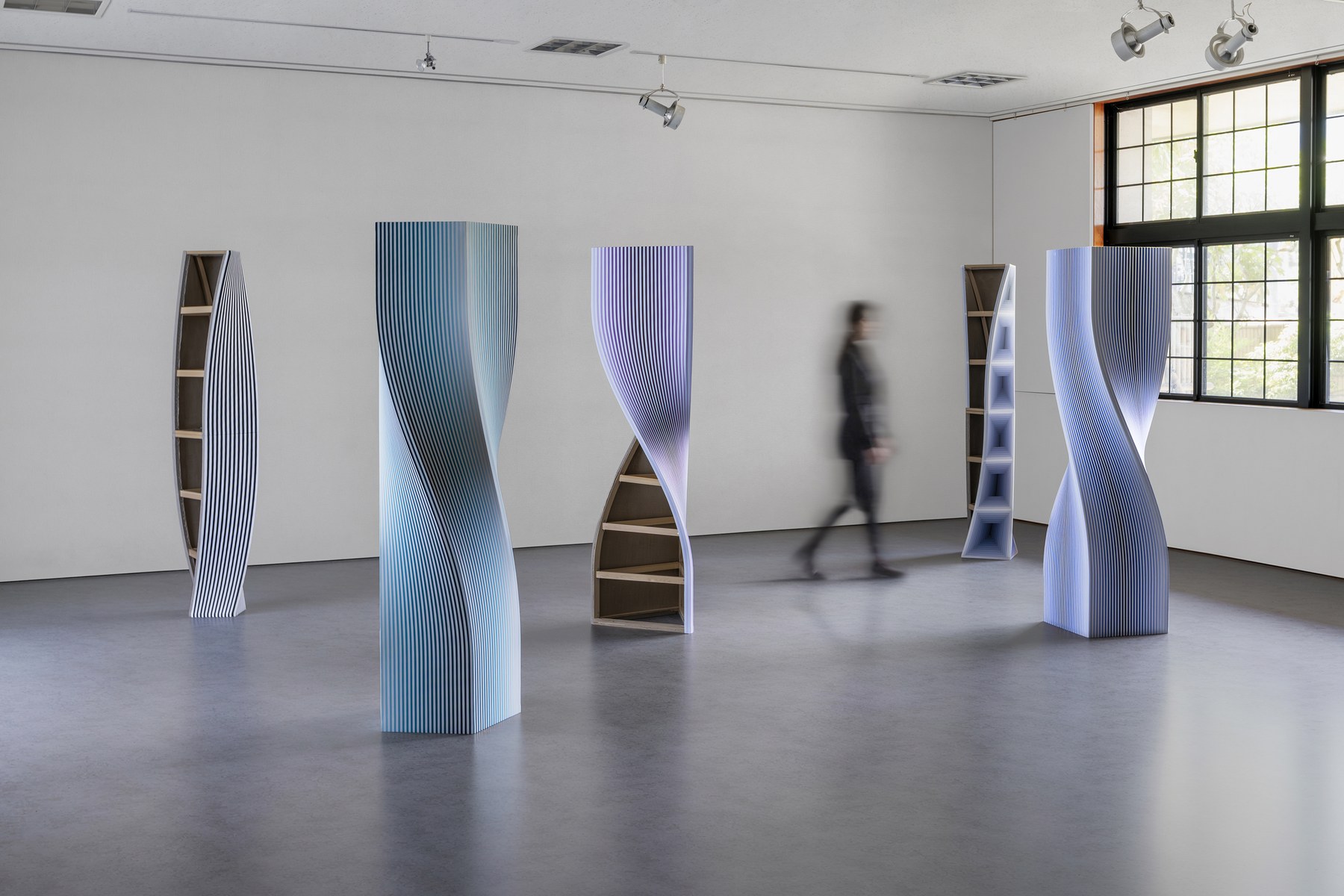
CONTORTION, installation view
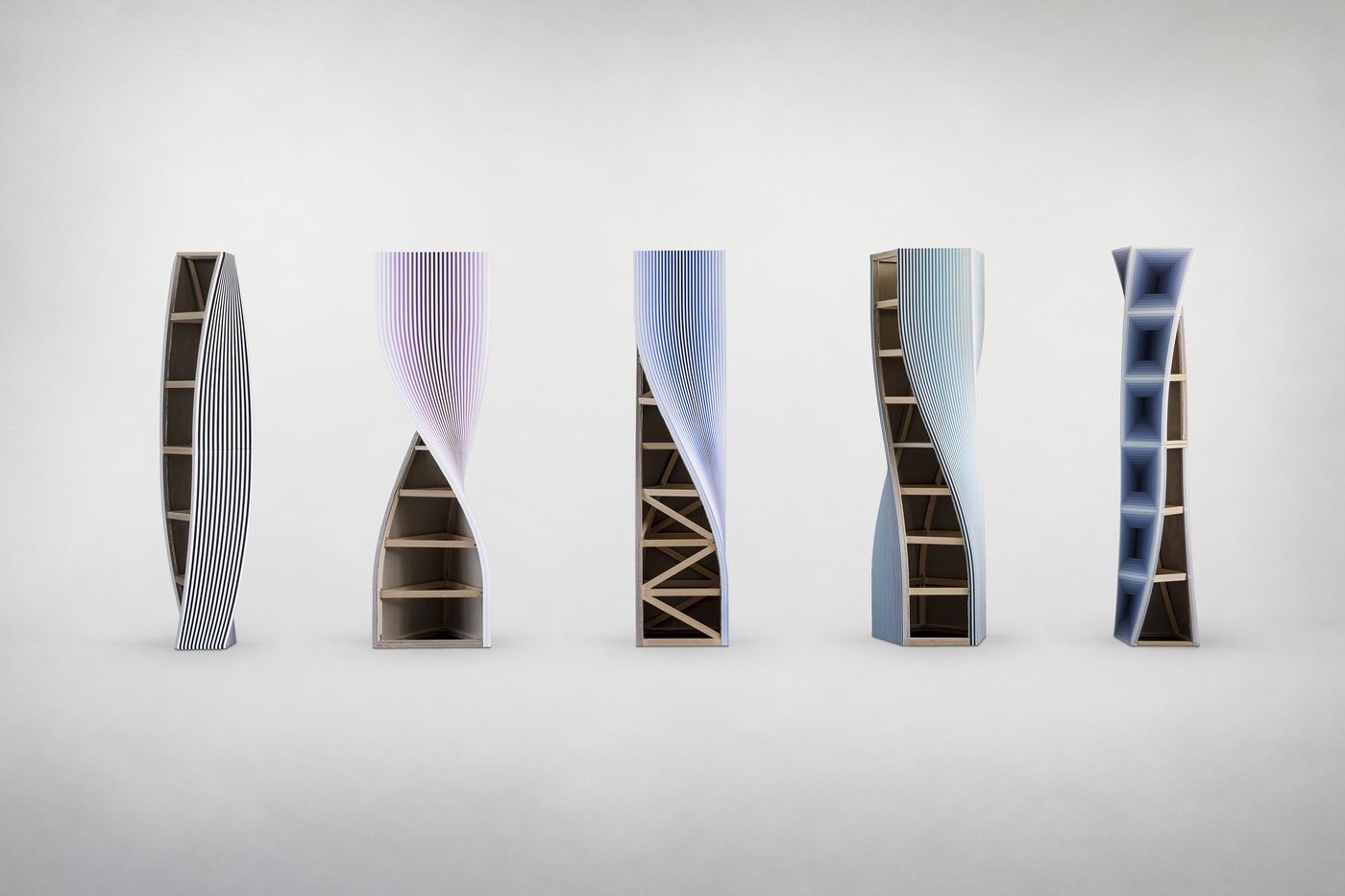
CONTORTION, structural view
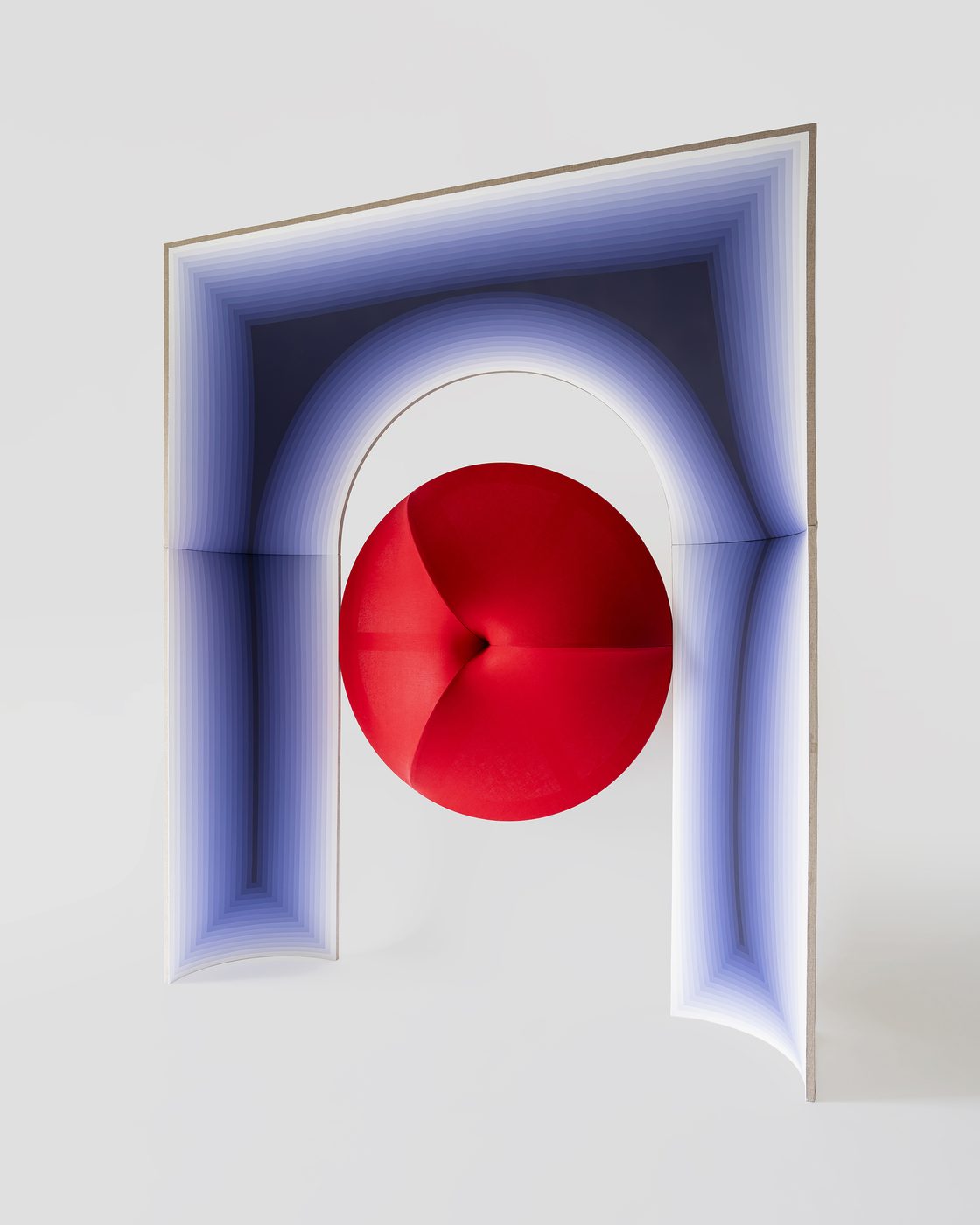
SUSPENDED GRAVITY, right view
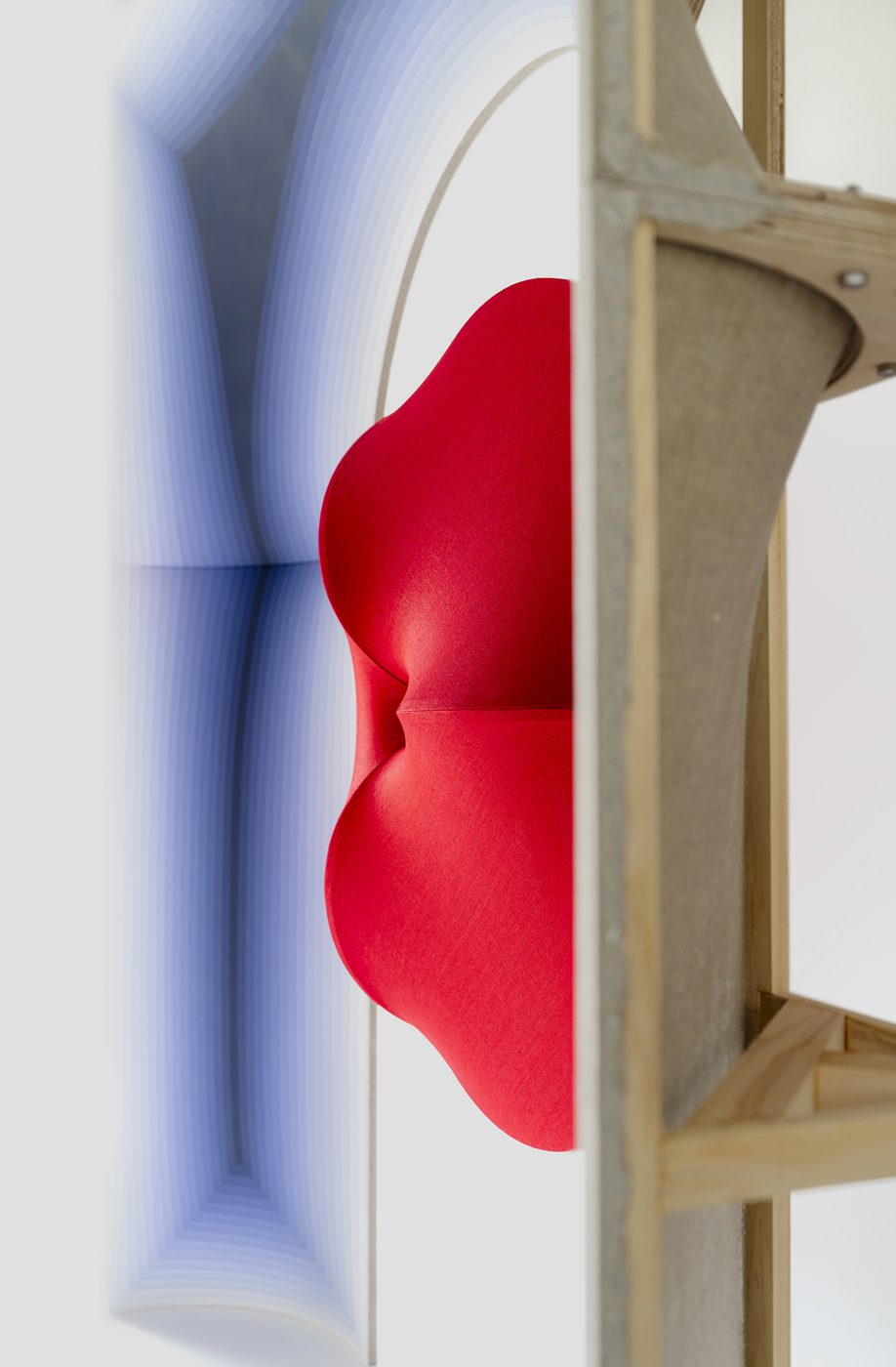
SUSPENDED GRAVITY, structural view
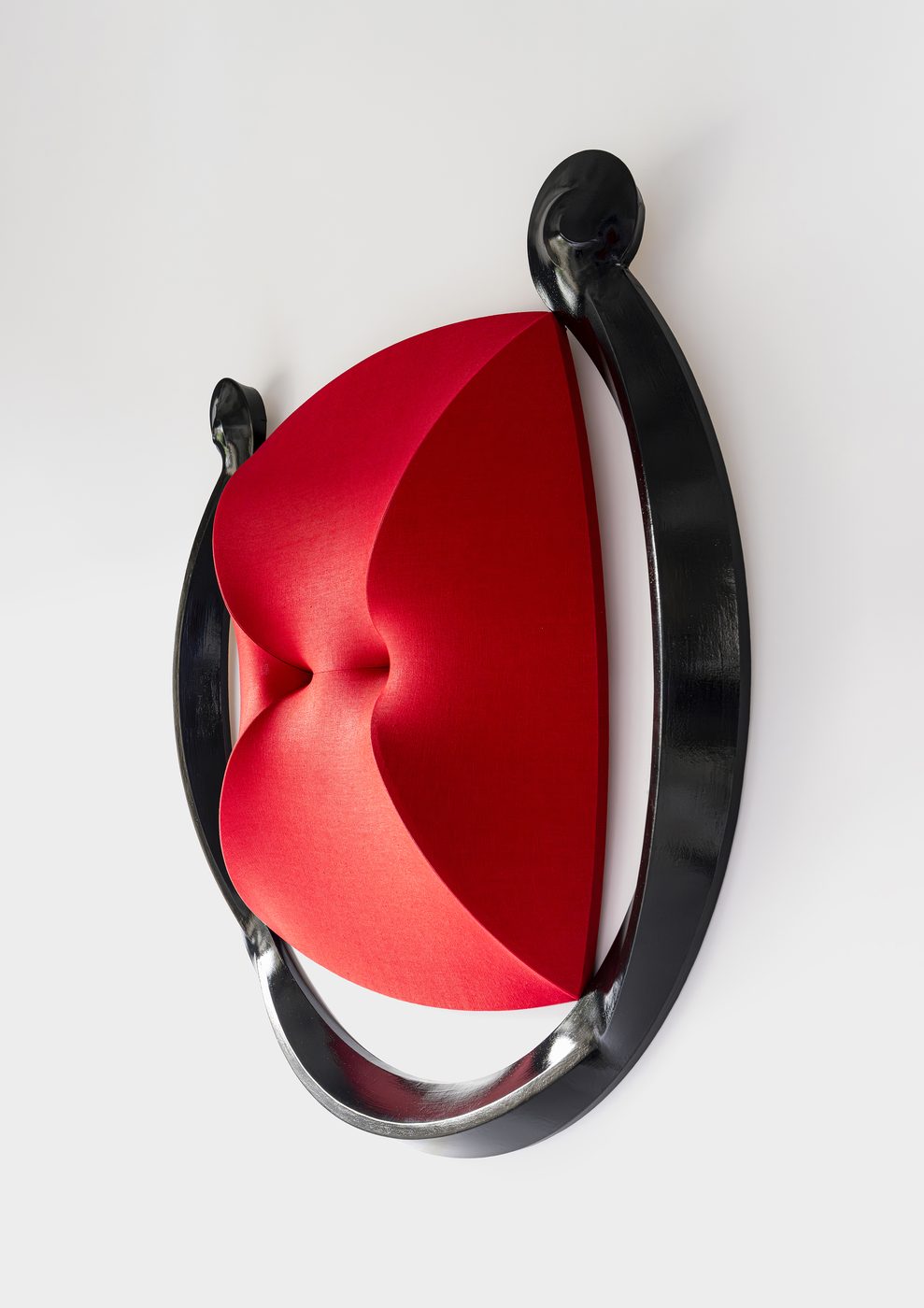
VOLUTE, right view
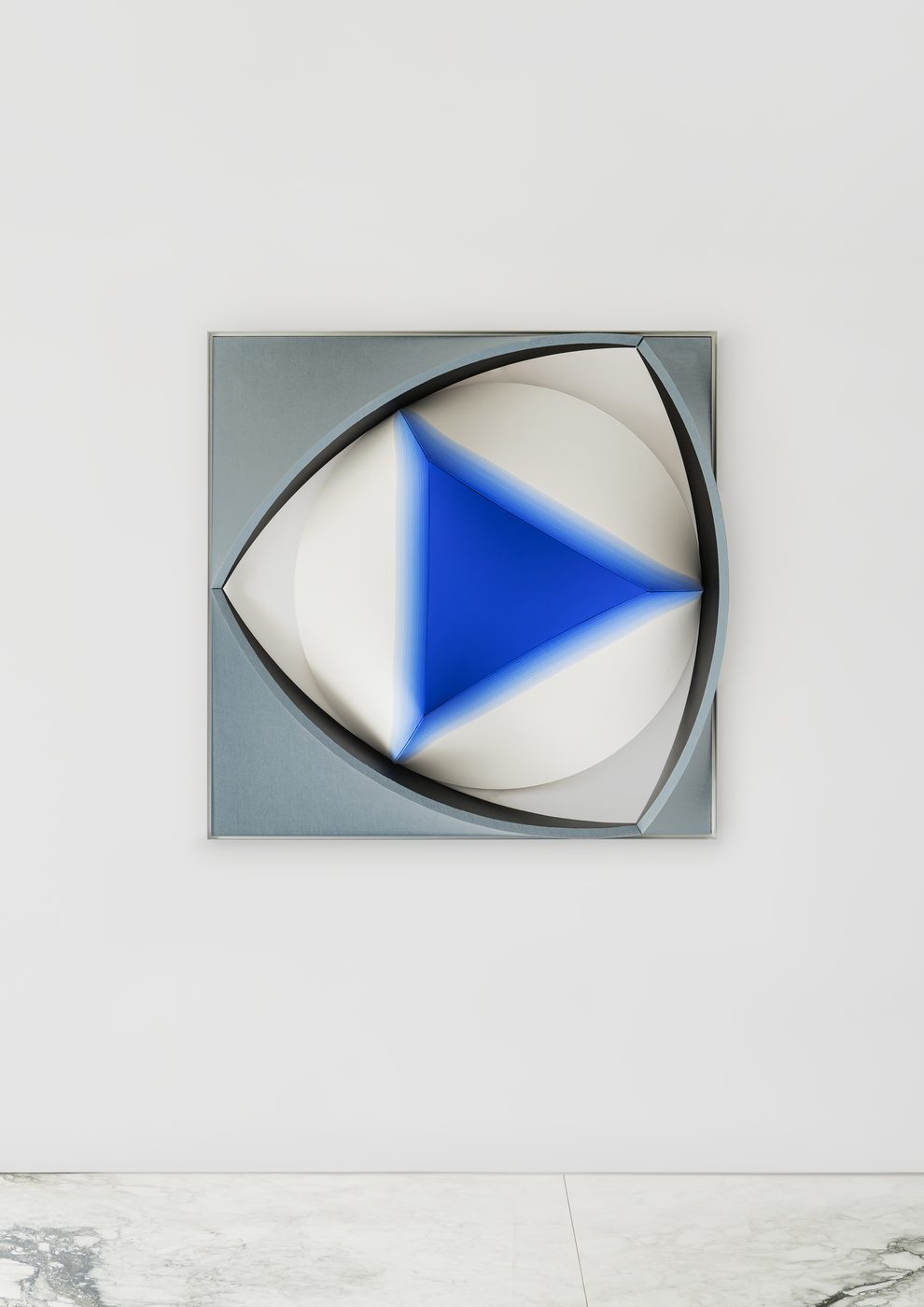
GEOMETRY OF RESTRAINT, front view
Q & A
Is geometry a constraint or a freedom for you — and has that answer ever changed?
For Jeu., geometry has always been a constraint—the law of the game. What interests us is not freedom. It is the pleasure of binding form to geometry, then playing by exact rules until form has only one move left: to assume a singular configuration beyond the reach of unrestricted choice. The answer has never changed; as the practice has evolved, the tension between law and form has only intensified.
Walk us through your process — where does a piece begin, and how do you know it's finished?
A work begins with a compass-and-straightedge construction. It is not a sketch, but already a blueprint. From there, the drawing is translated into an architectonic frame, over which linen is stretched. A curved surface then emerges from the interaction between tension and material resistance. Painting comes last, not to impose an image but to render perceptible what the surface has undergone. Yet even with ninety-nine per cent of the process precisely specified, one per cent remains beyond prediction. That is the margin where serendipity seeps into the work. The work is finished when the unforeseen has become indistinguishable from necessity—when nothing remains arbitrary and form answers only to the equilibrium of its own conditions.
Is there something outside of art — a system, structure, or phenomenon — that quietly shapes how you think about form?
Mathematics and physics often underlie our conception of form. They reveal realities stranger than fiction—beyond ordinary intuition, yet governed by rigorous laws. Non-Euclidean geometry is one example: it exceeds familiar assumptions about space and directs our curiosity towards other logics in which intuition itself begins to curve. Positional games such as chess also appeal to us. There is a particular pleasure in constructing an architecture of consequences: each move reconfigures the field of possibility and constrains what can follow. The same logic operates in our work. Form is not simply composed; it is generated through a sequence of designed conditions, bearing the trace of its own formation—an inscription of causality.
What does a viewer miss when they see your work as 'just geometry'?
Geometric art often invites the assumption that some suitably esoteric theory must lie behind it. In a work by Jeu., geometric order and precision may hold the eye, yet something paradoxical quietly takes shape: geometry itself assumes a peculiar organicity. Without organs, emotion or narrative, it is nonetheless a body—distilled to skeleton and skin, as if sensitised to the forces that hold it in form. This is what we call the cold bionomy of geometry: animated not by life, but by dynamic equilibrium sustained through frame, membrane, tension and void. An algorithm may calculate a form, but it does not know in advance when tension turns sensual and exactitude reads as dry humour—when geometry acquires a strange corporeality. That threshold is calibrated in real time, by hand, against the resistance of the work itself.
What's the last rule you set for yourself in the work, and did you keep it?
The last, non-negotiable rule was inevitability. Every part must derive from geometric constraint, and the whole must require each part; their reciprocal necessity must cohere in three dimensions as a spatial construct. Only then can the work extend beyond pictorial flatness into space as small architecture—no longer exhausted by a single view, but encountered through movement.
Describe a failure or a dead end in your practice — something that didn't work.
The dead end is always physical. However meticulously a frame is built, physics remains indifferent. Linen is stretched by hand over a wooden structure cut and assembled to minute tolerances, but as the gesso dries, the linen contracts further. The frame begins to creak, warp or, occasionally, split. Artists often speak of hearing the voice of materials, of entering into dialogue with them to discover the form they want to take. We listen only for the scream—the sound we least want to hear. The work is going well when the material remains silent: silence is equilibrium.
Newsletter
Curated open calls and one artist to know, every couple of weeks. Free, no spam.