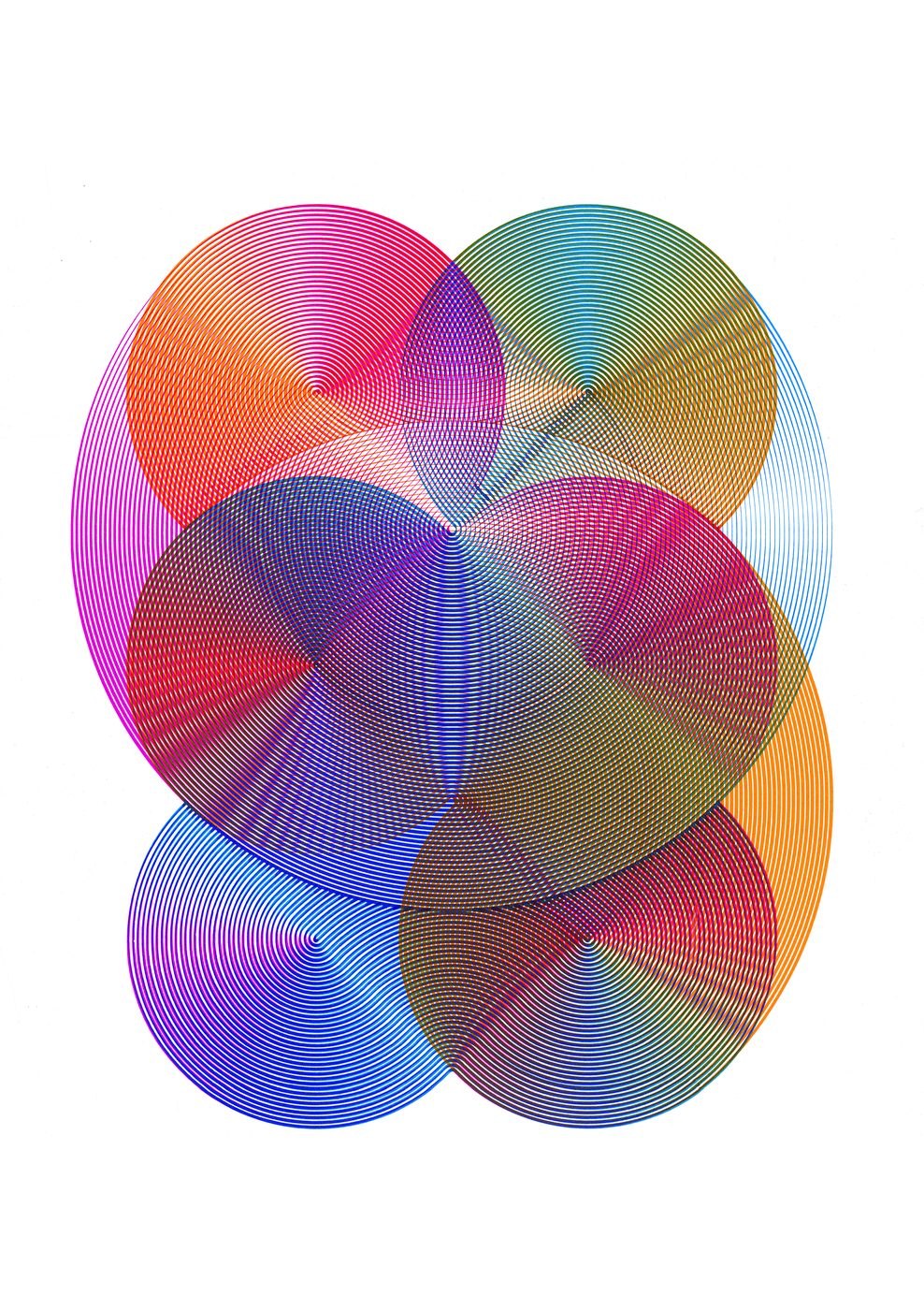
About
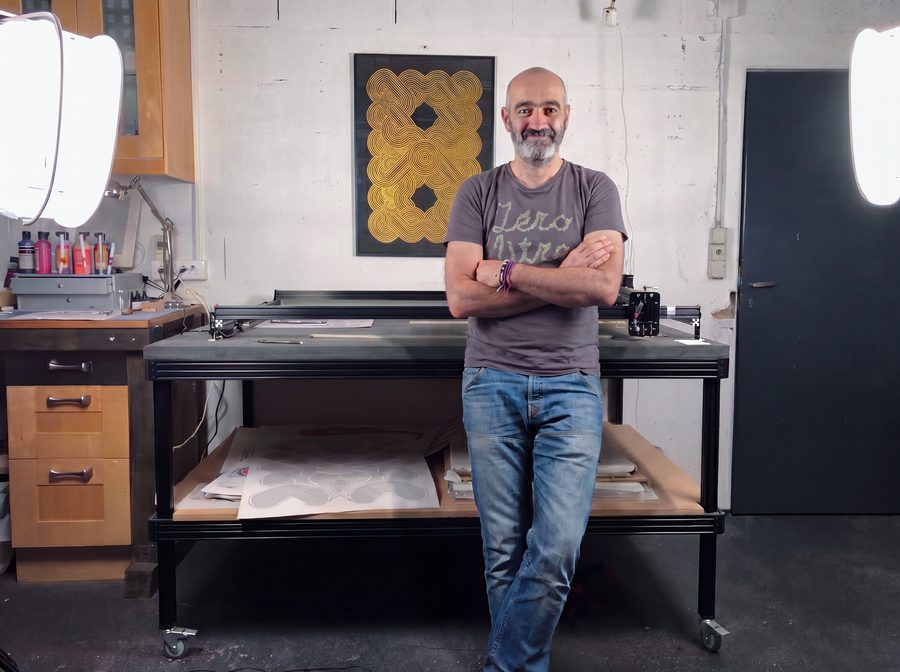
I'm Targz, a French pen plotting artist. What I'm really after are artefacts: shapes I suddenly see inside the abstract output, something close to pareidolia. I never know when one will appear. When it does, it feels like my brain was waiting for it.
I came to art through my curiosity for technology. I got my first gaming console in the 80s, my first computer in the 90s, then a career in creative programming and a habit of adopting whatever was new: AR, VR, 3D printing, blockchain, AI and in 2017 I get my first pen plotter. Since then, I've been experimenting with it, inspired by the pioneers of Op Art and pen plotting like Vera Molnar and Bridget Riley.
I write my own generative tools in JavaScript and Processing, then I “print” the pieces with a plotter I built myself, part off-the-shelf hardware, part 3D-printed plotting head. The machine and the work are inseparable; a single piece can take months of tuning pens, machine, and motion control before I get the result I want.
Selected works
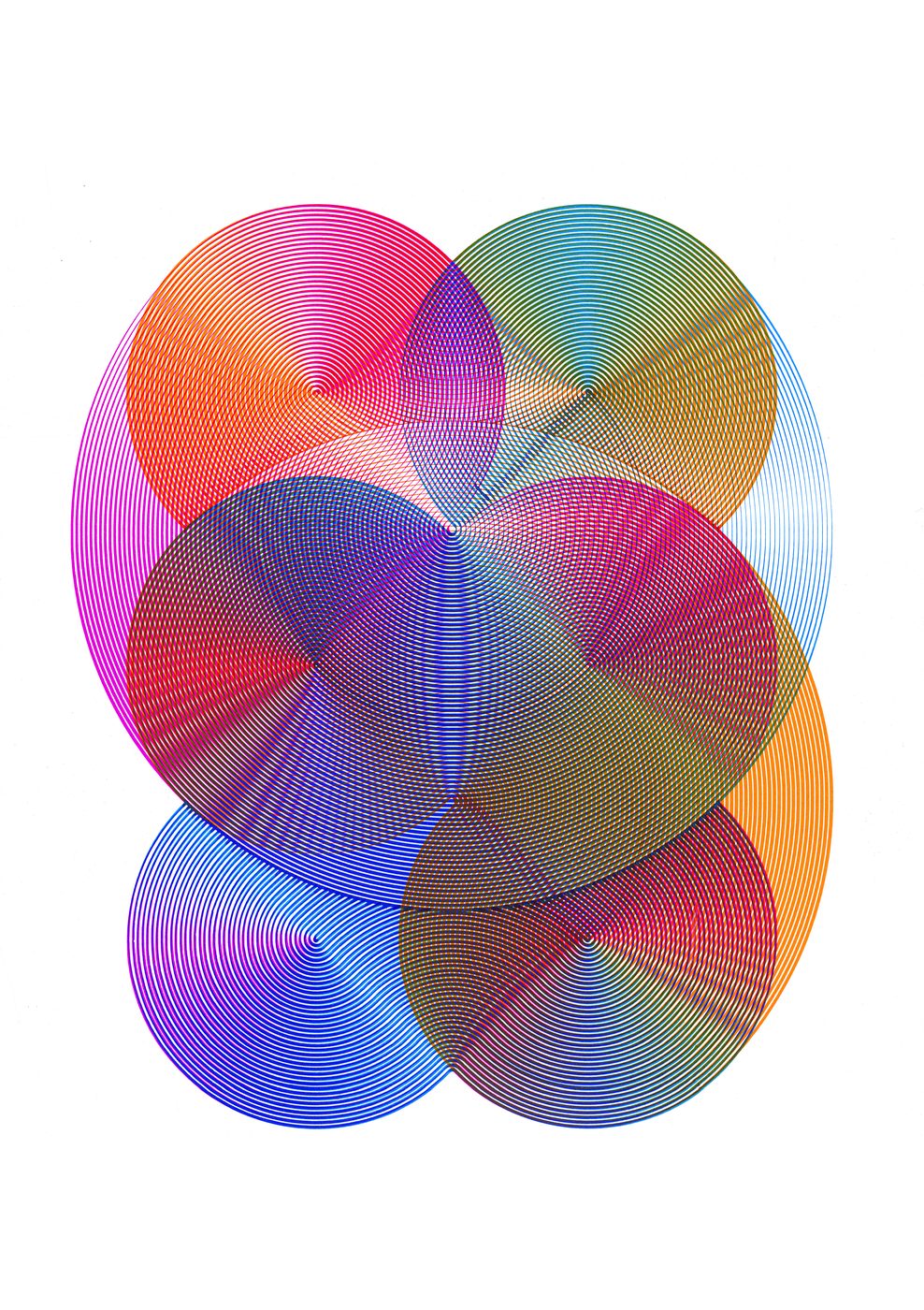
Color Wheel Chaos, 2023, ink on paper, A1
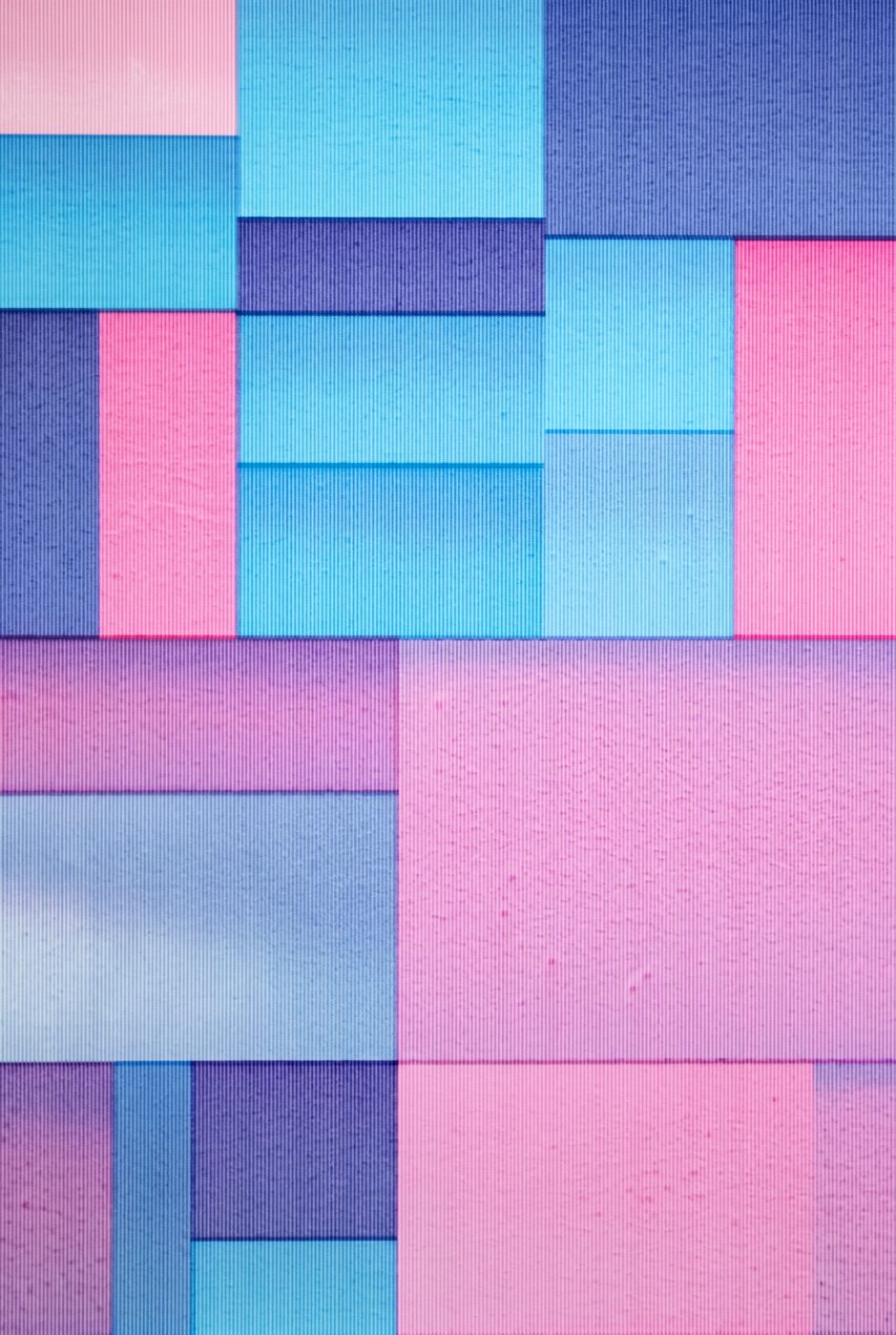
Fragmentation, 2025, ink on paper
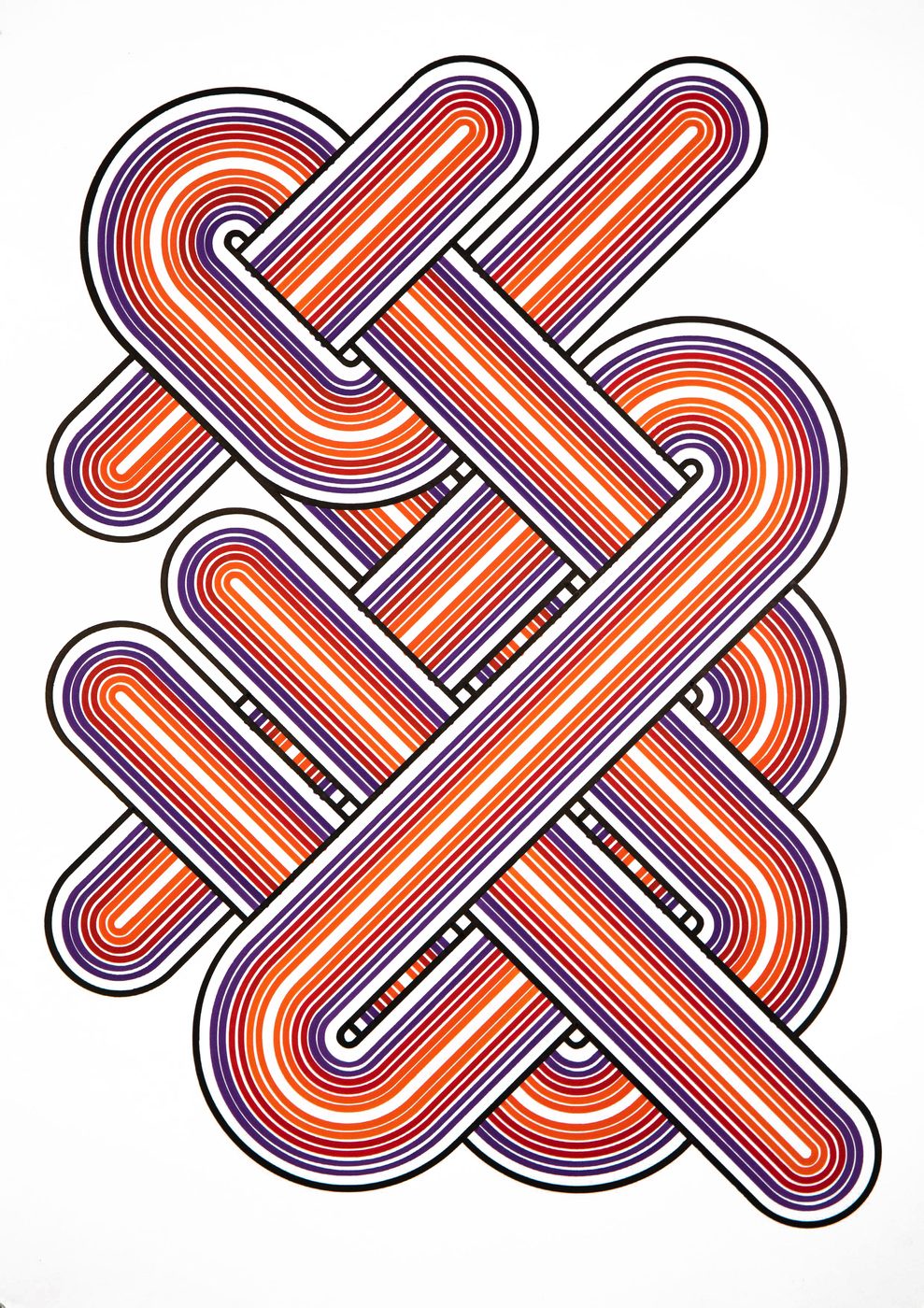
Luminous Gradient, 2023, ink on paper, A1
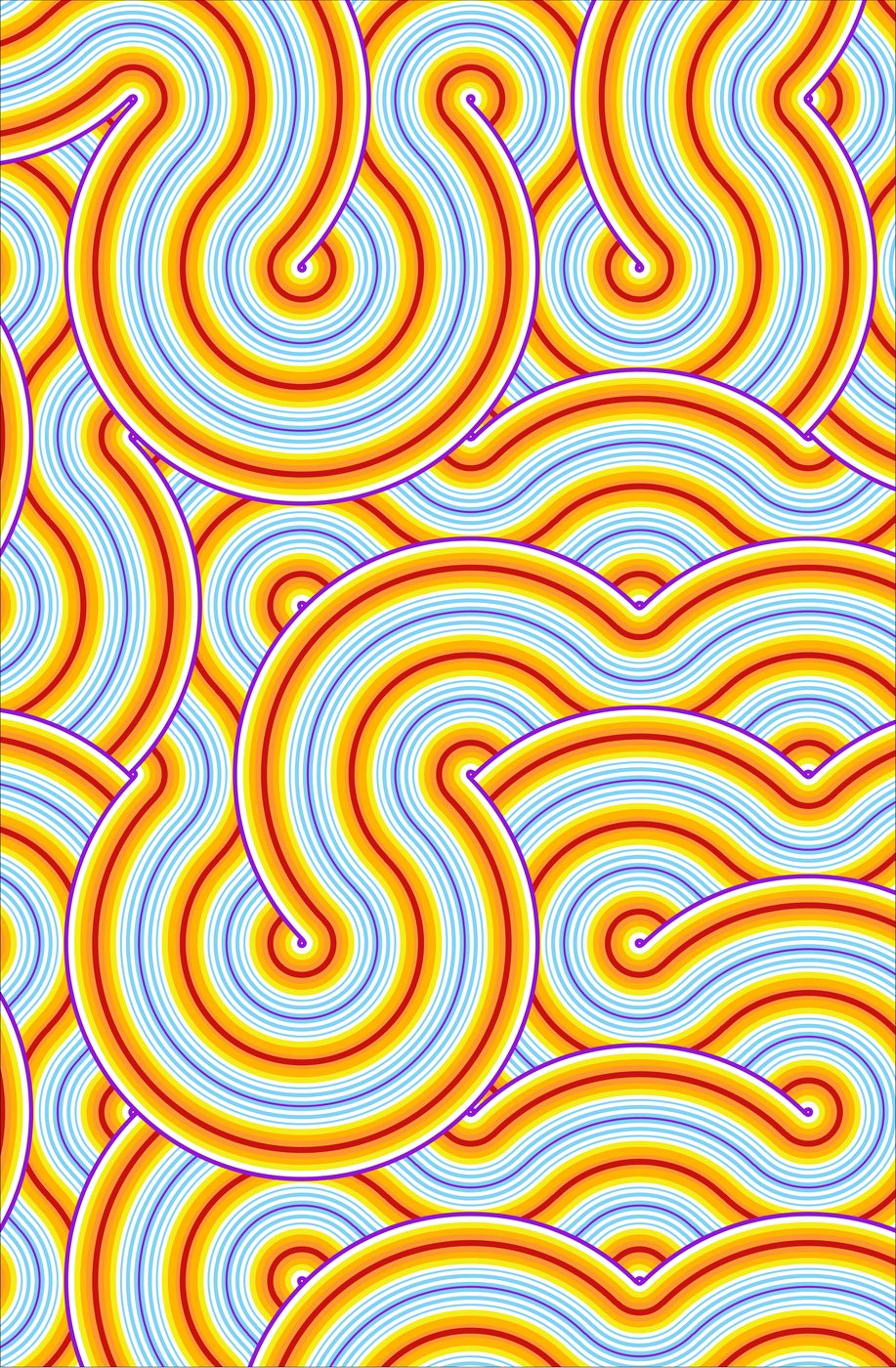
Plasma Churn, 2025, acrylic on canvas, 116×73 cm
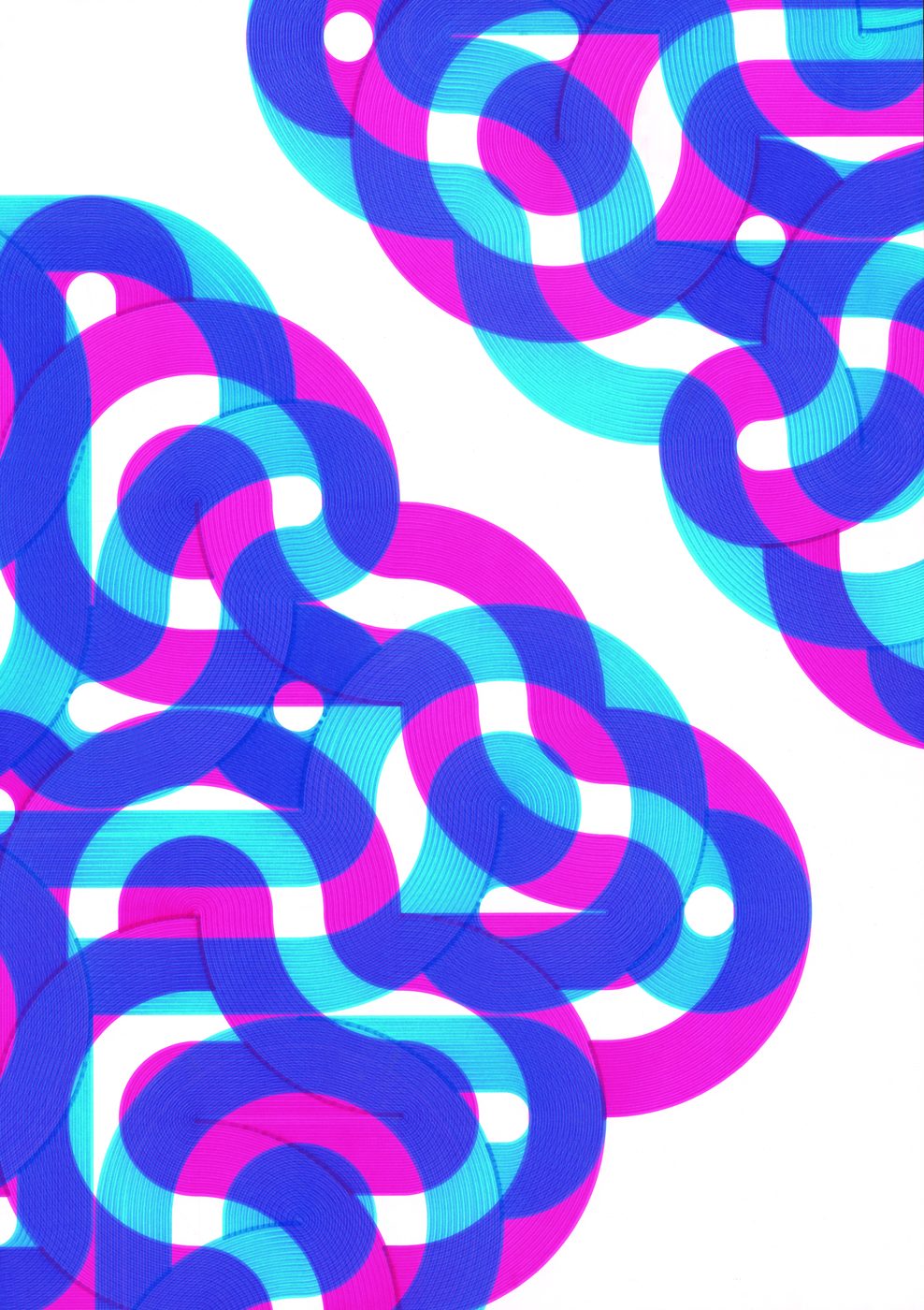
Synapses, 2025, acrylic on canvas, A1
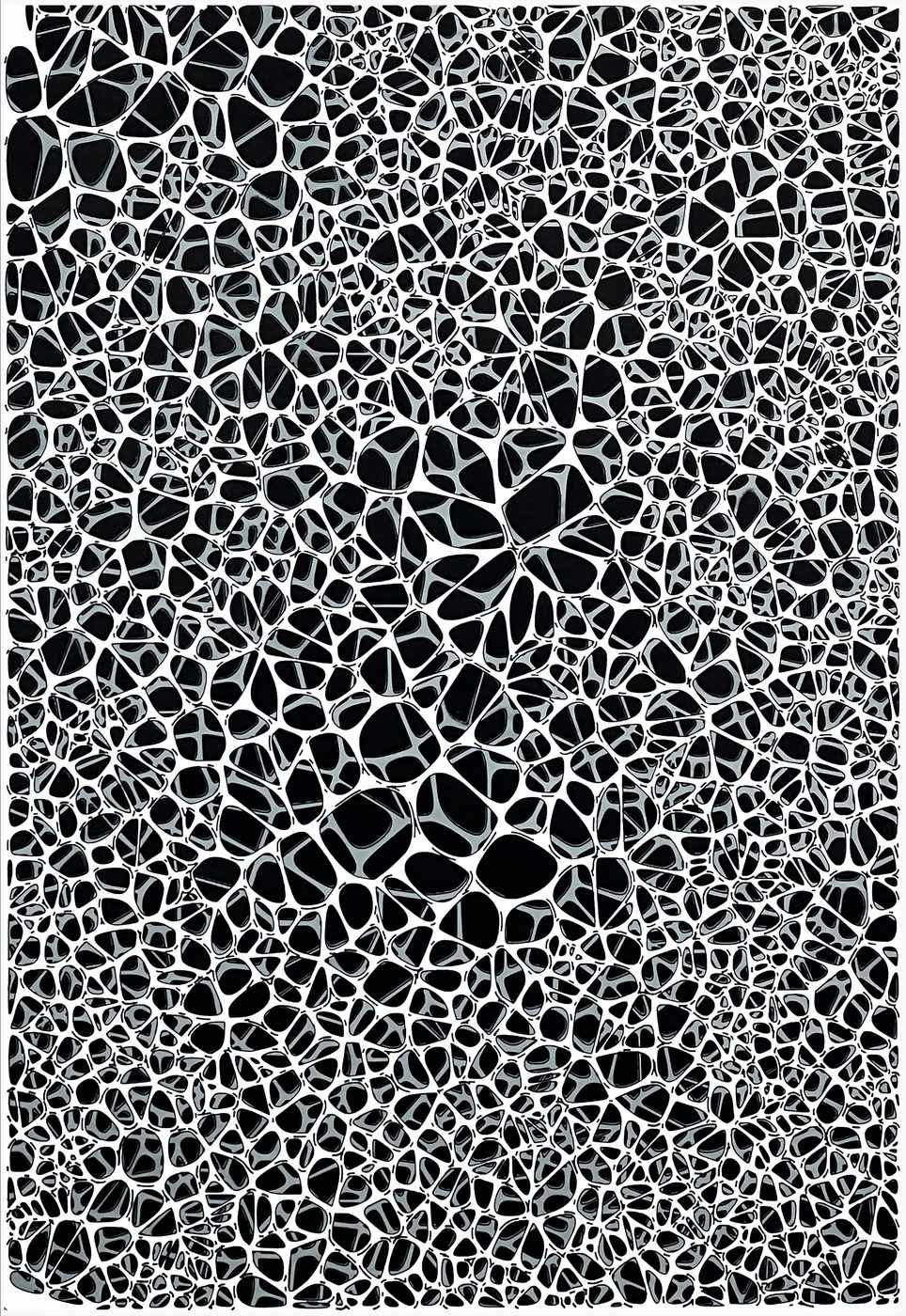
The Last Brain Cell, 2026, acrylic on paper, A1
Q & A
Is geometry a constraint or a freedom for you — and has that answer ever changed?
At the start, I just wanted to use plotters. A plotter comes with its own constraint: it can only draw lines. Short, long, curved, but only lines. I've played with that constraint ever since, and it shaped my whole practice. So yes geometry began as a constraint I was handed. Then I discovered I actually love geometric shapes and patterns, and the constraint became the thing I want to be doing.
Walk us through your process — where does a piece begin, and how do you know it's finished?
It usually starts with a rough idea of a pattern, something I have in mind and want to explore, but still very vague at that stage. Then the generative art coding phase begins, and this is where the project can shift a lot depending on the output and the inspiration. Serendipity is strong here. Sometimes a bug becomes the whole project. Then comes production: I play with the generative code, push it, and generate a few pieces, already with the pen and the technique in mind. Last is the plotting phase. I try different pens, tweak the machine and the settings, and sometimes hack a pen to a result I like. You can see the generated files as a mold, and then depending on what you put into it, you can get very different results.
Is there something outside of art — a system, structure, or phenomenon — that quietly shapes how you think about form?
I discovered that I see things in patterns. I call them artefacts. It can be literal, a face or an object, or it can be an emotion, a feeling. It's a bit like pareidolia, but wider. I play with it a lot. Sometimes, intentionally, when I hide a message or a portrait in the piece. But more often I'll pick an abstract pattern simply because I see something in it. It's very personal.
What does a viewer miss when they see your work as 'just geometry'?
They see the geometry, not the artefact I see in the piece. I name each work after its artefact to help people find it for themselves. But the way content gets consumed now doesn't leave viewers much time to look past the surface and discover what's actually there.
What's the last rule you set for yourself in the work, and did you keep it?
A big part of generative art is the curation when you generate a lot of variations. My rule for that selection: I shouldn't keep a piece because it's nice. I should keep it because it creates an emotion. That's not a common way to choose, and I often forget it. I catch myself trying to convince myself that a piece has meaning, that it's nice, new, fresh, usually because I'm frustrated I haven't found the one that actually moves me. And when I do see it, I feel something very strong, impossible to describe. Sometimes I cry. That's what I'm really looking for.
Describe a failure or a dead end in your practice — something that didn't work.
I explore a lot, both in the code and in the physical process, so failure is just part of exploration. But the real dead end was designing for the views. I had a lot of followers, engagement, comments, and for a while I let that run me. I oriented the work around the views, the fame, the sales. That's the one that actually took me nowhere.
Newsletter
Curated open calls and one artist to know, every couple of weeks. Free, no spam.