Selected Artist
About
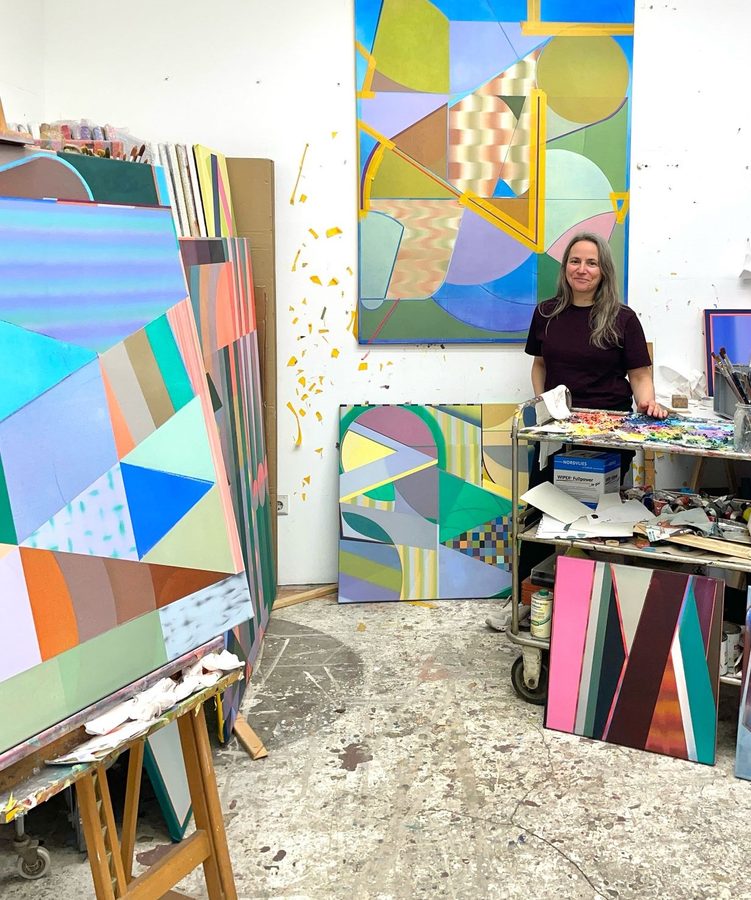
My work operates always within the interplay of colour and geometry. It emerges from an intensive process of collecting, arranging, and transforming—where literary, scientific, or geometric impulses are translated into autonomous systems of order based on colour and form. For me, painting serves as a vehicle for memory, imagination, and space.
The theme is varied and adapted multiple times using a serial approach.
In the series "Painterly Architectonics", I examined the constructivist works of the artist Lyubov Popova (1889–1924). I have deconstructed the fundamental structures and building blocks of her compositions in order to translate them into paintings and drawings. The project originated from a collaboration with the MOMus—Museum of Modern Art-Costakis Collection in Thessaloniki, as part of an Artist Residency at the Goethe-Institut Thessaloniki in 2025. The museum houses most of Lyubov Popova’s work.
In contrast, the series "Geometric Symphony" and "Solaris" represent a playful engagement with a literary source: the science fiction novel Solaris (1961) by the Ukrainian-Polish author Stanisław Lem.
Here, too, the development of a classification system formed the basis of the work. Through repeated readings, I analyzed the text, gathered specific terms and phrases, and assigned them to various categories—such as colour, form, geometry, and philosophy. A process of free association gave rise to two series of drawings and three series of paintings.
Selected works
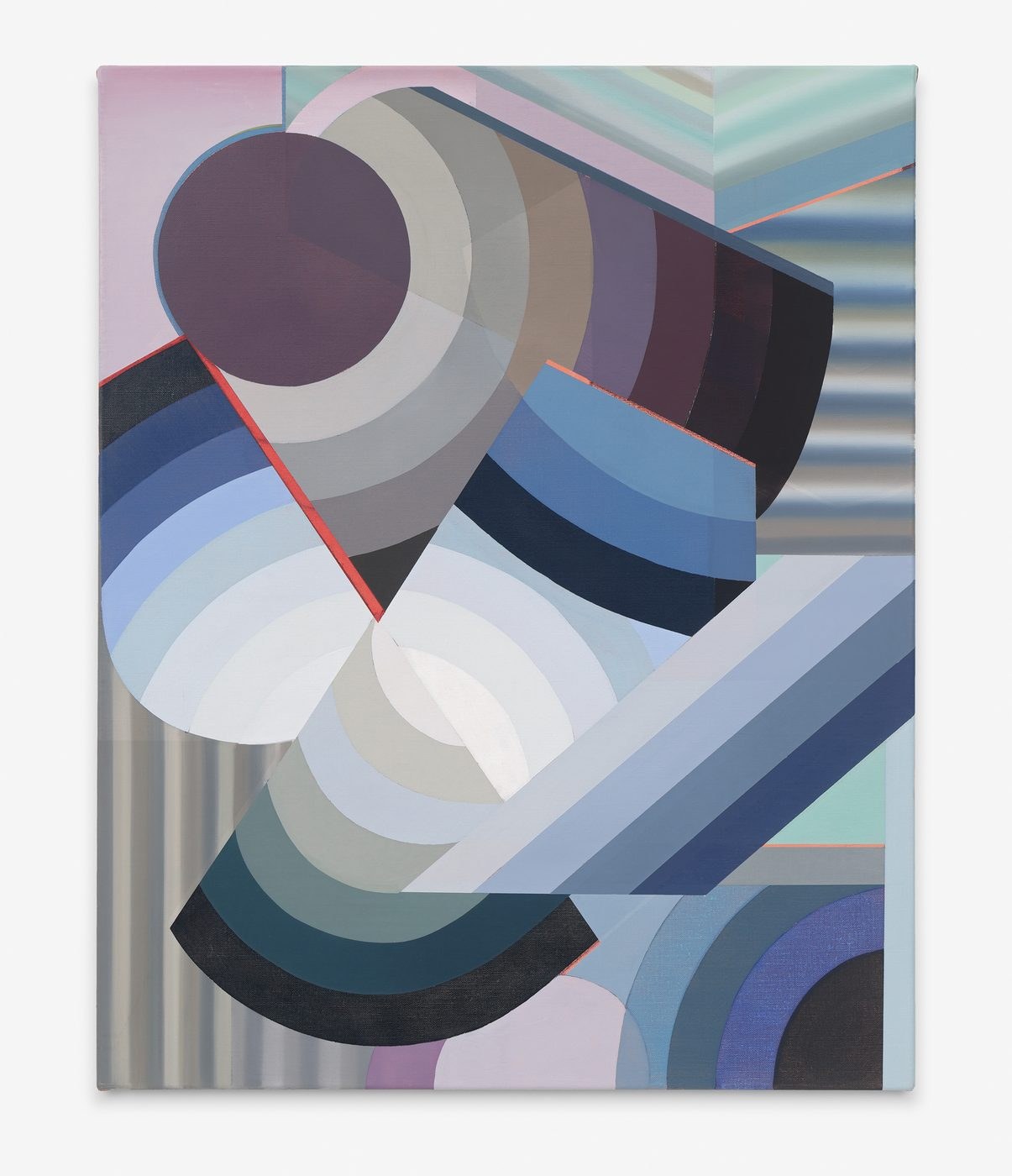
Painterly Architectonic III, 2025, oil on canvas, 100 × 80 cm. Photo: © HG Gaul
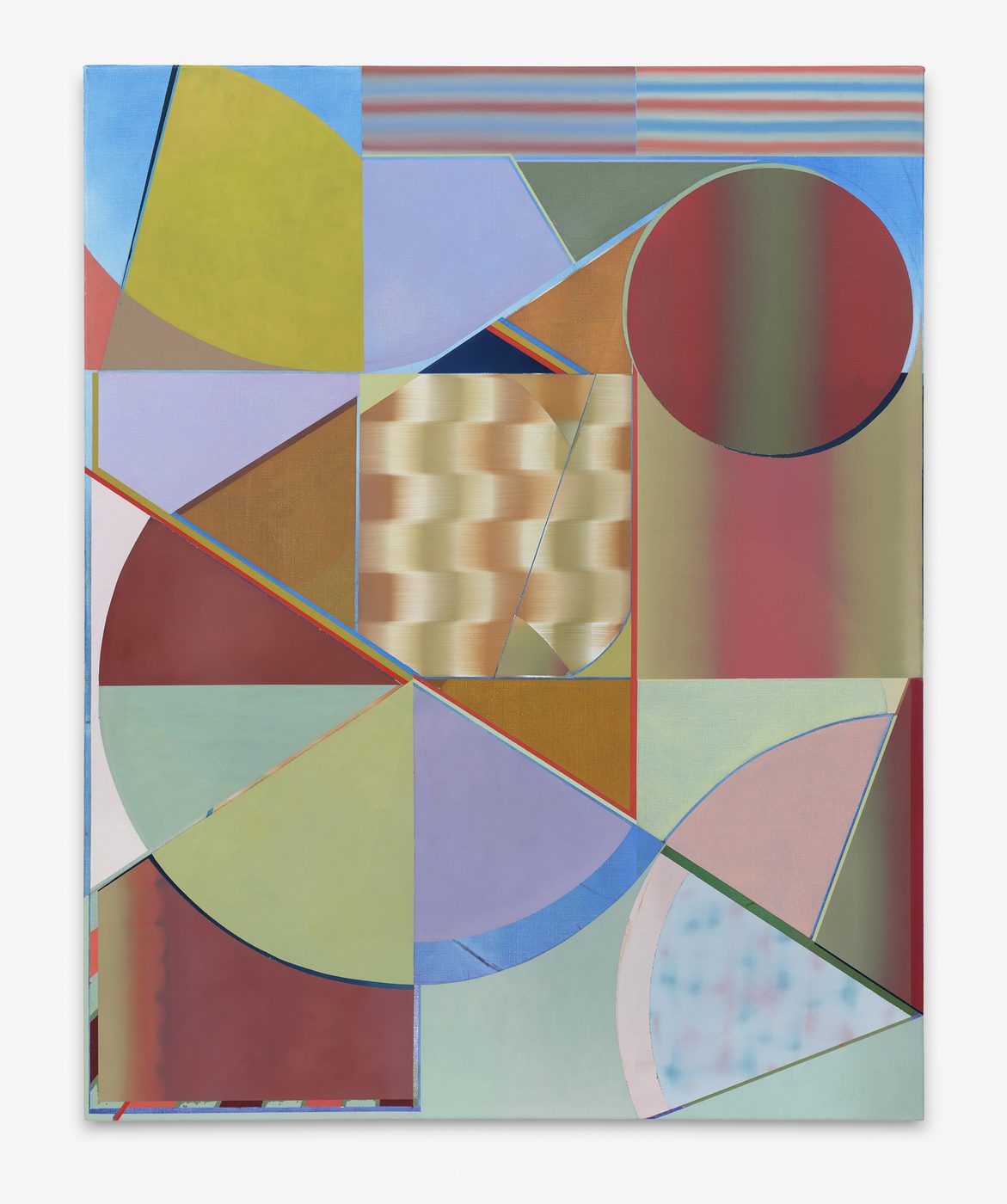
Painterly Architectonic II, 2025, oil on canvas, 145 × 115 cm. Photo: © HG Gaul
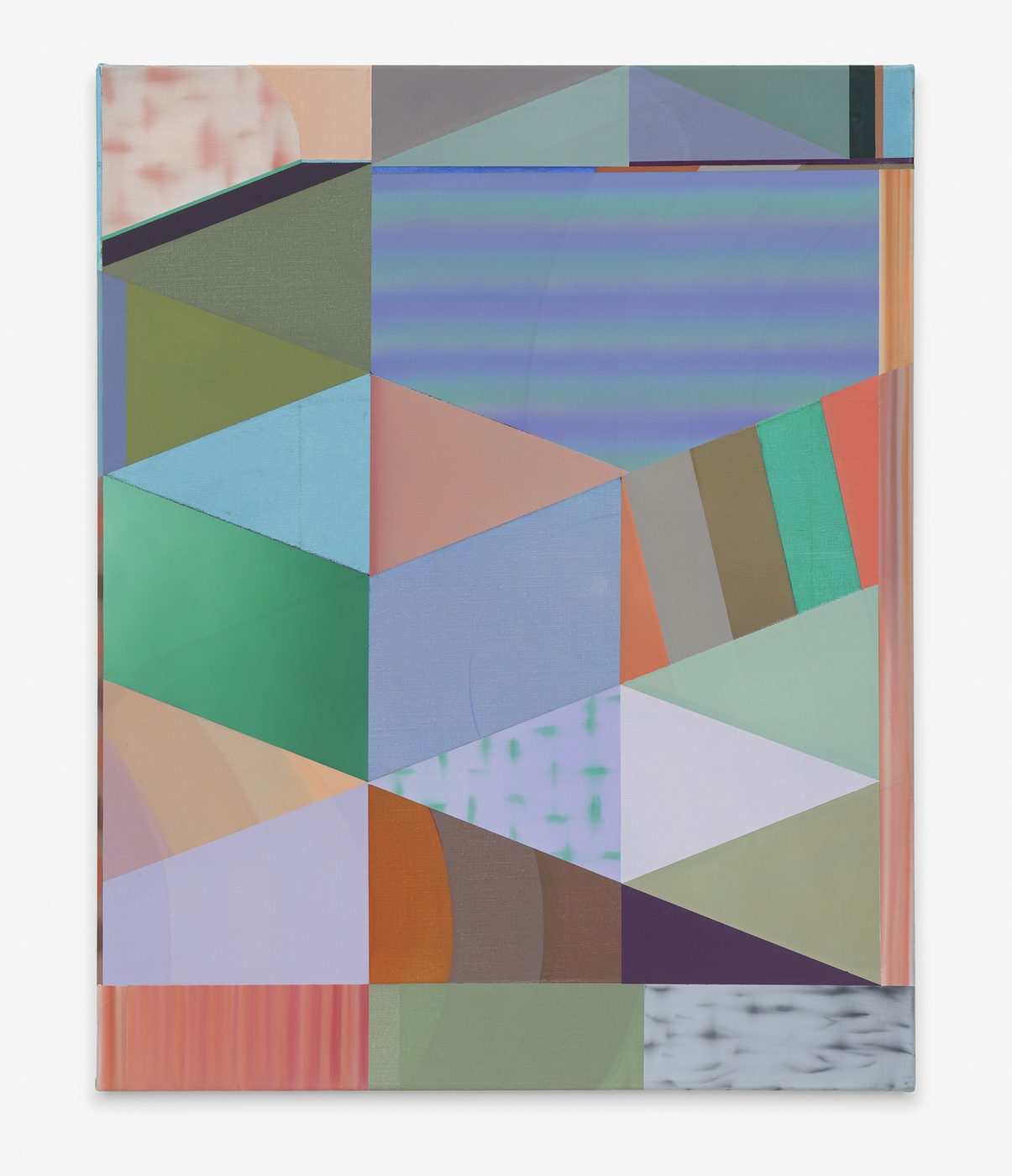
Painterly Architectonic IV, 2025, oil on canvas, 100 × 80 cm. Photo: © HG Gaul
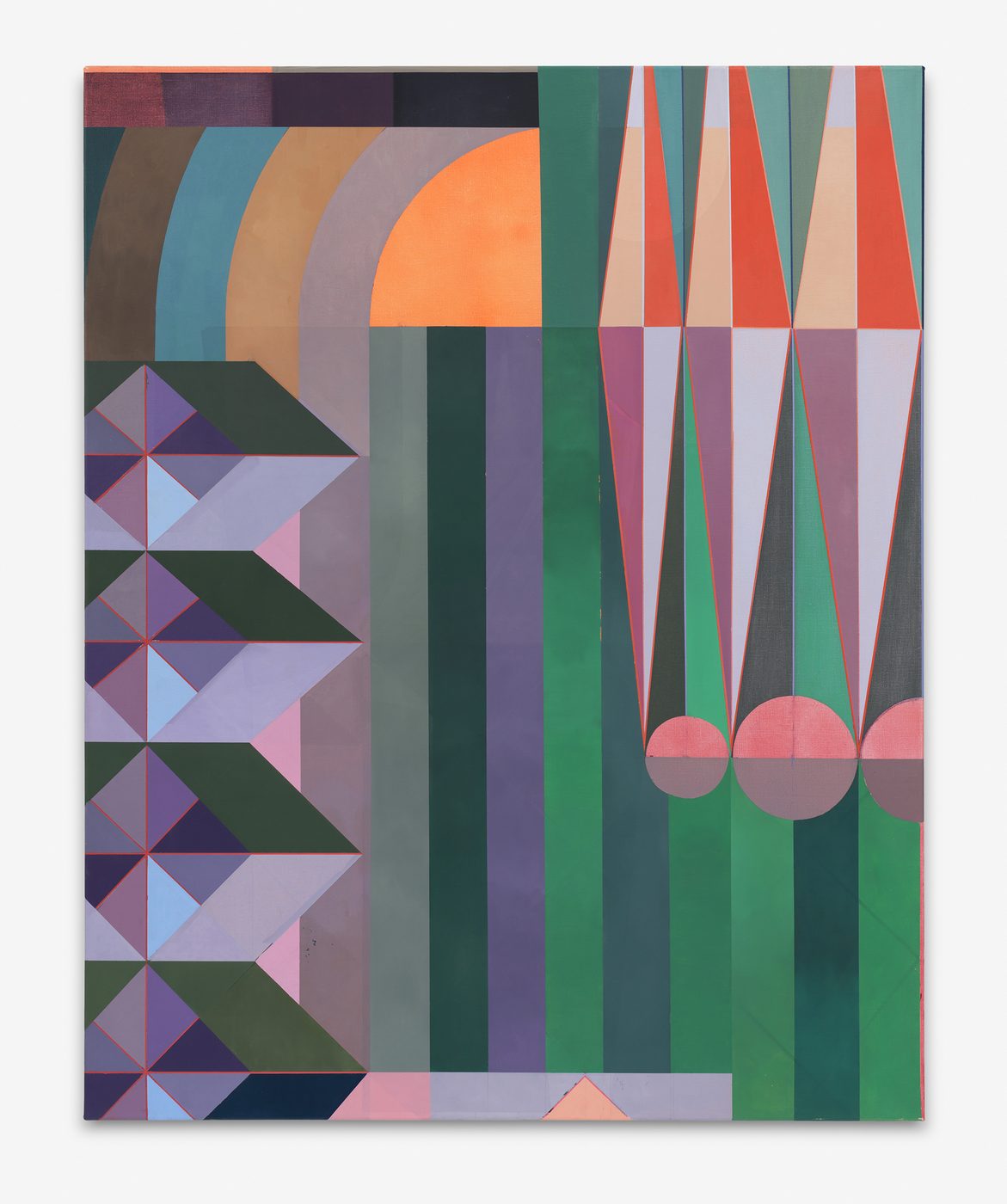
Painterly Architectonic I, 2025, oil on canvas, 145 × 115 cm. Photo: © HG Gaul
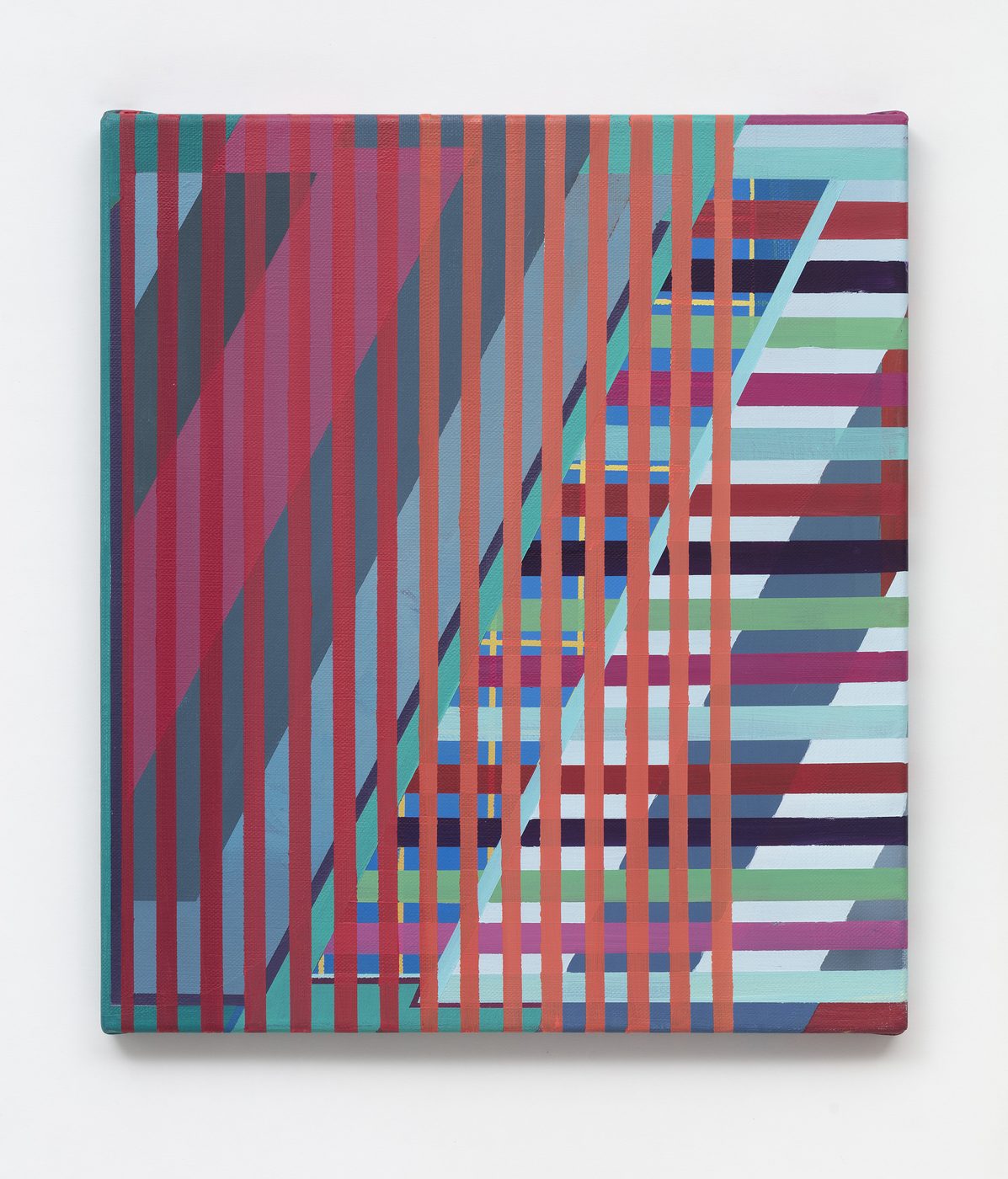
Geometric Symphony V, 2022, oil on canvas, 40 × 35 cm. Photo: © HG Gaul
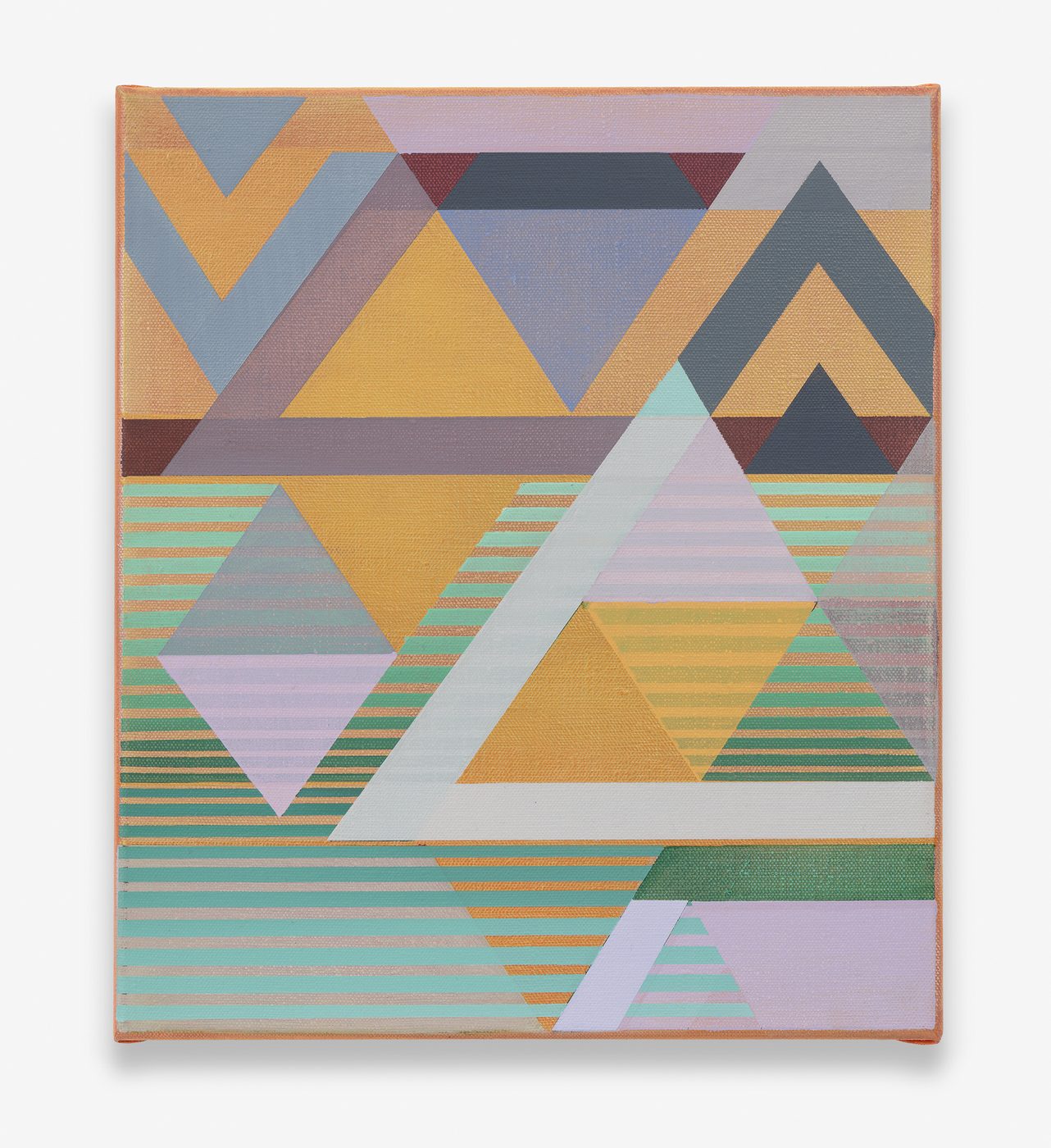
Geometric Symphony X, 2025, oil on canvas, 40 × 35 cm. Photo: © HG Gaul
Q & A
Is geometry a constraint or a freedom for you — and has that answer ever changed?
For me, geometry forms the foundation of my compositions and is inseparable linked to the body of colour. It determines both the starting point and the process of my work.
Walk us through your process — where does a piece begin, and how do you know it's finished?
I usually begin my work by selecting a base colour to cover the entire surface as an underpainting. The composition then evolves directly on the canvas through the intuitive, linear drawing of simple geometric shapes in chalk—a prolonged process of removing, adding, and reflecting. Subsequently, additional colours and tonal gradations are introduced to create contrasts or variations relative to the underpainting; in the process, the base colour may at times disappear completely. The "right" moment to finish the work depends on whether I feel that the colours and shapes have found a balanced, harmonious relationship with one another.
Is there something outside of art — a system, structure, or phenomenon — that quietly shapes how you think about form?
Yes. I am fascinated by systems that seem to follow an internal order without ever being rigid or entirely predictable. The spectrum ranges from natural phenomena—such as folds, sedimentary deposits, or interference patterns—to mathematical structures, physical processes, or architectural arrangements. I am less interested in the scientific explanation than in the way complex forms emerge from simple principles. These transitions between rule and deviation, order and disruption, shape my understanding of form.
What does a viewer miss when they see your work as 'just geometry'?
When viewers perceive my work as "mere geometry," they often overlook the fact that geometry is not the actual subject—it is the language. My images emerge from observations, readings, or scientific ideas. Through drawing and painting, these starting points are gradually reduced to their essence, until only the underlying structures, rhythms, and relationships remain.
What's the last rule you set for yourself in the work, and did you keep it?
If one were to speak of a rule, it would be to start with a highly restricted colour palette and develop the image from a single dominant colour. Every subsequent decision should respond to this starting point rather than following a preconceived image. However, the process itself is just as important to me as establishing rules or systems; consequently, deviations from the rule occur and are an integral part of the painting process.
Newsletter
Curated open calls and one artist to know, every couple of weeks. Free, no spam.