Selected Artist
About
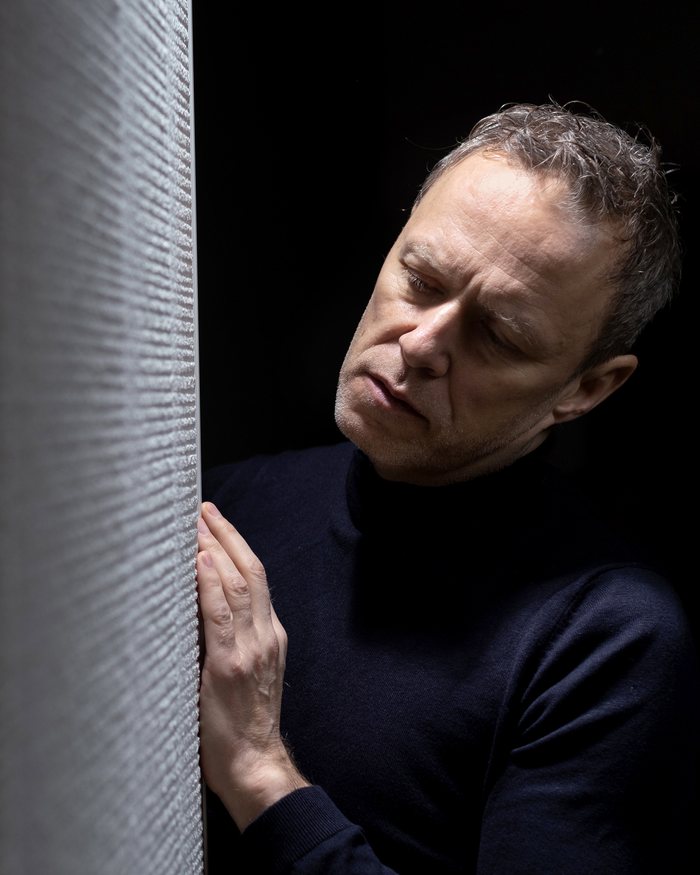
Piotr Olszewski (b. 1970, Rzeszów) is a painter based in Kraków. A graduate of the Faculty of Graphic Arts at the Academy of Fine Arts in Kraków, he graduated with distinction from the intaglio studio under the supervision of Professor A. Pietsch in 1996. He studied painting under Professor Stanisław Batruch from 1990 to 1996, and currently lives and works in Kraków.
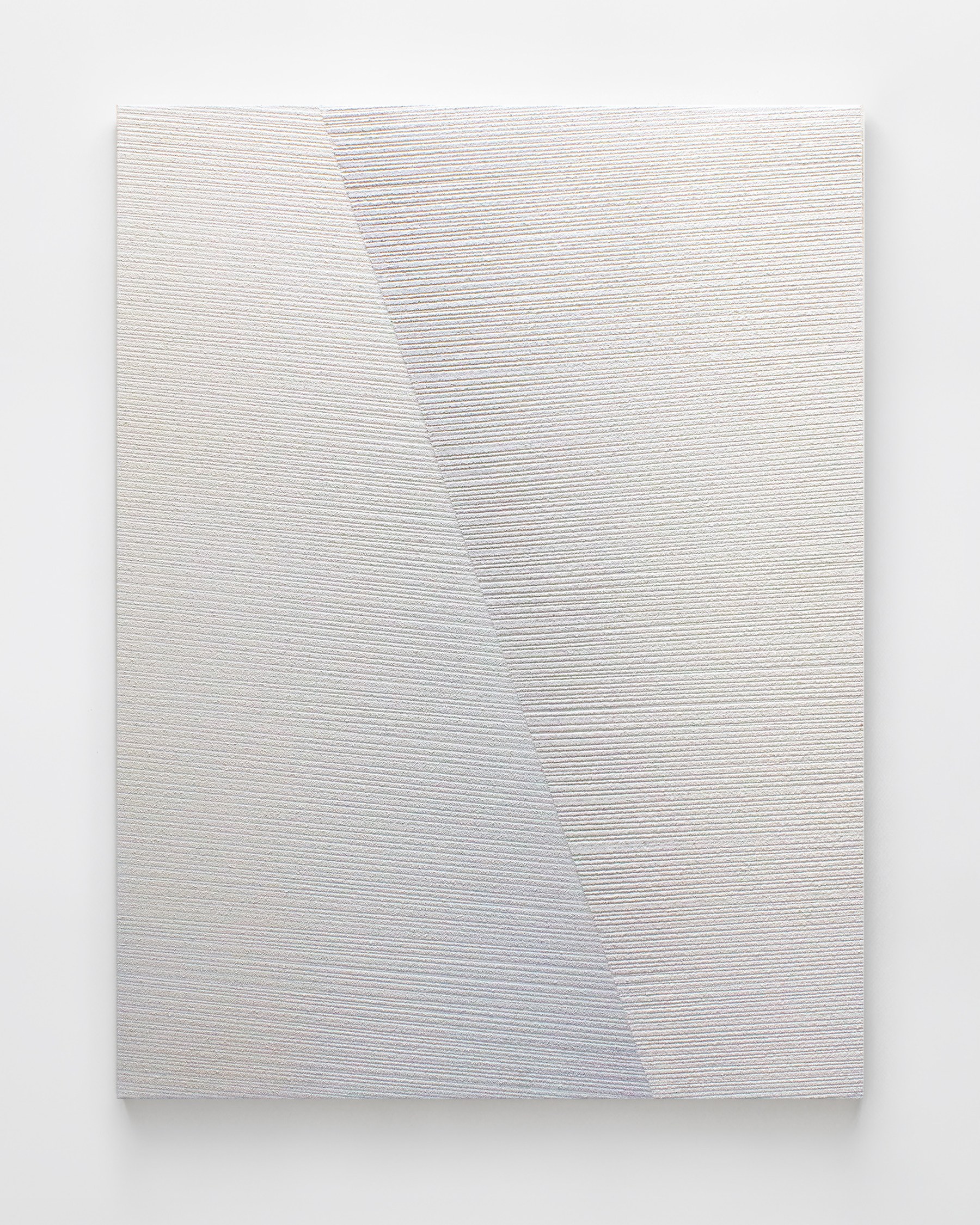
In his paintings, Olszewski employs a language devoid of narrative and literalism, yet deeply rooted in emotion. Using sparse form, subtle light, and a nearly monochromatic palette, he builds compositions with a distinct yet subtle rhythm. Lines, their tensions, and shifts form visual phrases, like successive bars recorded in the structure of a painting.
This rhythm gradually reveals itself, revealing what is initially invisible — emotions, relationships, and inner tension, like particles of pink, yellow, and blue hidden within seemingly uniform surfaces. A key motif in this work is change, understood not as a sudden rupture, but as a process that unfolds slowly, almost imperceptibly. The repetition of gestures and the rhythm of lines build a cumulation leading to a moment of breakthrough — a quiet, inner transformation. In these paintings, feeling and reflection, personal and universal experience, converge.
The materiality of the works also remains crucial. He uses Carrara marble, building rough, grainy, and haptic surfaces. Layers applied in a mantric, focused gesture create a structure that — like ritual — organizes time and thought. Up close, the imprint of a hand reveals itself, imperfect and human; from a distance, harmony and balance.
The paintings clearly echo inspiration from Japanese aesthetics and philosophy, particularly the concepts of ma, the space between, and yūgen, the depth that isn't immediately revealed. These paintings function like Zen gardens: they don't depict reality, but allow us to experience it. They are a space of silence in which every element — line, light, or void — has significance.
Selected works
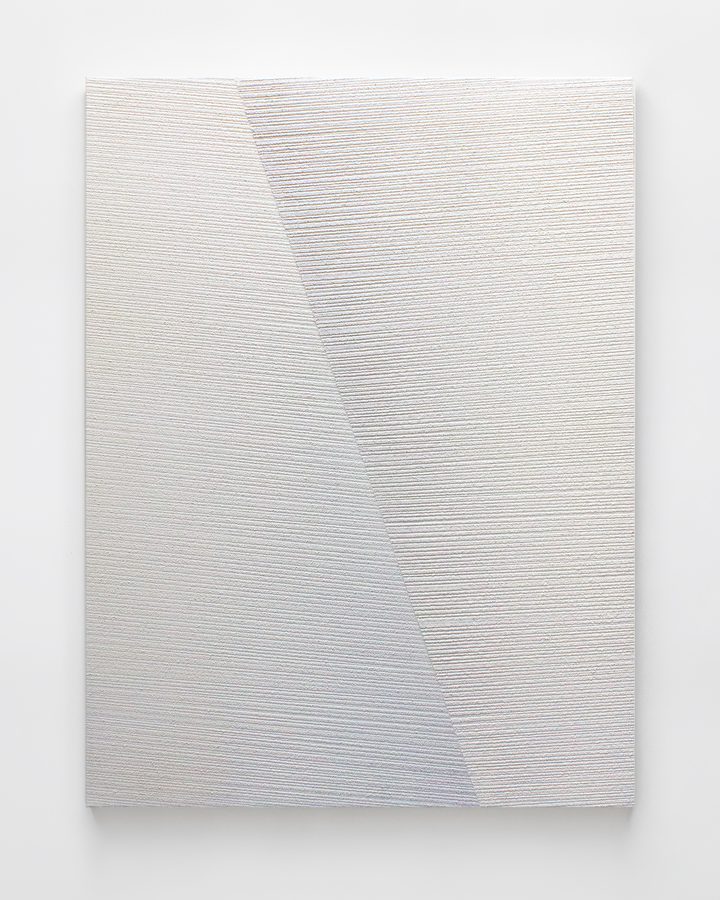
Change 25/10/2, 2025 — oil on canvas, Carrara marble, 120 × 160 cm
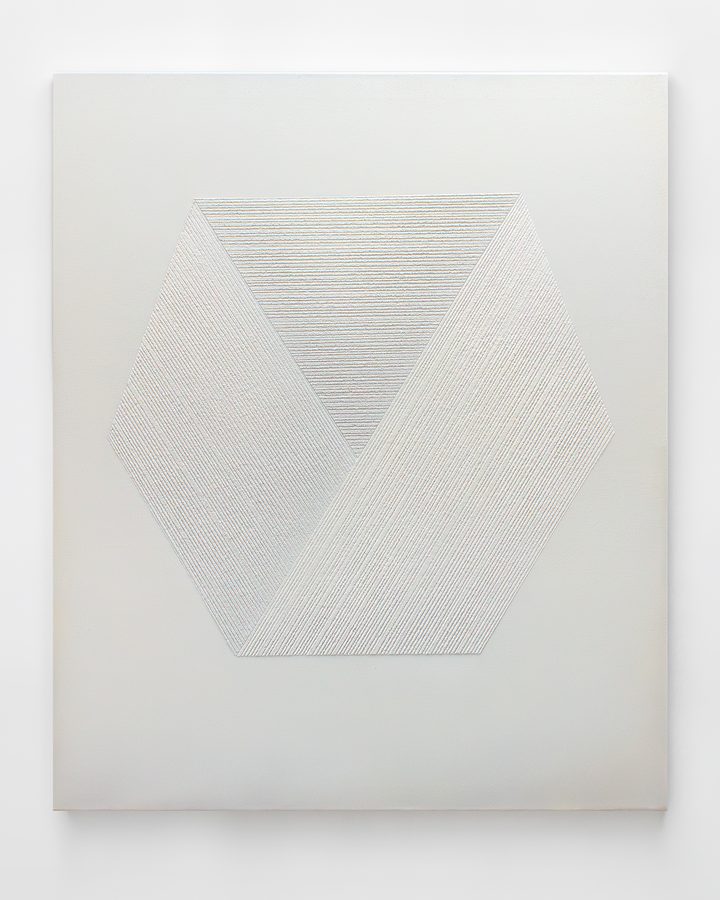
Change 25/12/2, 2025 — oil on canvas, Carrara & Thassos marble, 150 × 180 cm
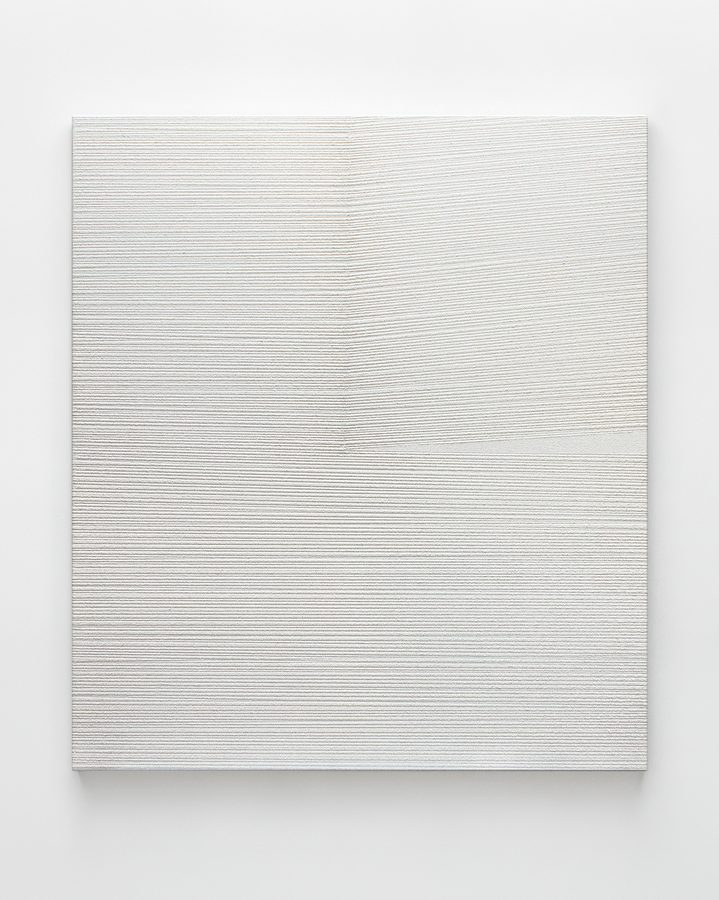
Change 25/9/1, 2025 — oil on canvas, Carrara marble, 140 × 160 cm
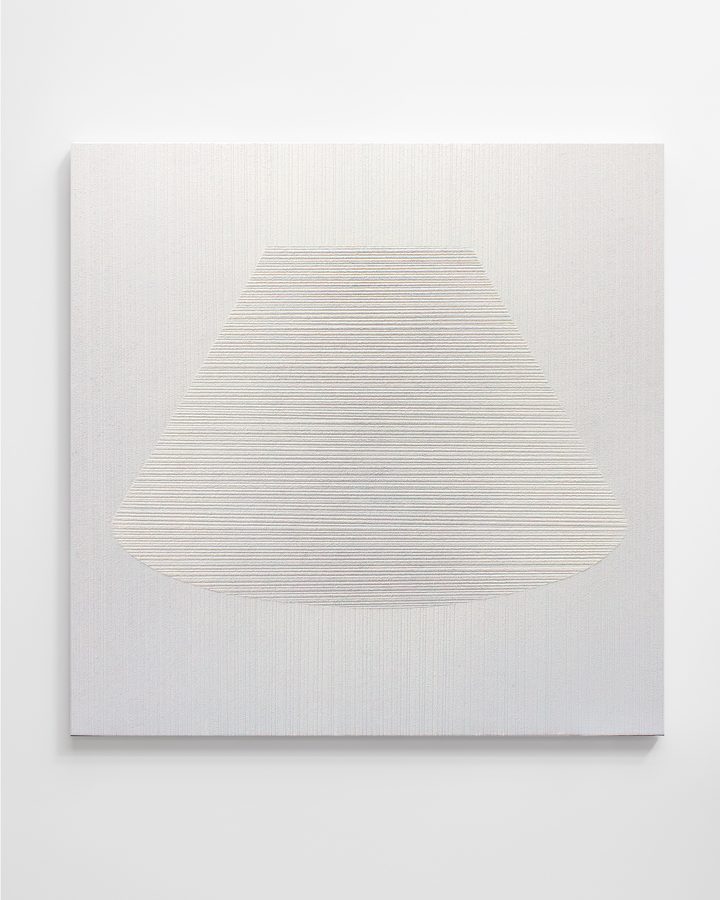
Change 25/9/2, 2025 — oil on canvas, Carrara marble, 150 × 150 cm
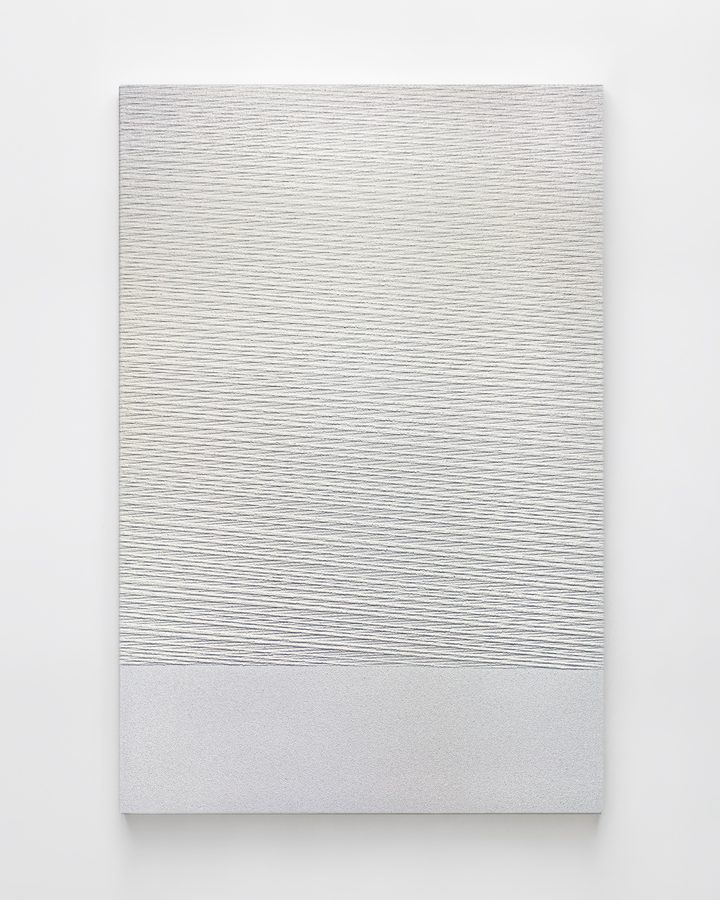
Change 26/5/1, 2026 — mixed media, oil on canvas, Carrara & Thassos marble, 100 × 150 cm
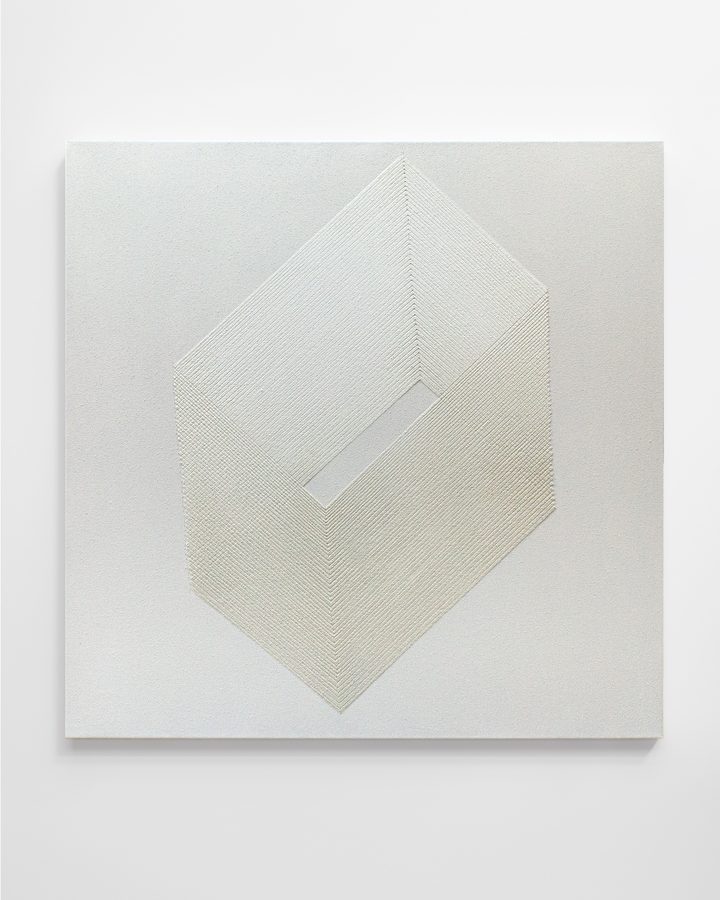
Change 26/6/2, 2025 — oil on canvas, Carrara marble, 130 × 130 cm
Q & A
Is geometry a constraint or a freedom for you — and has that answer ever changed?
Geometry is a language, simple, clear, and universal. Where there's no literalness, there's room for interpretation, which I greatly appreciate. This has never changed.
Walk us through your process — where does a piece begin, and how do you know it's finished?
Every work of art begins with emotions, then their interpretation, then their recording on paper. Finally, canvas, paint, marble, and realization. This is an art in which emotions—concept—and intuition are paramount. If I feel the truth, the work is complete.
What does a viewer miss when they see your work as 'just geometry'?
Emotions – which are contained in each work. Color – subtle, yet present in each one. Imperfections – which convey the quivering and changing nature of what I'm talking about. Texture – which makes the painting sensual and makes you want to touch it.
What's the last rule you set for yourself in the work, and did you keep it?
I assumed the work would be constructed using a single line. Thread sewn to the canvas in 200 places. I spent two days preparing the surface before starting to paint. My fingers were pricked with needles. But this is the painting I've recently become most fond of.
Describe a failure or a dead end in your practice — something that didn't work.
There was a time when I wanted the painting to be simply pretty. That was a mistake. It was empty, emotionless, and meaningless.
Newsletter
Curated open calls and one artist to know, every couple of weeks. Free, no spam.