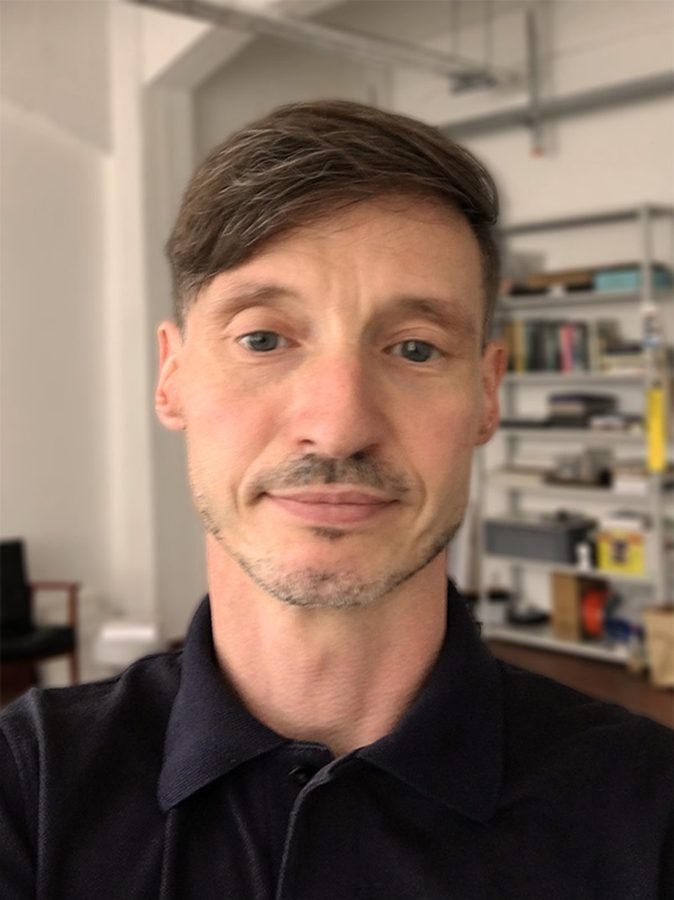
Selected Artist
About
Thomas Poeser's work is informed by the theories of modernism and follows minimalist aesthetics by means of geometric abstraction. His focus lies on the exploration of rhythmic and modular configurations, creating dynamically structured systems of space, shape and colour. These concepts are often expressed in precise patterns and variations on the grid. Diverse layering techniques examine the essence of light as the correlation of space and time.
Within this framework, Poeser often combines the conceptual rigour of systemic and serialised art with personal decisions that define the final aesthetics of the outcome. Working predominantly on paper, he frequently extends these geometric systems into three-dimensional space, translating structural logic into sculpture, moving image, and sound environments. This multidisciplinary approach ensures that his geometry-based concepts function across both static and time-based media.
Selected works
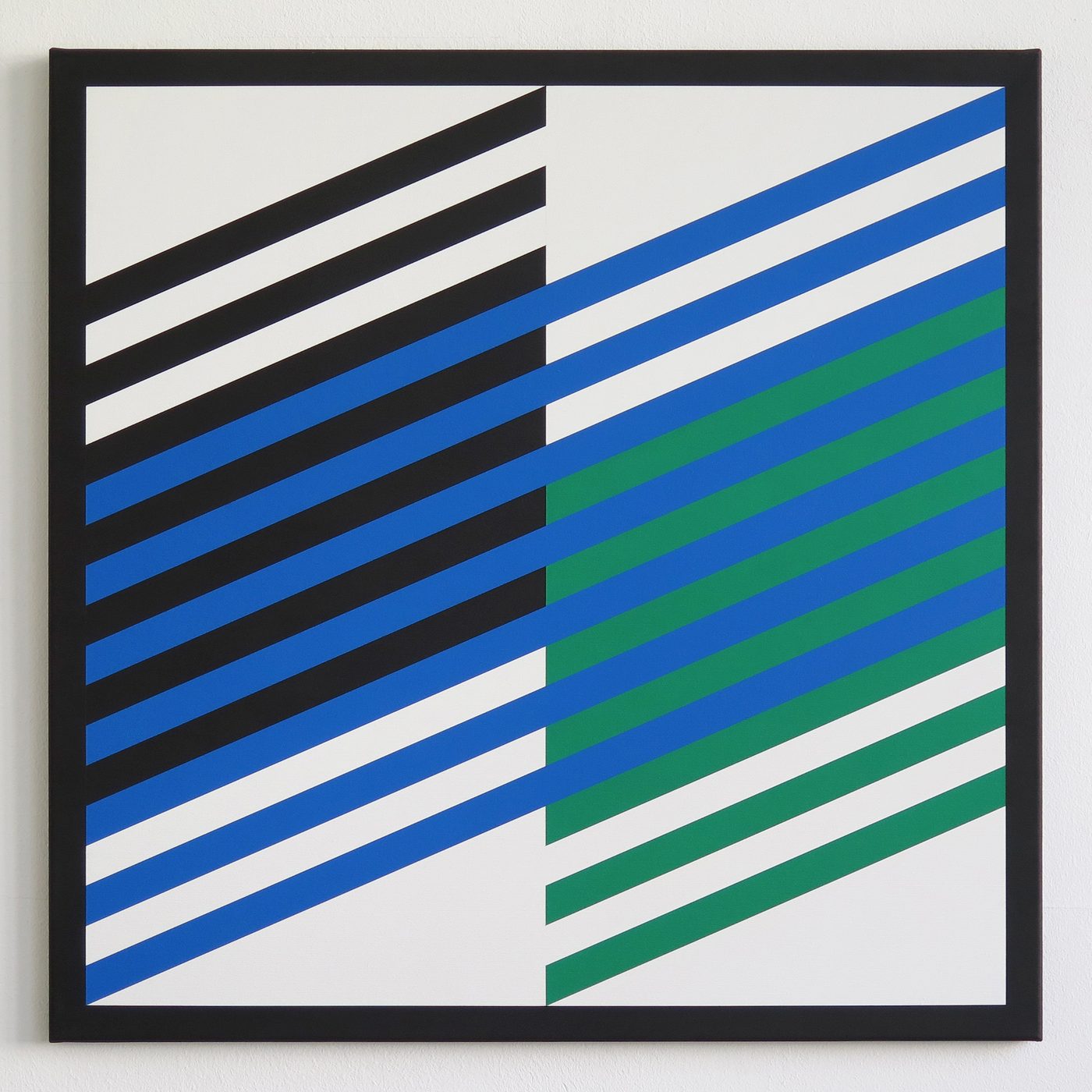
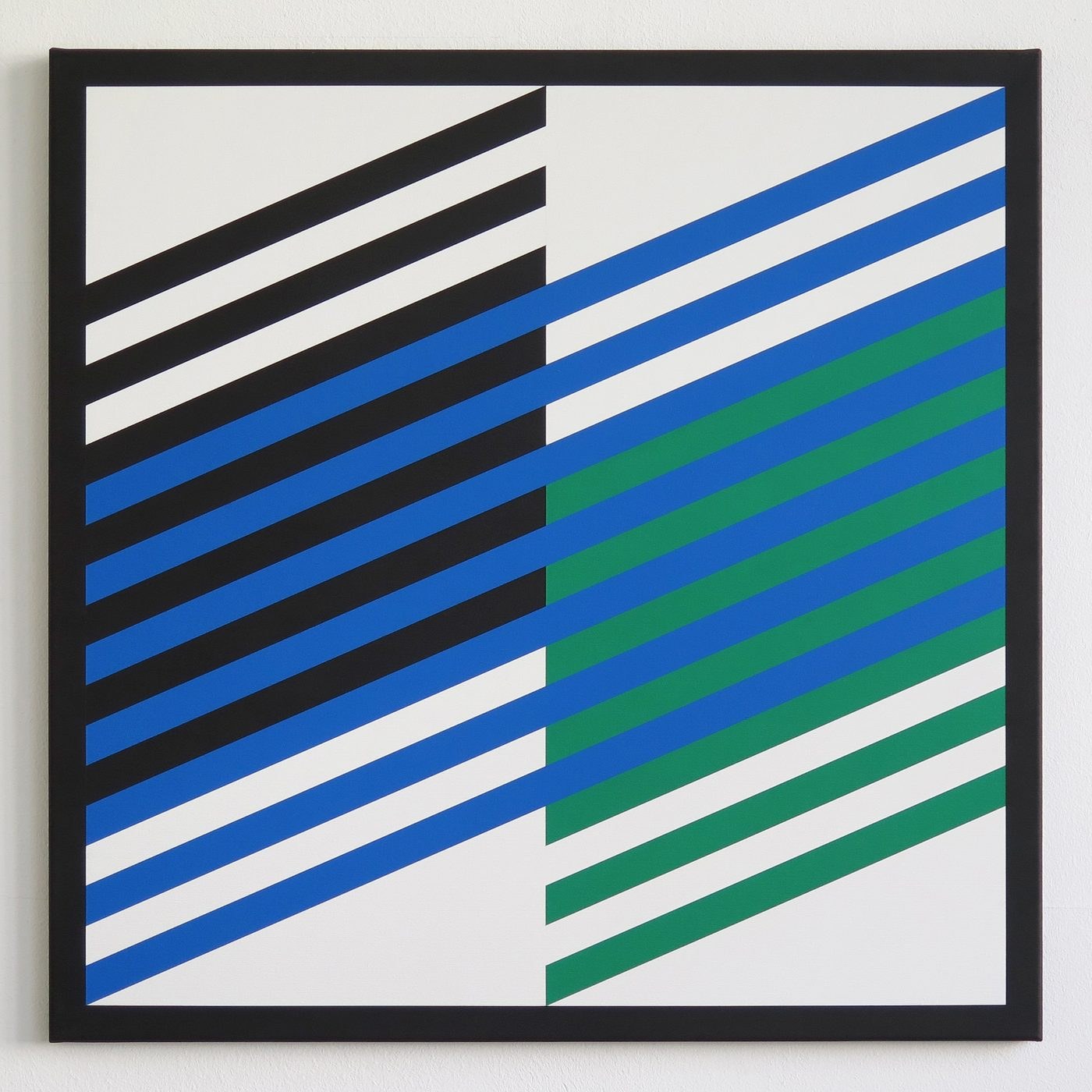
Diagonals V (black, blue, green), 800 × 800 mm, 2019 — acrylic on canvas, from a series of 6 paintings
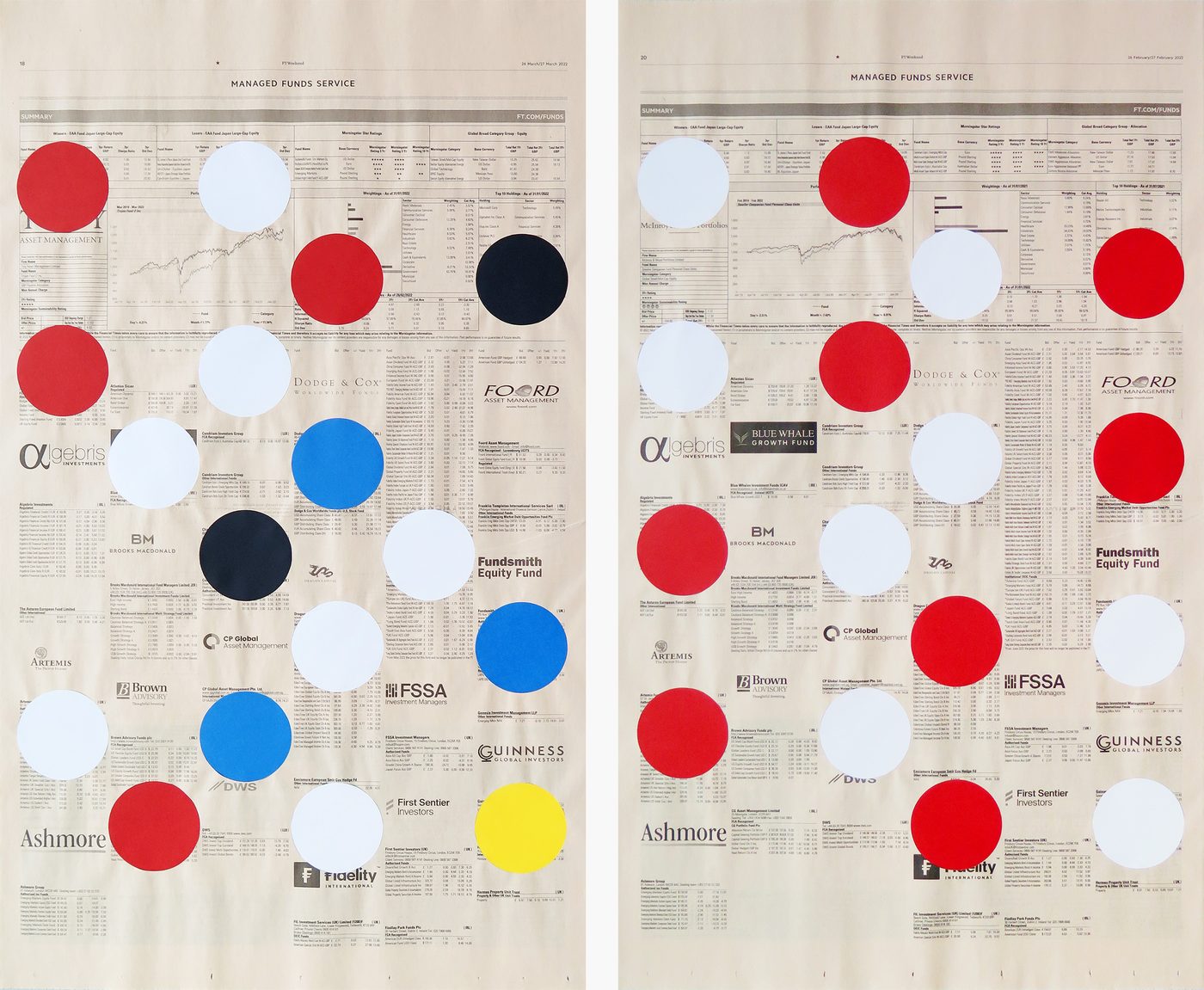
FT – Disruption Pattern I/III, 558 × 330 mm each, 2022 — newspaper & origami paper; paper-intarsia from the series Disruptive Embedments (Financial Times Cycle)
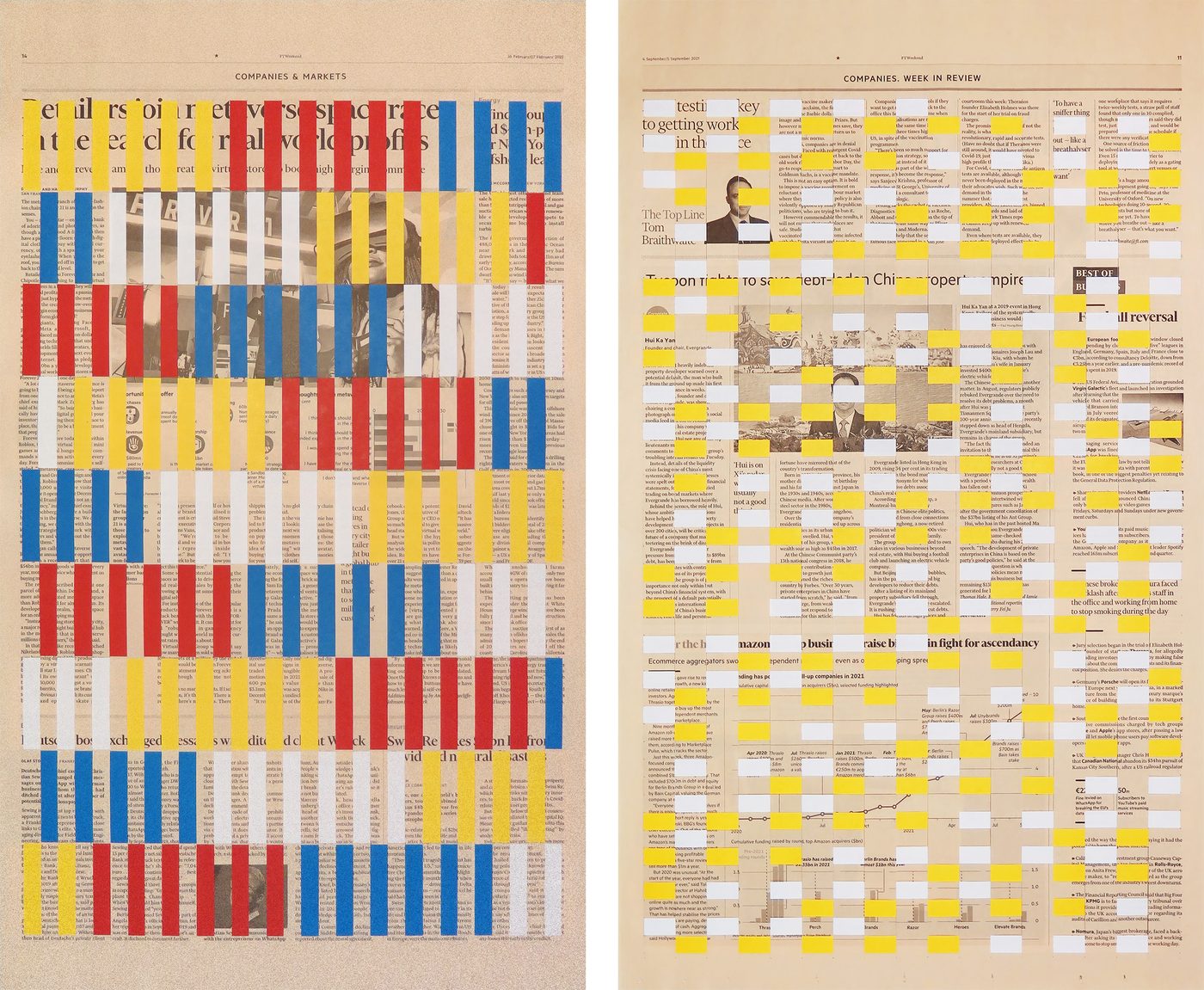
FT – Interwoven Disruption Pattern I/III, 558 × 330 mm each, 2022/23 — woven origami & newspaper, from the series Interwoven Disruptions (Financial Times Cycle)
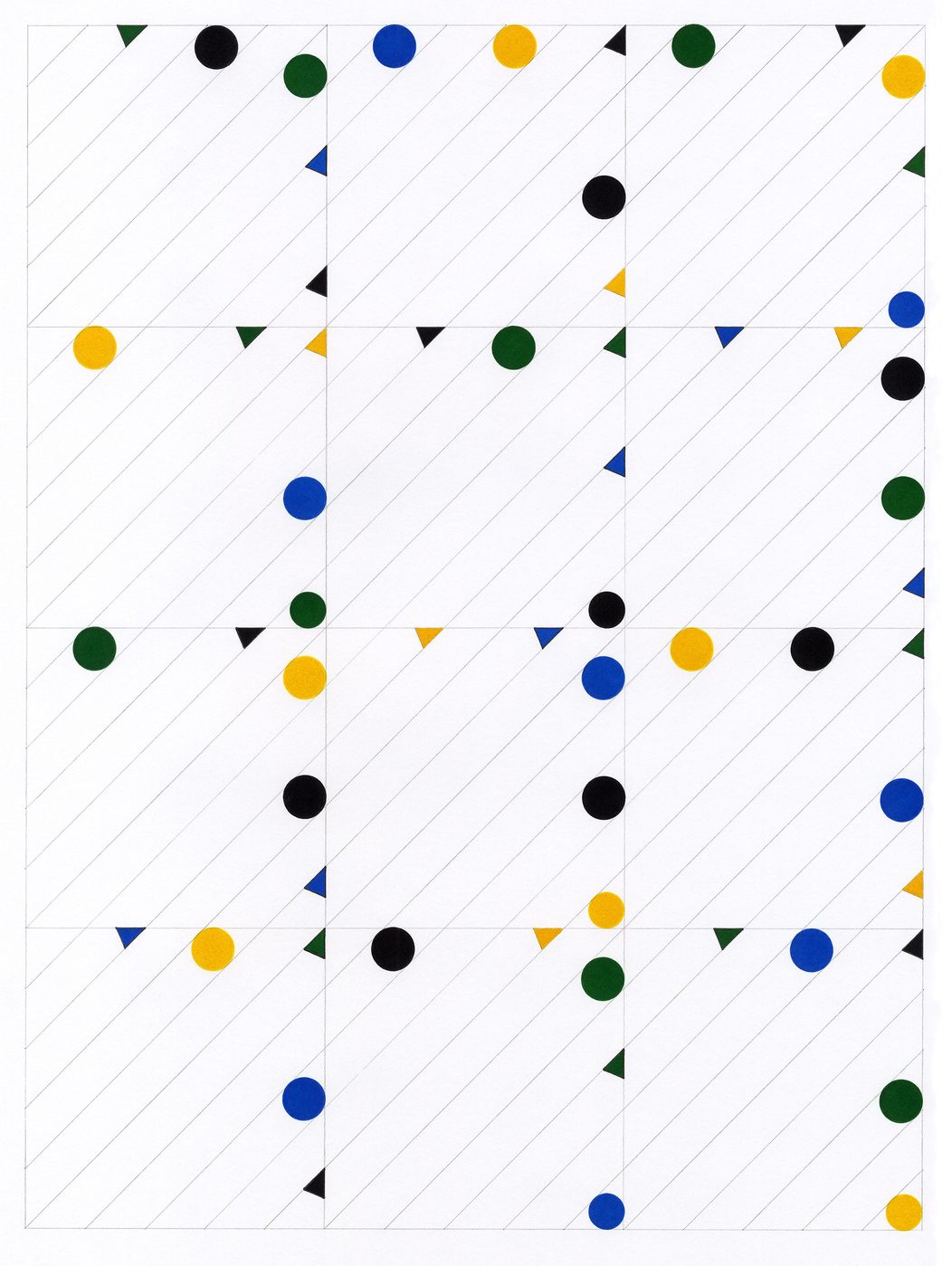
Geometric Composition on Diagonals I, 360 × 270 mm, 2019 — pencil and ink on paper
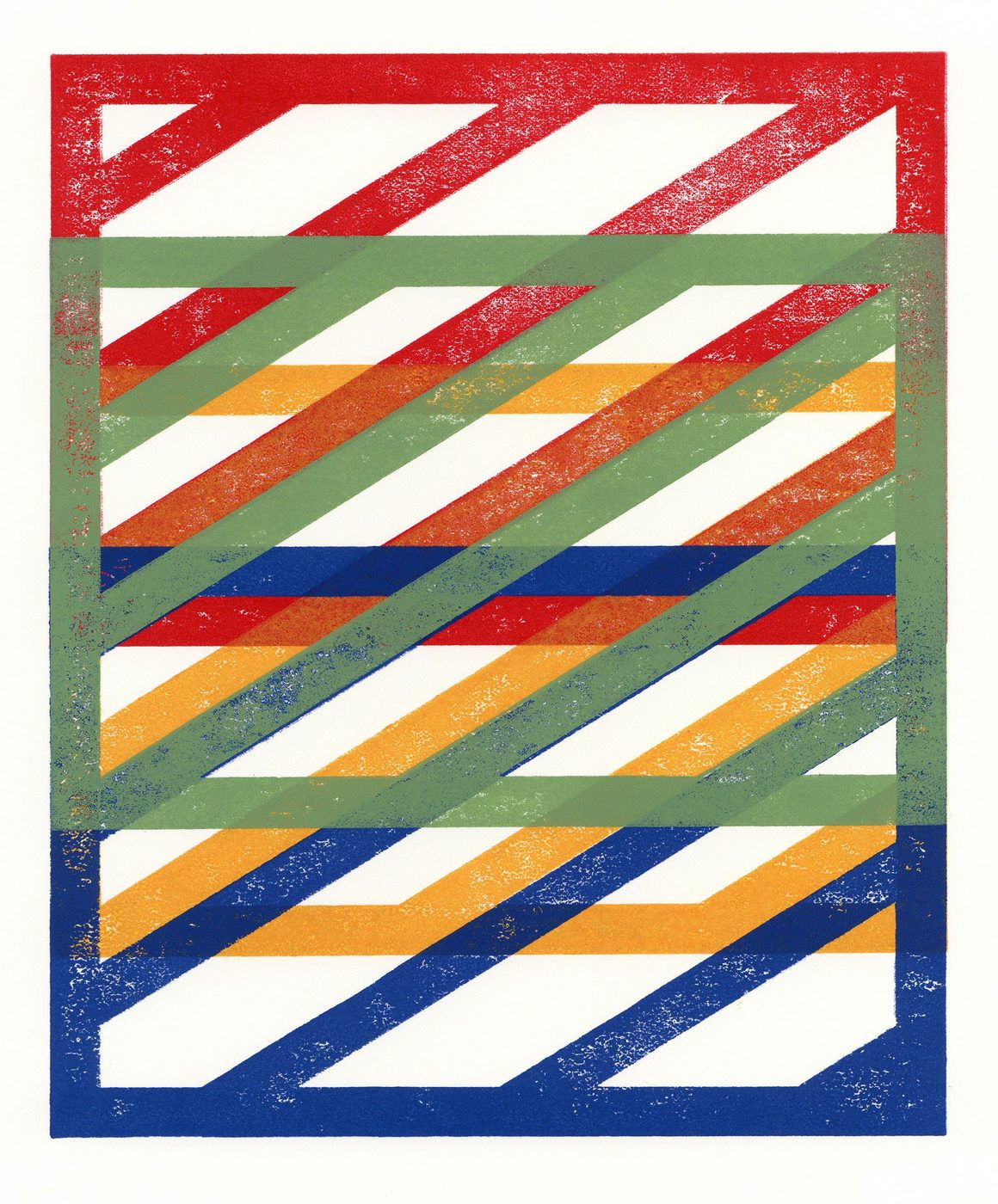
Modules Variation (red, yellow, blue, green), 219 × 180 mm, 2017 — lino-print on paper, edition of 2
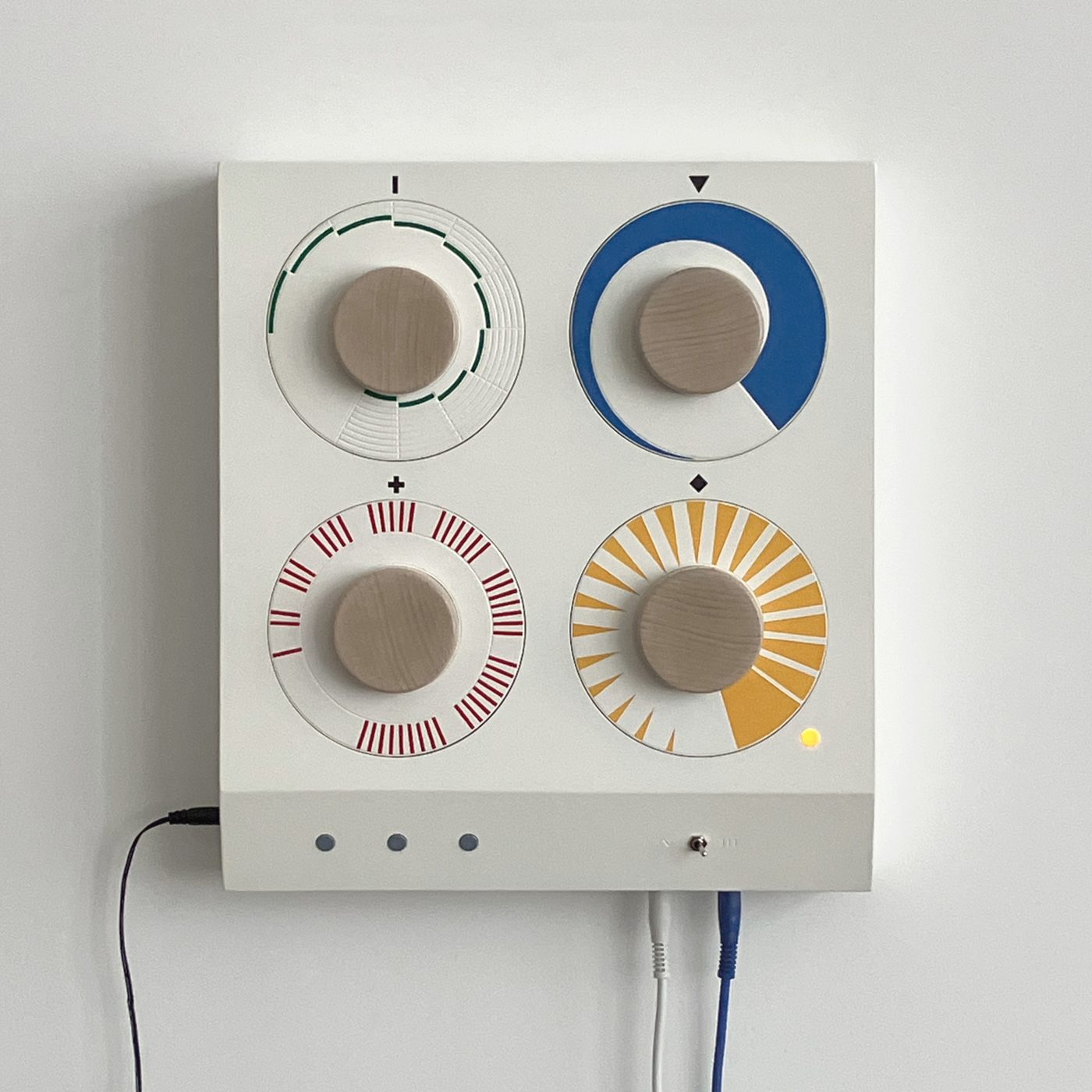
Papagena, 350 × 315 × 70 mm, 2025 — sculptural electronic instrument; mdf, wood, acrylic paint, analog and digital electronic circuits
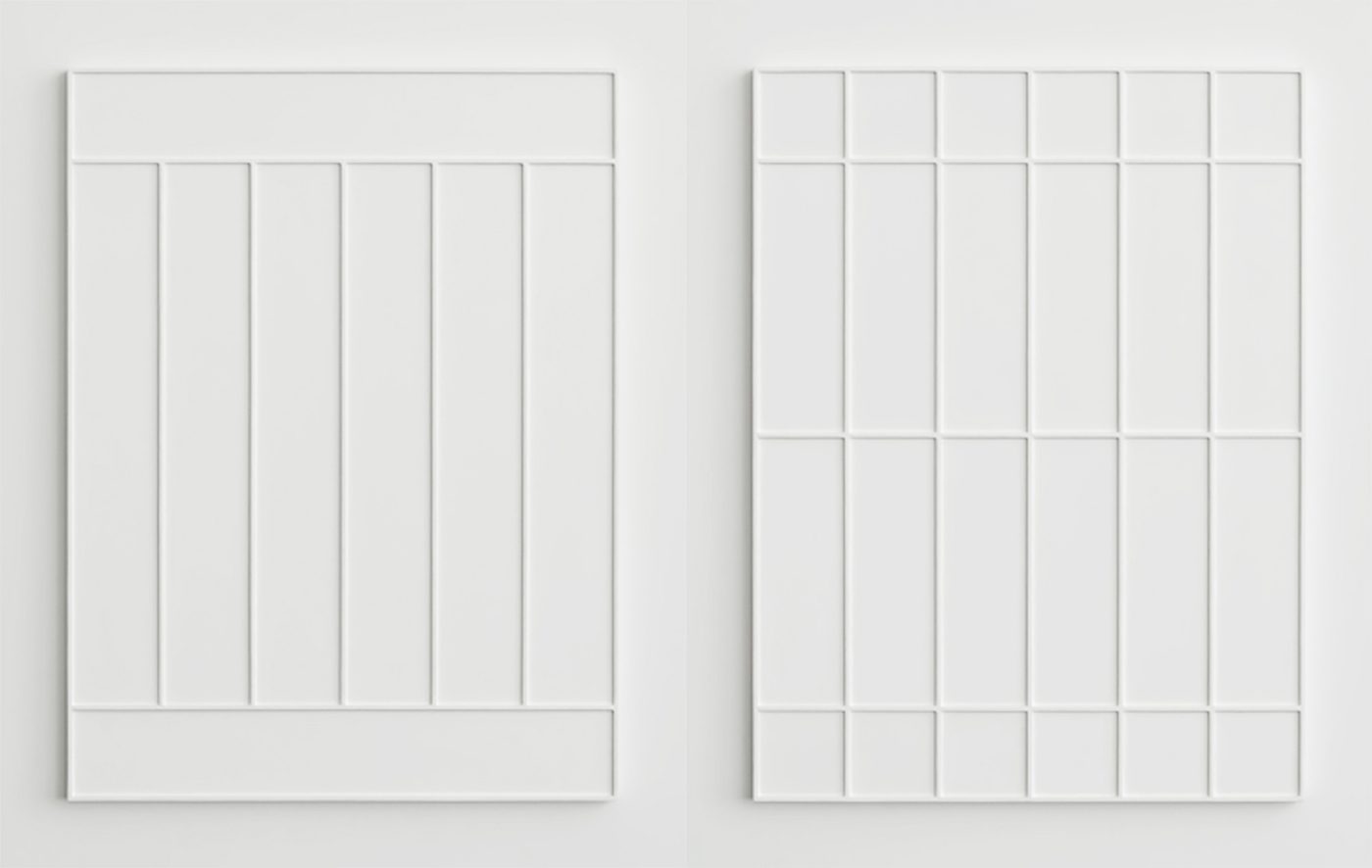
Passage 2.1, 2.2, 480 × 360 × 15 mm each, 2022 — mdf, acrylic paint, from the series Passages
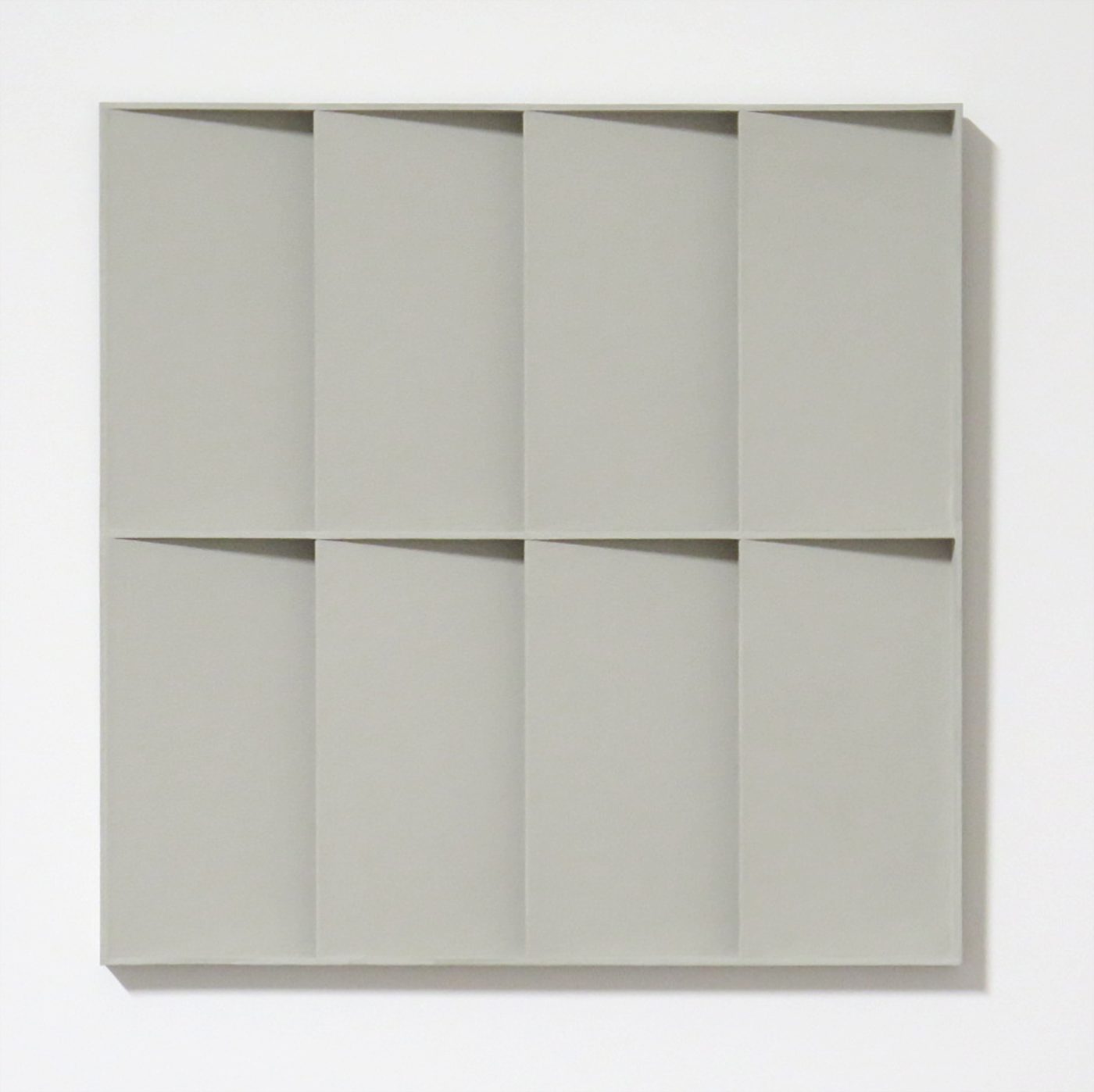
Reflector Grid II – 2 × 4, 250 × 250 × 15 mm each, 2025 — cardboard, acrylic paint, from the series Reflector Grids
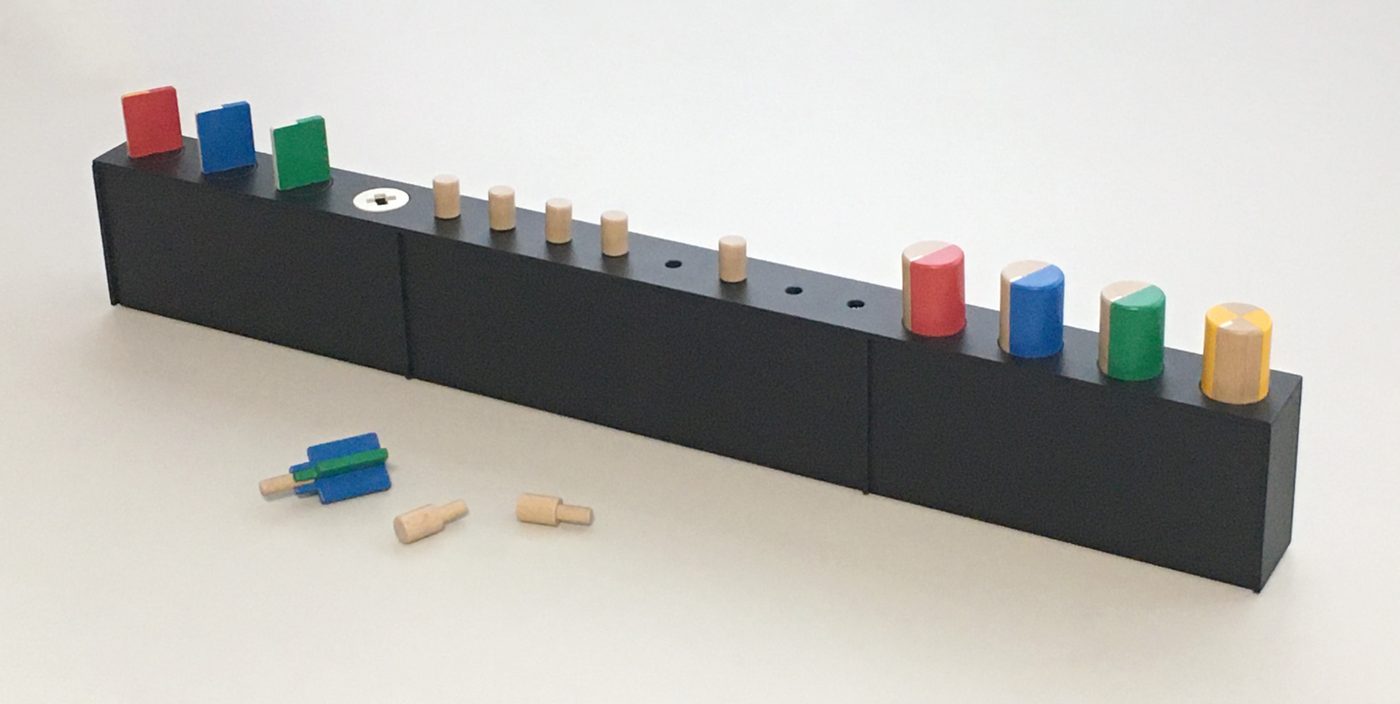
Toucan, 130 × 670 × 50 mm, 2025 — sculptural electronic instrument; mdf, wood, acrylic paint, analog electronic circuit; used in improvised performances (a.k.a. Playing The Toucan)
Q & A
Is geometry a constraint or a freedom for you — and has that answer ever changed?
The choice of geometry as a form of expression fits me; it came to me naturally. I am drawn to simplification, which gives me the feeling that what I create is somehow more universal.
I am not sure whether I create art for myself or for others, but I know I do not want it to be too personal in the sense of being about me. It is about my interpretation of things, not about myself, the interpreter. In a recent talk, an artist mentioned how her use of reduction counters over-stimulation, acting as an anchor for mental stability against rising everyday complexity. While I do not consciously aim for this aspect, I fully recognize and support it.
From time to time, I venture into more personal, intuitive, and expressive abstract forms. Yet, I always find myself returning to geometry. This choice doesn't necessarily follow my patterns of art appreciation; I like a lot of expressive and non-geometric visual art. But as an artist, I have to follow my inner voice, and that leads me to what I do and in what way I do it. My process is more often planned before execution than not. Well, it is conceptual.
Even though using geometric form hints at restricting oneself, there seem to be unlimited ways to make use of the given elements. Well studied ways of how to do this manifested in design principles and concepts, and hopefully in other than design related areas. Poetry, for instance, is inherently constrained by the use of words, or more precisely, by a limited system of signs, of which the most commonly used in western cultures are letters (though an interesting alternative way is asemic writing).
Looking back at the richness of geometric art already created, it is tempting to think that we reached an end to what can be used along that lane. In my view, however, we are not there yet – and likely never will be. Anyone who has ever worked with the powerful tool of recombination will agree. In that respect, I often think of the sheer endless dimensions of Jorge Luis Borges' The Library of Babel that contains all possible books.
Ultimately, constraints can be incredibly helpful in creative processes. I experience this intensely when working with sound: limiting yourself to just a few audio sources allows you to focus on the details. If you use a plethora of them, the outcome might be grand, but you lose the connection of having a substantial role in making it. When you have everything at hand, the process becomes less about originating something from within, and more about managing assets – a sort of creative bureaucracy. In this regard, the visual process is no different.
I do not mind limitations as long as I am content with what I can achieve through them. The moment they cease to serve the work, I feel entirely free to step outside the boundaries.
Walk us through your process — where does a piece begin, and how do you know it's finished?
My process develops along the lines of idea-, concept-, and system-creation, paired with experimentation and variation. It usually begins with sketches and scribbles (I have a tendency to do these on the envelopes of official letters that reach me by post).
Where applicable, I also make use of the computer; I might, for example, code a small program to test variants of color combinations. For me, making art is an iterative process. I believe that action breeds inspiration: if you do not know what to do, just do something. The act of making inevitably creates new ideas, which then serve as the foundation for the next work. Consequently, a piece usually evolves into a series of variations exploring a cohesive system.
When I have the feeling that I reach a point where exploration of the system in specific terms does not lead to conclusive inspiration or new insights, I leave the system and might return to it later with other aspects in mind.
Not yet realised pieces, including the areas of interest behind them, are in a competition for my attention. I tend to develop potential pieces to a degree where I get an idea, how they could reach a satisfying result. Some of these get finished, right away, while others become ongoing 'projects'.
Once I decide to finalize a geometric work, I plan the necessary steps required to reach the desired state. At the end of that planned process, I am confident that the piece is finished.
The 'projects' however need more time, a 'creative pausing'. In this case, it is good to have a representation of the current state visible in the studio – to get reminded that there is something that will need more attention at some point. I think, this keeps the mind working on the piece subconsciously, always putting it in relation with current affairs and thought processes that will reshape the work, once it is picked up again.
Is there something outside of art — a system, structure, or phenomenon — that quietly shapes how you think about form?
I often think about what else there might be, that we cannot experience (per se) – the structures and phenomena that exist beyond the limits of human perception. For some time, I felt that I should dedicate my work to making the non-visible to be experienced. Good examples of this would be electromagnetic fields, or the elusive essence of the passage of time.
My geometric art is fitting in that it emerges from a conceptual place; like geometry comes more out of the invisible (the realm of the mind) than art that is created through visual reference. Is there anything like a rectangular grid in untouched nature that could be referenced? – it is most likely a human invention.
Recently, my focus has shifted toward the broader exploration and creation of systems. This area spans from algorithms, cybernetics and semiotics to the more philosophical functional aspects of (artificial) intelligence. I have come to realize that any attempts to understand the world we live in are interconnected with the exploration of the underlying systems.
How the for me often already vague results of explorations in the philosophical domain find their way into the actual art that I make, I still cannot explain. It seems to happen at least partially on a subconscious level; so there is this question concerning the process of idea shaping to translation into creation that is well worth exploring in its own right.
As a conclusion, I see my work as a system itself, each piece part of a system that at the same time represents itself and other systems.
What does a viewer miss when they see your work as 'just geometry'?
To be honest, I have never actually encountered that statement in person. However, I think that geometric art could get a bit more appreciation; reductive and conceptual artworks have a high potential for being perceived as 'simple' or 'just this-or-that'. I do not worry much about what I consider shallow or under-substantiated judgment, which is often simply a matter of learned taste or ideological bias.
There is a common narrative that certain art requires 'mediators' to bring it closer to the audience. In my view, this in-between layer is useful for people who are already curious and willing to engage with a challenging subject, much like navigating modern serious music (Ernste Musik). For others, this might, will or should not work. Art does not have to be universally accessible; it might also just not be the right time for it, now.
That said, I strongly dislike the idea of elitist art, art that is primarily appreciated by 'initiated' circles. It appears to me that the 'understanding' of art that is not easily accessible often serves as a vehicle to signal intellectual superiority and separate oneself from the 'uninitiated'. But to what extent are artists responsible for the appropriation of their art?
Access to a body of work happens through invoking interest. Here, for me, aesthetics come into play. I find it much easier to engage with a concept behind an artwork, if I like the looks of the visual manifestation (or other perceptual stimulation), and that happens mostly according to personal taste.
What's the last rule you set for yourself in the work, and did you keep it?
It has to have the potential for me to like it or else it does not make sense to continue that path.
Since rules are there to be broken, sometimes perseverance wins: It happens that I continue, without being fully convinced, pushing forward simply to finish what was started – because you never know… it might, at some (possibly much) later point in time, seem quite fitting, suddenly interesting or inspiring a better work.
Describe a failure or a dead end in your practice — something that didn't work.
I experiment a lot and failure is an intrinsic part of that process. There is a manifold of opportunities for failure and dead ends, and, though it might sound cliché, I generally embrace each of their manifestations. They signpost the way to somewhere better.
In the first moment of experiencing that something does not work as expected, I also feel disappointment. But looking back, not only does the feeling ease, I often find the way how things went was for the better. We can learn much from the mechanics of evolution: trial and error, hit or miss are proven successful tools. A mis-take is merely an unsuccessful try.
Even in situations where one thinks 'I just destroyed the work', most of the time, the work can still be brought to a satisfying condition. However, when things cannot be fixed, it is important to being able to let go. I actually participated in a gallery project where artists handed over their failed works along with specific instructions on how to destroy them. The gallery executed the instructions and documented the process. A case Germans would call “erfolgreiche Anschlussverwertung” (roughly translated: a successful case of follow-up usage).
While a healthy dose of hope is needed to get things going and to try something not tried before, focusing on success, rather than on experiencing the journey and learning from the process, can ruin everything. The problem is often a level of expectation set too high. The ideal is to dance as if nobody is watching you. In the end, there are usually some people that like what you do and how you do it.
Newsletter
Curated open calls and one artist to know, every couple of weeks. Free, no spam.