Selected Artist
About
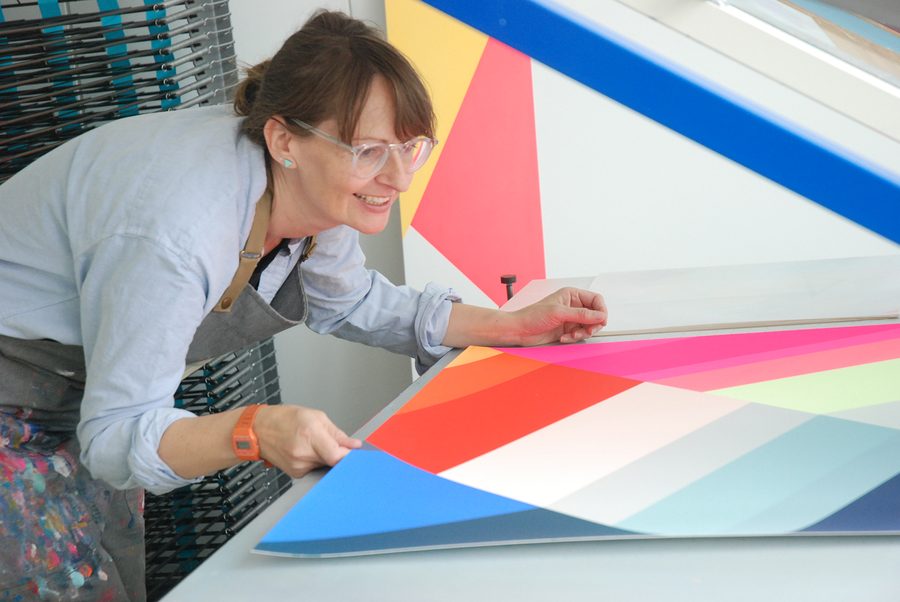
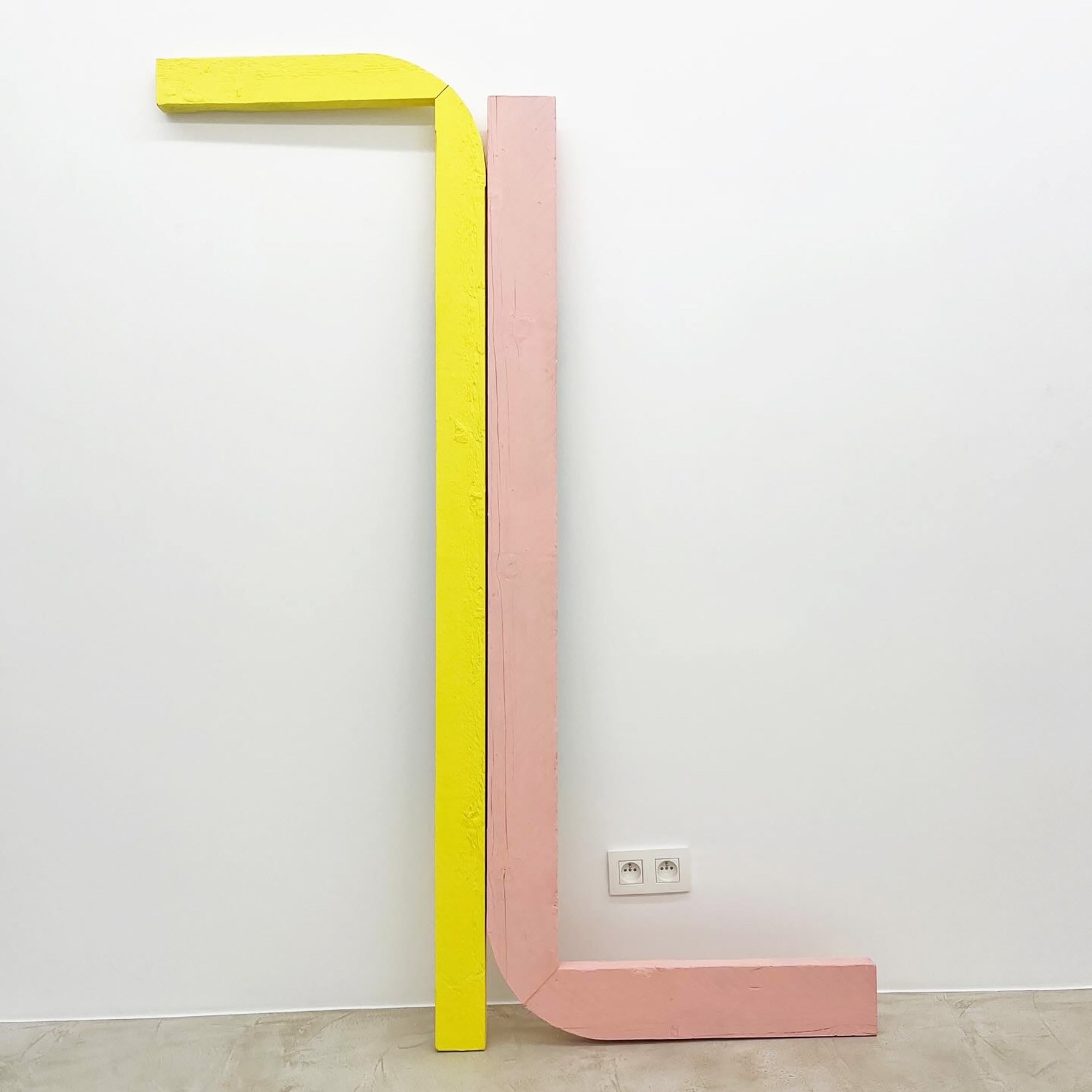
Geometry has been central to my practice for more than a decade. Working across painting, printmaking, sculpture, installation and public art, I use geometric abstraction as a framework for exploring colour, space, material and feeling. The geometric forms are drawn from observation: shapes encountered in the built environment, domestic spaces and the everyday. Doorways, windows, gaps, folds, shadows and slivers of light all contribute to the visual vocabulary of the work. My work investigates how simple forms can generate complex visual and spatial experiences. Through colour, scale and arrangement, geometric elements shift between stability and movement, clarity and ambiguity. I am interested in the relationship between geometric form and the body, and in the ways we intuitively understand dimensions and space through lived experience. Our awareness of the width of a doorway, the scale of a room or an opening that allows light to pass through reflects a deeply embodied relationship with geometry. I am interested in geometry's ability to be both precise and open-ended. It is used to measure, organise and solve problems, yet it also leaves room for interpretation and subjective experience. This relationship between structure and ambiguity is a recurring concern in my work. Across two- and three-dimensional forms, geometric structures serve as a means of exploring how colour, form and space interact, creating works that are rigorous in their construction yet open to multiple readings.
Selected works
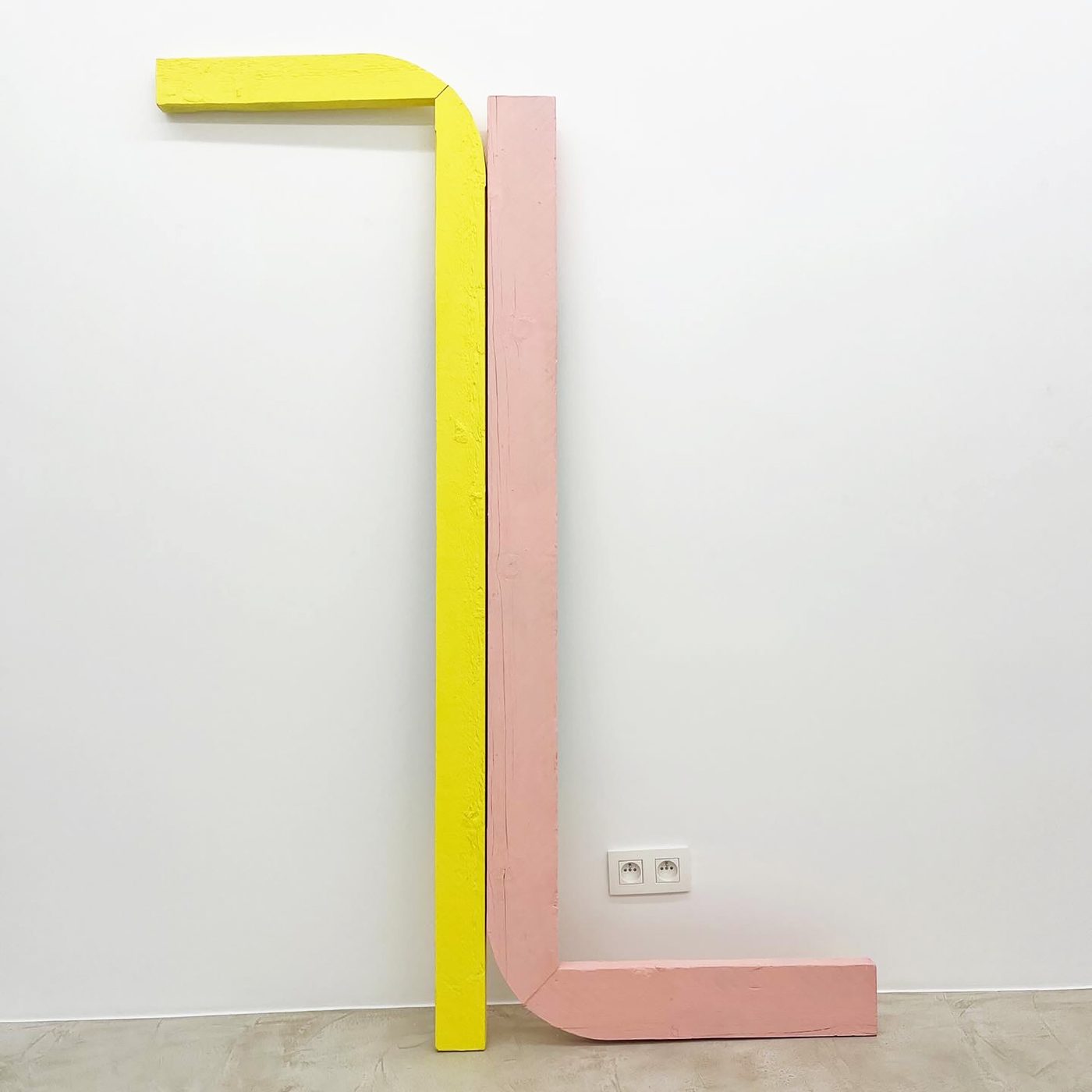
Brace
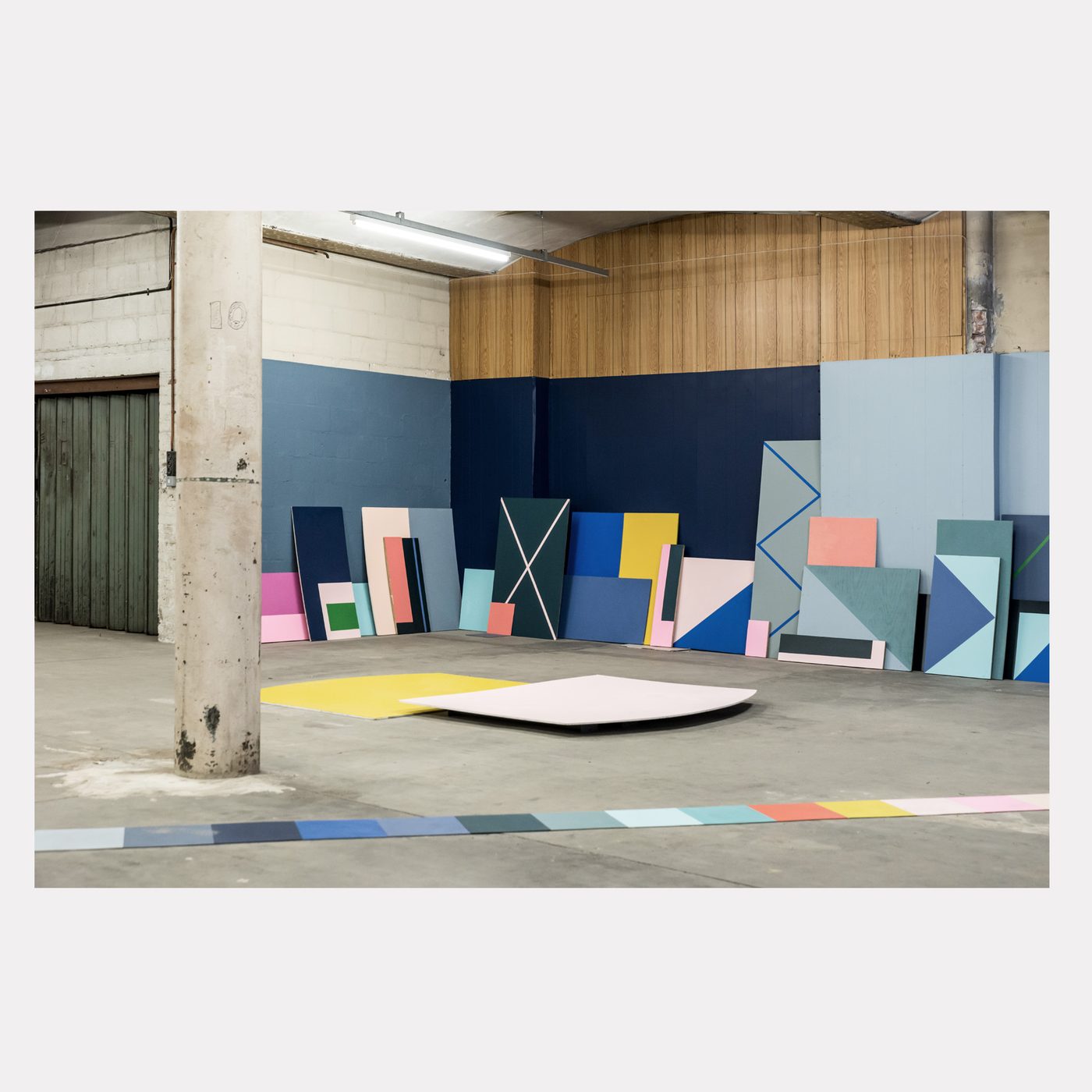
Centre of Gravity
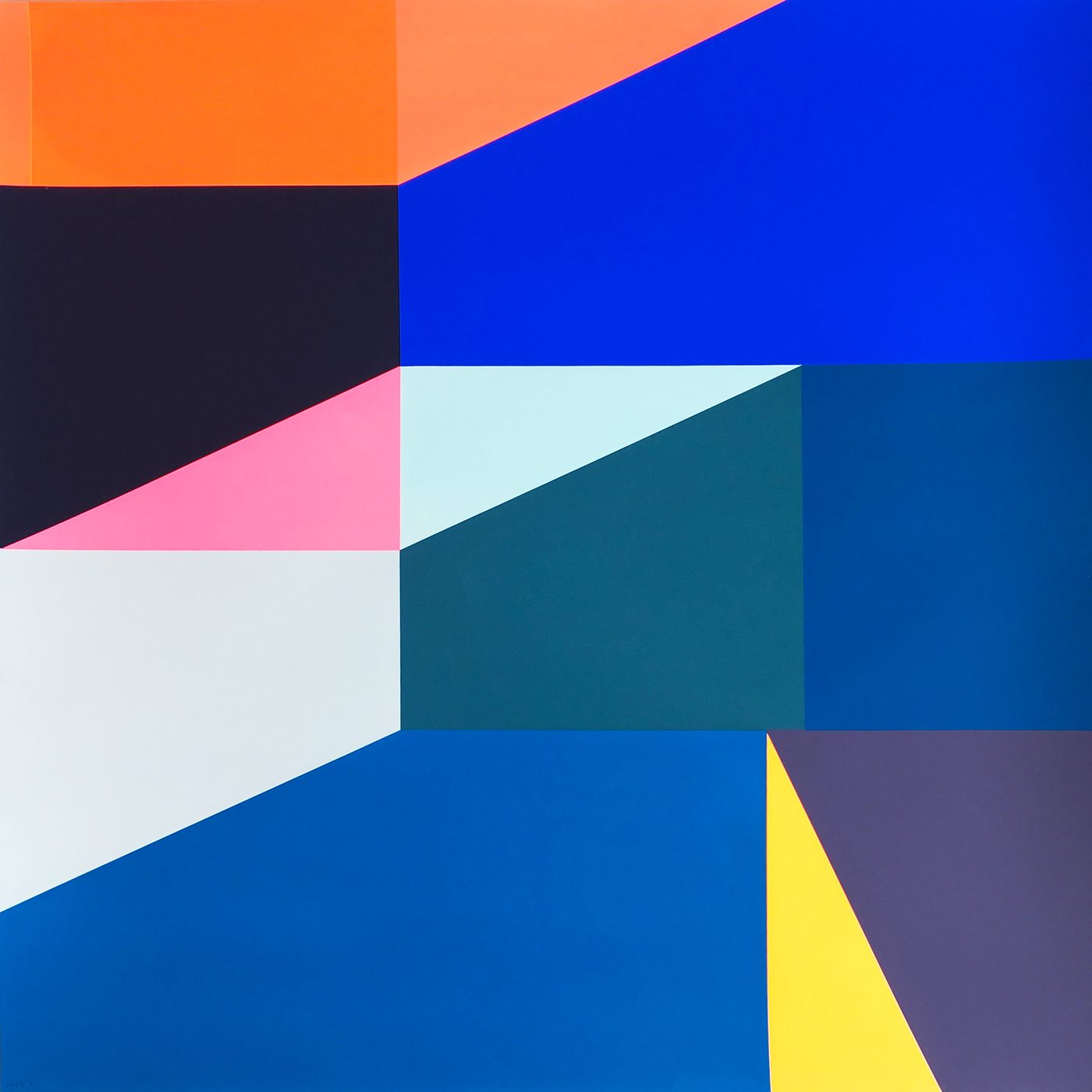
Frea Buckler
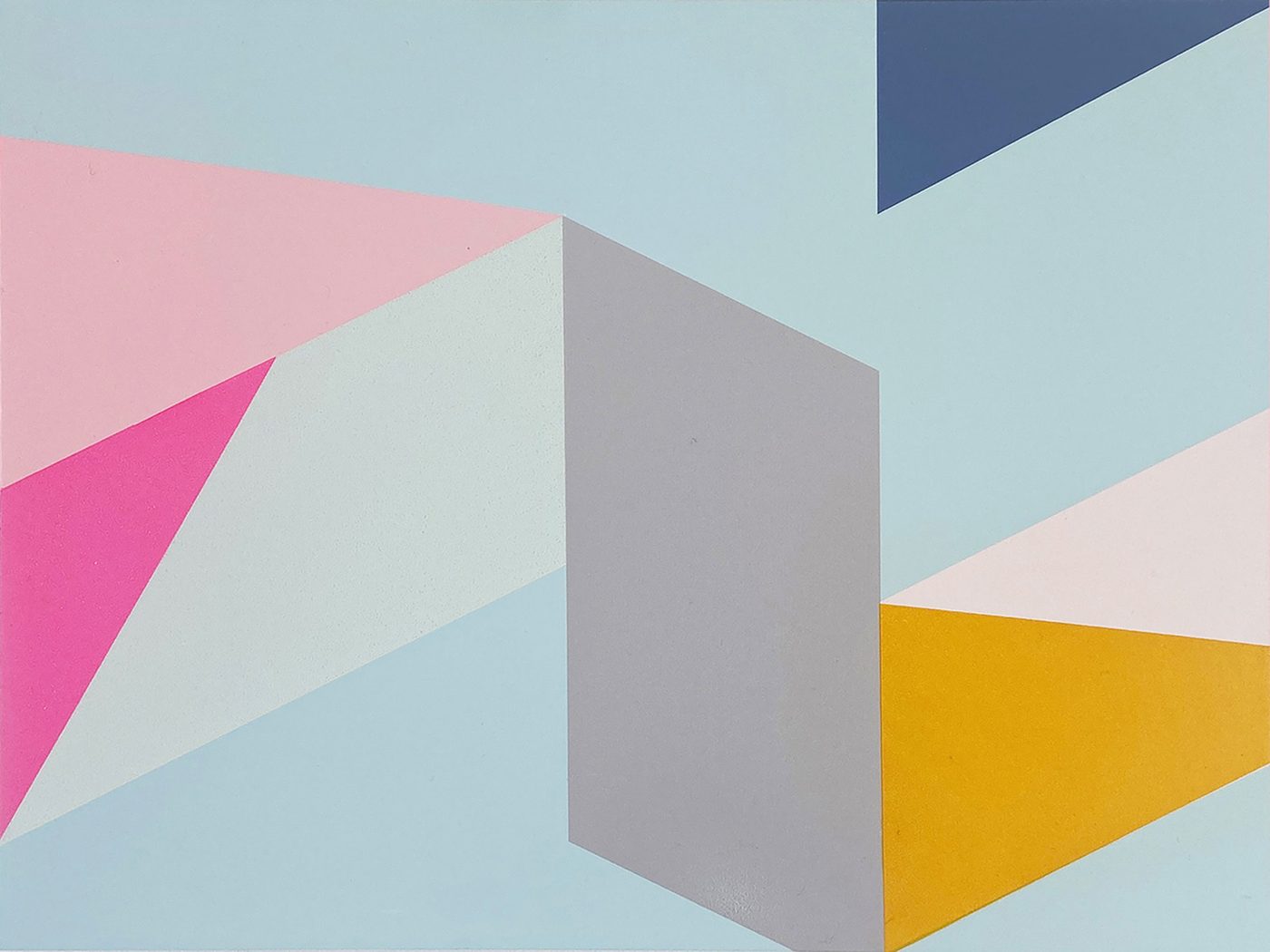
Linger
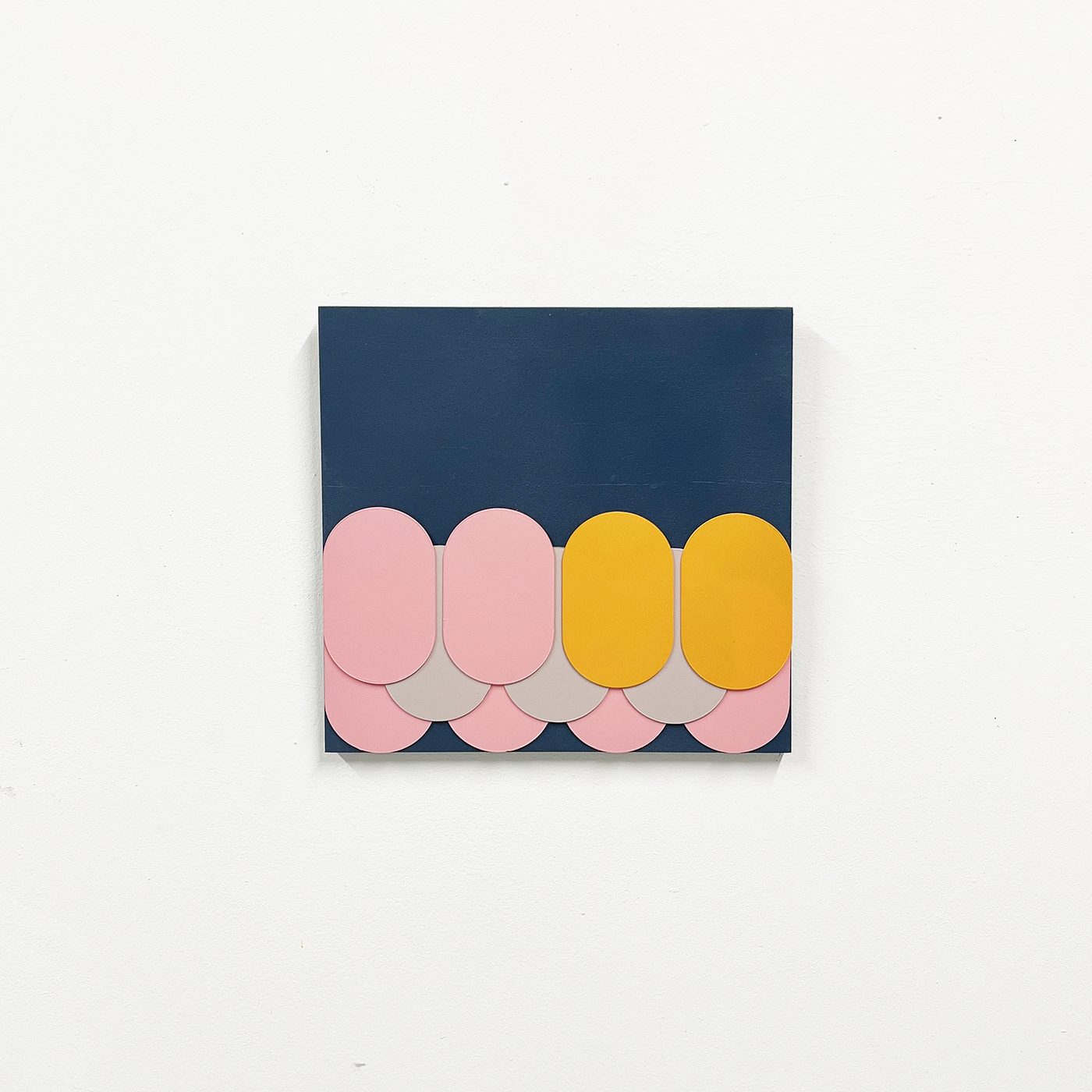
Mother Overlap

Frea Buckler
Q & A
Is geometry a constraint or a freedom for you — and has that answer ever changed?
Geometry has always given me freedom. The simplicity of geometric forms provides a structure within which intuition, improvisation and chance can happen. I am interested in the tension between order and disorder, between alignment and asymmetry, and in the moment when something emerges from apparent chaos. My process is often intuitive and responsive; I collect, arrange and adjust materials until relationships begin to reveal themselves. Earlier in my practice, particularly through screenprinting, I would work in series, and the unique screenprints, which I thought of as drawings were iterative. As my work has expanded into painting, sculpture and installation, geometry has become more physical and spatial. It is no longer just something seen on a surface, but something that occupies space and relates to the body. For me, geometry is a language for understanding relationships, between forms, materials, architecture and the spaces we inhabit.
Walk us through your process — where does a piece begin, and how do you know it's finished?
A piece often begins with something found: a piece of discarded timber, an offcut, an object or material that has a previous life and carries traces of its own history. I rarely begin with a fixed idea of what the work will become; instead, I collect, arrange and experiment, allowing the material to suggest possibilities. I think this way of looking goes back a long way. As a child, I remember going to the tip with my dad and being fascinated by what people had thrown away and what stories these objects might carry. Now, working from a studio on a small industrial estate, I am surrounded by fabricators, workshops and the constant movement of materials. Living in the city, I find myself continually noticing things left on pavements, stacked in yards or waiting in skips — objects that have reached the end of one purpose but might be at the beginning of another. In the studio, I move things around, photograph combinations, test colours and adjust relationships until something begins to emerge. Colour is often discovered through this process rather than planned in advance. I am interested in the point where contrasting elements find a sense of balance, where something feels resolved but still retains a sense of tension or possibility. A work is finished when the different elements begin to feel as though they could not be arranged another way; when the relationships between colour, form, material and space become inevitable.
Is there something outside of art — a system, structure, or phenomenon — that quietly shapes how you think about form?
My understanding of form has been shaped by the environments I have lived in. I grew up in a modernist house, surrounded by defined architectural lines, angular ceilings and a sense of clarity and proportion. At the same time, the garden was informal and encouraged wildlife, allowing plants to grow, adapt and find their own relationships. Looking back, I think this combination of structure and spontaneity has quietly informed the way I see and make. I am interested in the visual language of the built environment and the quiet ingenuity of everyday solutions. Temporary repairs, improvised structures, supports, wedges, joins and adaptations all find their way into my thinking. I am fascinated by the way geometry appears naturally within these solutions, how simple forms, angles and relationships can create efficient and effective responses to practical problems. Architecture, construction and the spaces we inhabit are important influences, but so are the small human gestures that modify and adapt them. I am drawn to the point where necessity becomes form, where function creates its own kind of beauty, and where structure and improvisation exist together. These ideas have shaped my approach to materials, colour and composition. I see geometry not as something imposed on the world, but as something already present within it, a way of understanding relationships between objects, spaces and the people who use them.
What does a viewer miss when they see your work as 'just geometry'?
When a viewer sees the work as "just geometry", they may miss the histories, emotions and human gestures embedded within it. Geometric abstraction is often associated with mathematics, systems and precision, but for me the opposite is true. The forms are not generated through calculation; they emerge through an intuitive and expressive process of looking, arranging and responding. The marks happen to be geometric, but they are a way of conveying feeling, balance, tension and relationship. Many of the works begin with materials that have been used, discarded, repaired or adapted. The geometry sits alongside these traces of life, the evidence of making, problem-solving and resourcefulness. I am interested in the meeting point between order and imperfection, structure and chance. For me, geometry is not simply an aesthetic language; it is a way of understanding relationships between colour, material, space and the body. Beneath the apparent simplicity of the work are ideas about care, resilience and transformation.
Newsletter
Curated open calls and one artist to know, every couple of weeks. Free, no spam.