Selected Artist
About
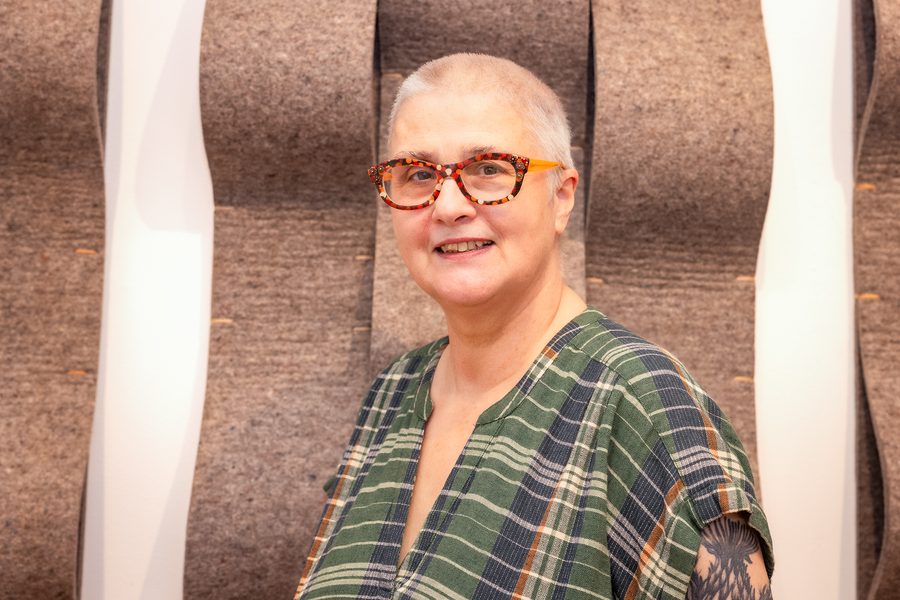
Yvette Kaiser Smith (b.1958, Prague, Czechoslovakia) is a Chicago artist whose practice involves dialogues with material, formalism, mathematics, history, culture, and contemporary circumstance. She creates wall-based, geometric abstractions, where values of digits from the numbers pi and e, significant dates, or architectural footprints, direct a composition’s formal structure.
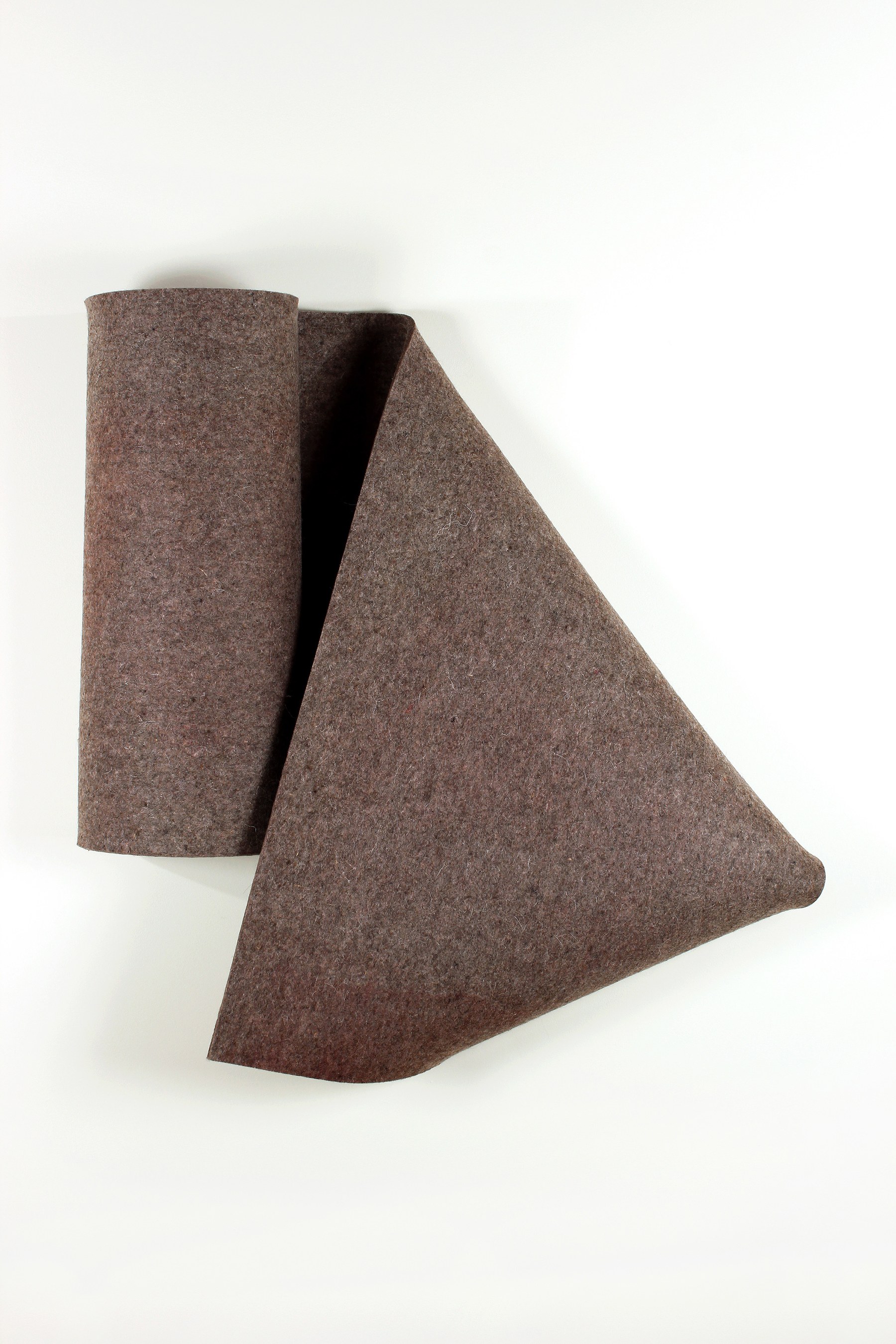
Using a variety of industrial felts, recent works combine languages of sculpture, embroidery, and weaving; and may allude to painting, drawing, or tapestry. She holds a 1990 BFA from Southern Methodist University focused in sculpture and photography, along with a fellowship to Yale School of Art Summer Program which was anchored in painting.
Since receiving an MFA in Sculpture from The University of Chicago in 1994, she has exhibited extensively at regional museums, art centers, universities, and alternative galleries worldwide. Her work is included in numerous public, corporate, and private collections throughout the US and abroad. With art making experiences in Bulgaria, Newfoundland, North Macedonia, Portugal, Croatia, and Spain, travel and international residencies have become an important part of her practice.
Selected works
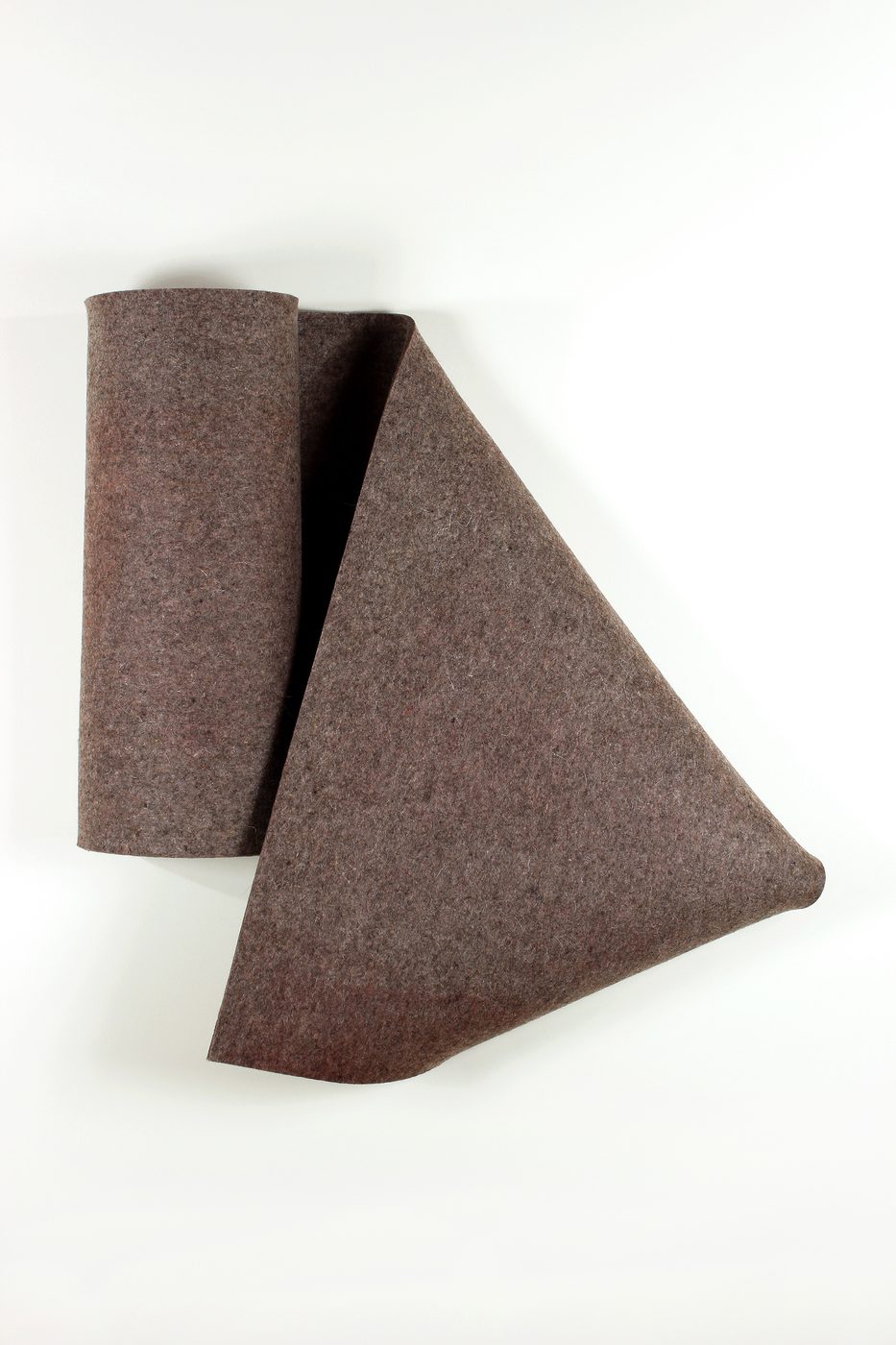
Twins in Asymmetrical Topology, 2026 — 1/4" industrial wool felt, linen cotton yarn, grommets; 33 × 33 × 8.5 in
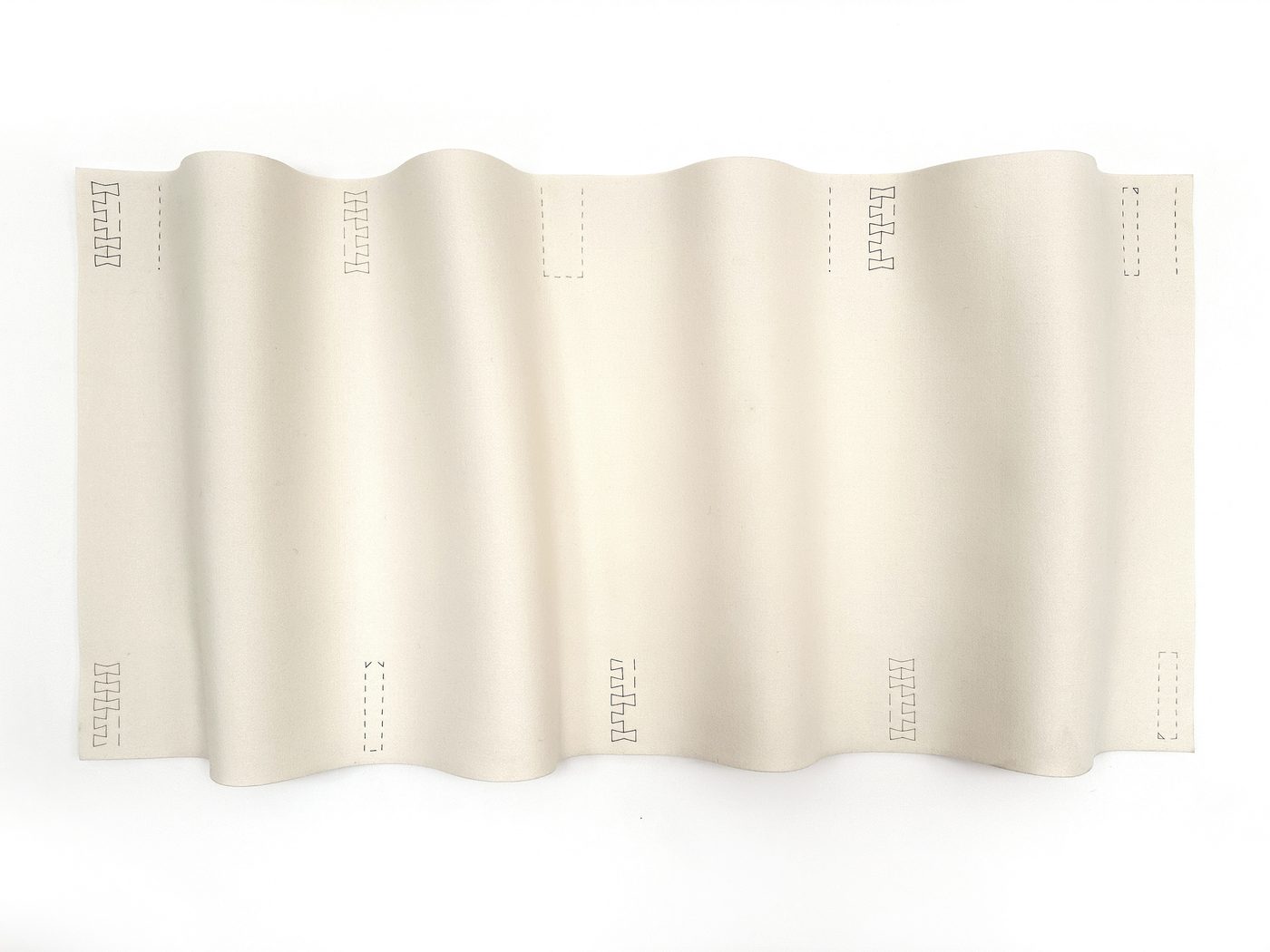
Generations (IB Gaudí's Sagrada Familia Schools), 2026 — 1/4" industrial wool felt, cotton yarn, Kakishibu thread, grommets; 50 × 96.5 × 8 in
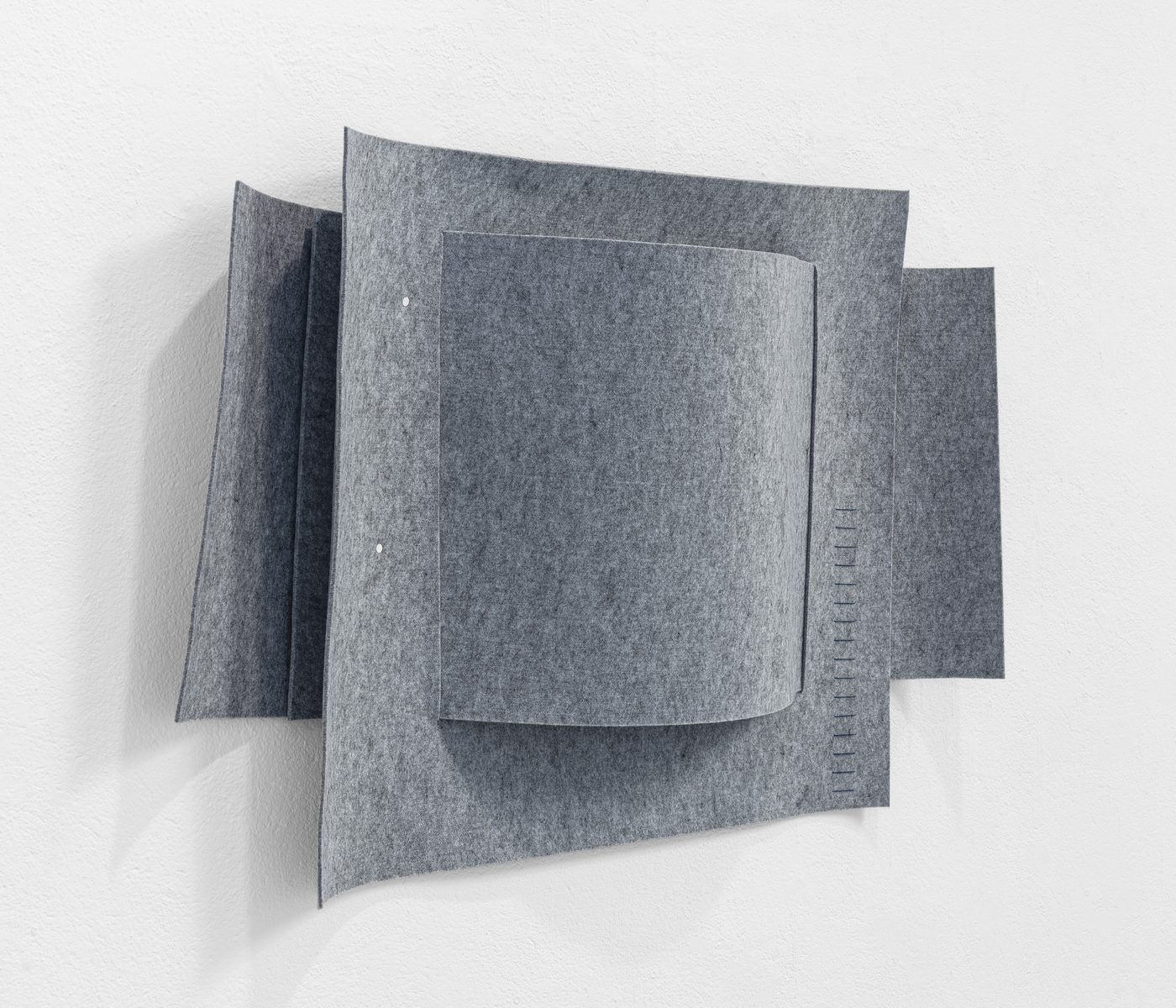
Embedded (left side view), 2025 — 4.7mm acrylic felt, Maito Sashiko thread, post binding screws, spray paint, grommets; 33 × 51 × 10 in. Created during PADA Studios Art Residency, Barreiro, Portugal
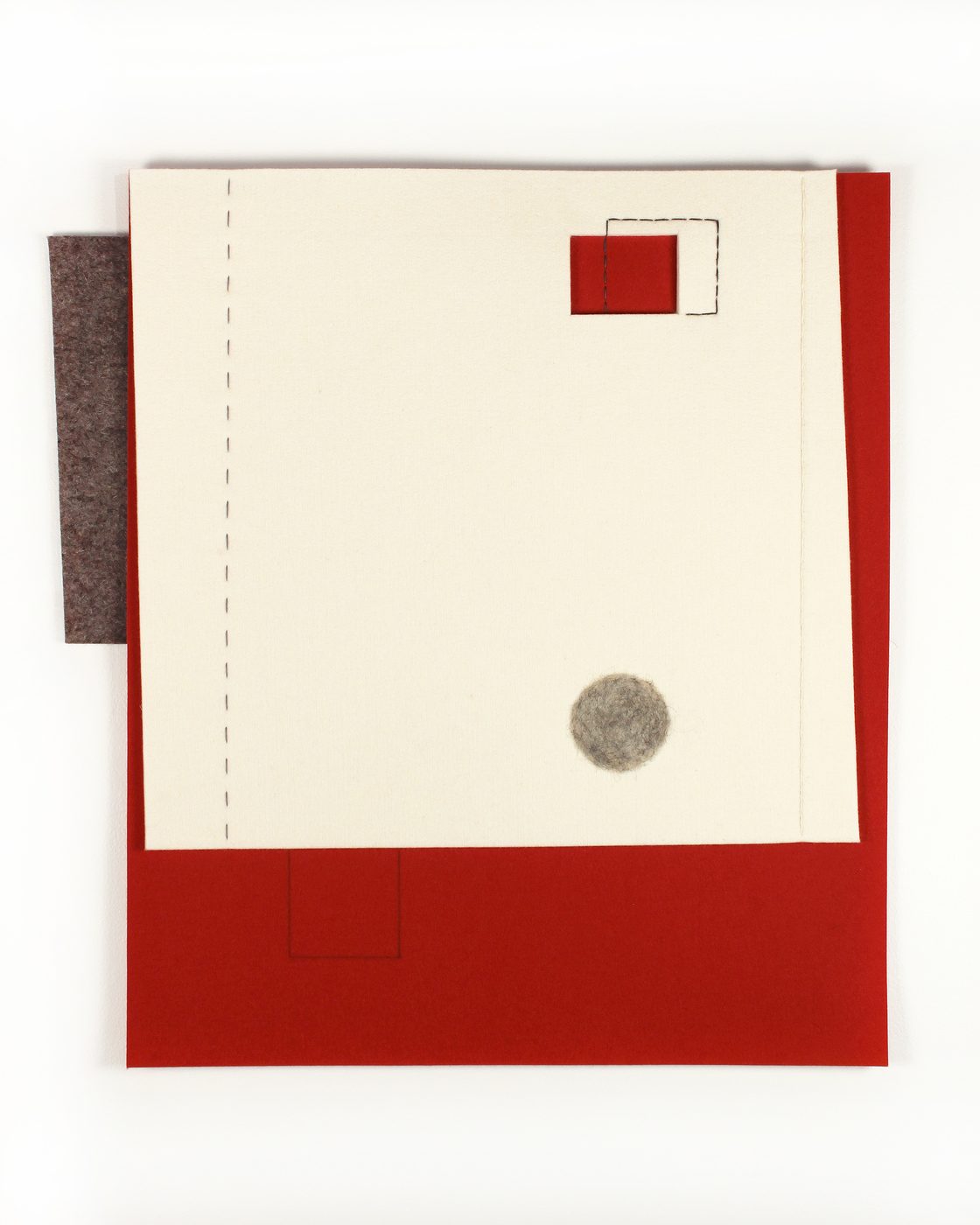
Adaptable Architecture, 2025 — 1/4" industrial wool felt, 1/8" designer wool felt, needle-felted Croatian wool, Sashiko thread, graphite, grommets; 28 × 26 × 1 in. Created during Culture Hub Croatia PROSTOR artist residency, Split, Croatia
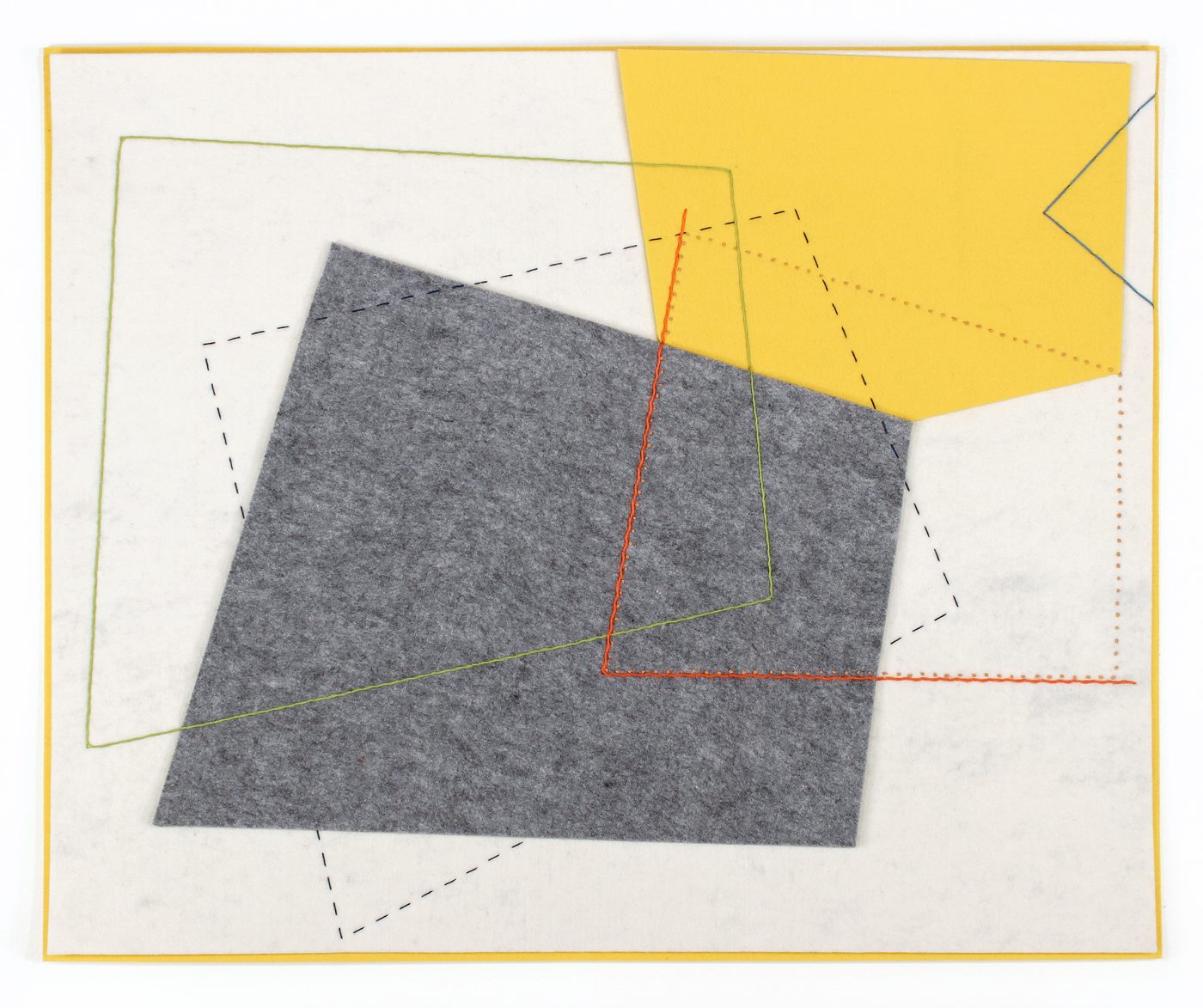
Border Disorder, 2023 — 1/8" polyester felt, 4.7mm acrylic felt, Sashiko thread, cotton yarn, grommets; 27 × 33 × 1 in. Created during Brashnar Creative Project artist residency, Skopje, Republic of North Macedonia
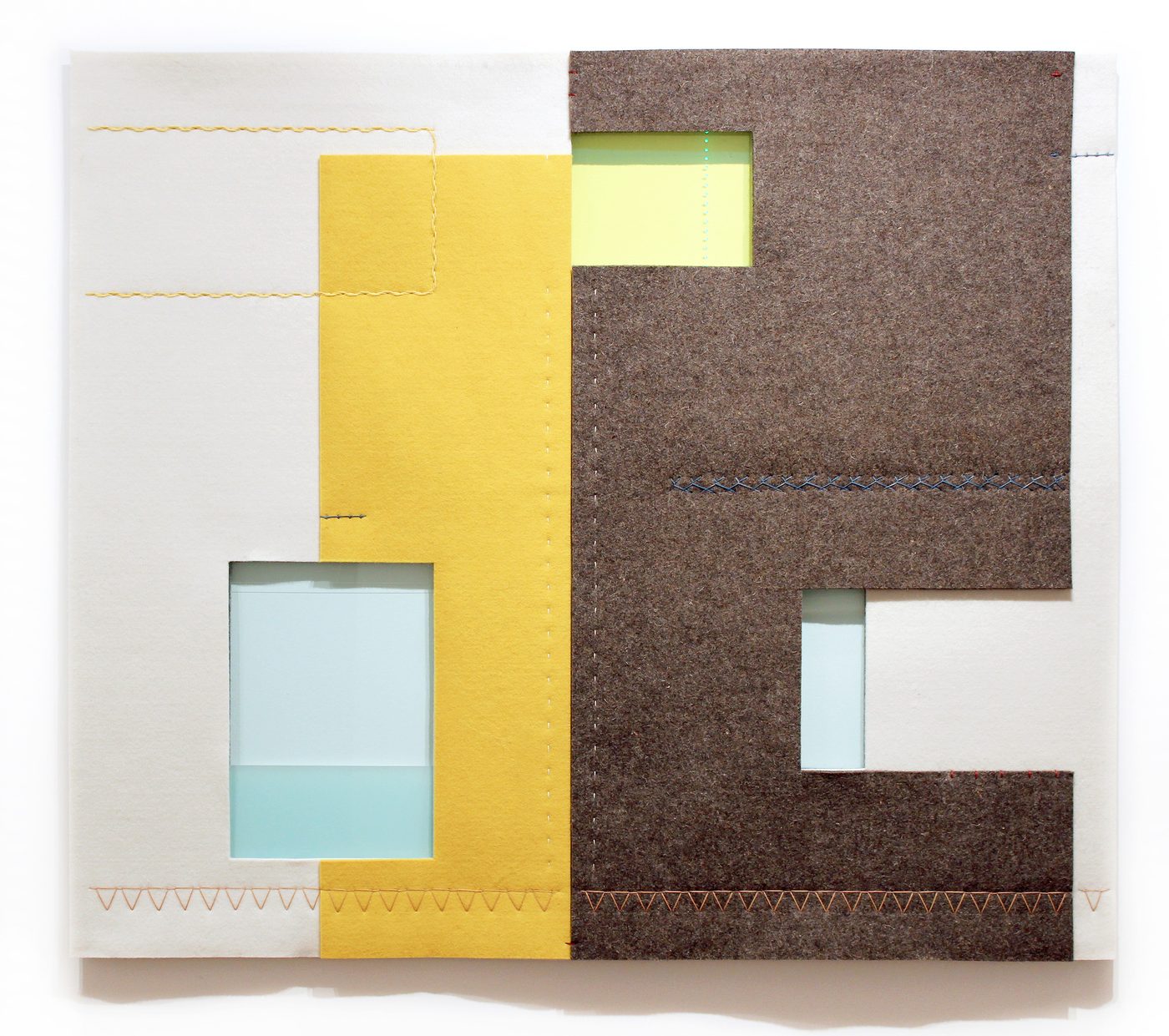
Blue Pocked and Threaded, 2023 — 1/4" industrial felt, 1/8" polyester felt, 4.7mm acrylic felt, 1/8" clear and fluorescent acrylic sheets, spray paint, Sashiko thread, cotton and pearl cotton threads, cotton carpet warp yarn, grommets; 40 × 46 × 1 in. Created during Pouch Cove Artist Residency, Newfoundland
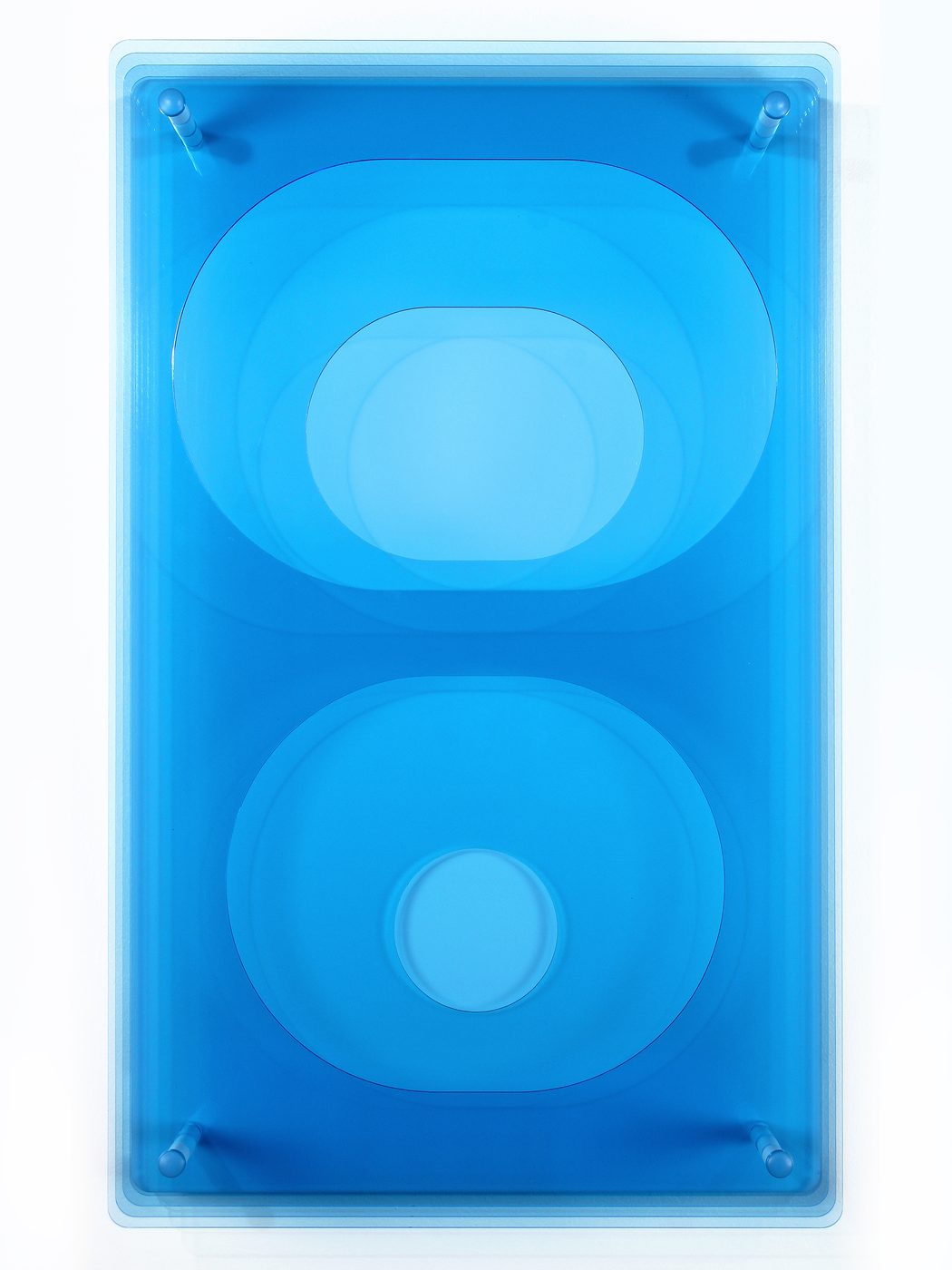
Social Circles (22 56 34 57), 2024 — laser-cut acrylic sheets, polypropylene spacers, hardware, capped hardware; 27.5 × 17 × 5.25 in
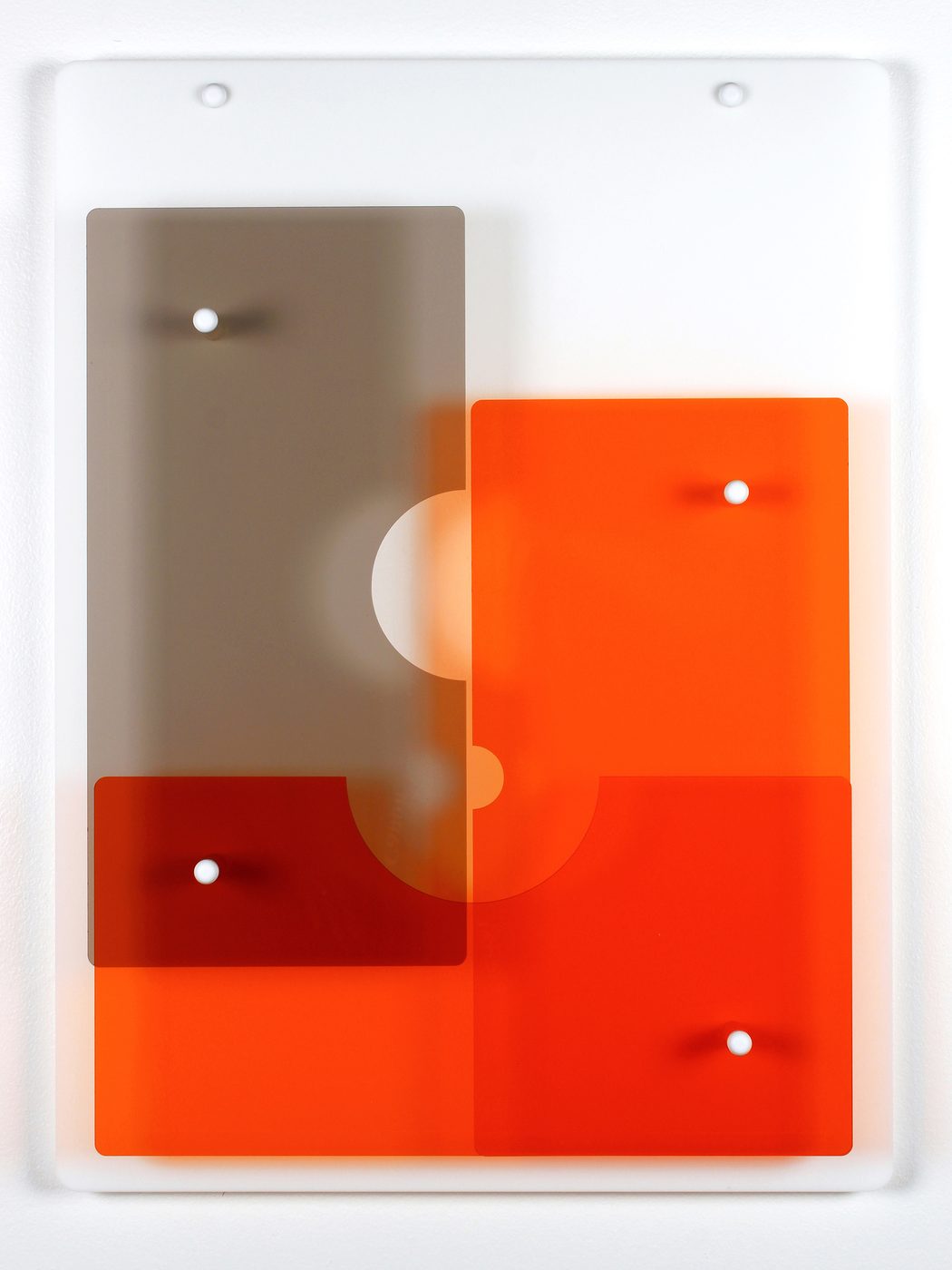
pi × 5s (30146), 2018 — laser-cut acrylic sheets, nylon spacers, capped hardware; 23 × 17 × 2.5 in
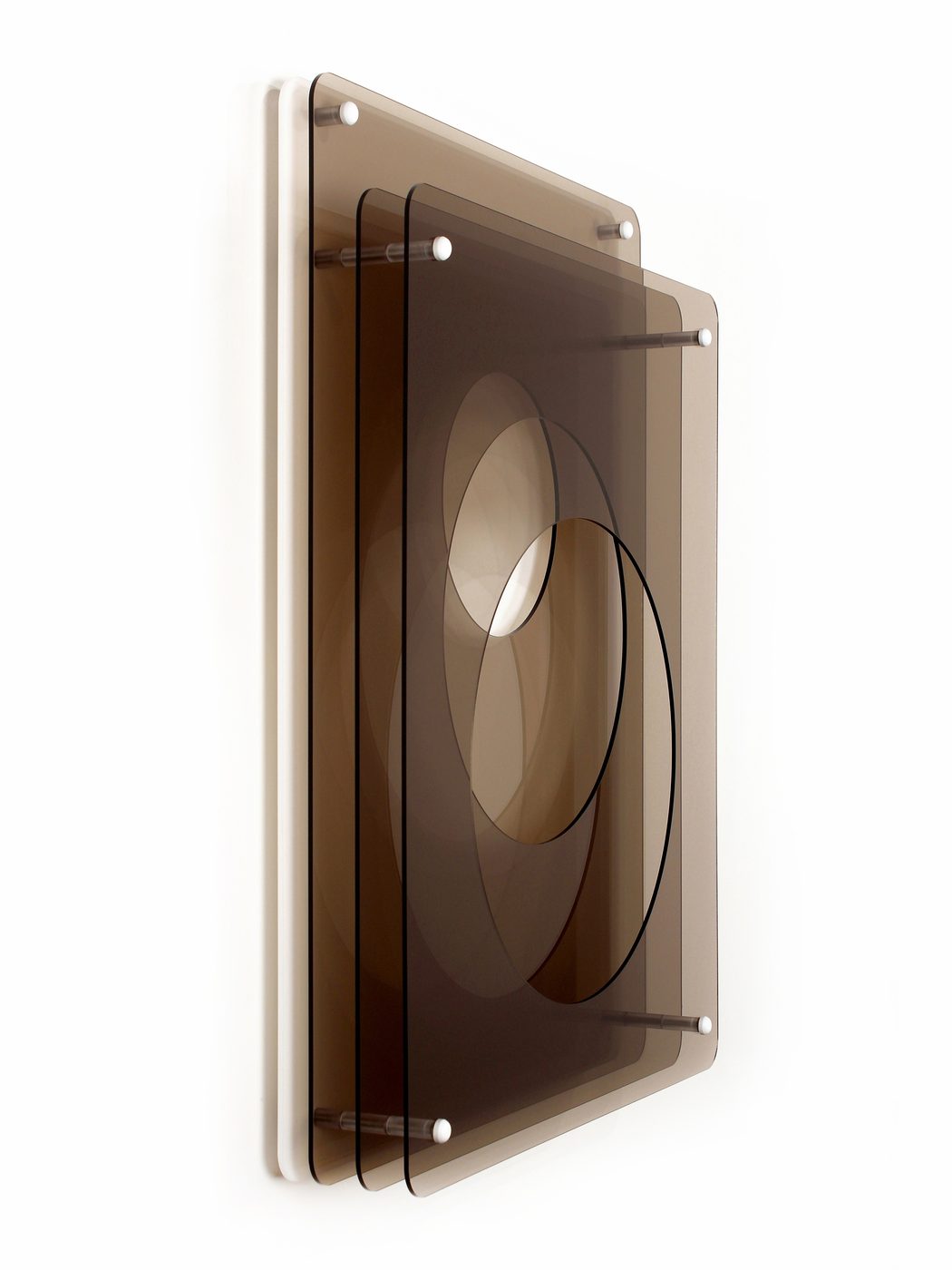
e Palindrome (985589), side view, 2018 — laser-cut acrylic sheets, polycarbonate spacers, capped hardware; 23 × 17 × 4 in
Q & A
Is geometry a constraint or a freedom for you — and has that answer ever changed?
Geometry is both a constraint and a freedom. I find that constraints of any kind lead to focus of specificity which then facilitate freedom. A freedom to fully explore a defined space which then leads to discovering previously unexplored forms. I like solving the puzzle of abstraction. Of looking for a story within the language of a specific material or finding a new system for running a sequence of numbers to create a yet unknown pattern. As I prefer a referent, a story or object or number sequence to dictate the formal language, and I am also a minimalist at heart, geometry makes the perfect vehicle.
Is there something outside of art — a system, structure, or phenomenon — that quietly shapes how you think about form?
Using a variety of industrial felts, recent works combine languages of sculpture, embroidery, and weaving; and may allude to painting, drawing, or tapestry. New works can be responses to a specific scrap of acrylic, or a curiosity about new ways of combining materials. Expressions focus on math, geometry, and language of the material. During international residencies, these dialogues expand with influence of specific histories and cultures. They begin as responses to some detail or specificity of a place. Inspiration comes from walking the streets, local cultural institutions, historical events, phrases from a book, a map, or an architectural element. Each experience not only produces unique works specific to that location, it also leads to new ways of seeing and working. Travel has greatly influenced the exploration and evolution of the felt forms. My current focus and curiosity lean towards thicker, heavier industrial felts and creation of more active sculptural forms. This began in PADA, a residency in Barreiro, Portugal and really exploded in my latest body of work which is a direct response to Gaudi’s work in Barcellona. Constructed from laser-cut acrylic sheets separated by vinyl spacers, a separate body of work uses simple geometric shapes, panel placement, cut-outs and/or engraved lines to plot numerical values. Using sequences from either pi or e, numbers are both the content and means to various ends. In some works, the articulation of digits is simple and direct. In more complex systems, the precise sequence used can be difficult to reverse engineer but, numbers in specific sequences are always the works’ referent, their source of abstraction, their structural foundation.
What's the last rule you set for yourself in the work, and did you keep it?
More a challenge than a rule. I was asked to participate in a group show titled Knots. The curator wanted my old crocheted fiberglass work. I am currently really into the industrial felt work and creating minimal sculptural forms. My challenge: how to make a simple knot be more than just a knot, be interesting, tell a story. Yes, they stand as metaphors for various emotional and psychological states within personal relationships.
Describe a failure or a dead end in your practice — something that didn't work.
In the 30 years that I have been proffesionally active, I had two major pivots in terms of material and process caused by external factors and one test drive that could be called a dead end. I spent over 20 years creating works, based on identity narratives, by crocheting fiberglass. Geometry and pattern were part of that visual language. Number sequences entered as a tool to generate a random pattern, and as math is the underlying principle in all of life, became part of an expanding identity dialogue. All work created since 2006 has used values of numerical digits to direct a composition’s formal structure. In 2016, due to a temporary loss of workspace, I transitioned the math to drawings and screen prints. This lasted just a few months. I found it limiting. I was introduced to a laser cutter and found that I could create more complex and more interesting systems for running the math and subsequently abandoned the 2D exploration. The acrylic is pure math. Pure geometry. Consequently, this work almost completely removed my hand and the sense of my hand from the work. In 2020, COVID shut down the lab where I used a laser cutter. A longing to reconnect my hand with the material and the need to make do with available tools, led to my current practice of exploring industrial felt. No matter where I go in terms of material and process, the numbers and geometry always follow. Because to me, the minimalist, there is nothing more essential and beautiful than simple forms in simple shapes.
Newsletter
Curated open calls and one artist to know, every couple of weeks. Free, no spam.