Selected Artist
About
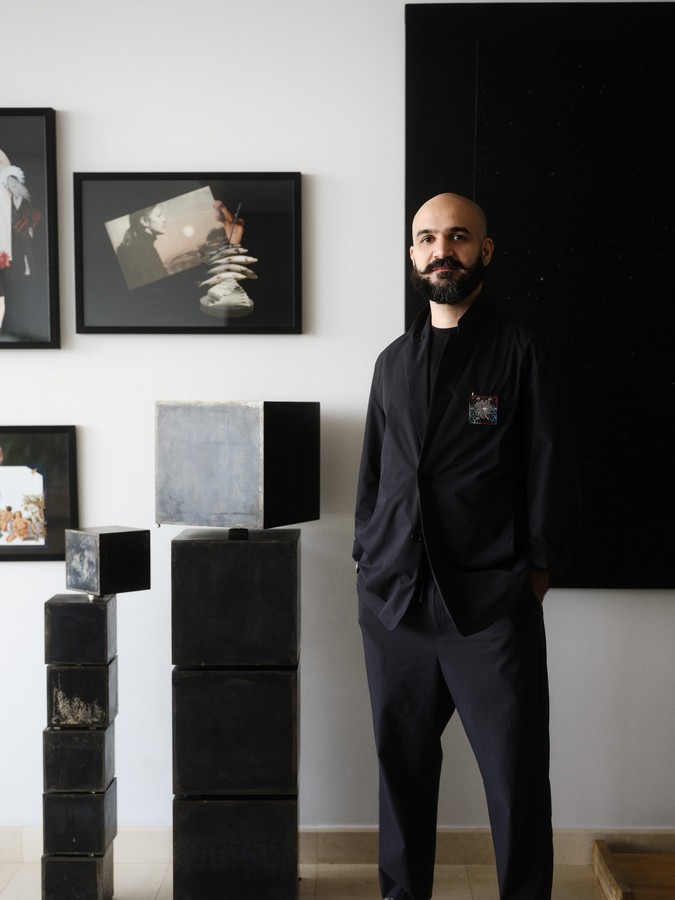
Armin Najib is an artist whose practice encompasses painting, drawing, photography, with a focus on sculpture and art jewelry. His work primarily revolves around kinetic mechanisms and magnetic fields. With a bachelor's degree in mechanical engineering specialising in Solid Design, Najib's background involves extensive study and research in various methodologies and design forms.
His fascination with magnetism, ergonomic placement elements, and environmental sensing has led him to develop his own tools and instruments tailored to his concepts. Najib's childhood experiences sailing with his father, a Merchant Marine Captain, instilled in him a curiosity for exploration. He views the art world as a dynamic arena where he can pose questions, seek answers, or leave them open-ended. In his own words, Najib describes his creative process as a form of improvisation rather than anticipation, emphasizing the role of making in developing ideas.
Najib initially began his career as an art jeweler, an experience that deepened his understanding of the concept of the 'Precious' — a quality he has since carried into his sculpture and painting, often addressing aspects overlooked or undervalued in contemporary discourse. Recognizing the importance of knowledge transfer, he has mentored numerous students, apprentices, and assistants, imparting both conventional and innovative techniques. Many of his mentees have gone on to receive grants and admissions to prestigious and respected art universities worldwide.
Selected works
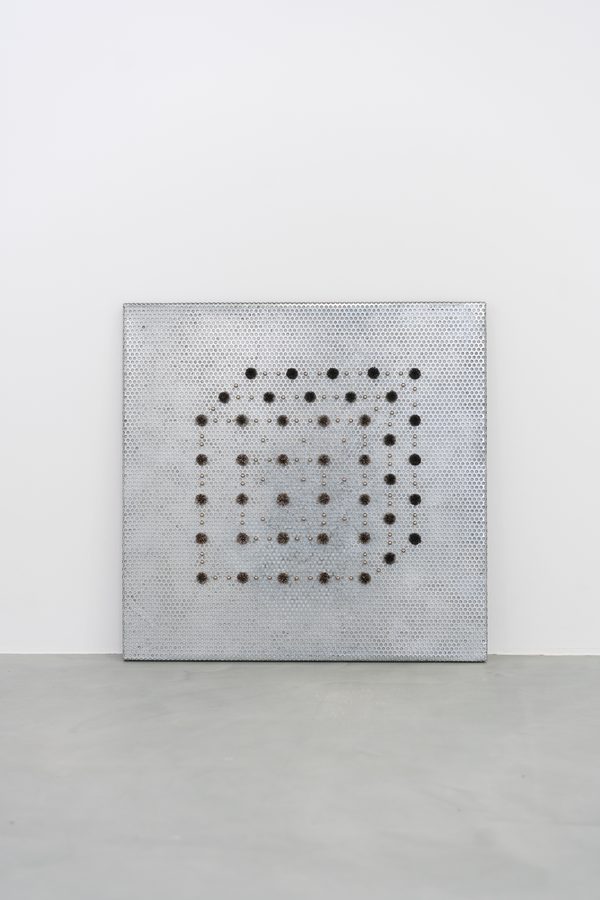
Evolution
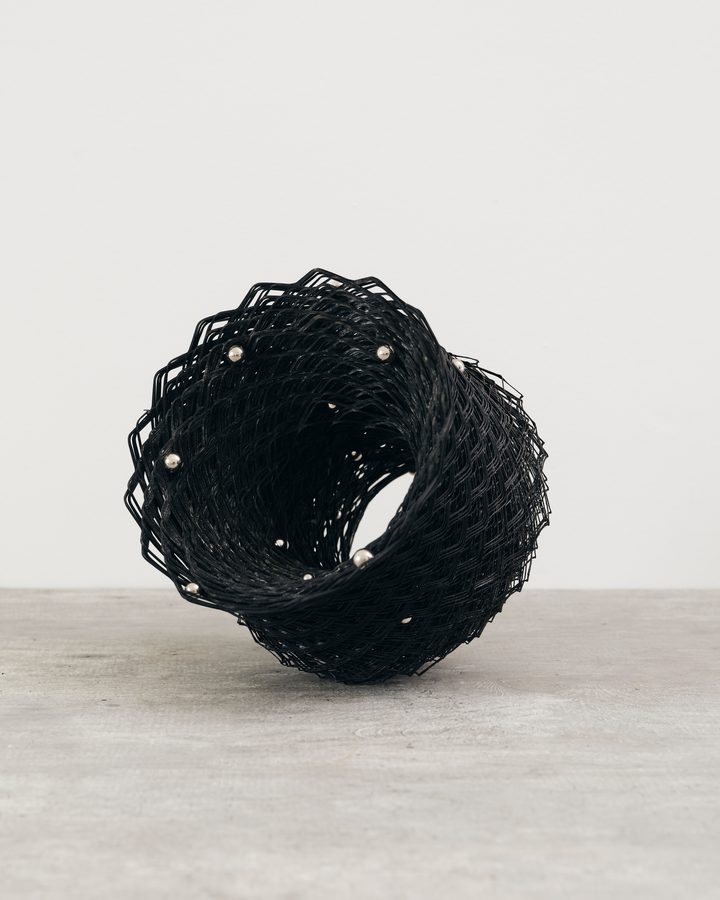
SILISIUM Series, No. 0.5
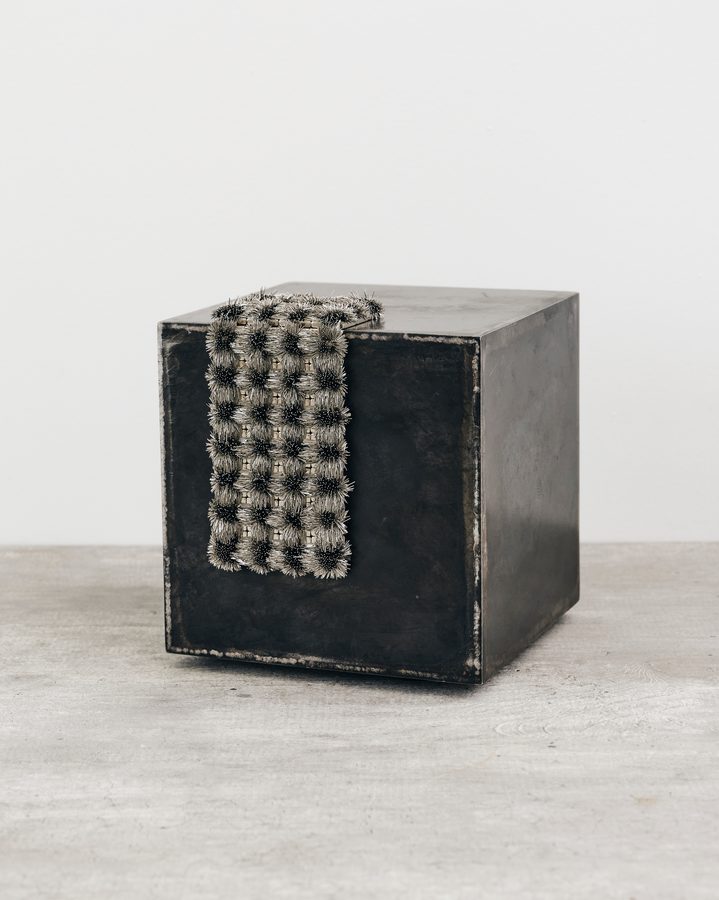
SILISIUM Series, No. 00
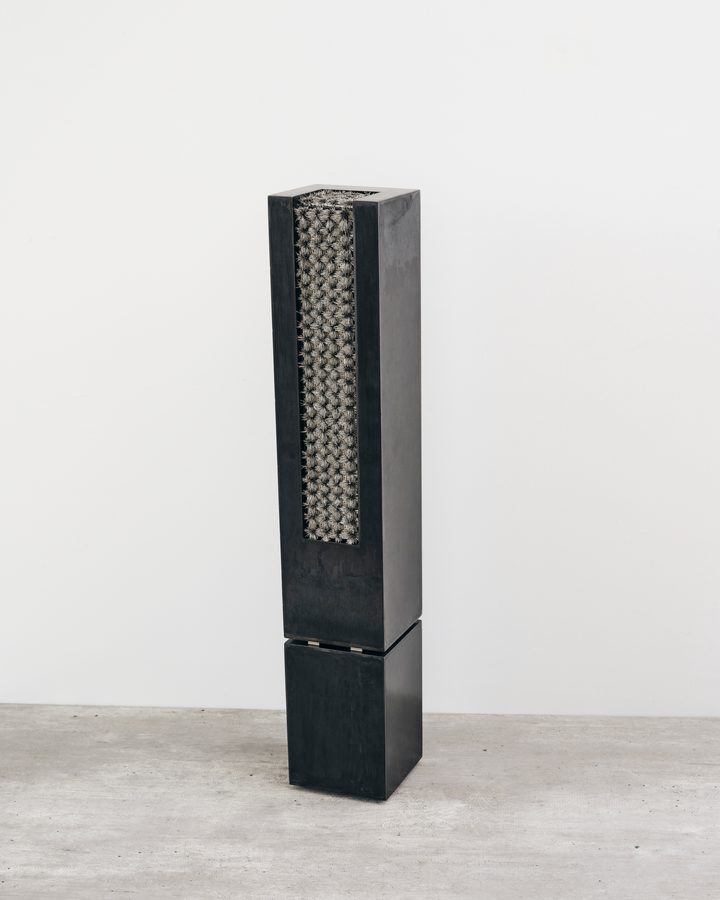
SILISIUM Series, No. 1
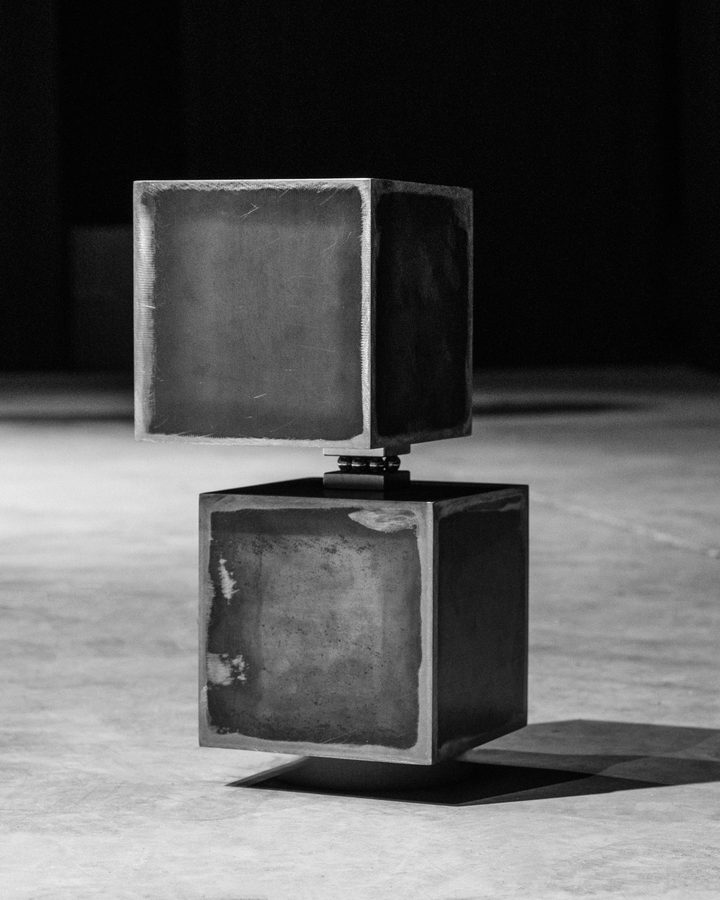
Armin Najib
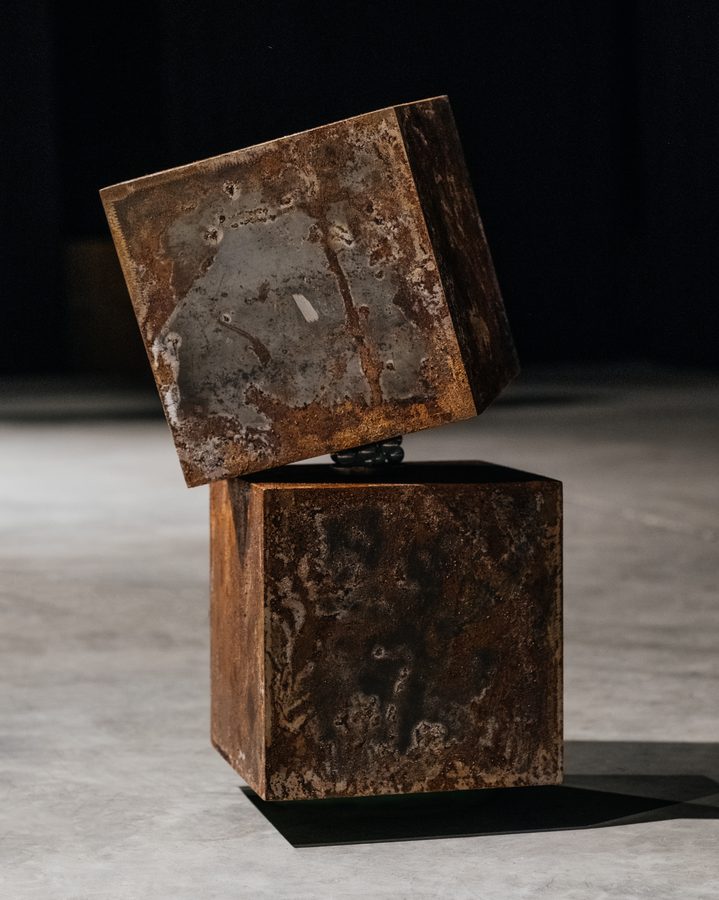
Armin Najib
Q & A
Is geometry a constraint or a freedom for you — and has that answer ever changed?
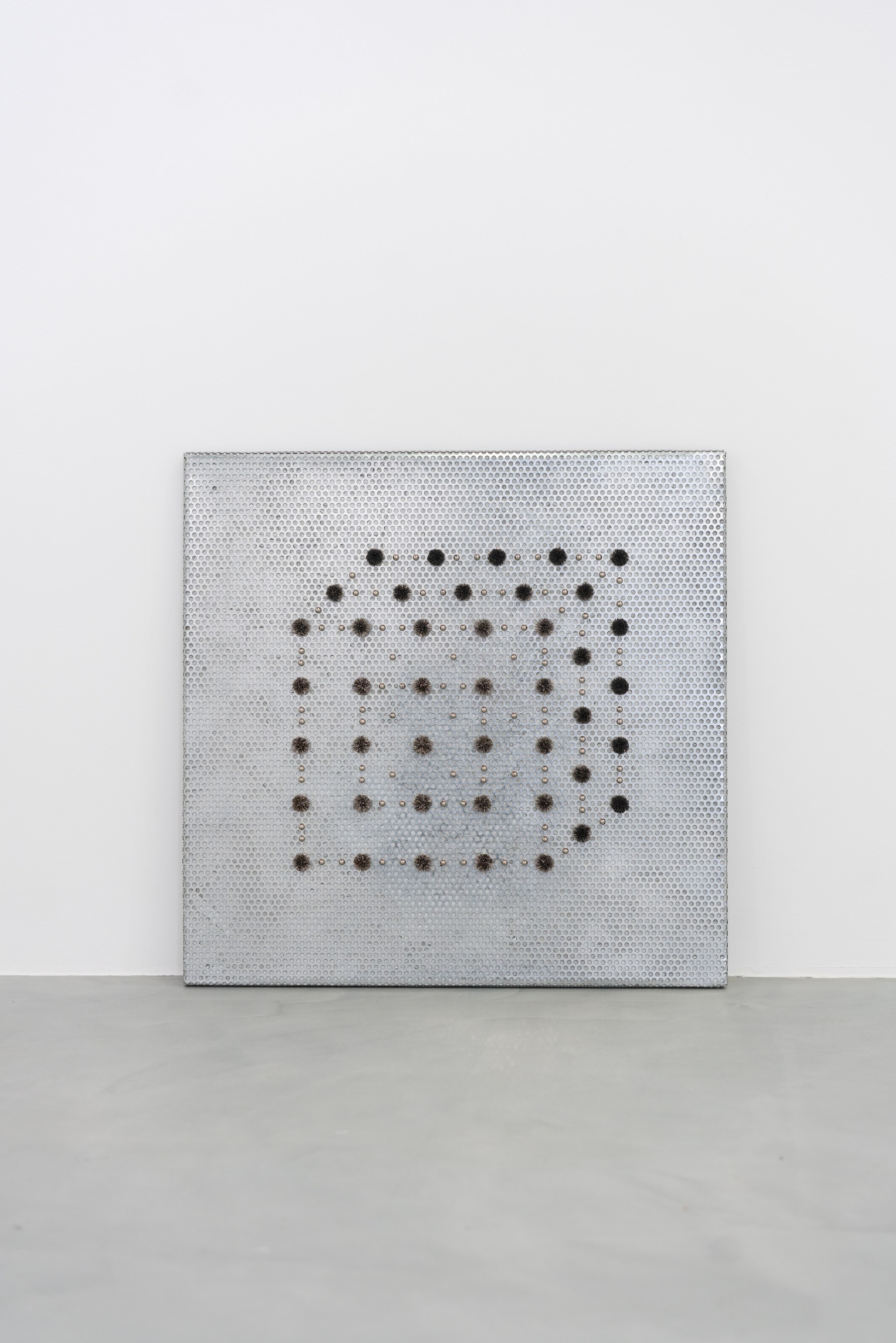
I was, and still am, obsessed with cubic forms, sharp edges, and fine lines. I believe that we, as human beings, are the only creatures on this planet who find tranquility and peace in such geometry. Our apartments, devices, cars, and most of what we use, and design are fundamentally rooted in these forms. In contrast, no other animal constructs its habitat with sharp edges; in nature, we encounter predominantly rounded, smooth shapes, while we stand in opposition to this softness. I have come to see the cube as intrinsic to human nature, an imposed order, a form we have introduced to the world rather than inherited from it, therefore this geometry is my playground where I can find the freedom to play, create and build.
Walk us through your process — where does a piece begin, and how do you know it's finished?
The forms and imagery of my works often occur with minimum pre-planning. One cast form suggests additional forms, and pieces are added much in the manner of a collage. I never feel limited by a preconceived idea but need the freedom to make alterations based on my response to the piece. I feel that an artwork must be beautifully made, but it should also reach beyond its limits to satisfy greater aesthetic needs. Thus, another aim is to make a meaningful statement about forms, texture, color, and balance. The moment that I can’t add or remove anything more is where I feel the artwork is finished.
Is there something outside of art — a system, structure, or phenomenon — that quietly shapes how you think about form?
As an artist, you function much like a sponge, absorbing your surroundings; consequently, everything happening around you inevitably shapes your work, even if the influence isn't entirely direct.
What does a viewer miss when they see your work as 'just geometry'?
Jewelers like me have a heightened sense of the precious; it is part of the work. When jewelers turn to sculpture, public art, or even architecture, they bring a dimension that other sculptors, through different routes of learning, have neglected or forgotten: the dimension of the precious.
What's the last rule you set for yourself in the work, and did you keep it?
To believe ideas have been, and continue to be, developed through making and I trust this process and for me it's a commitment and surely you need courage for this.
Describe a failure or a dead end in your practice — something that didn't work.
As an artist you build everything based on your failures, you spent many hours in the studio to finally find a way to make something perfectly in balance and works after all, for me any artworks that i failed to finish making, for any reason either technically or aesthetically,or I considered to be a loss become a fertilized soil for the next one, parts got dismantled, alloys got melted to be sacrificed for the next one.
Newsletter
Curated open calls and one artist to know, every couple of weeks. Free, no spam.