Selected Artist
About
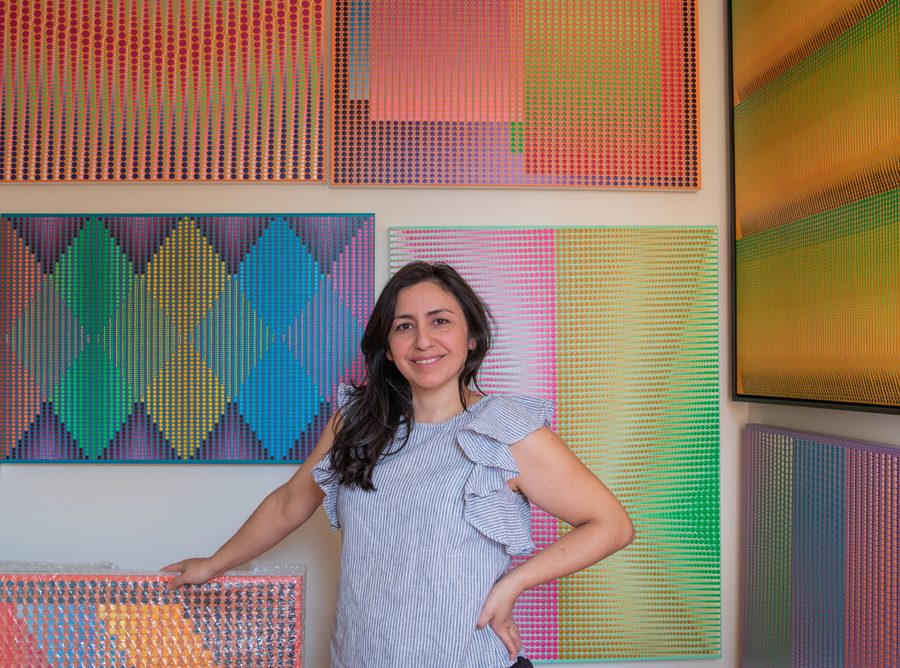
Argentinian-born and based in Sydney, Australia, Celia Fernandez is a contemporary geometric abstraction artist whose work offers a fresh interpretation of Op and kinetic art through her signature dot-based technique.
Her work reimagines the lineage of Op and kinetic art, merging it with a deeply introspective and spiritual dimension that reflects on human connection, emotion, and transformation. Each composition becomes both a visual and spiritual meditation, transforming the circle -one of humanity's oldest and most universal symbols- into a language of energy, connection, and renewal.
For Fernandez, the act of creating is profoundly spiritual. The dot, as the fundamental point of all beginnings, becomes a metaphor for life itself, representing unity, eternity, and the continuous cycles of birth, death, and rebirth.
Grounded in both precision and intuition, she creates visually striking, conceptually grounded works where geometry becomes a vessel for spirituality and abstraction a bridge between the self and the infinite.
Entirely handcrafted, her paintings combine digital-like precision with bold colour relationships to create hypnotic visual experiences that transcend the purely optical. A finalist in several Australian art prizes, Fernandez's work is experimental, intuitive, and playful, a delightful representation of contemporary art.
Selected works
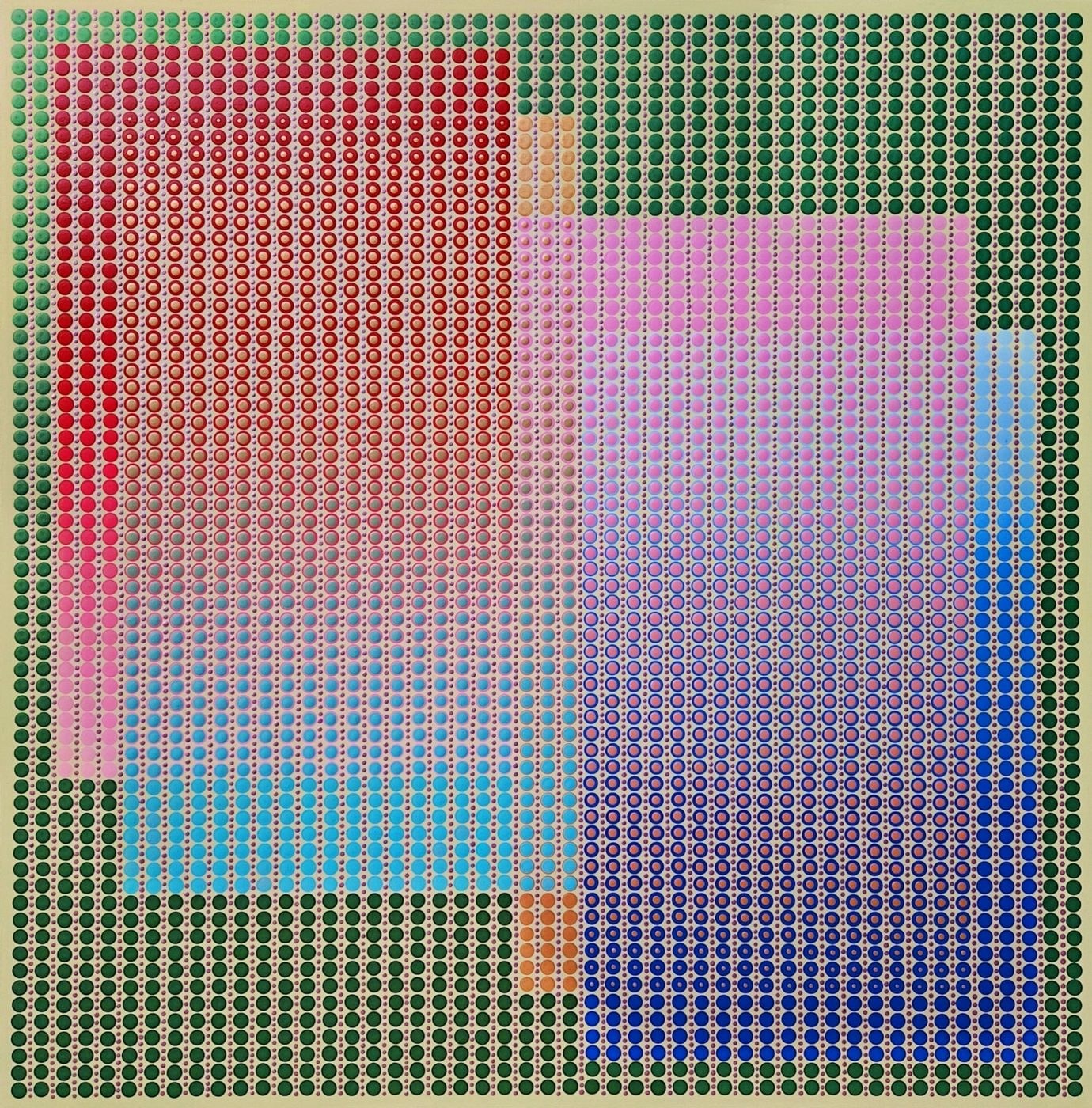
4472, 2025, acrylic on canvas
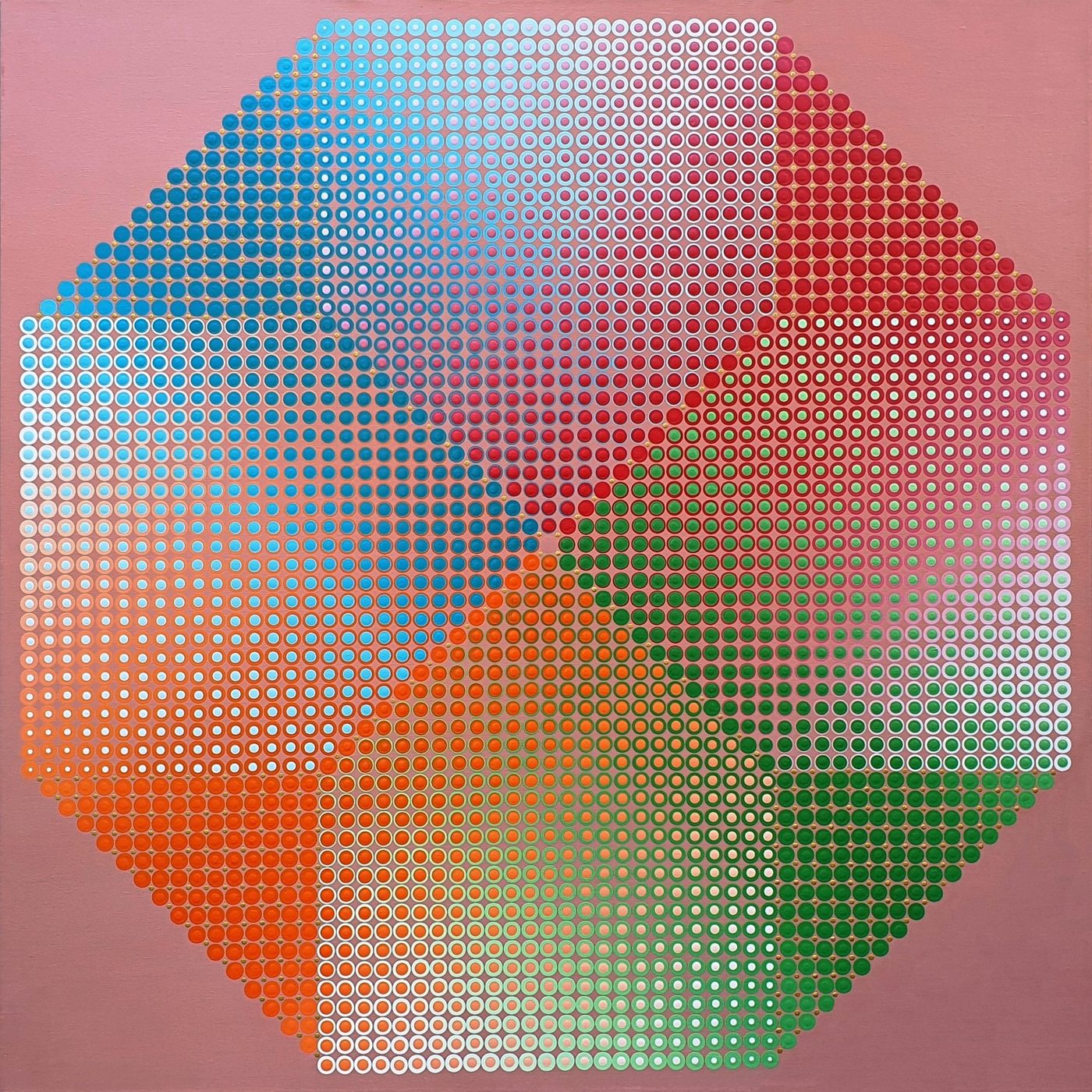
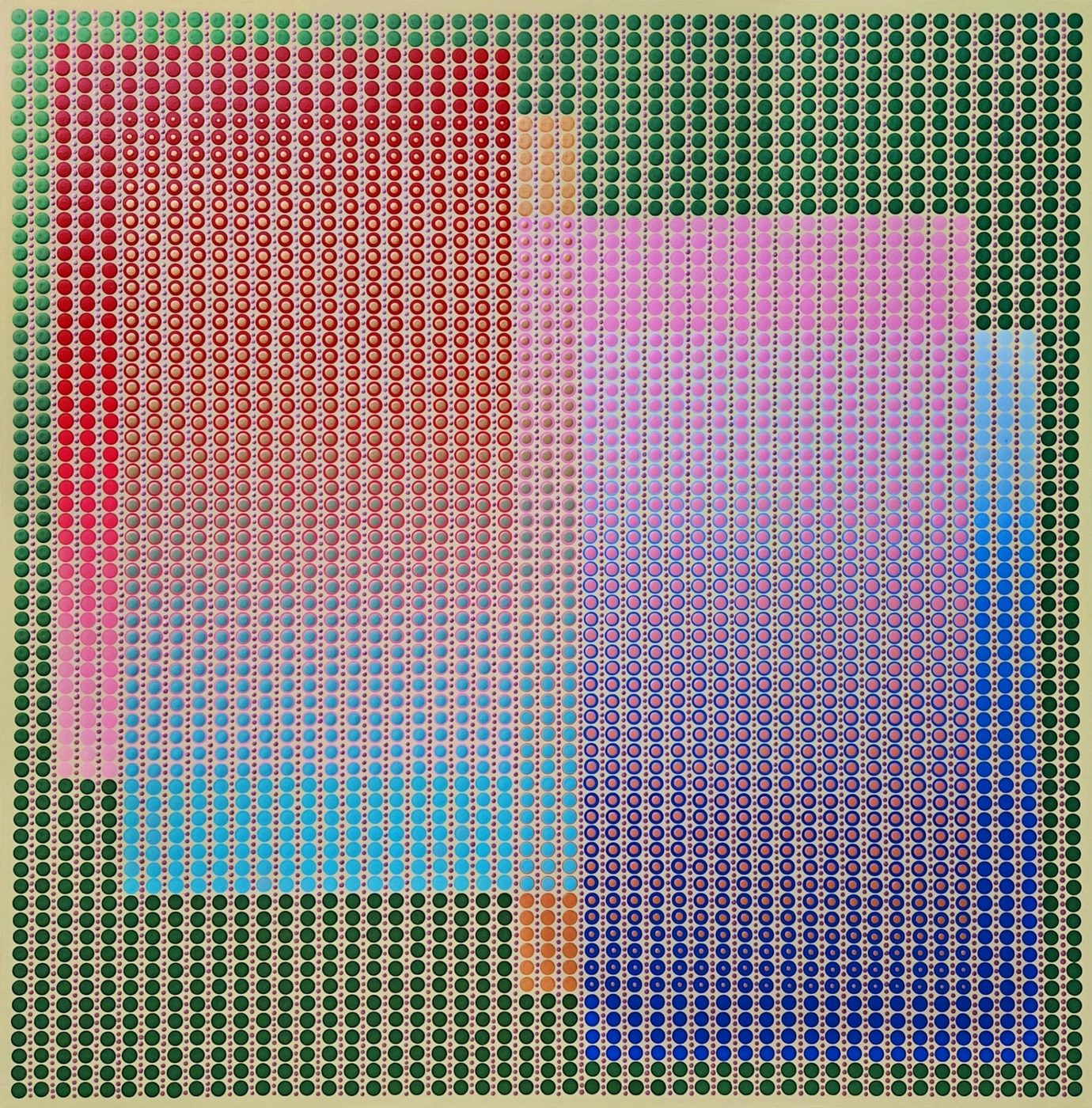
Alone in the Crowd, 2024, acrylic on canvas
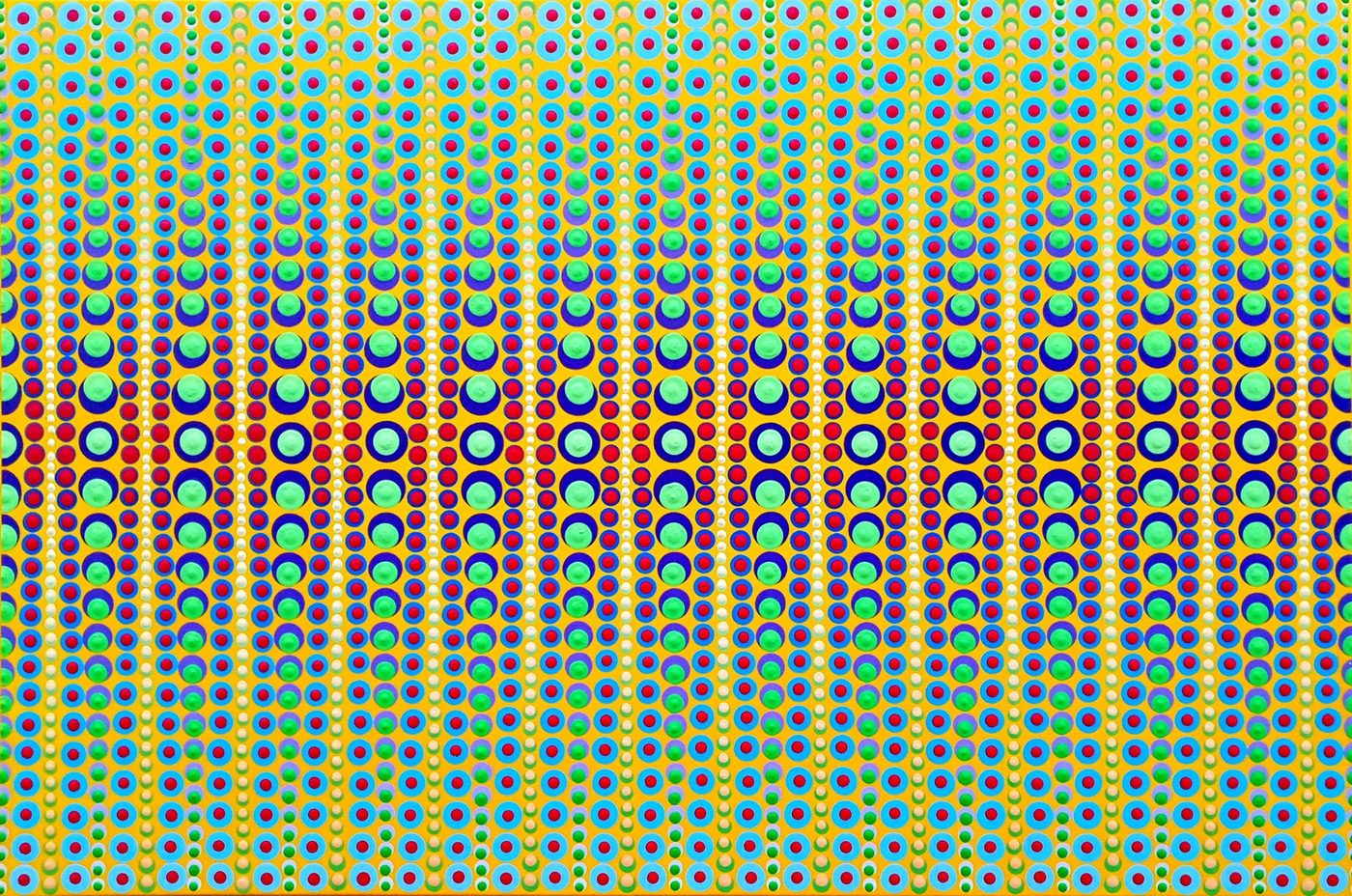
Chimera, 2020, acrylic on canvas
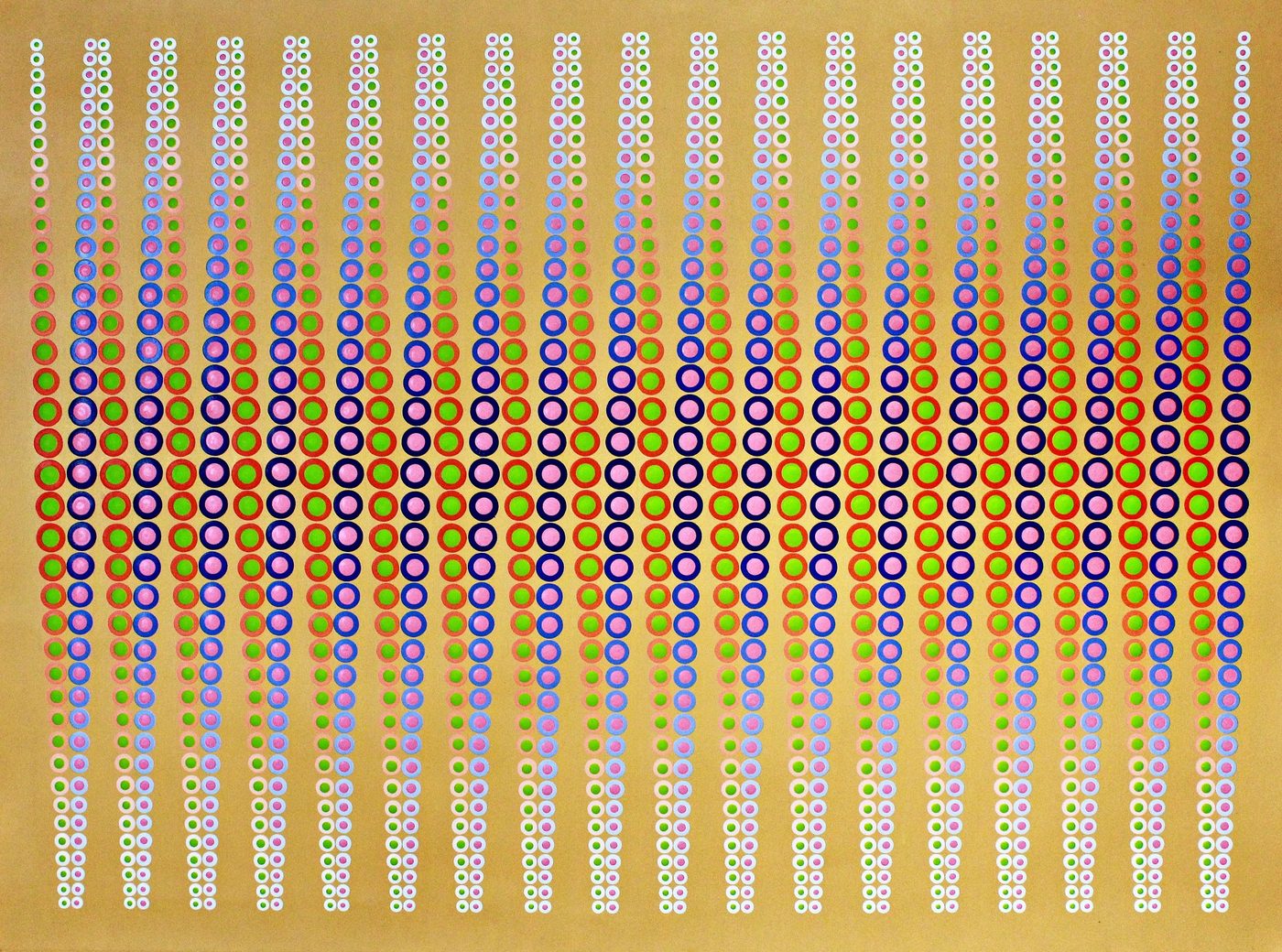
Complicity, 2023, acrylic on paper
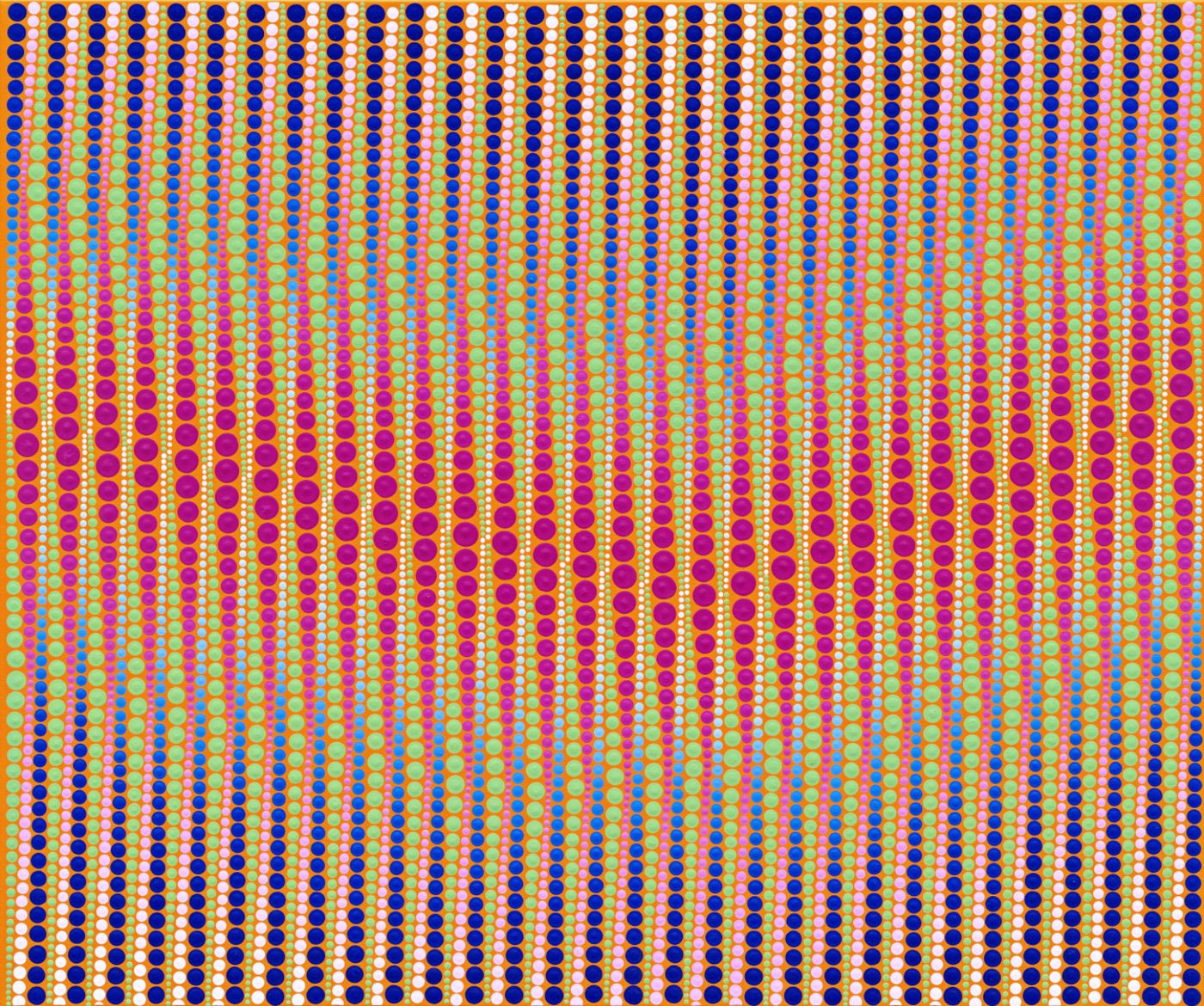
Crowd, 2021, acrylic on canvas
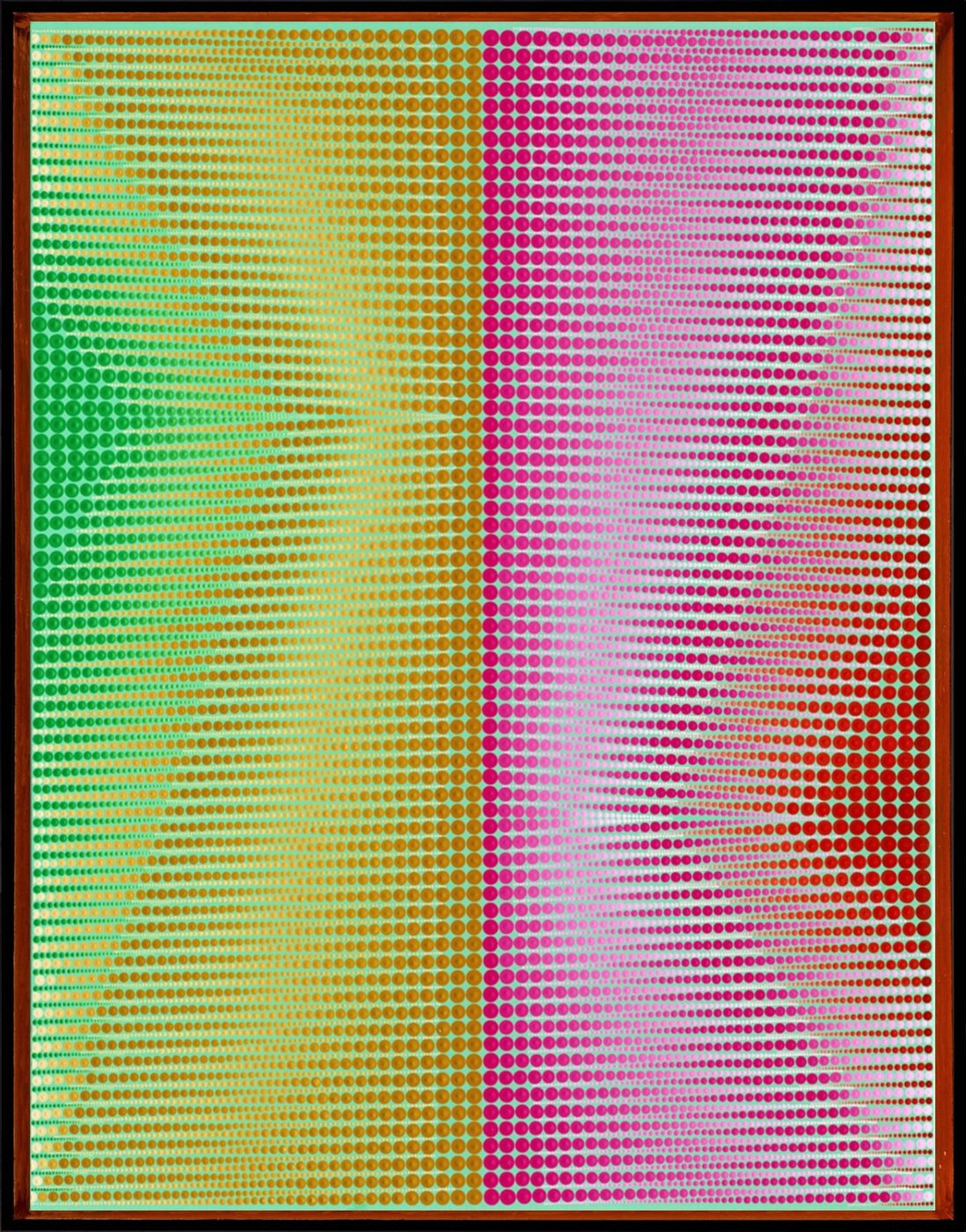
Fire Approaching, 2020, acrylic on canvas
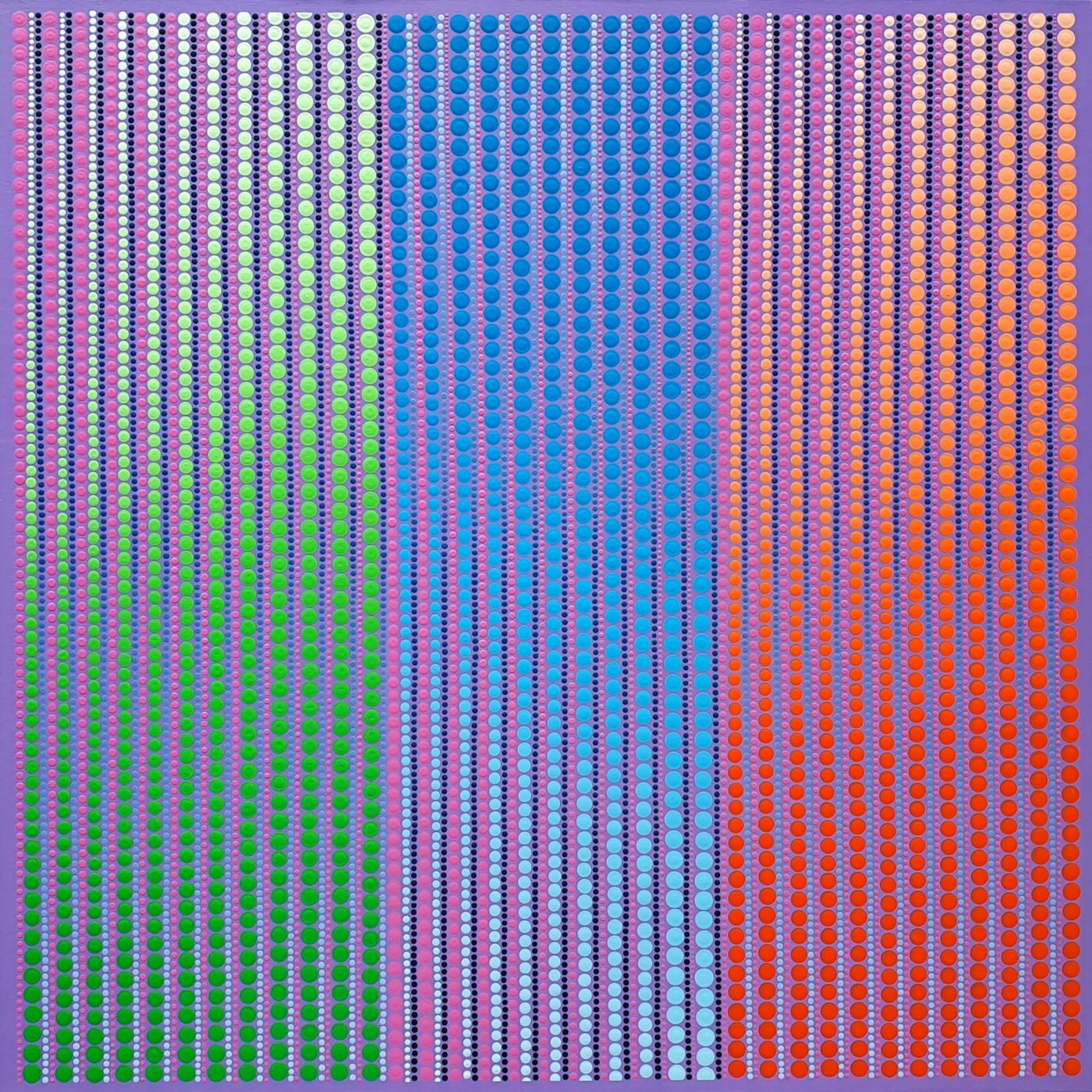
Strength and Tenderness, 2023, acrylic on canvas, 76×76 cm
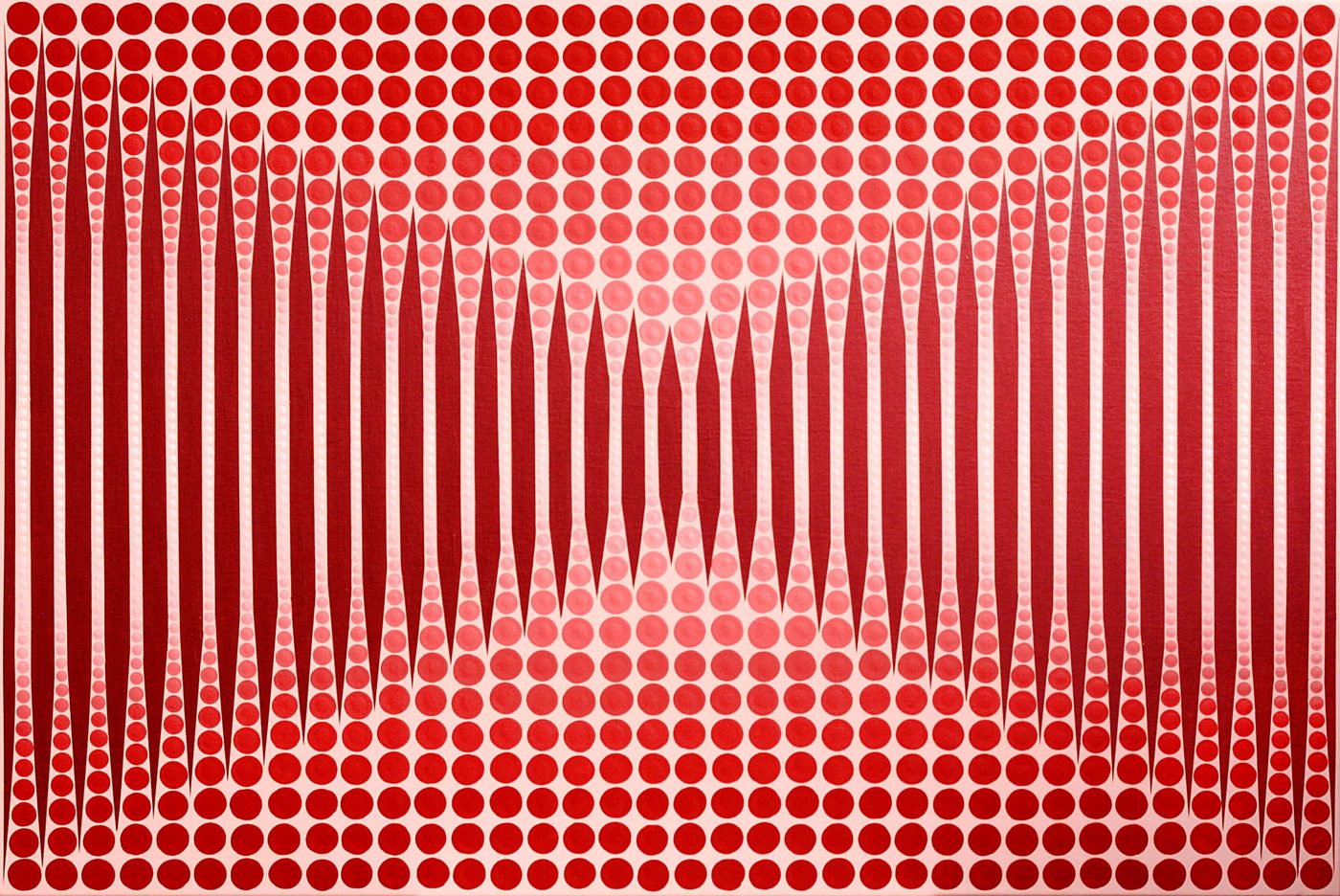
Desde lo Más Profundo de Mi Ser, 2023, acrylic on canvas, 90×60 cm
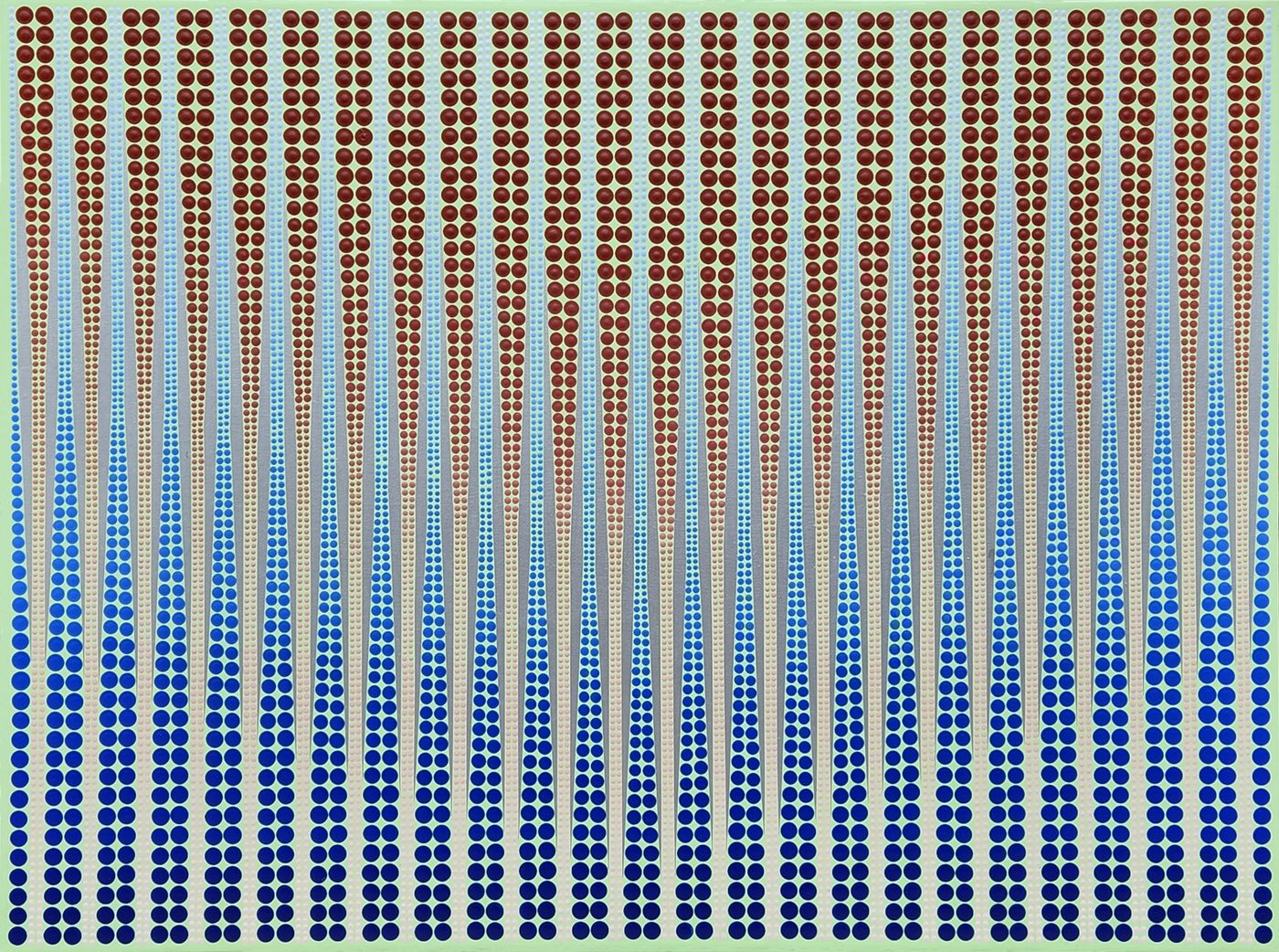
Río de la Plata, 2025, acrylic on canvas, 122×90 cm
Q & A
Is geometry a constraint or a freedom for you — and has that answer ever changed?
My artistic journey began with geometric abstraction; geometry has given me a sense of freedom through which I can express myself, a form of meditation, and a way of connecting with a deeper part of who I am. The process of creating allows me to both disconnect from the outside world and reconnect with my inner self—the part that seeks spiritual exploration, balance, and connection. Although I appreciate and admire many forms of artistic expression, I feel a profound connection to geometry. It has connected me with a part of myself that remained dormant until I discovered this language. There is a belief that an artist’s work reflects their qualities and inner world. In my case, I feel my practice does something different: it brings out qualities I do not naturally associate with myself, such as patience and a love for mathematics, and in that way, it completes me. Geometry has not limited my expression; instead, it has revealed a new dimension of who I am.
Walk us through your process — where does a piece begin, and how do you know it's finished?
Everything begins in my mind. I have a particular way of seeing everyday objects and translating them into geometric forms. Once an idea emerges, I begin sketching and exploring how it can be interpreted through my dot-based language. This is often the most challenging stage, as I am not simply designing a composition, but discovering how the idea can exist within the rules of my technique. I then explore different shapes, colour relationships, and combinations through drawings and painted studies on paper. Creating these smaller painted studies allows me to visualise the final work and understand the behaviour of the paint itself -its flow, how colours interact, transition, and influence each other, and how the geometric forms come to life- before translating the concept onto a larger canvas. Once I have developed several A4 studies, I transfer the chosen composition onto canvas. One of the challenges of this stage is adapting the precise grid structure and maintaining symmetry while moving from a smaller format to a much larger scale, because I do not use digital tools in my process; I rely on hand-drawn calculations, adjustments, and trial and error before beginning the painting itself. Although the final painting is highly detailed and labour-intensive, the greatest amount of time is often spent in the conceptual development and experimentation. Throughout this process, the work gradually reveals its own meaning, almost as if it expresses itself, and its final title is revealed.
Is there something outside of art — a system, structure, or phenomenon — that quietly shapes how you think about form?
Although I began painting very instinctively, without questioning why I was drawn to geometry, I was always attracted to hard-edged lines and the precision of geometric forms. Over time, however, I began to sense that there was something deeper connected to this visual language, particularly as my work started to explore emotions, experiences, places, and human connections. I am often asked why I chose to paint with dots. My simple response has always been that they chose me. This led me into a personal process of introspection through meditation, reflection, and questioning. Through this journey, I began to understand the profound significance of the circle -one of humanity’s oldest and most universal symbols- and the many layers of meaning it carries across cultures. The circle became more than a geometric form; it became a symbol of connection, continuity, and the cycles that exist within life and nature. When I moved beyond the need for rational explanations, I realised that the dots were something that had always existed within me. To me, the dot represents the origin of all things, a point from which everything begins. It reflects the idea that we are all part of something larger, interconnected beings, vibrating energy experiencing existence within the same universal rhythm.
What does a viewer miss when they see your work as 'just geometry'?
Sometimes we do not realise how deeply connected geometry is to our lives, our evolution, and the ways humanity has used it throughout history. It exists not only in the structures we create, but also in the patterns, rhythms, and forms found throughout nature. Beyond its visual qualities, geometry carries layers of symbolism and meaning. The circle, in particular, is a powerful universal symbol that appears across cultures, spiritual traditions, science, medicine, and the natural world. When a viewer sees my work as “just geometry”, they may miss the emotional and symbolic language beneath the surface. The circle is not simply a shape; it represents wholeness, continuity, and connection. Perhaps this is why many of us feel instinctively drawn to this particular form: something that appears empty yet feels complete.
Newsletter
Curated open calls and one artist to know, every couple of weeks. Free, no spam.