Selected Artist
About
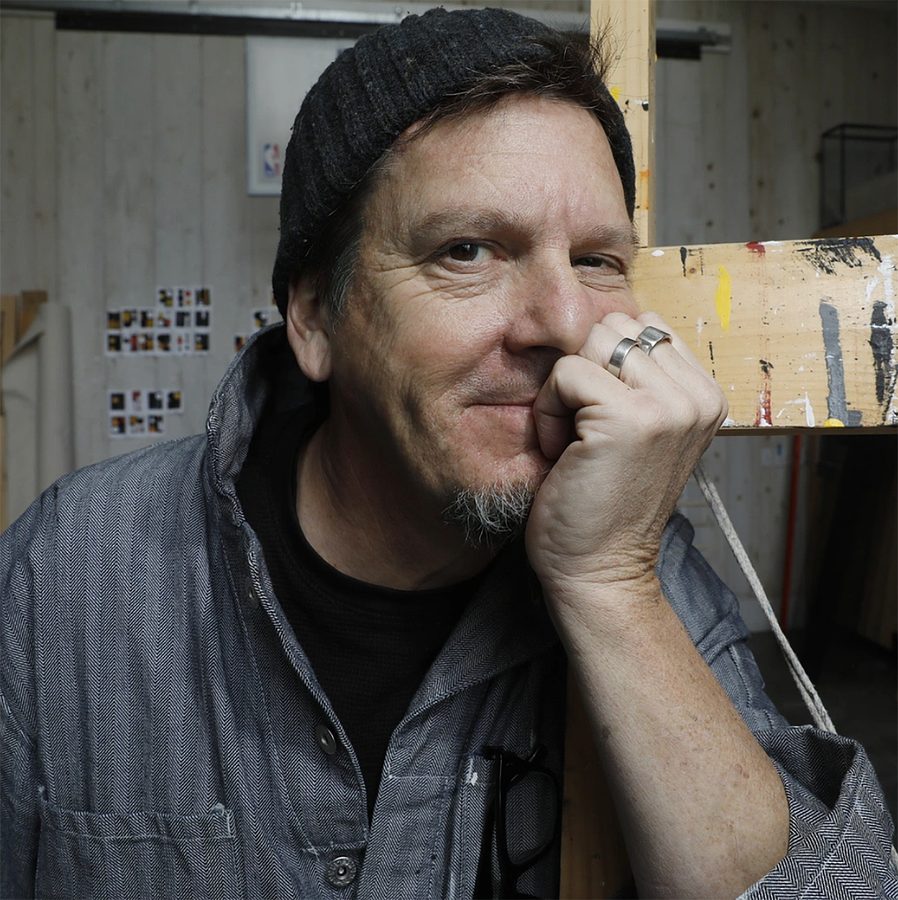
Christopher Griffith (CG) is a self taught Canadian artist based in the Hudson Valley with an atypical progression.
Trained as a research geneticist, I left a PhD program in London to pursue a short lived and successful career in fashion photography in the late 1990’s. A cross country pilgrimage across America led to my first monograph STATES (2001) a hyper minimalist interpretation of post war American Motorama and a career segue into blue-chip commercial photography. I subsequently published three other photography monographs: FALL (2004) an minimalist study of autumn foliage in the American Northeast, BLOWN (2009) an organic study on blown-out tires collected from highways across America and SHINE (2015) a project commissioned by the NY Times on the weathered hands of immigrant shoe shiners in New York City.
I closed my NYC studio in 2017, relocated the family to a farm in upstate NY with a desire to unpack unresolved creative projects. In 2018, I took IN MEMORIAM, a series of unconventional large scale funeral flower motifs to the ECC group show during the Venice Biennale to highly polarized reviews. In early 2020, I began producing large scale abstract paintings of verbal communication. The HOBO GLYPH series utilize an early form of graffiti used by American travelers dating back to the Civil War.
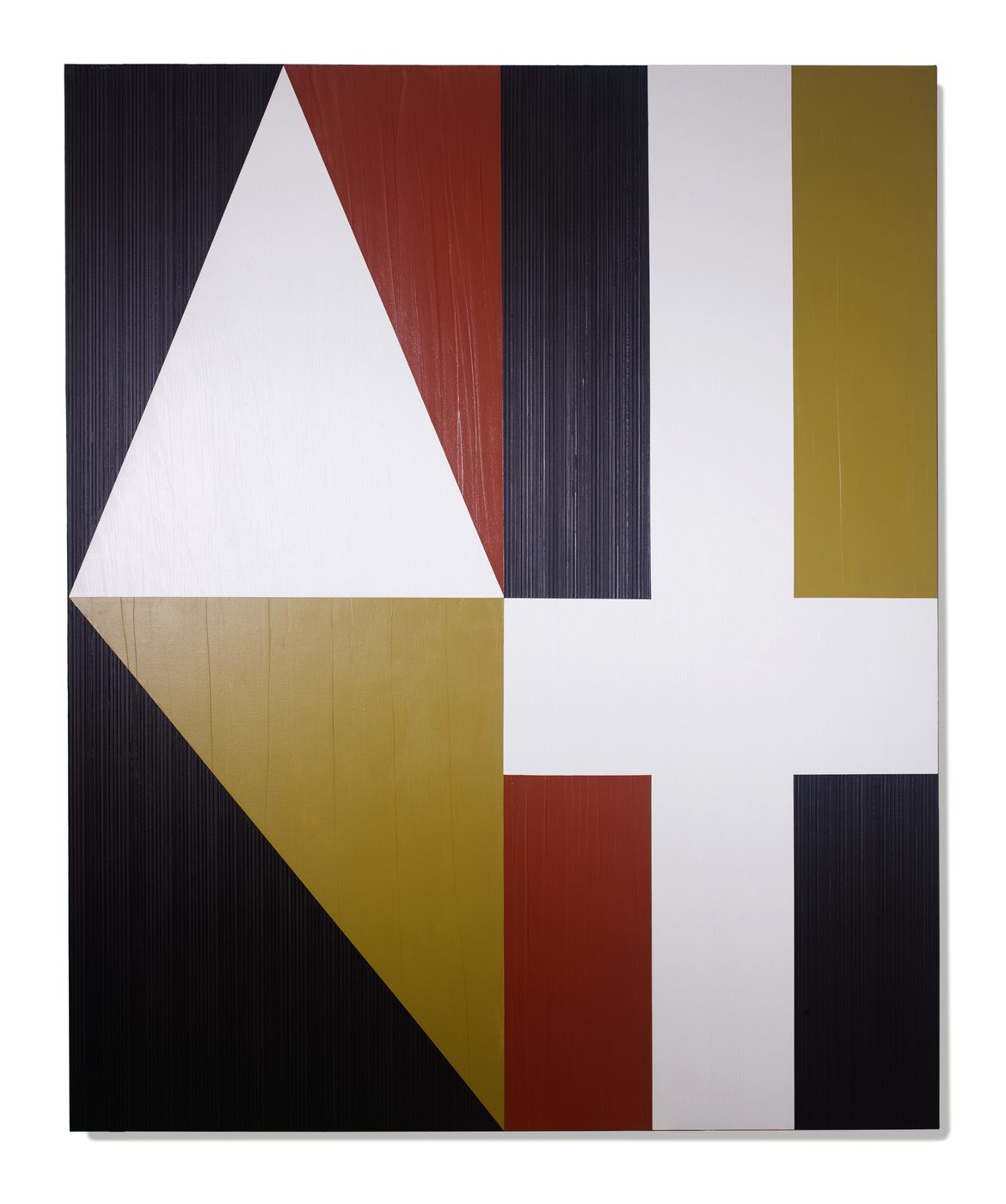
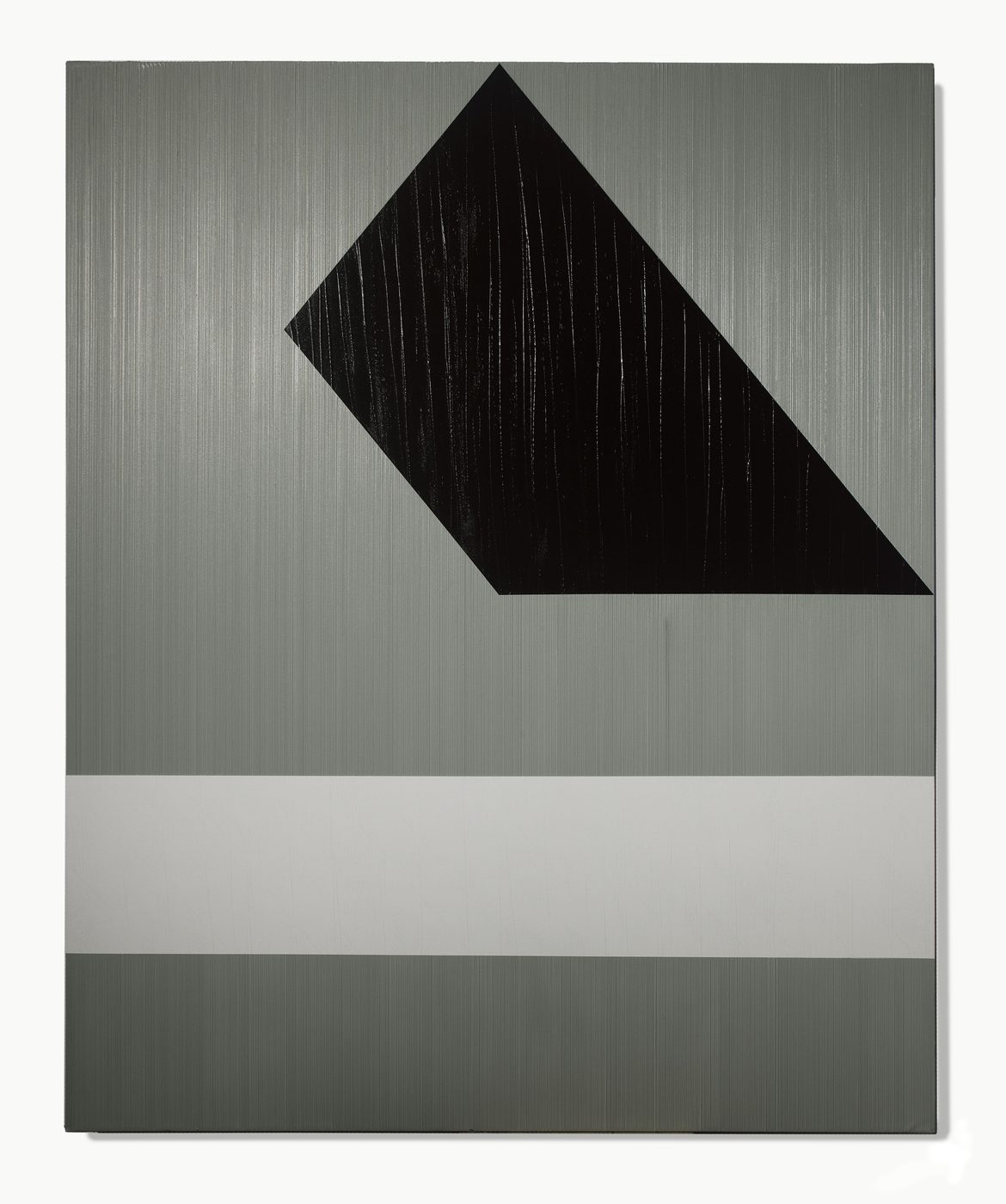
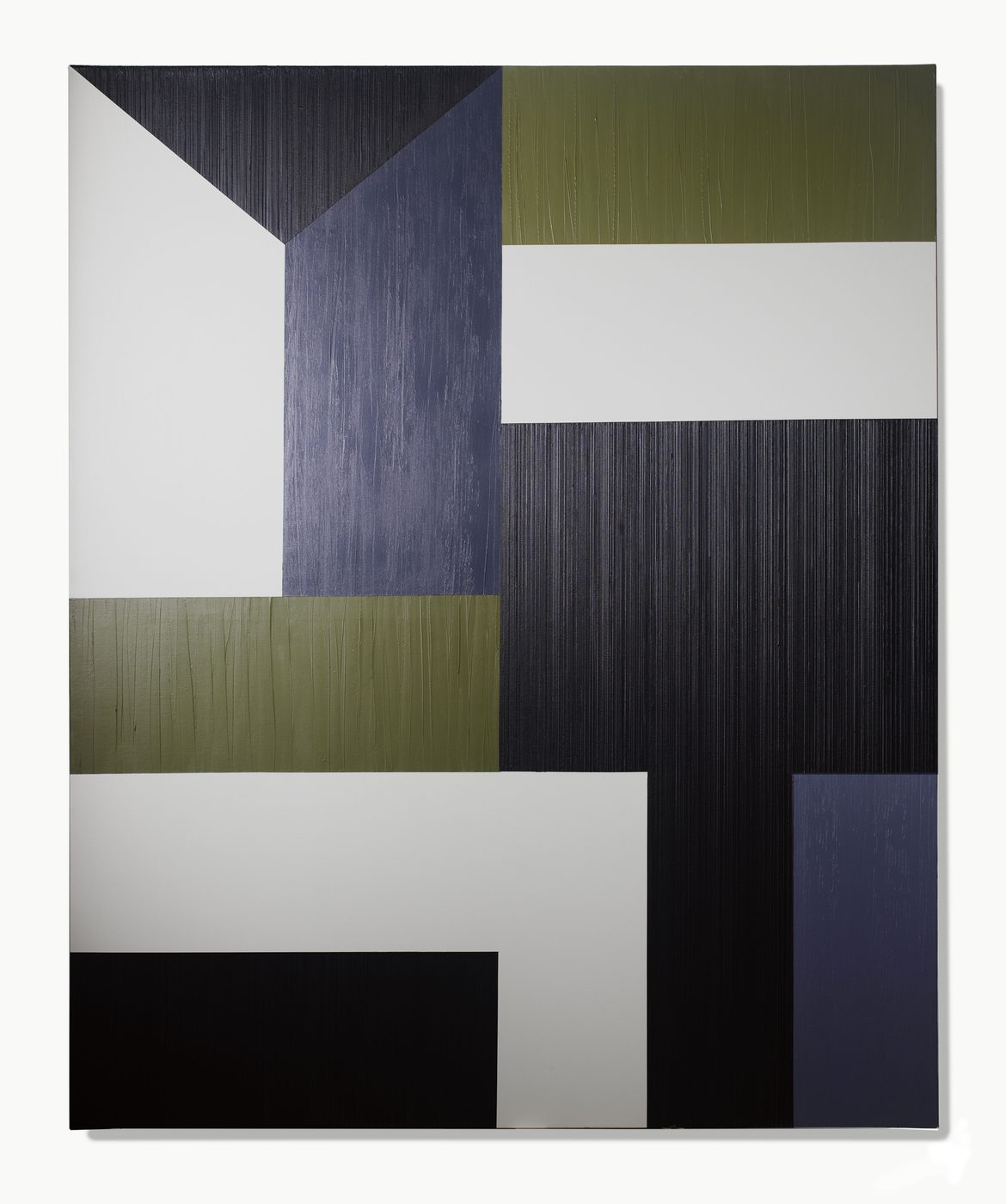
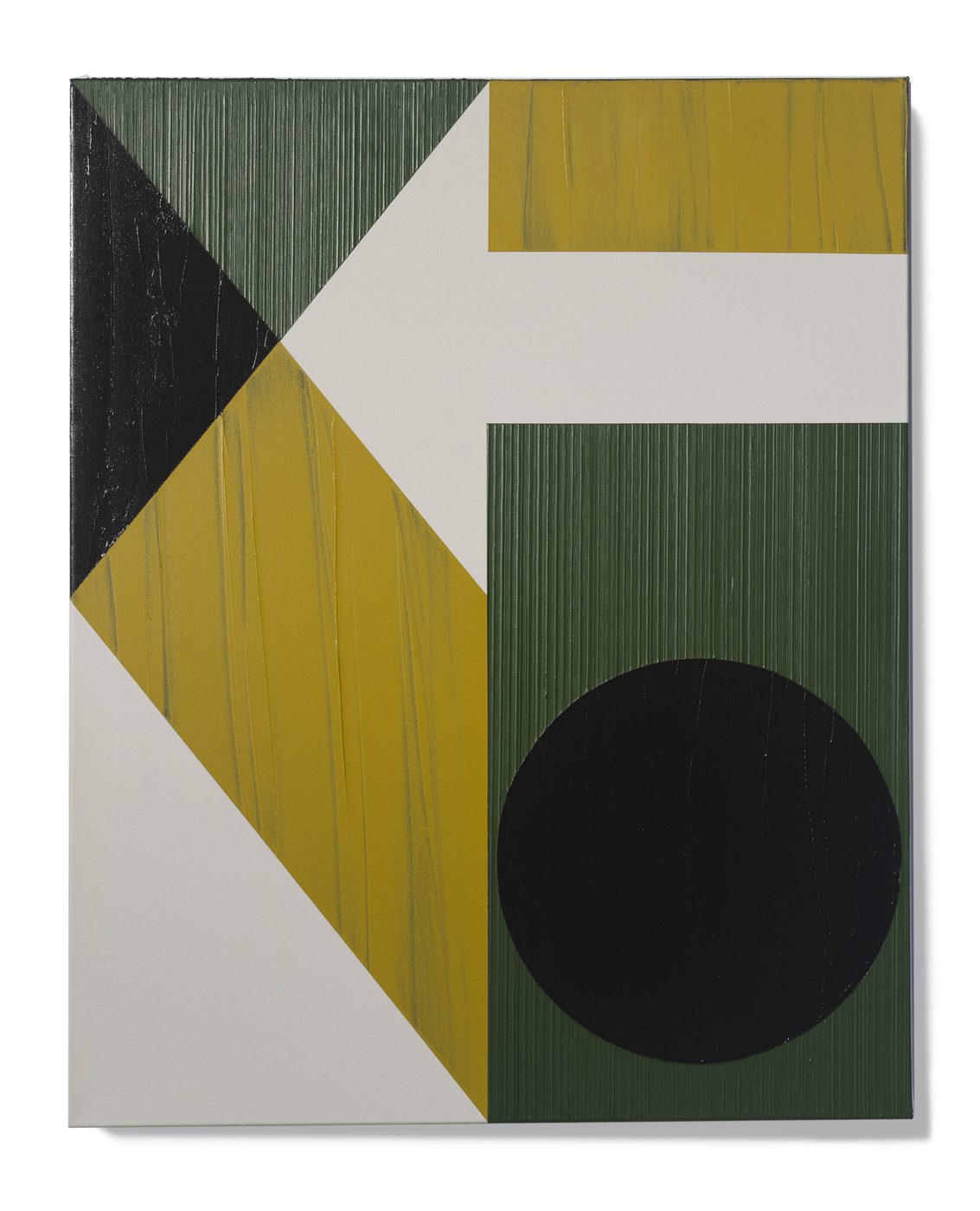
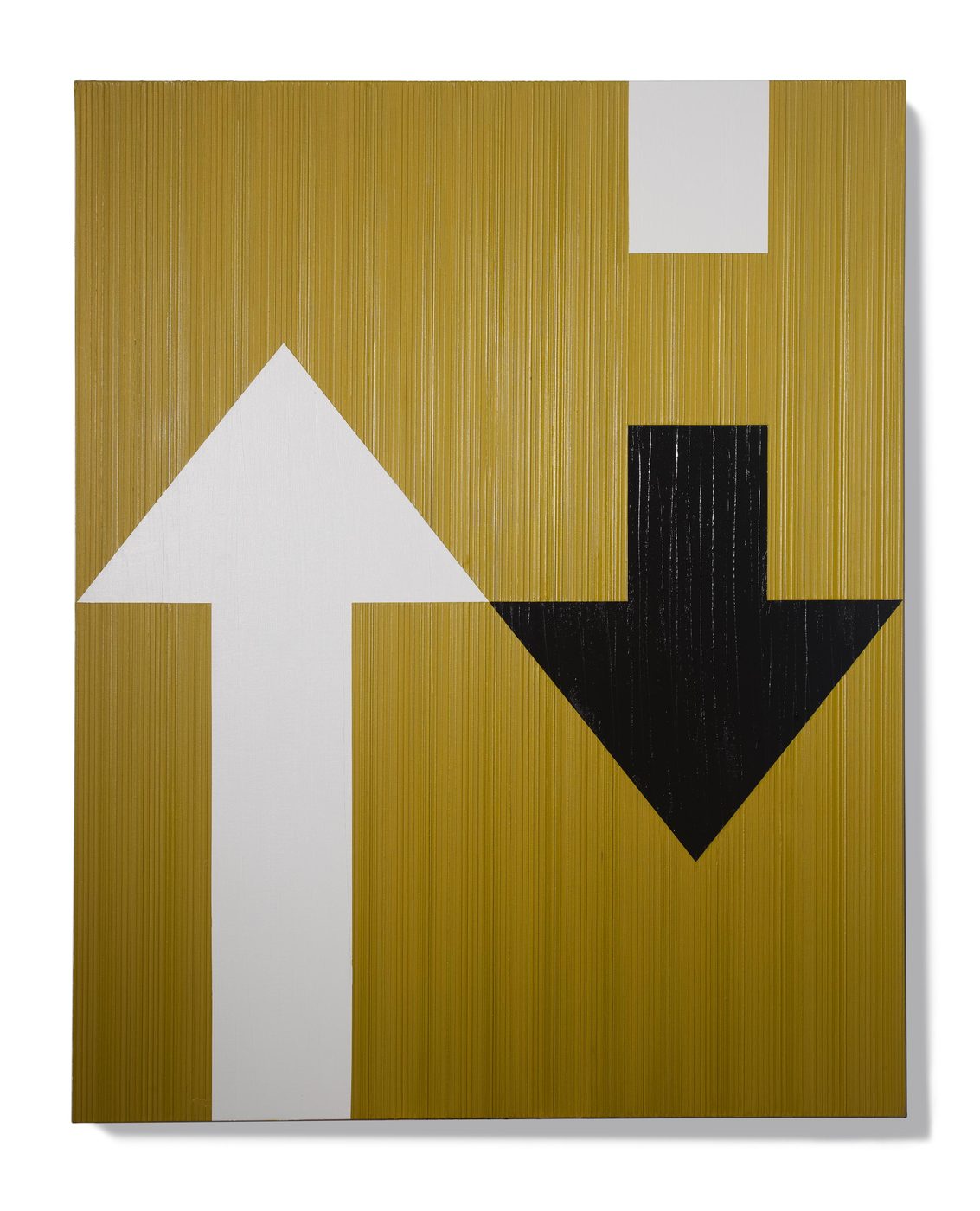
The recent series FOURPLAY employs a purposely designed, highly redacted font which facilitates the merging of positive and negative space in the creation of highly abstracted interpretations of 4 letter words. Clearly inspired by the dialect and quadrant design of word artists Wool and Indiana, but with a graphic language more akin to Kelly, Riley and Herrera.
They are abstract riddles to be decoded.
Selected works
Christopher Griffith
Christopher Griffith
Christopher Griffith
Christopher Griffith
Christopher Griffith
Christopher Griffith
Q & A
Is geometry a constraint or a freedom for you — and has that answer ever changed?
Neither. It is just how I naturally approach any creative project, meaning that I never really think about it being liberating or restricting. Now that we are talking about it, I would say that geometric structure along with a propensity towards graphic minimalism has been a defining aspect of my life and a consistent thread in what has been a varied career that started out in biochemistry, then fashion photography, then advertising photography and now in painting. From the first rolls of film I ever shot of staircases in Montreal whilst at University till now, my approach has always had a strong linear graphic slant that I don’t really spend much time analyzing. Art critic Tyler Whyte of the Boston Globe (then at the Toronto Star) when reviewing my third monograph BLOWN on shredded tires collected from highways across America said, 'His work has the subtlety of (being hit with) a sledgehammer’. It still don’t really know if it was meant as a compliment or a criticism, but I have taken it to be a very accurate account of my intentions. I am rarely subtle.
Walk us through your process — where does a piece begin, and how do you know it's finished?
With the present series FOURPLAY, it generally starts when I am reading and I come across a 4 letter word that I either have never properly understood or is being used in a novel context that results in an interpretation that I am not accustomed. I then do a 2 over 2 impression in my head (sometimes involving air-drawing with my hands), immediately add the word to a massive database of words I keep on my phone, then a formal sketch (executed whilst binging something on BritBox), then a computer rendition to determine the final color blocking and lastly small card sized print outs, which go up on the ‘wall of voo-doo’ grid in my studio, where they sit patiently waiting for me to pay attention to them, placing them ever higher up in prioritization… to then hopefully eventually make them. Some have been up there for a few years…. many have been taken down and will likely never be made. The battle in my head over what comes next can be long and laborious.
Is there something outside of art — a system, structure, or phenomenon — that quietly shapes how you think about form?
Architecture. I think it is a career where I could have succeeded . I love structure, I am drawn to simplicity, but I also love the physicality of building and I particularly like renovating unconventional spaces. My wife and I have renovated 5 properties over the past 20 years, including a defunct 1880’s dutch dairy barn and more recently a 200 year old Church overlooking the Hudson. I have a very innate sense of 3 dimensional space, and have designed and project managed all of our renovations acquiring the skill of building along the way. YouTube serving as the Sensei to this little grasshopper. It’s odd, I feel that painting is a culmination of multiple aspects of my past; it is highly experimental like science, it is very physically involved like building and it is characterized by the very graphic approach that defined my career in photography. It’s kind of full circle. Oh, and there is also the I Ching, which I don’t fully understand yet, but there are some very clear inadvertent parallels that I need to unpack. It’s my summer reading in Nova Scotia.
What does a viewer miss when they see your work as 'just geometry'?
Nothing. I think that if a painting works purely as a geometric construct sufficient for someone to place in their world to contemplate and enjoy, then I have definitely succeeded. The fact that there are veiled words within is potentially very impacting, but it is not the main driving force in my practice. There are many impacting words that I would love to make, but have not yet created motifs that I am sufficiently pleased with. This poses the question of whether or not the viewer should be informed of the messaging within. I have a tendency to tell people in a attempt to illustrate another level for the viewer to digest. But I am not at all sure that this is the right approach and I think possibly shows my insecurities in my desire to be seen as vaguely clever as it certainly instigates an entirely new level of conversation about the work. There are those who simply don't want to know and do not care about the riddles within. To them the abstraction either works visually, or it doesn’t. Conversely, I had a lovely pregnant lawyer who worked for a mergers and acquisitions firm in NYC buy C*NT. When i delivered it, I asked why, to which she said ‘I want it sitting behind my head in my office on zoom calls when I am schooling some bro who is trying to mansplain something he know nothing about’. So, I think it matters that people understand the meanings within…but maybe not everyone
What's the last rule you set for yourself in the work, and did you keep it?
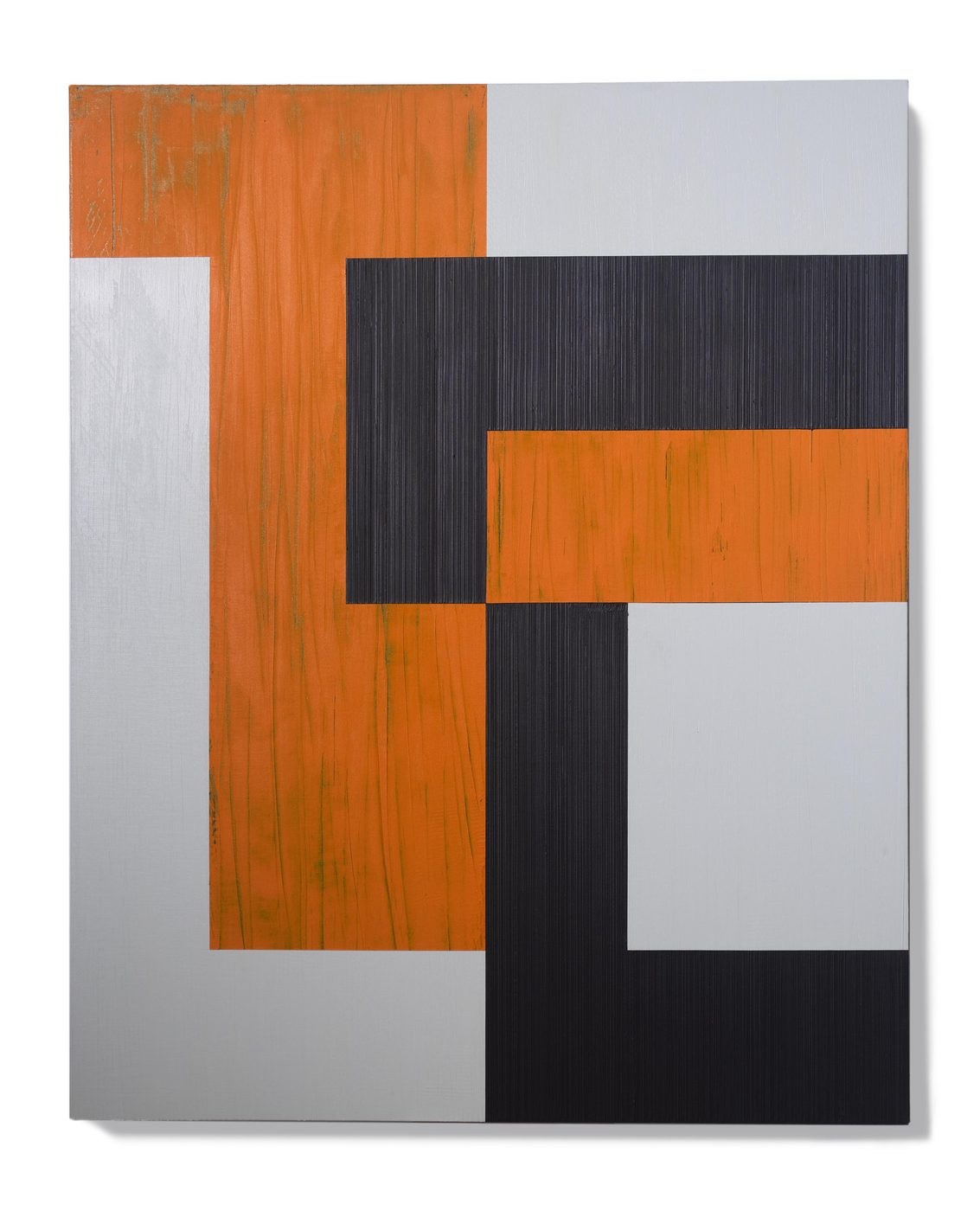
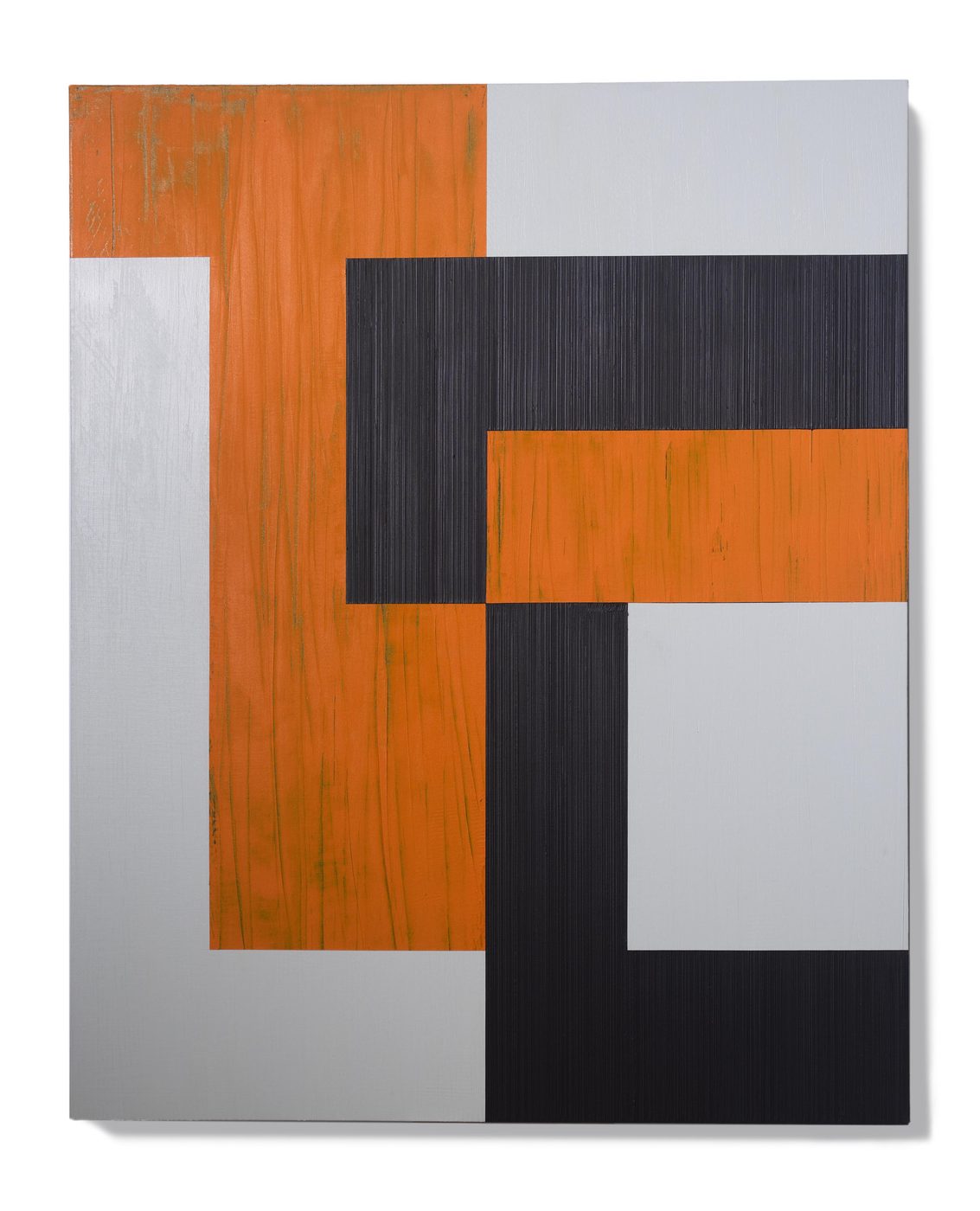
I promised I would do something with paint that I had never done before, knowing exactly what it was I wanted to to do. It’s actually an inner dialog I have on most paintings, but yesterday it was far more dramatic. The thing about painting is that we all have our shticks whether we admit it or not. It’s hopefully what makes us discernible and dare I say unique, but the way we paint can also become a prison if we are afraid to break out of our defined molds. It’s a fine line between creating a cohesive body of work and being guilty of a step-and repeat. I have been working in hard edge for the last 4 years and the final stage of what I do is normally a very heavy oil and wax impasto that is applied using a moving 2D vertical rolling rig allowing the application of perfect vertical and horizontal linear textures across color fields using heavily serrated oversized brushes. This involves masking other adjacent color fields facilitating a final reveal. But…for months I have wanted to deconstruct the usually perfected masked hard edge by dragging wet paint into the adjacent color fields once all masking has been removed. So I finally did it. I kind of like it. Not quite sure why it took me so long.
Describe a failure or a dead end in your practice — something that didn't work.
So I painted the word IFFY. I liked the design and the implication of the word. So I made a 72x90” painting, which I thought was really successful. Some months later I was having a studio visit and we were looking at the painting deciphering the letters when I realized that it was non-sensical in that I had made it incorrectly. I still liked it, but it did not translate into the intended word…. or any word for that matter.Awhile later, I decided to do the painting again, but had played around with at the positive-negative interaction and created a new motif. I painted it again… and at the final reveal saw that I had made it incorrectly AGAIN. I realize that once I am into the exercise of painting that I don;t really visualize the painting until the very end and if a mistake is made at the onset, it is most likely not going to be corrected along the way. I was going to destroy both of them but then told this story to a gallerist I know and he was adamant that I never destroy the mistakes. As he said…. ‘they will likely be more valuable than the rest some day’. They survive, hidden from view for now.
Newsletter
Curated open calls and one artist to know, every couple of weeks. Free, no spam.