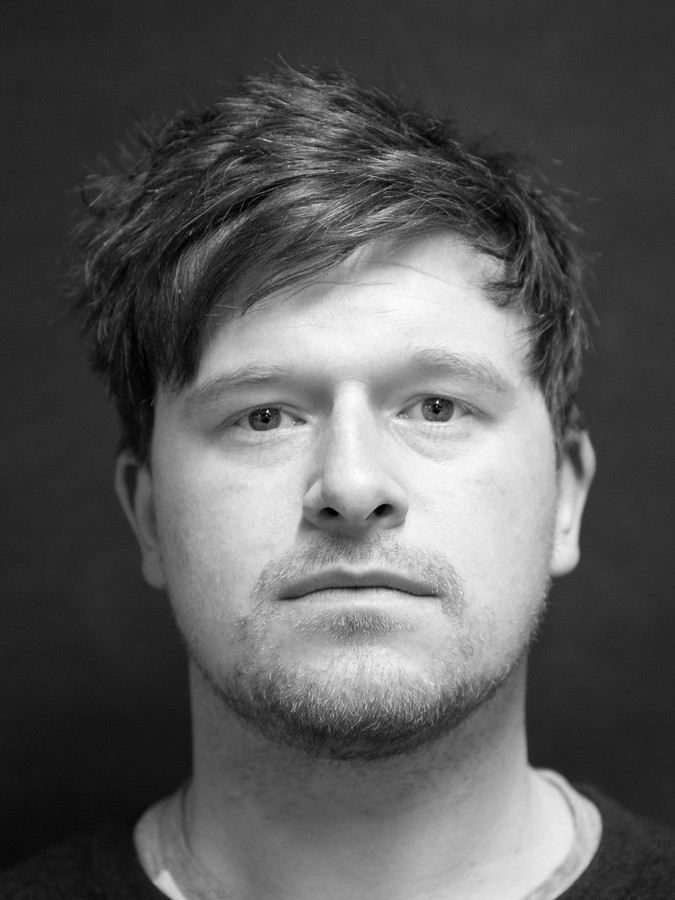
Selected Artist
About
Geometry is the foundation of my practice, not as a visual style, but as a system for shaping perception and experience. Working across murals, painting, sculpture and site-specific installation, I use geometric structures to investigate the relationship between space, light, movement and the viewer. My work is informed by architecture, Minimalism, Op Art and the Light and Space movement, often employing perspective, anamorphic interventions and abstract forms to create moments of spatial ambiguity.
Whether through large-scale public artworks, painted surfaces or three-dimensional constructions, I am interested in how simple geometric relationships can transform the way a place is experienced. Rather than treating geometry as a fixed language, I use it as a framework for exploration, testing how form, colour, shadow and scale can activate environments and encourage a heightened awareness of space. Through this process, geometric abstraction becomes a tool for connection between artwork, site and viewer.
Selected works
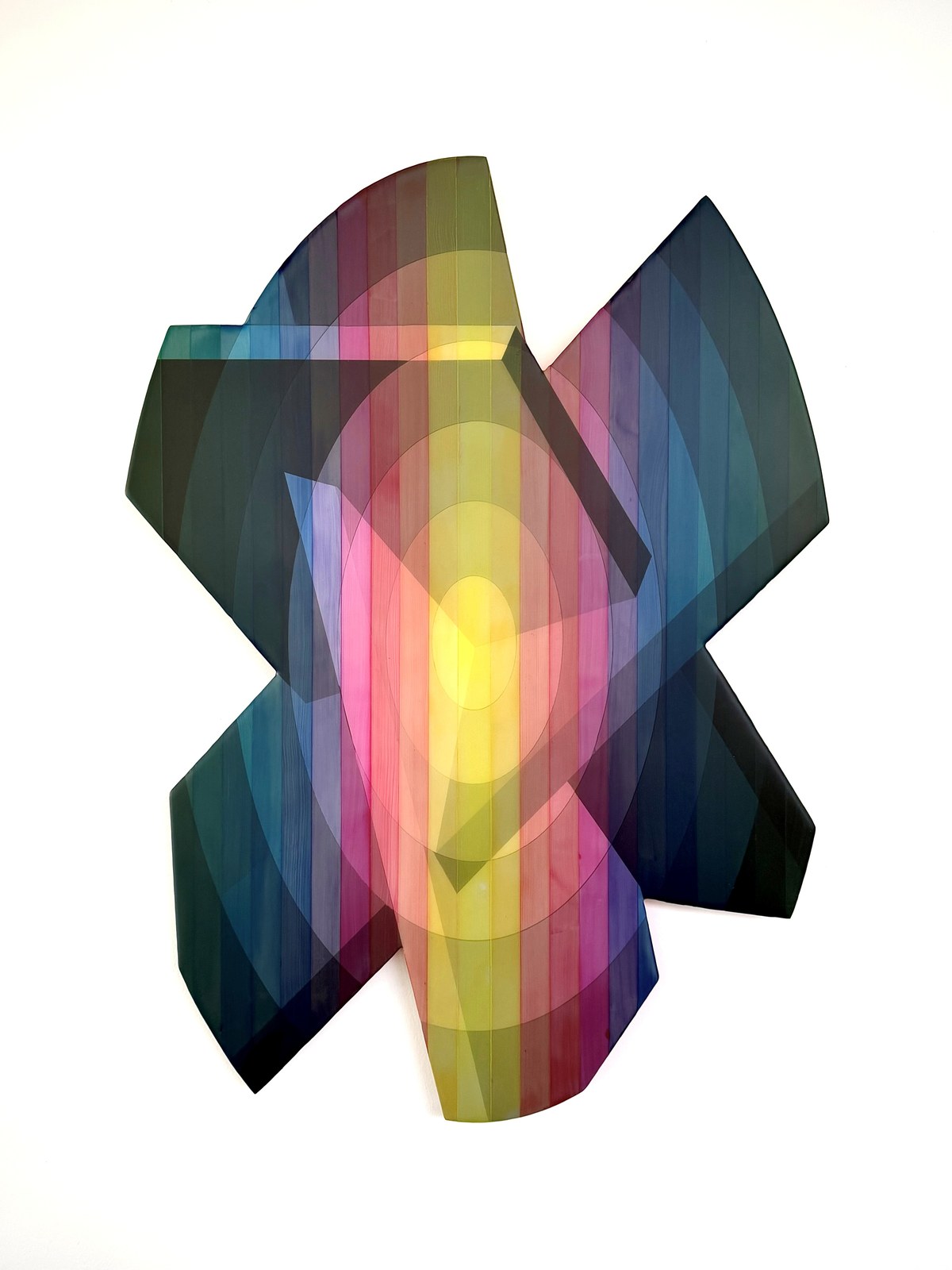
Facade, 25 × 20 × 2 in, 2025 — laser-cut wood assemblage, aerosol, glaze, resin
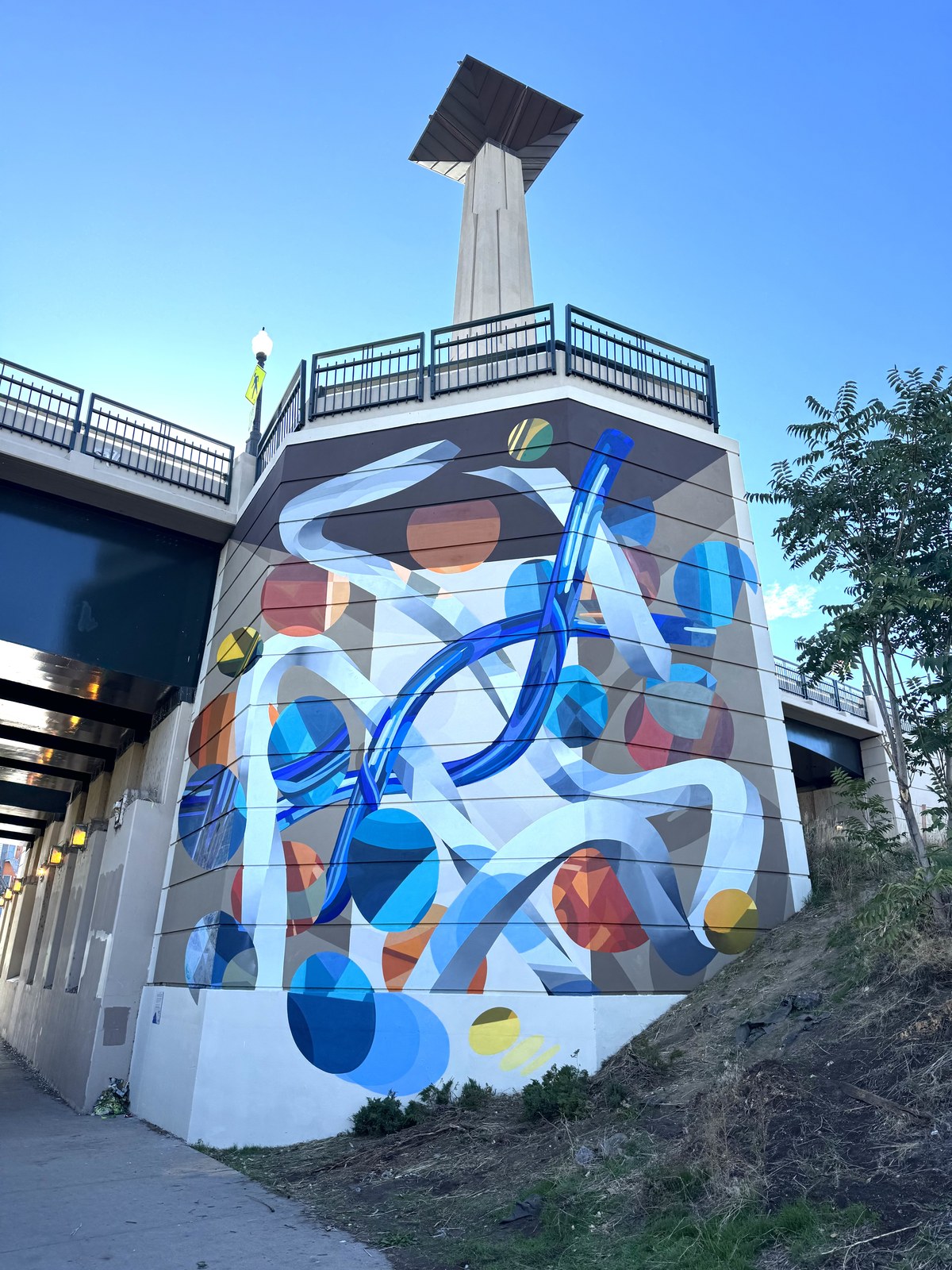
Synaptic Space, 2025 — aerosol and masonry paint, site-specific anamorphic mural

Duality, 32 × 25 × 2 in, 2023 — laser-cut wood assemblage, aerosol, glaze
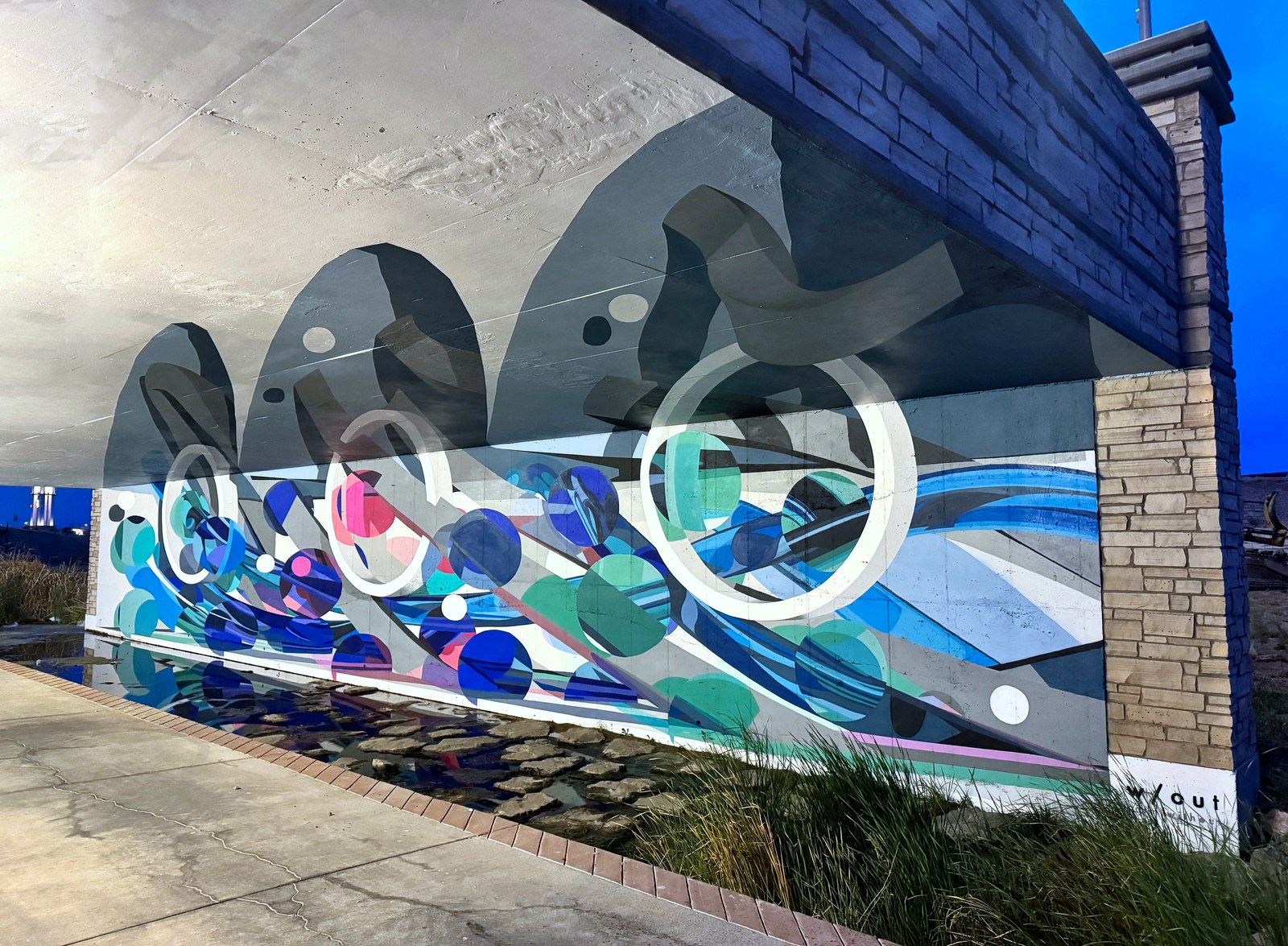
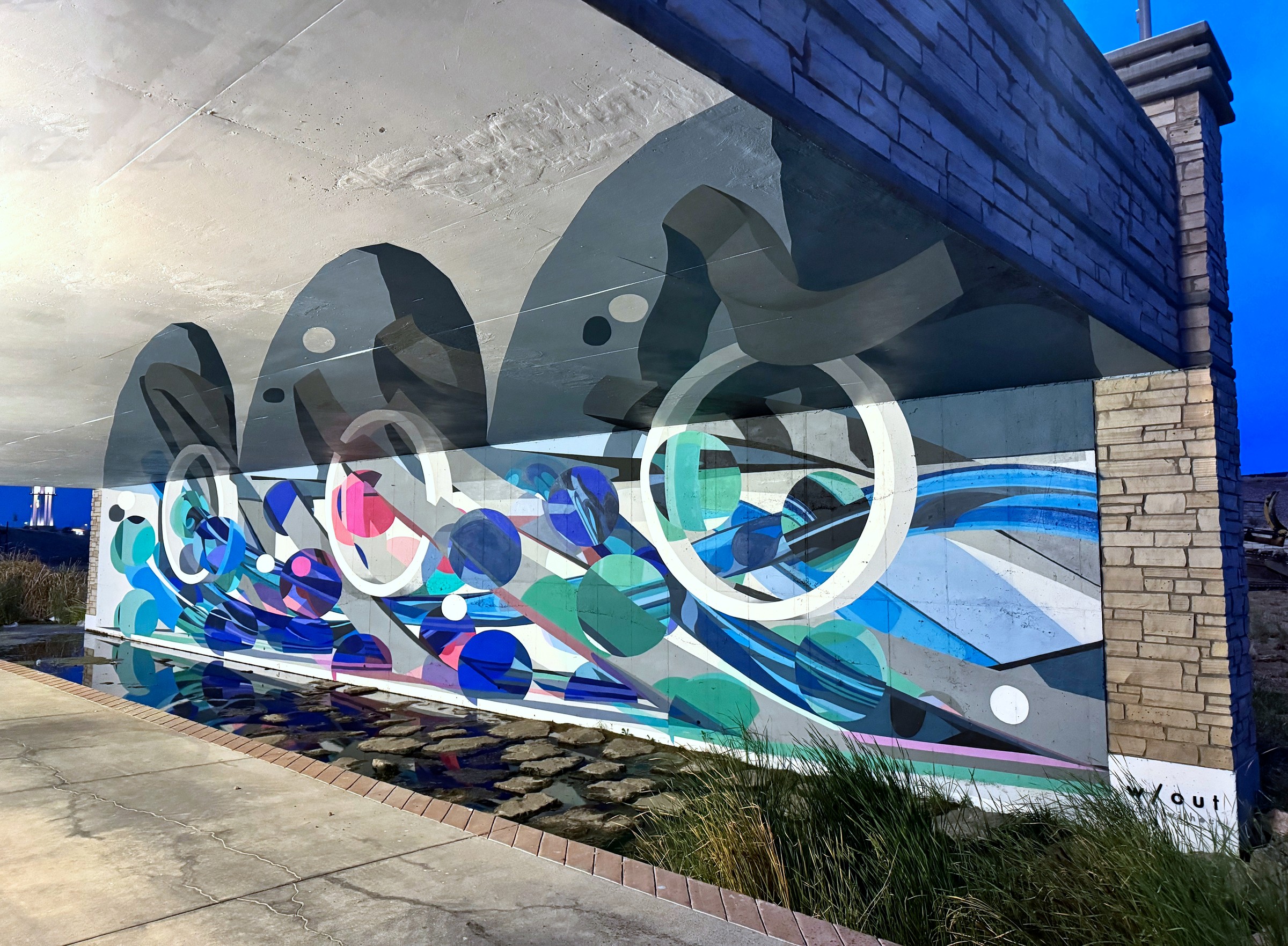
Pause-Flow-Reflect, 13 × 85 × 10 ft — aerosol and masonry paint, site-specific anamorphic mural
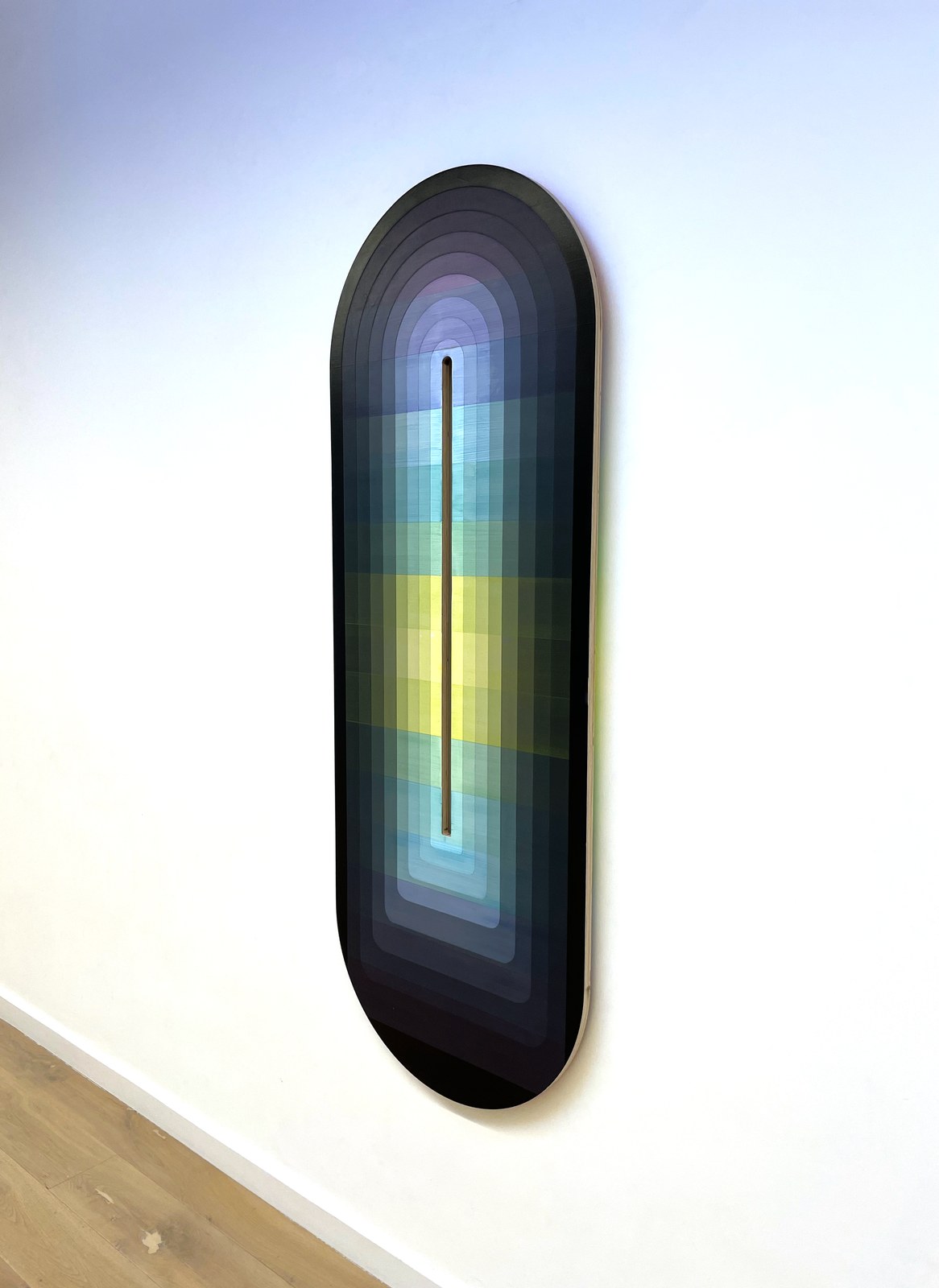
Entrance, 60 × 25 × 2 in, 2022 — CNC-cut birch panel, aerosol, glaze
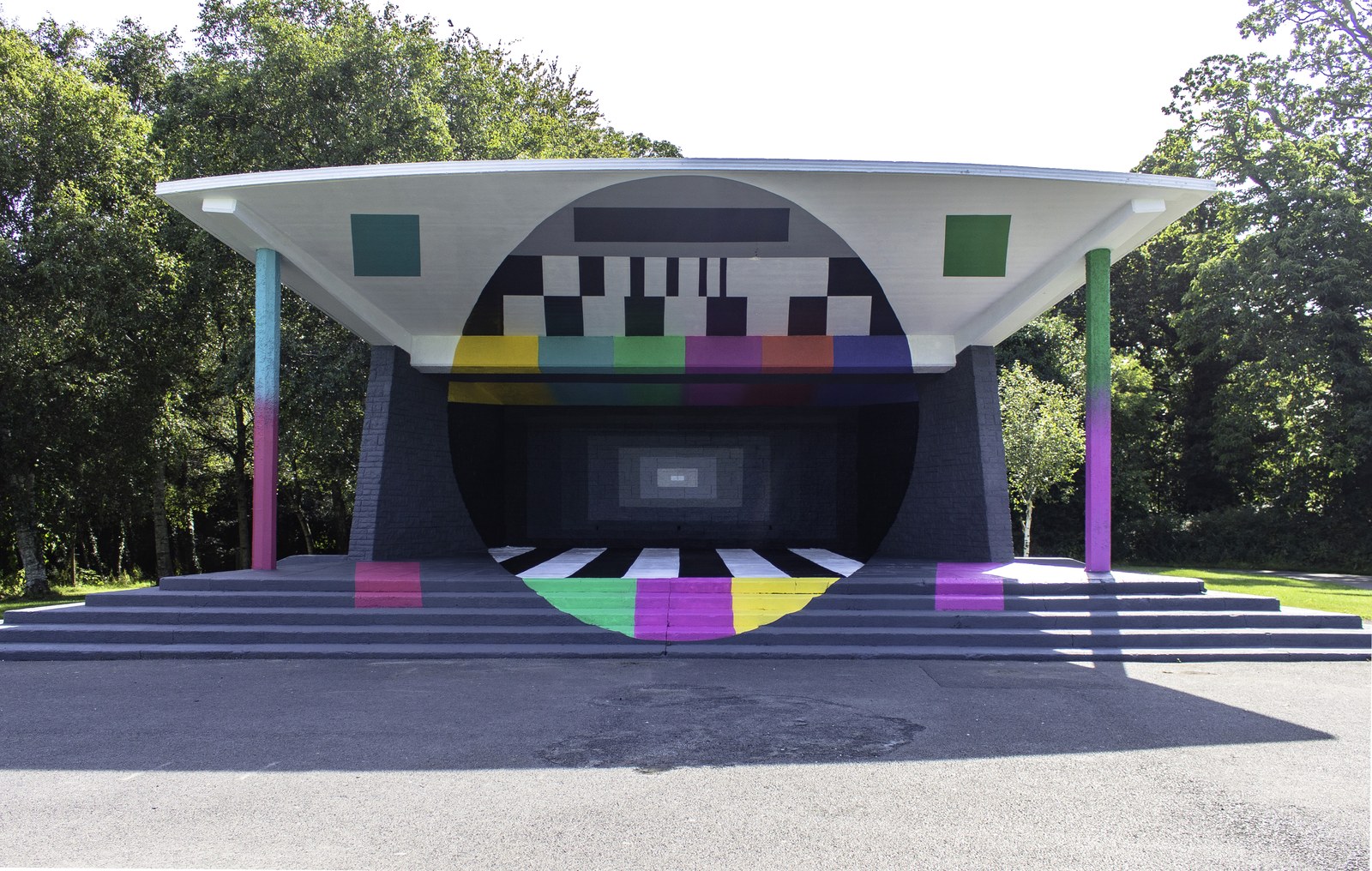
Please. Stand By — aerosol and masonry paint, site-specific anamorphic mural, dimensions variable
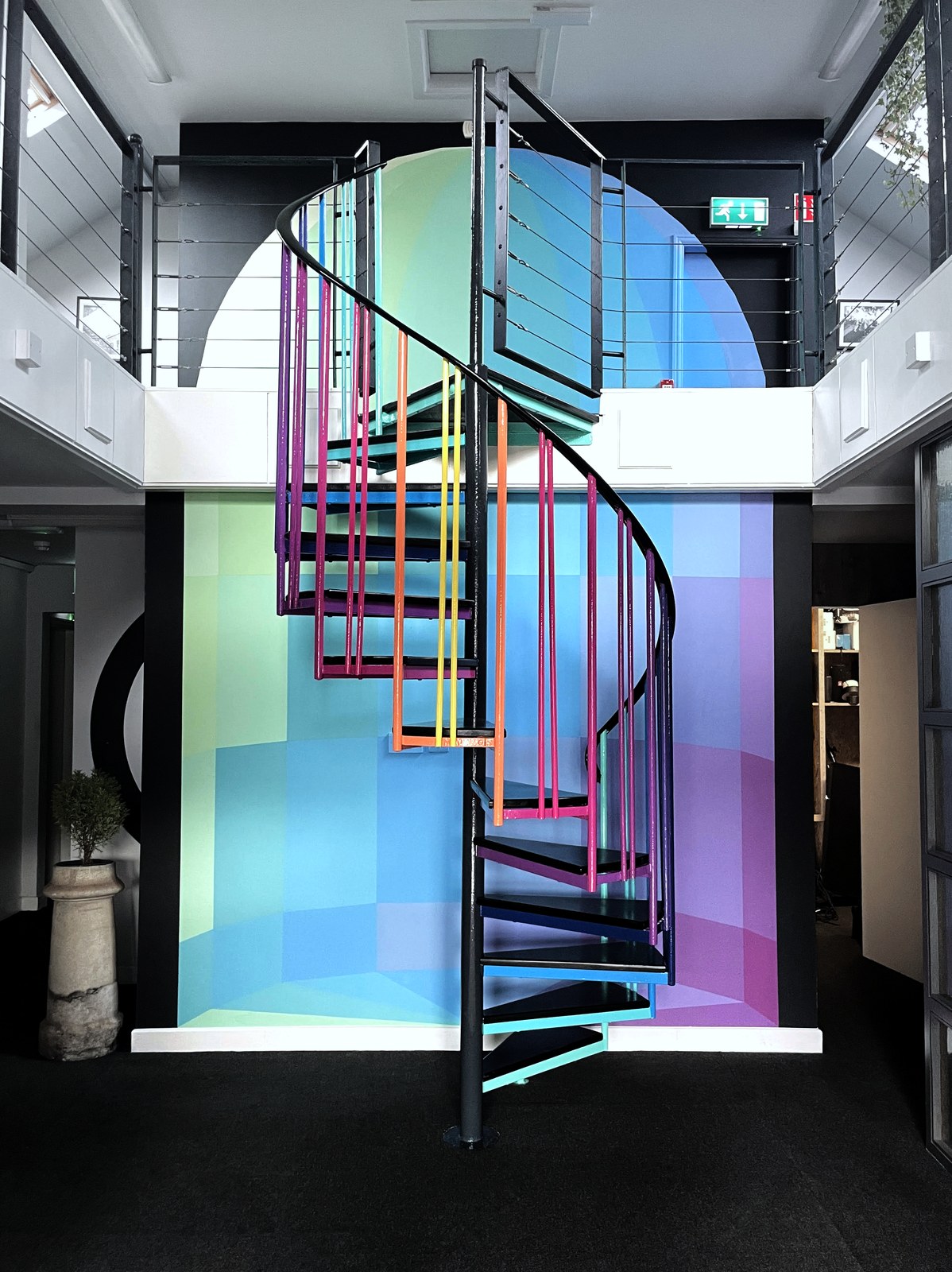
Helix, 2022 — interior paint, site-specific installation
Q & A
Is geometry a constraint or a freedom for you — and has that answer ever changed?
I've come to see geometry less as a constraint and more as a framework to work within. Having those boundaries allows me to focus less on what a work is about and more on what it does.
That shift started with something quite small: noticing, while drawing and sketching sculptural forms, that I only needed a suggestion of a shape for the mind to complete it. That became even more pronounced once I started working digitally, and again when I moved into sculpting digitally. But the more interesting discovery underneath that was about the space between things, that it could be as important to how we perceive a form as the form itself. Sometimes more so. It became a richer place to experiment, and geometry gave me a way to emphasise that space rather than just the shapes sitting within it.
That's when geometry stopped being the subject of the work and became the framework through which I explore perception.
Whether it's paint sitting on a panel or a composition sitting across an existing wall, I'm working with the same basic idea: one layer, physical or architectural, and another layer of colour and form reading against it. What changes is what I'm asking that relationship to do. Sometimes I want it to resolve, to reward you for finding the one position where everything locks into place. Sometimes I want it to stay open, so the longer you look, the less settled it feels. Either way, that's the moment I'm chasing: the point where the layers stop being separate things and start becoming one experience.
Walk us through your process — where does a piece begin, and how do you know it's finished?
Studio work usually begins with form, a composition of repeated shapes that I push and layer until it starts to develop a sense of movement and three-dimensionality. Over that I build a second, optical layer of contrasting forms that pulls back against the volume pushing forward. Where those two systems overlap they create a mass of new shapes, and I work through them one by one, assigning each its tone from a set palette of white to black until every shape holds its own against both layers at once.
I'm not trying to impose an image onto a surface. I'm trying to build a set of relationships where every decision depends on the one before it. Changing a single tone or shape can alter the whole reading of the work, so the process becomes less about composing an image and more about finding a balance where everything supports everything else.
I know it's finished when it clicks. No two tones repeat, none sit next to each other, and the whole thing locks into place, genuinely like solving a puzzle where there's one right answer and I can feel the moment I've found it.
Some works stop there. Others go one step further with transparent glazes that create another optical layer. I choose the colours I want to work with and let the glaze react with the tonal structure beneath it. The final result is never entirely predictable, which is part of what keeps the process exciting.
I enjoy that moment when something suddenly starts behaving in a way it shouldn't.
Site-specific work begins differently. Rather than starting with a blank surface, I start with an existing space, recreate it digitally at scale, and sculpt directly within the architecture until the right composition reveals itself. It's another kind of puzzle, one of movement, viewpoint and perception. I'm thinking about volume before colour, movement before image, allowing the site to become part of the work rather than simply a surface to paint.
Is there something outside of art — a system, structure, or phenomenon — that quietly shapes how you think about form?
I've always been fascinated by the fact that we never really experience anything all at once. As we move through a space, forms overlap, disappear, reveal themselves and continually change their relationships. We only ever understand something through fragments, building a complete picture from a series of partial views. That idea has probably shaped how I think about form more than anything else.
Later on, ideas around higher-dimensional geometry began to resonate with me because they seemed to describe something I'd already been thinking about. We can't truly experience a four-dimensional object directly; we only ever encounter projections or shadows of it in lower dimensions, a tesseract being the best-known example. You never see the whole object, only traces of it from different viewpoints.
It gave me a way to think about my own work differently, whether that's a shaped panel, an installation or a site-specific intervention. A piece like Facade isn't really a flat image and isn't fully a volumetric object either. I'm interested in creating works that sit at the threshold where physical form gives way to optical perception. Where the physical form runs out, I let optical illusion take over, with tone and colour standing in for a dimension that isn't actually there. In a way, the work becomes its own kind of shadow: a trace of a form I'm circling but never quite landing on.
What does a viewer miss when they see your work as 'just geometry'?
I think that's a fair way to see it, honestly. A lot of people will look at abstract shapes and see exactly that, geometry, and that's fine. Sometimes things are what they are, and it's not my place to tell someone they're wrong about what they're looking at. The colour and the gradients are vibrant, optical, immediate; they can catch someone on that level alone, and that's a real part of the work too.
But if you look a little longer, there are more relationships waiting underneath that first glance. The push and pull between the tonal layer, the optical form and the shape of the canvas gives the surface a real presence; there's more happening on it than a glance can take in. Give it more attention and you catch the shapes doing something they shouldn't be able to do. That's usually where discovery starts, not because you've worked it out immediately, but because something on the surface has pulled you in further than you expected to look.
That's really what I'm hoping for: not that people arrive at some deeper meaning, just that they get curious enough to look a little closer and start working out what's actually happening in front of them. The geometry is the entry point. What it's doing is the rest of it.
Describe a failure or a dead end in your practice — something that didn't work.
For a while, the glazing stage was where things kept going wrong. I'd spend a long time building the tonal base, going shape by shape until it locked into place, and then when I taped over the glaze to work on the colour bands, the tape would pull the glaze itself up, ruining that layer. It didn't happen once; it happened repeatedly, and each time meant redoing that stage from scratch.
More recently, I switched to using resin as a barrier before the glazing stage. It creates a solid, sandable, cleanable layer, so if something does go wrong with the taping or the glaze, I'm not losing the tonal work underneath. I can sand back and start this process again without rebuilding everything.
Looking back, I realised those setbacks weren't just technical problems. They forced me to slow down and understand how each stage depended on the one before it, rather than rushing towards the finished piece.
It reinforced something that's become central to the work: every layer depends on the one beneath it. The process isn't just physically built in layers; conceptually it works the same way.
Newsletter
Curated open calls and one artist to know, every couple of weeks. Free, no spam.