Selected Artist
About
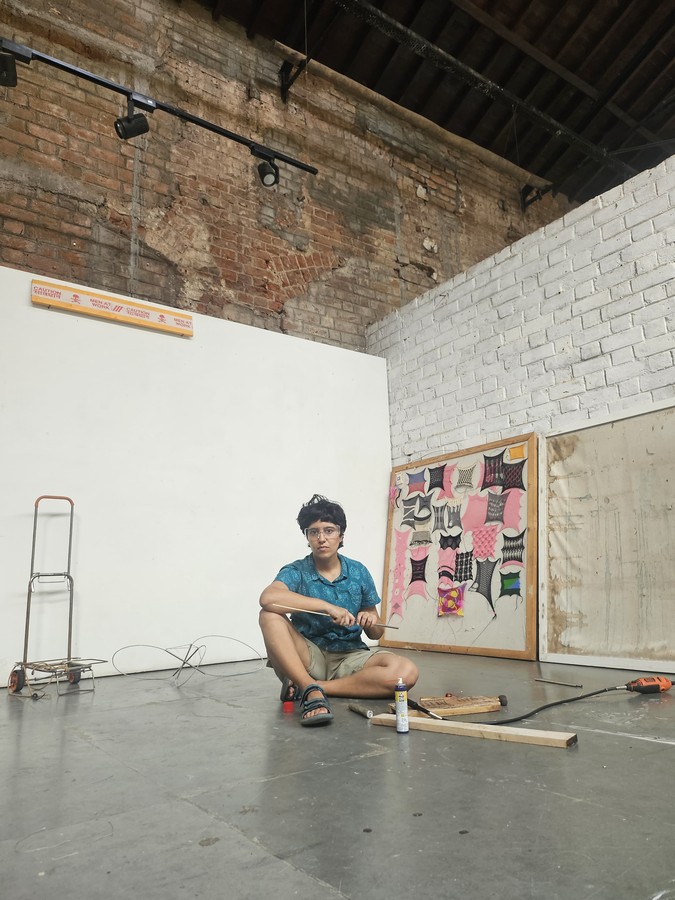
I'm an artist-researcher working in self-organised approaches to creating forms and movement. My recent works are sculptural prototypes built in a way that is emergent, and not shaped completely by a human creator: using material intelligence, tensegrity, geometric logic, and natural forces like wind and gravity. I aim for my work to express that beauty and efficiency are one, and to inspire curiosity and embodied exploration.
My tangible outcomes are perceived as sculptures, but for me they are a research method (research-through-making) to investigate how we can create more frugally, playfully and lightly in an ecologically endangered world. In my current work, I seek to converge technical structural knowledge, domestic knitting, creating new expressions in soft, analogue-interactive sculptures that use a combination of knit membranes and struts.
I trained in architecture and industrial design in India: School of Planning and Architecture, Delhi and National Institute of Design, Ahmedabad. I was invited for various makerspace and art residencies: Bildingship, Medienfrische (Austria), Valletta Design Cluster (Malta), Thinker Maker Space (Cyprus), Center ROG (Slovenia). I exhibited 'soft nothings' at Thinker Maker Space, Cyprus, and 'Rolling sculptures', at Medienfrische, Austria. In 2026, I am showing work at MAG contemporary, India: 'Pressure Systems'.
Selected works
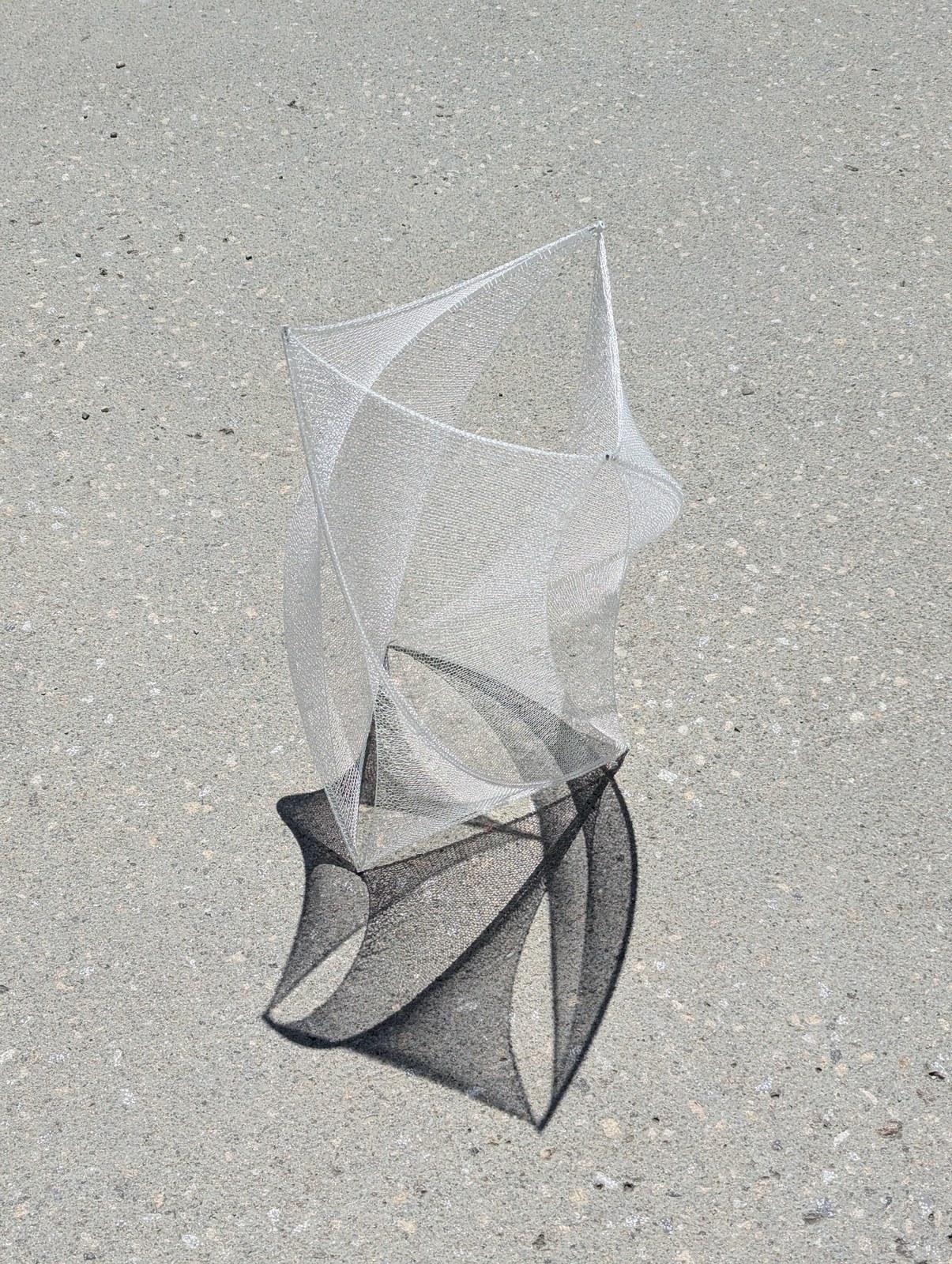
Soft Nothings-1, 60 × 30 × 30 cm, 2025 — polyester yarn, fishing line, acrylic rods
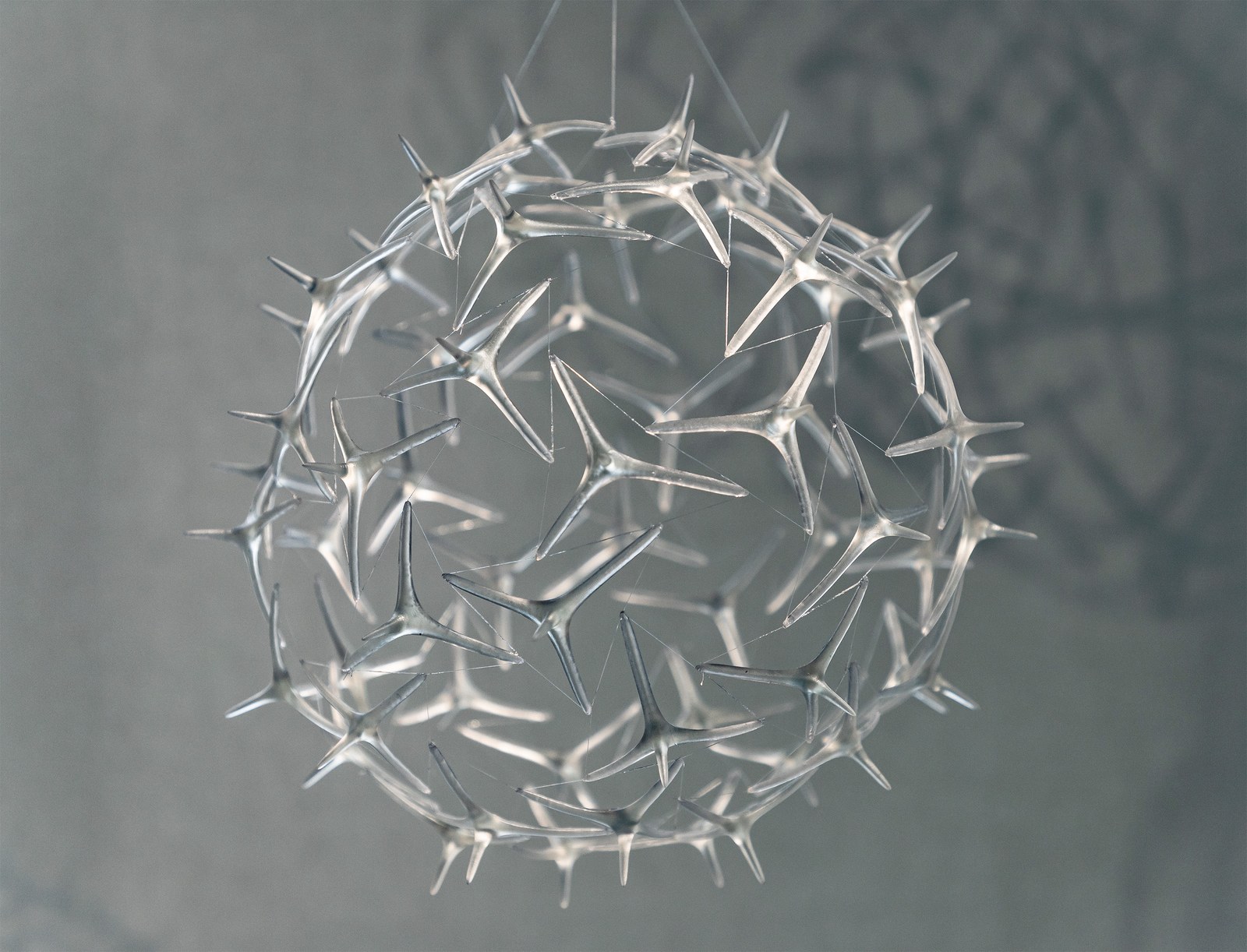
Soft Nothings-2, 25 × 25 × 25 cm, 2024 — resin 3D-printed components, fishing line, hand assembled
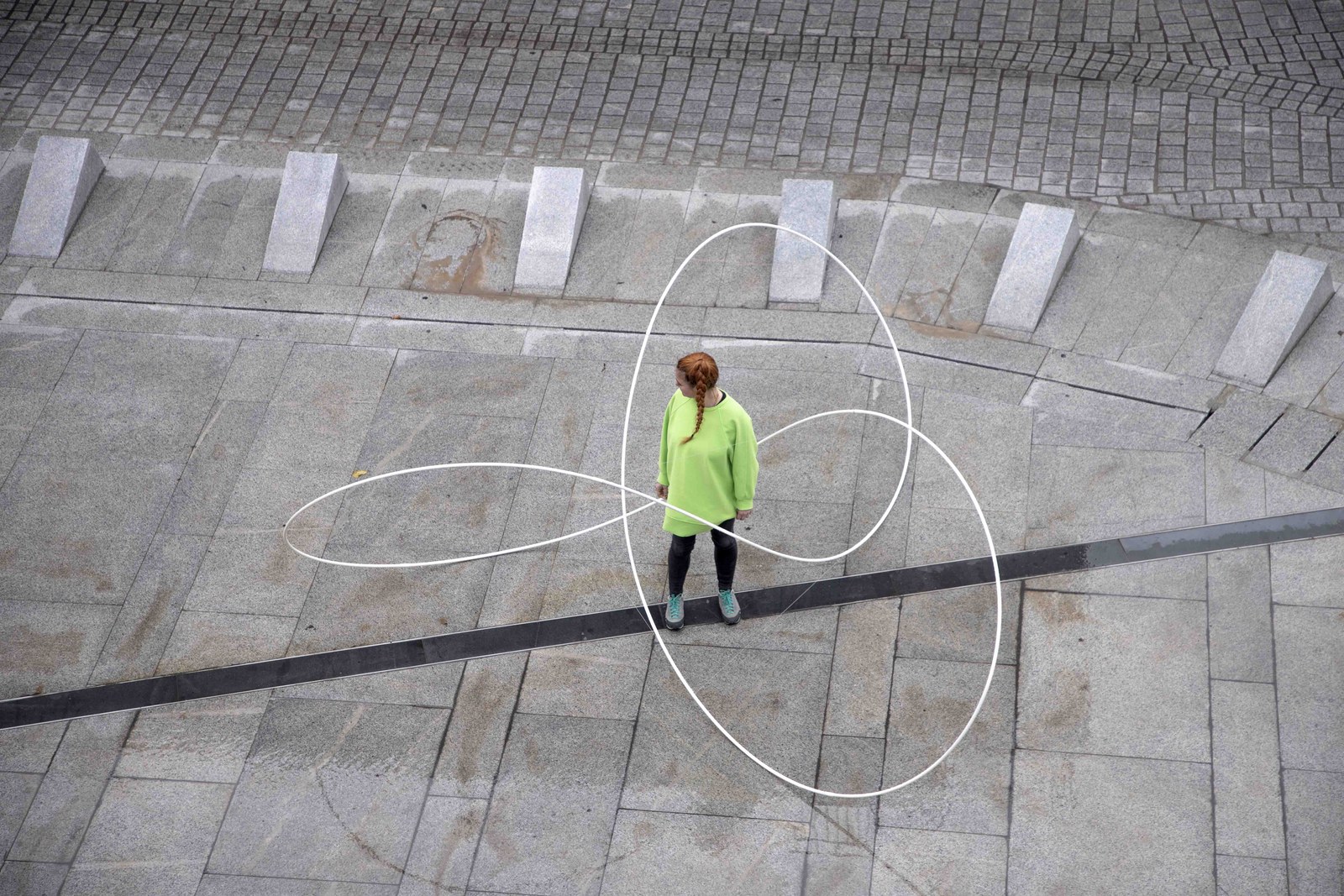
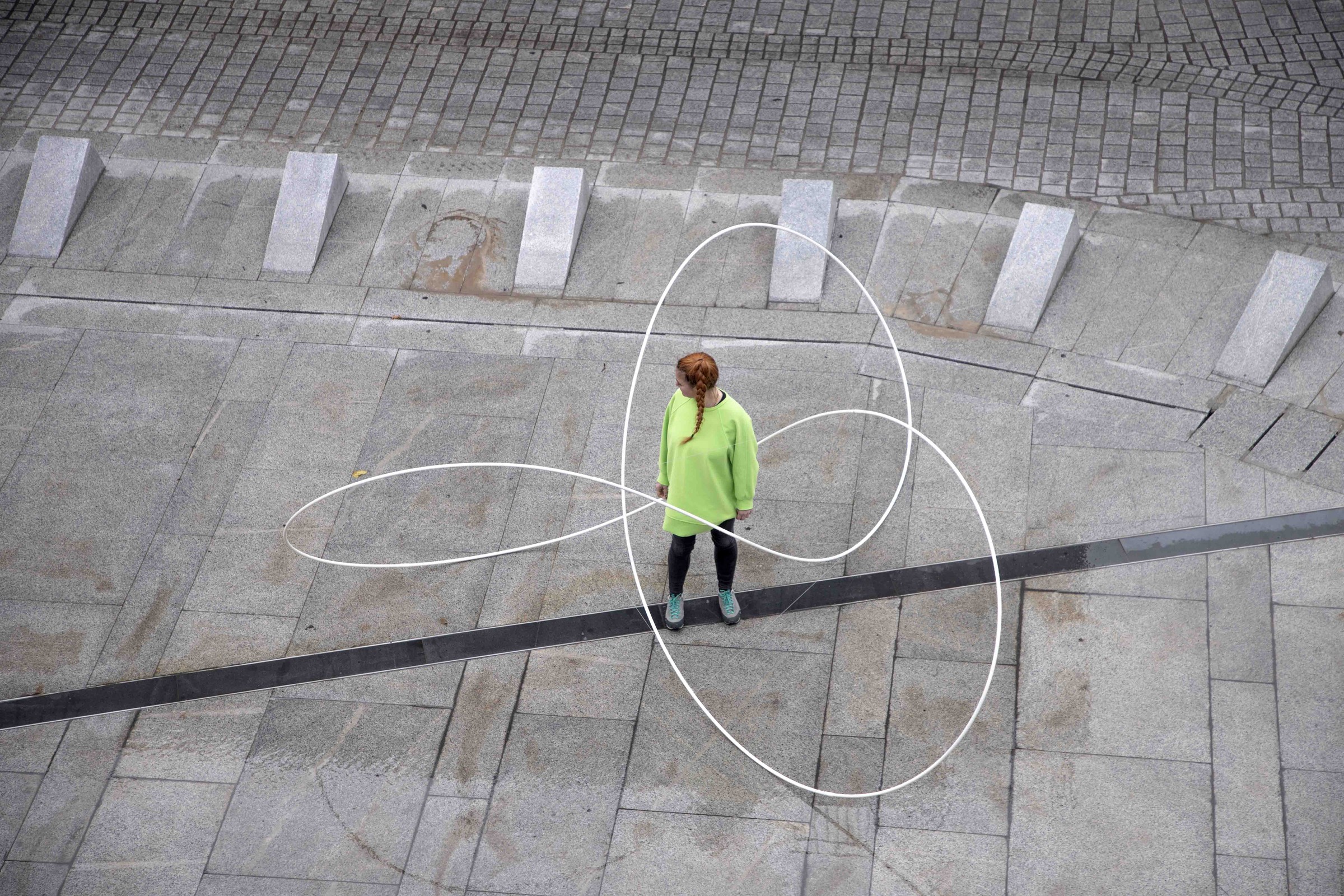
Soft Nothings-3 (trefoil), 140 × 180 × 180 cm, 2024 — PVC pipes (actively bent), fishing line
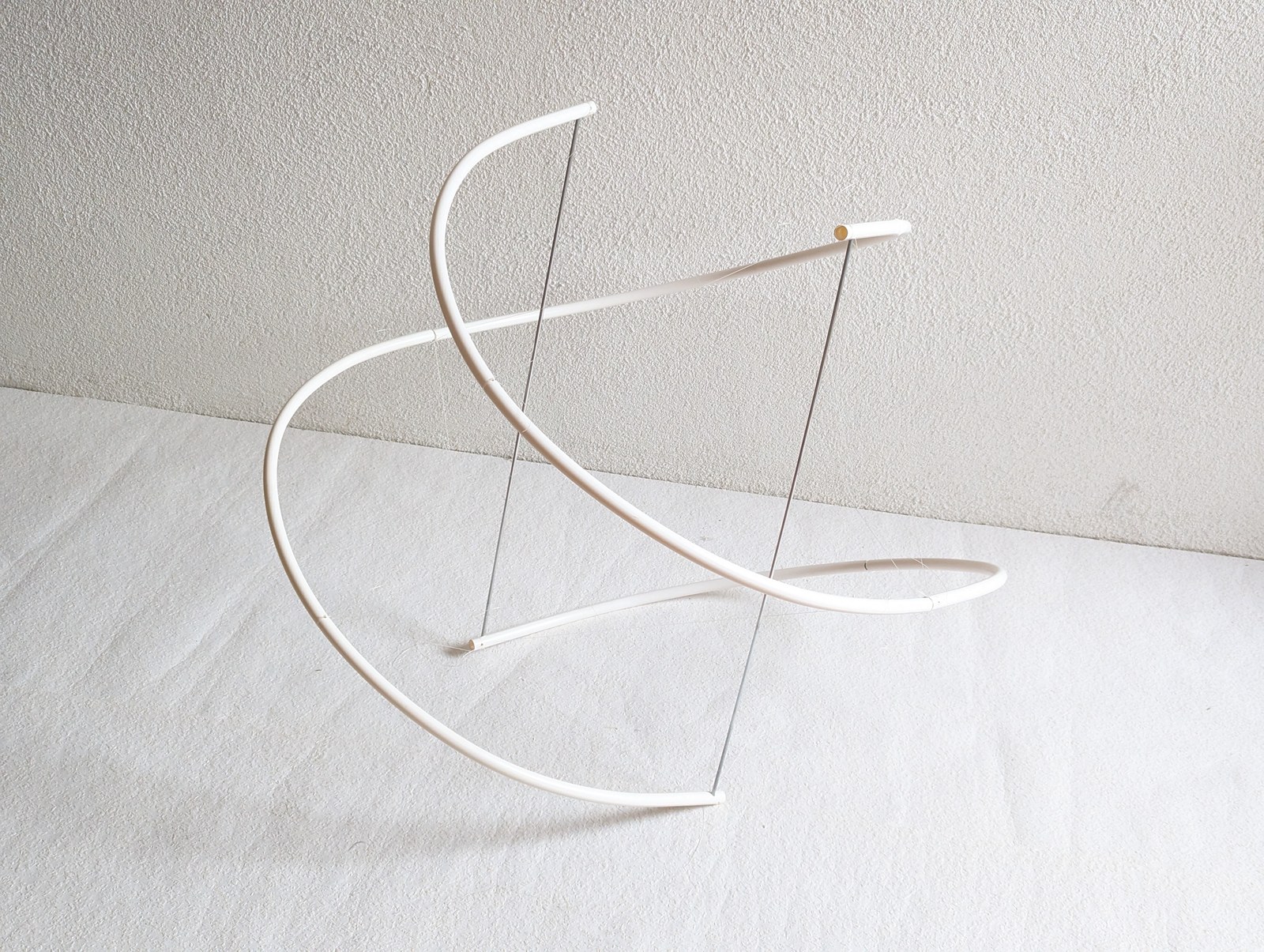
Rolling Sculpture-1, 75 × 75 × 75 cm, 2024 — PVC pipes, aluminium rods and fishing line
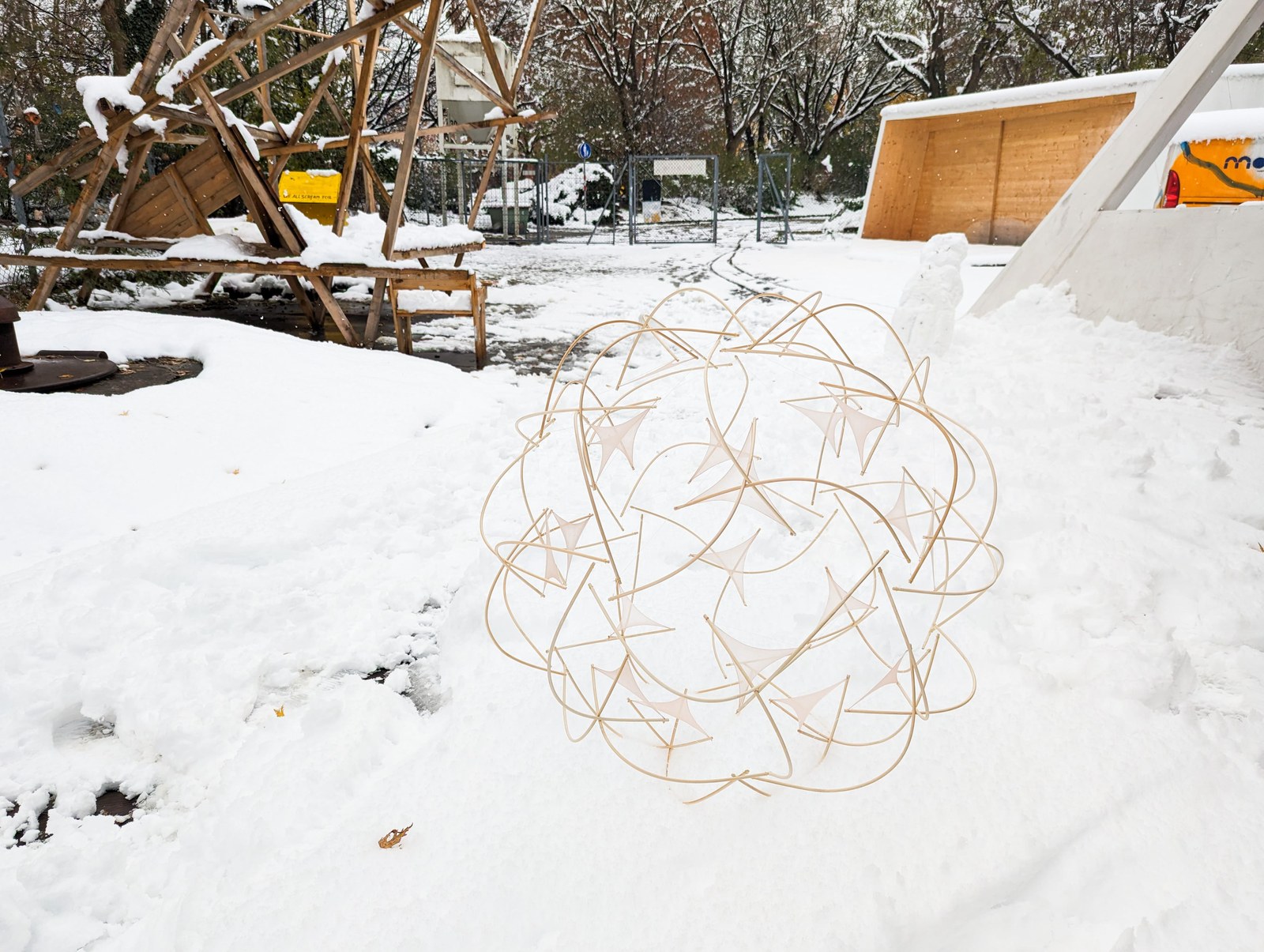
Modular Sculpture-1, 70 × 70 × 70 cm, 2023 — cane, fishing line and knitted net
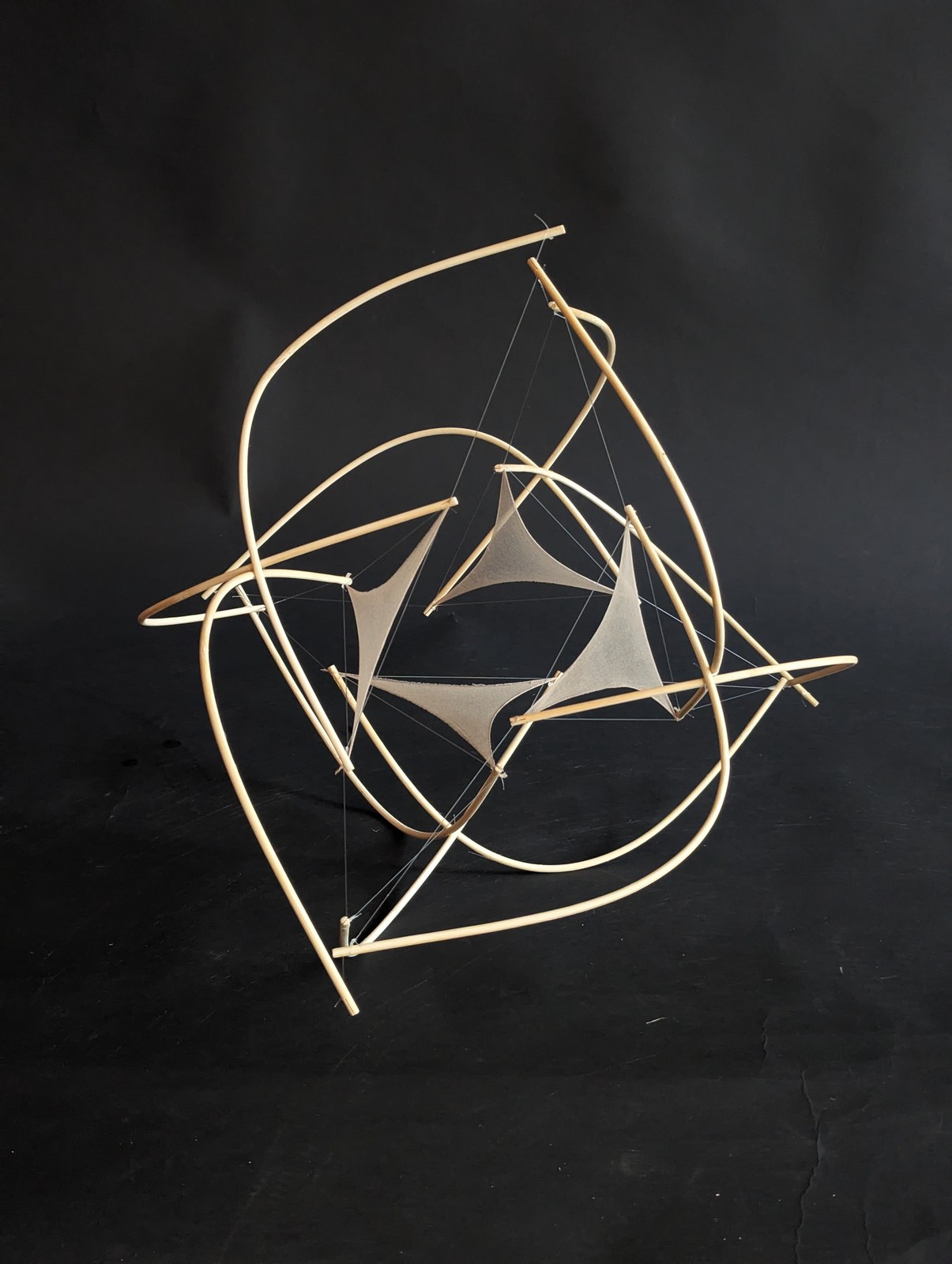
Modular Sculpture-2, 40 × 30 × 30 cm, 2023 — cane, fishing line and knitted net
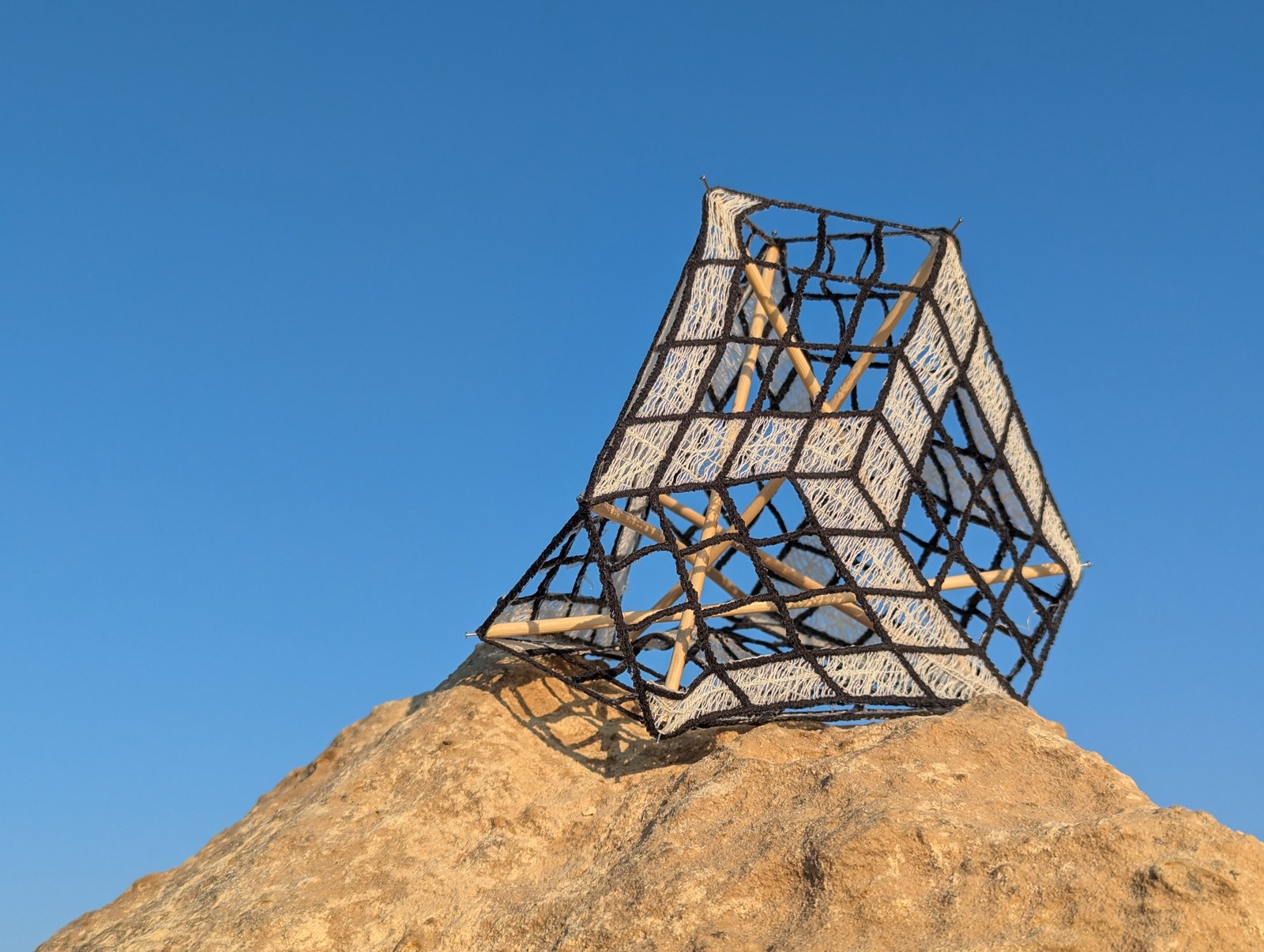
Lace Tensegrity, 15 × 15 × 15 cm, 2024 — generative mesh digital embroidery in polyester thread, cane
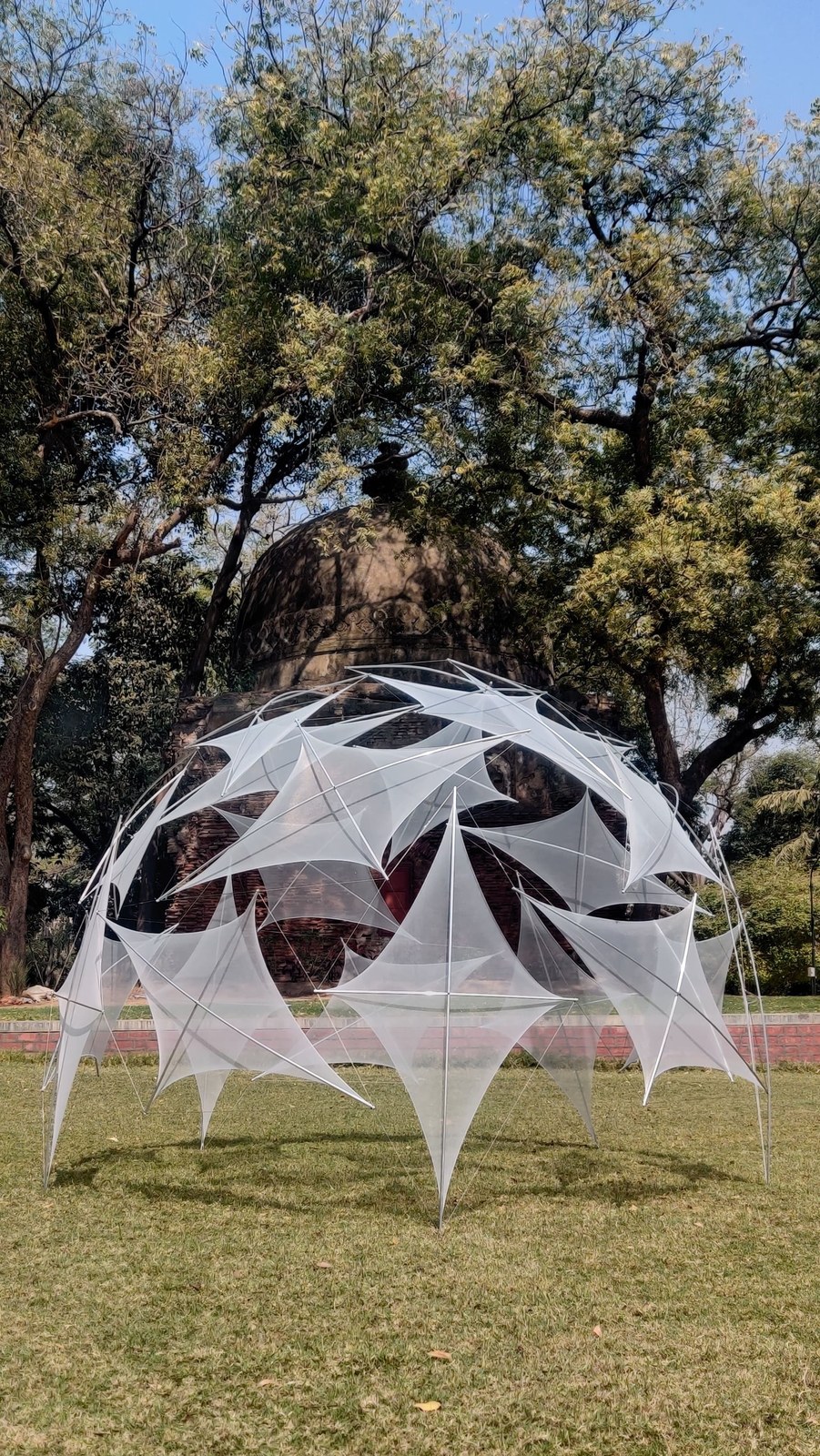
Rhombic modular dome, 200 × 260 × 260 cm, 2021 — aluminium pipes, steel cables, knitted net
Q & A
Is geometry a constraint or a freedom for you — and has that answer ever changed?
Geometry is a starting point for me. I explore geometric logic through making, to make it tangible to see its structural and aesthetic potential. Sometimes it helps me organise an idea to make seemingly complex or non-orthogonal forms simple to make. So, I do not see it as a constraint but a natural way of thinking. Within 3-dimensional geometry there is a whole range of logics one can apply, and new ones continue to be discovered. Sometimes I discover my own intuitive system derived from basic geometry. Geometry is a system that can grow endlessly, like a fractal and lead to a variety of visually rich forms. As I understand this better it feels like freedom, and because I have had more opportunities to create and think as I make: the outcomes have become more complex and diverse as I'm experimenting more and building on my geometric knowledge.
Walk us through your process — where does a piece begin, and how do you know it's finished?
My practice has emerged from exploring how form and structure is created in architecture and design in 'lighter' ways. This led to experimental prototypes based in 'research-through-making'. I use a combination of curiosity-driven making and form-finding simulation (kangaroo), keeping room for accidental discoveries. A piece begins when there is a three-dimensional form I'd like to make 'lightly'. I make small, intuitive models with membranes, yarn and sticks to test its behaviour and structure. I make iterations to explore it further, sometimes modelling it digitally based on insights from making. Sometimes I'm curious about a module and want to see the different ways it can be put together to create different forms. Spheres and platonic solids are fundamental forms for this sort of exploration where modules are self-organised around a centre, so I often start with those and then modify them. Then I work on materiality, fabrication details and I know it is finished when it is created tangibly, and looks beautiful: which is when no component is superfluous to the structure or intention.
Is there something outside of art — a system, structure, or phenomenon — that quietly shapes how you think about form?
The theory of lightweight structures pioneered by Frei Otto where natural and human-made structures are placed on the same pedestal shape how I think about form, as well as the concept of tensegrity (Snelson) which has analogies in structural biology (membranes). I don't think 'organic' and 'geometric' are separate systems. Geometric logic at a smaller scale leads to organic forms and networks at a larger scale. Nature uses 'Minimum Inventory Maximum Diversity' (Peter Pearce) to create diverse forms from minimal parts (like molecules) and so do I. I'm interested in form that is optimised; it emerges from a balance of forces, and material intelligence, rather than forcing materials to take shapes or using heavy materials. I am interested in making frugally, DIY culture and 'jugaad' which led me to create lightweight forms that can be disassembled and moved. We are more nomadic and moving large heavy things takes more energy.
What does a viewer miss when they see your work as 'just geometry'?
Despite its calculated structure and dimensions, my work can look and feel soft and organic, move in unexpected ways, and create larger spatial experiences that for me, act as experiments in creating lightly and optimally; a research method ongoing for many years. Sometimes the geometry can be hidden and the piece looks chaotic. More recently, using membranes knit on my domestic machine is a way to converge technical structural logic from my experience in a male-dominated industry, with a historically feminine 'craft'. Knitting and soft membranes have their own geometry and technical logic which is overlooked in favour of geometry of rigid shapes and structures. Hence, there is a combination of playfulness and resistance.
What's the last rule you set for yourself in the work, and did you keep it?
I try to use more found materials and more natural materials but it's not simple to make geometric structures out of those because of their inconsistency and unpredictability. This is not a rule, but a welcome challenge that can lead to a new language within my practice and in my current research-though-making.
Describe a failure or a dead end in your practice — something that didn't work.
Many sculptures don't work as anticipated- either structurally, or visually, or both. But it is not a dead end as it teaches me something and adds to the embodied knowledge it takes to create such pieces. Sometimes I use the same modules from a failed piece to make something else that works. Sometimes the same form, made larger, or smaller fails because the form simply doesn't look good or works the same way when its size is changed. It feels like a dead end in the moment- but it can be worked on in the future.
Newsletter
Curated open calls and one artist to know, every couple of weeks. Free, no spam.